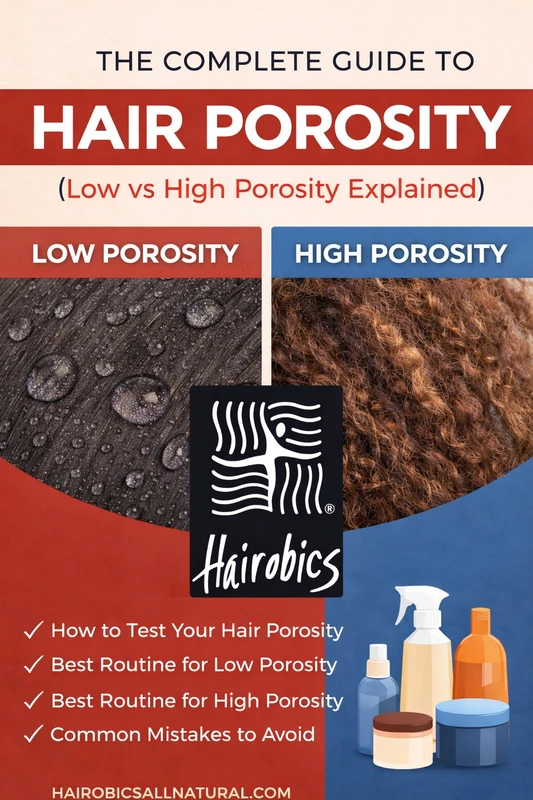
Hair porosity is one of the most important but misunderstood factors in hair care. Many people spend years trying different oils, conditioners, and hair growth routines without realizing the real issue isn't the product — it's how their hair absorbs and holds moisture.
Understanding your hair porosity can completely change your results. Once you know whether your hair is low porosity, normal porosity, or high porosity, you can choose products, techniques, and routines that actually work with your hair rather than against it.
For people with natural hair, curly hair, coily hair, and textured hair, porosity is especially important because moisture balance is the key to length retention, reduced breakage, and healthy hair growth.
This complete guide will explain:
• What hair porosity is
• The science behind moisture absorption
• Differences between low vs high porosity hair
• How to test your hair porosity
• Best routines for each porosity type
• Common mistakes people make with porosity
• Best ingredients and products for each type
By the end of this guide, you'll know exactly how to build a hair routine that helps your hair retain moisture, grow longer, and stay healthy.
What Is Hair Porosity?
Hair porosity refers to how well your hair absorbs and retains moisture.
Every strand of hair is covered by a layer called the cuticle, which consists of overlapping scales similar to shingles on a roof.
These cuticles determine how easily moisture enters and leaves your hair strand.
There are three main porosity levels:
Low Porosity Hair
Cuticles are very tight and flat, making it difficult for moisture to penetrate.
Normal Porosity Hair
Cuticles are slightly lifted, allowing moisture to enter and stay balanced.
High Porosity Hair
Cuticles are raised or damaged, allowing moisture to enter quickly but escape just as fast.
Porosity affects nearly everything in your hair routine, including:
• Moisture retention
• Product absorption
• Breakage levels
• Frizz
• Curl definition
• Hair growth retention
This is why two people can use the exact same hair product and get completely different results.
The Science Behind Hair Porosity
To understand porosity, we need to look at the structure of a hair strand.
A single hair strand has three main layers:
1. Cuticle Layer
The outer protective layer made of overlapping scales.
2. Cortex
The middle layer containing protein, moisture, and pigment.
3. Medulla
The innermost core (sometimes absent in fine hair).
When the cuticle layer is tight and smooth, moisture has difficulty entering.
When the cuticle layer is raised or damaged, moisture enters easily but escapes quickly.
Healthy hair relies on balanced moisture movement through the cuticle layer.
Why Hair Porosity Matters for Hair Growth
Hair growth happens at the scalp, but length retention happens at the hair strand.
If hair strands constantly lose moisture, they become:
• brittle
• dry
• prone to split ends
• easy to break
This is why many people feel like their hair stops growing at shoulder length.
In reality, their hair is growing, but it breaks at the same rate it grows.
Hair porosity directly affects:
• elasticity
• hydration levels
• breakage resistance
• overall hair strength
Understanding porosity allows you to maximize moisture retention, which is critical for long healthy hair.
The Three Types of Hair Porosity
Low Porosity Hair
Low porosity hair has tightly packed cuticles, which makes moisture absorption difficult.
Characteristics of Low Porosity Hair
• Water sits on top of hair instead of absorbing
• Products build up easily
• Hair takes a long time to dry
• Hair often feels greasy from product buildup
• Deep conditioners struggle to penetrate
People with low porosity hair often feel like nothing works on their hair.
This happens because most products sit on top rather than penetrating the hair shaft.
Normal Porosity Hair
Normal porosity hair has balanced cuticles that allow moisture to enter and stay inside the strand.
Characteristics of Normal Porosity Hair
• Moisture absorbs easily
• Hair holds styles well
• Hair stays hydrated longer
• Minimal product buildup
• Balanced elasticity
Normal porosity hair is the easiest hair type to manage.
However, environmental damage can eventually push normal porosity hair toward high porosity.
High Porosity Hair
High porosity hair has raised or damaged cuticles, allowing moisture to enter quickly but escape just as quickly.
Characteristics of High Porosity Hair
• Hair absorbs water instantly
• Hair dries very quickly
• Hair becomes frizzy easily
• Hair tangles easily
• Hair breaks easily
High porosity hair often results from:
• heat damage
• chemical processing
• bleaching
• environmental damage
However, some people naturally have high porosity hair due to genetics.
How to Test Your Hair Porosity
One of the easiest ways to determine your porosity is the water strand test.
The Water Test
-
Take a clean strand of hair
-
Place it in a bowl of water
-
Wait 2–4 minutes
Results:
Floats on top: Low porosity
Stays in the middle: Normal porosity
Sinks quickly: High porosity
The Spray Bottle Test
Spray water onto your hair.
If water:
• beads up → low porosity
• absorbs slowly → normal porosity
• absorbs instantly → high porosity
The Slip Test
Slide your fingers up a hair strand toward the scalp.
If it feels:
• smooth → low porosity
• slightly textured → normal porosity
• rough → high porosity
Best Hair Care Routine for Low Porosity Hair
Low porosity hair requires techniques that help open the cuticle layer.
1. Use Warm Water
Warm water helps lift the cuticle slightly, allowing moisture to penetrate.
2. Use Lightweight Products
Heavy oils can cause buildup.
Better options include:
• argan oil
• grapeseed oil
• jojoba oil
3. Apply Heat When Deep Conditioning
Heat helps open the cuticle.
Use:
• steam treatments
• hooded dryers
• warm towels
4. Clarify Regularly
Low porosity hair accumulates buildup quickly.
Clarifying every 3–4 weeks can help reset the hair.
Best Hair Care Routine for High Porosity Hair
High porosity hair requires cuticle sealing and moisture retention.
1. Use the LOC Method
LOC stands for:
Liquid
Oil
Cream
This method traps moisture inside the hair shaft.
2. Use Protein Treatments
Protein fills gaps in damaged cuticles.
Examples include:
• hydrolyzed keratin
• silk protein
• rice protein
3. Use Heavier Oils
Heavier oils help seal moisture.
Examples:
• castor oil
• olive oil
• shea butter
4. Use Cool Water Rinses
Cool water helps close the cuticle and lock in moisture.
Best Hair Care Routine for Normal Porosity Hair
Normal porosity hair requires maintenance rather than repair.
Recommended routine:
• regular deep conditioning
• balanced moisture and protein
• minimal heat damage
• protective styles
Maintaining a balanced routine helps keep the cuticles healthy.
Ingredients That Work Best for Each Porosity Type
Best Ingredients for Low Porosity Hair
• aloe vera
• glycerin
• honey
• lightweight oils
These ingredients absorb easily and avoid buildup.
Best Ingredients for High Porosity Hair
• shea butter
• castor oil
• hydrolyzed proteins
• ceramides
These ingredients strengthen and seal the cuticle.
Common Hair Porosity Mistakes
Using Heavy Oils on Low Porosity Hair
Heavy oils can sit on the surface and cause buildup.
Avoiding Protein Completely
High porosity hair often needs protein to repair damaged cuticles.
Overwashing High Porosity Hair
Frequent washing strips moisture quickly.
Ignoring Clarifying Treatments
Product buildup can make hair behave like low porosity even if it isn't.
Can Hair Porosity Change?
Yes.
Hair porosity can change due to:
• heat damage
• chemical treatments
• environmental stress
• aging
• improper hair care
However, genetic porosity patterns often remain consistent near the roots.
Damaged ends usually have higher porosity than new growth.
How Porosity Affects Curly and Coily Hair
Curly and coily hair structures make moisture retention more challenging.
Because curls twist and bend, natural scalp oils struggle to travel down the hair shaft.
This means curly hair often experiences dryness regardless of porosity level.
Combining porosity knowledge with moisture-focused routines helps maintain healthy curls.
The Role of Oils in Hair Porosity
Oils do not moisturize hair — they seal moisture inside the hair shaft.
For best results:
-
Apply water-based moisture first
-
Seal with oil afterward
This technique helps prevent moisture loss.
Why Many Hair Products Fail
Many people choose products based on marketing rather than hair structure.
Without understanding porosity, people often:
• use oils that are too heavy
• skip protein when they need it
• overuse protein when they need moisture
Hair porosity explains why one product works for someone else but fails for you.
The Best Routine for Long Healthy Hair
Regardless of porosity, healthy hair growth depends on several core habits.
1. Maintain Moisture Balance
Dry hair breaks easily.
2. Protect Hair From Damage
Limit heat styling and harsh chemicals.
3. Use Protective Styles
Styles like braids and twists protect fragile ends.
4. Maintain Scalp Health
Healthy follicles support stronger hair growth.
Final Thoughts
Hair porosity is one of the most important concepts in healthy hair care.
Once you understand your hair's porosity, you can:
• choose better products
• build a smarter hair routine
• retain more length
• prevent breakage
For people with natural hair, curly hair, and textured hair, mastering moisture balance through porosity awareness can completely transform hair health.
Instead of fighting your hair, you learn how to work with your hair's natural structure.
And when your hair receives the moisture and care it actually needs, healthy growth becomes much easier to achieve.