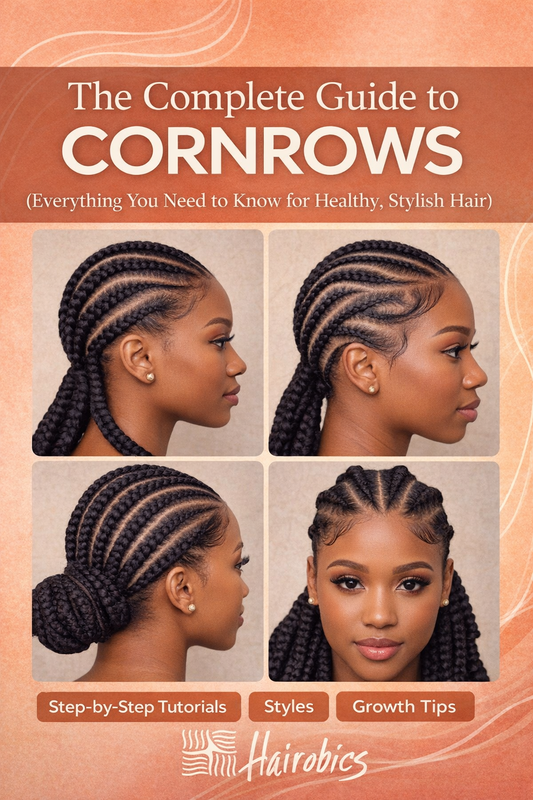
Cornrows are more than just a hairstyle—they are a cultural symbol, a protective style, and a powerful tool for hair growth and retention, especially for natural hair.
Whether you're new to cornrows or looking to perfect your technique, this complete guide will walk you through everything from history and styling to maintenance, growth benefits, and mistakes to avoid.
Table of Contents
-
What Are Cornrows?
-
The History and Cultural Significance of Cornrows
-
Benefits of Cornrows for Natural Hair
-
Are Cornrows Good for Hair Growth?
-
How to Prepare Your Hair for Cornrows
-
Step-by-Step: How to Do Cornrows
-
Best Products to Use Before, During, and After
-
Popular Cornrow Styles (Trending & Timeless)
-
How Long Should You Keep Cornrows In?
-
How to Maintain Cornrows (Daily + Weekly Routine)
-
How to Prevent Breakage and Hair Loss
-
Cornrows for Different Hair Types (3A–4C)
-
Cornrows for Kids vs Adults
-
Cornrows with Extensions vs Natural Hair
-
How to Sleep with Cornrows
-
How to Wash Cornrows Without Ruining Them
-
Signs Your Cornrows Are Too Tight
-
How to Take Down Cornrows Properly
-
Common Cornrow Mistakes to Avoid
-
Cornrows and Edge Protection
-
How to Grow Your Hair Faster with Cornrows
-
FAQs About Cornrows
-
Final Thoughts
1. What Are Cornrows?
Cornrows are a braiding technique where hair is braided very close to the scalp using an underhand, continuous motion. The braids are typically arranged in straight lines, curves, or intricate patterns.
Unlike regular braids, cornrows:
-
Sit flat against the scalp
-
Can be styled in patterns
-
Last for weeks with proper care
2. The History and Cultural Significance of Cornrows
Cornrows date back thousands of years in African culture. They were used to:
-
Represent tribe, age, and social status
-
Communicate identity and heritage
-
Serve as maps and survival tools during slavery
Today, cornrows remain a powerful cultural and fashion statement.
3. Benefits of Cornrows for Natural Hair
Cornrows are considered one of the best protective styles because they:
Protect Hair from Damage
-
Reduce daily manipulation
-
Prevent tangling and breakage
Retain Length
-
Keeps ends tucked away
-
Minimizes split ends
Promote Moisture Retention
-
Easier to keep hair hydrated
Low Maintenance
-
Saves time daily
-
Ideal for busy lifestyles
4. Are Cornrows Good for Hair Growth?
Yes—but indirectly.
Cornrows help with:
-
Length retention (key to visible growth)
-
Reduced breakage
-
Healthier scalp environment
However, growth depends on:
-
Scalp care
-
Moisture routine
-
Proper installation (not too tight)
5. How to Prepare Your Hair for Cornrows
Preparation is EVERYTHING.
Step 1: Cleanse
Use a sulfate-free shampoo to remove buildup.
Step 2: Deep Condition
Hydration prevents breakage while braided.
Step 3: Detangle Thoroughly
Avoid knots before braiding.
Step 4: Stretch Your Hair
-
Blow-dry (low heat) or
-
Banding method
Step 5: Moisturize + Seal
Use:
-
Leave-in conditioner
-
Hair oil to lock in moisture
6. Step-by-Step: How to Do Cornrows
Basic Cornrow Technique:
-
Section hair evenly
-
Divide into 3 strands
-
Begin braiding close to scalp
-
Add hair as you move down
-
Continue until the end
Key Tips:
-
Keep tension even
-
Don’t braid too tight
-
Use edge control for clean parts
7. Best Products to Use Before, During, and After
Before Braiding:
-
Hydrating leave-in conditioner
-
Lightweight oil
During Braiding:
-
Styling cream or butter
-
Edge control
After Braiding:
-
Scalp oil (for nourishment)
-
Moisturizing spray
8. Popular Cornrow Styles (Trending & Timeless)
Straight Back Cornrows
Classic and clean.
Feed-In Cornrows
Natural-looking thickness.
Stitch Braids
Sharp, defined parts.
Zig-Zag Cornrows
Creative patterns.
Cornrows with Bun
Elegant and protective.
Cornrows with Extensions
Adds length and volume.
9. How Long Should You Keep Cornrows In?
Recommended: 2–4 weeks
Keeping them longer can:
-
Cause buildup
-
Lead to breakage
-
Weaken roots
10. How to Maintain Cornrows
Daily:
-
Apply light oil to scalp
-
Use a satin scarf at night
Weekly:
-
Light cleansing or rinse
-
Refresh edges
11. How to Prevent Breakage and Hair Loss
Avoid:
-
Tight braiding
-
Dry scalp
-
Skipping moisture
Do:
-
Hydrate regularly
-
Massage scalp
-
Protect edges
12. Cornrows for Different Hair Types
3A–3C Hair
-
May need gel for grip
4A–4C Hair
-
Ideal for cornrows
-
Holds style longer
13. Cornrows for Kids vs Adults
Kids:
-
Looser tension
-
Shorter wear time
Adults:
-
Can handle longer styles
-
More styling versatility
14. Cornrows with Extensions vs Natural Hair
Natural Hair:
-
Lightweight
-
Health-focused
Extensions:
-
More dramatic styles
-
Longer-lasting look
15. How to Sleep with Cornrows
Always use:
-
Satin scarf or bonnet
-
Silk pillowcase
This prevents:
-
Frizz
-
Dryness
-
Breakage
16. How to Wash Cornrows Without Ruining Them
-
Dilute shampoo with water
-
Apply to scalp only
-
Gently rinse
-
Air dry
17. Signs Your Cornrows Are Too Tight
-
Headaches
-
Red bumps
-
Tingling scalp
If you notice this:
? Take them out immediately
18. How to Take Down Cornrows Properly
-
Apply oil to soften
-
Gently unravel ends
-
Detangle slowly
-
Wash and deep condition
19. Common Cornrow Mistakes to Avoid
-
Braiding too tight
-
Skipping moisture
-
Leaving them in too long
-
Not protecting at night
20. Cornrows and Edge Protection
Edges are fragile.
To protect them:
-
Avoid tight front braids
-
Use lightweight oils
-
Massage gently
21. How to Grow Your Hair Faster with Cornrows
Key Growth Routine:
-
Keep scalp clean
-
Oil 3–4x weekly
-
Moisturize regularly
-
Avoid tension
-
Take breaks between styles
22. FAQs About Cornrows
Do cornrows damage hair?
Not if done correctly.
Can you swim with cornrows?
Yes, but rinse after.
Are cornrows good for thinning hair?
Only if installed gently.
23. Final Thoughts
Cornrows are one of the most powerful protective styles for natural hair, combining beauty, culture, and functionality.
When done correctly, they:
-
Protect your hair
-
Help retain length
-
Simplify your routine
But remember—healthy hair starts with proper care, not just styling.