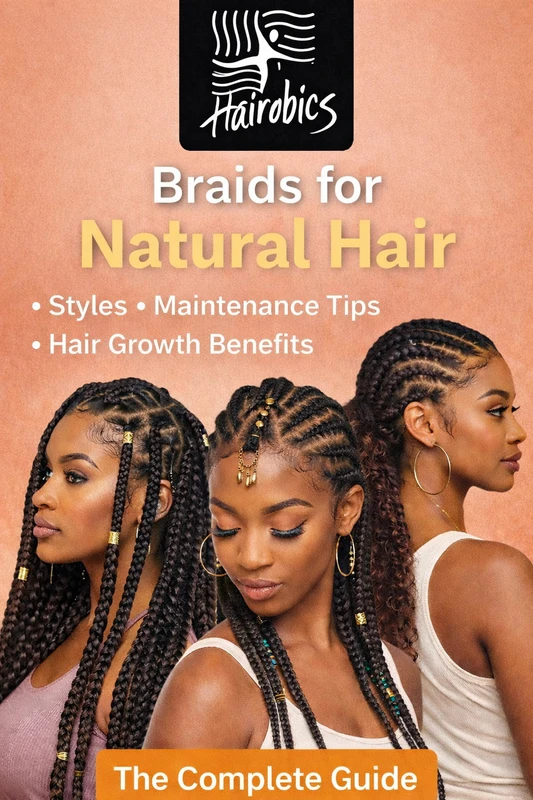
(Styles, Hair Growth Benefits, Maintenance, and Expert Tips)
Braids have been a foundational part of Black hair culture for centuries. From traditional cornrows worn by African civilizations to modern knotless braids trending across social media, braided hairstyles are more than just a fashion statement—they’re a powerful tool for protecting, growing, and maintaining natural hair.
If you have natural hair, braids can be one of the best styles you wear. When done correctly, they protect your hair from daily manipulation, reduce breakage, and help retain length.
But braids also come with many questions.
-
Do braids help hair grow?
-
Which braids are best for natural hair?
-
How long should you keep braids in?
-
Can braids damage your hairline?
This complete guide answers all of these questions and more. Whether you’re new to braids or you’ve been wearing them for years, this article will teach you everything you need to know about braiding natural hair the right way.
The History and Cultural Significance of Braids
Braids are deeply rooted in African history. Thousands of years ago, braided hairstyles were used to communicate social status, age, tribe, wealth, and even marital status.
Different regions of Africa developed their own unique braiding patterns.
For example:
-
Cornrows originated in West Africa and were often worn by warriors and royalty.
-
Fulani braids come from the Fulani people of the Sahel region.
-
Goddess braids have roots in traditional African ceremonial styles.
During the transatlantic slave trade, braids even served as a survival tool. Enslaved Africans braided maps and seeds into their hair to help escape and rebuild their lives.
Today, braids continue to represent identity, culture, beauty, and creativity.
They are worn across the world and remain one of the most versatile hairstyles for natural hair.
Why Braids Are Great for Natural Hair
Natural hair thrives when it is protected and moisturized. Braids help achieve both.
Here are some of the biggest benefits.
Protective Styling
Natural hair can be fragile due to its curl pattern. Braids tuck the ends away and reduce daily manipulation.
Less manipulation means less breakage.
Length Retention
Hair grows about half an inch per month on average. However, many people don’t see growth because their hair breaks before length becomes visible.
Braids help retain the hair that grows.
Low Maintenance
Once installed, braids can last several weeks, making them perfect for busy lifestyles.
Versatility
Braids can be worn in countless styles including:
-
Updos
-
Ponytails
-
Buns
-
Half-up styles
-
Beaded designs
Weather Protection
Braids protect natural hair from environmental damage such as wind, sun, and cold temperatures.
Do Braids Actually Help Hair Grow?
Braids themselves do not make hair grow faster.
However, they help retain length, which gives the appearance of faster growth.
Hair grows from the scalp, not from the ends. What braids do is protect your hair so it doesn’t break off.
When braids are done correctly, they can support healthy hair growth by:
-
Reducing breakage
-
Minimizing tangles
-
Protecting ends
-
Limiting heat styling
-
Allowing moisture retention
However, braids that are too tight can cause serious damage, including traction alopecia.
The Best Braids for Natural Hair
There are dozens of braid styles available. Some are better for hair health than others.
Here are the most popular braid styles for natural hair.
Box Braids
Box braids are one of the most popular braid styles in the world.
Hair is sectioned into square parts and braided with or without extensions.
Benefits:
-
Versatile styling
-
Long-lasting
-
Great for length retention
They typically last 4–8 weeks.
Knotless Braids
Knotless braids have become extremely popular because they reduce tension on the scalp.
Instead of starting with a knot, the braid gradually feeds in extension hair.
Benefits:
-
Lightweight
-
Less scalp tension
-
More natural look
Knotless braids are considered one of the healthiest braid styles.
Cornrows
Cornrows are braids that sit flat against the scalp.
They can be worn alone or used as the base for wigs and sew-ins.
Benefits:
-
Very protective
-
Long cultural history
-
Low maintenance
Cornrows typically last 2–4 weeks.
Fulani Braids
Fulani braids combine cornrows with loose braids and decorative beads.
They are inspired by traditional African hairstyles.
Benefits:
-
Beautiful cultural design
-
Protective styling
-
Great for medium to long hair
Goddess Braids
Goddess braids are thicker cornrow-style braids.
They often include curly extensions to create a softer, more romantic look.
Tribal Braids
Tribal braids combine cornrows, box braids, and intricate parting patterns.
These styles can be extremely creative and visually stunning.
Micro Braids
Micro braids are extremely small braids that mimic natural hair strands.
They provide maximum styling flexibility but can be time-consuming to install.
Preparing Natural Hair for Braids
Preparation is one of the most important steps for healthy braided styles.
Skipping this step can lead to dryness, breakage, and scalp irritation.
Follow these steps before getting braids.
Step 1: Clarify the Hair
Start with a clean scalp.
Use a clarifying shampoo to remove product buildup, oils, and dirt.
This ensures your scalp stays healthy while the braids are installed.
Step 2: Deep Condition
Deep conditioning restores moisture and elasticity.
Hydrated hair is less likely to break while braided.
Step 3: Detangle Thoroughly
Braiding tangled hair can cause knots and breakage.
Use a wide-tooth comb or detangling brush to remove all tangles.
Step 4: Moisturize
Apply a leave-in conditioner or hair moisturizer to hydrate your strands.
This step is critical because braids will remain in your hair for several weeks.
Step 5: Stretch the Hair
Stretching the hair makes braiding easier.
You can stretch your hair by:
-
Blow drying on low heat
-
Banding
-
Twisting
How Long Should You Keep Braids In?
Braids should not stay in your hair too long.
The recommended timeframe is:
4–6 weeks
Leaving braids in longer can cause:
-
Severe tangling
-
Matting
-
Breakage
-
Product buildup
Your scalp also needs access to oxygen and cleansing.
How to Maintain Braids for Healthy Hair
Proper maintenance is essential.
Here’s how to care for braided hair.
Moisturize the Scalp
Your scalp still needs moisture.
Apply lightweight oils or scalp treatments several times per week.
Use a Satin Scarf or Bonnet
Sleeping on cotton pillowcases causes friction.
Always protect your braids with satin or silk at night.
Wash Your Braids
Many people believe braids should never be washed.
This is false.
Your scalp should be cleansed every 1–2 weeks.
Diluted shampoo works best.
Avoid Heavy Product Buildup
Too much product can cause buildup at the roots.
Stick to lightweight products.
Signs Your Braids Are Too Tight
Tight braids can cause permanent hair loss.
Watch for these warning signs.
-
Pain that lasts more than 2 days
-
Red bumps on the scalp
-
Headaches
-
Thinning edges
-
Small white bulbs at the roots
If you experience these symptoms, remove the braids immediately.
Braids and Hairline Health
Your edges are the most delicate part of your hairline.
Tight braids can cause traction alopecia, a condition where hair follicles are permanently damaged.
To protect your edges:
-
Avoid extremely tight braids
-
Choose knotless braids
-
Take breaks between styles
-
Use nourishing scalp oils
How Often Should You Take Breaks Between Braids?
Experts recommend taking 2–4 weeks between braided styles.
This allows your scalp to recover and your hair to rehydrate.
During breaks, focus on:
-
Deep conditioning
-
Moisturizing
-
Gentle detangling
Common Braiding Mistakes That Damage Natural Hair
Even protective styles can damage hair if done incorrectly.
Here are the biggest mistakes.
Braiding Too Tight
This is the most common mistake.
Tight braids pull on the follicles and weaken hair roots.
Leaving Braids in Too Long
Overgrown braids lead to matting and breakage.
Skipping Moisture
Braids can cause dryness if hair isn’t moisturized regularly.
Heavy Extensions
Very heavy braids put stress on hair follicles.
Ignoring Scalp Health
Healthy hair begins with a healthy scalp.
The Best Hair Care Routine for Braids
A simple routine works best.
Weekly routine example:
Day 1
Light scalp oil
Day 3
Moisturizing spray
Day 7
Cleanse scalp
Day 10
Apply leave-in conditioner
Consistency keeps hair healthy while braided.
How Braids Fit Into a Long-Term Hair Growth Strategy
Braids should be part of a balanced hair routine.
Combine braids with:
-
Moisture retention
-
Low manipulation styles
-
Healthy diet
-
Scalp care
-
Gentle detangling
Healthy hair growth requires patience and consistency.
The Best Products to Use With Braids
Using the right products keeps braided hair healthy.
Look for products that provide:
-
Hydration
-
Scalp nourishment
-
Lightweight moisture
-
Natural ingredients
Avoid products that contain:
-
Heavy waxes
-
Drying alcohols
-
Mineral oil buildup
Final Thoughts: Why Braids Remain One of the Best Styles for Natural Hair
Braids are more than just a hairstyle.
They are a cultural symbol, a protective style, and a powerful tool for healthy hair care.
When installed and maintained correctly, braids can help natural hair:
-
Retain length
-
Reduce breakage
-
Protect ends
-
Simplify daily styling
However, balance is key. Braids should always be combined with proper scalp care, moisturizing routines, and regular breaks between styles.
Healthy hair is built over time through consistent care.
Braids are simply one of the many tools that help natural hair thrive.