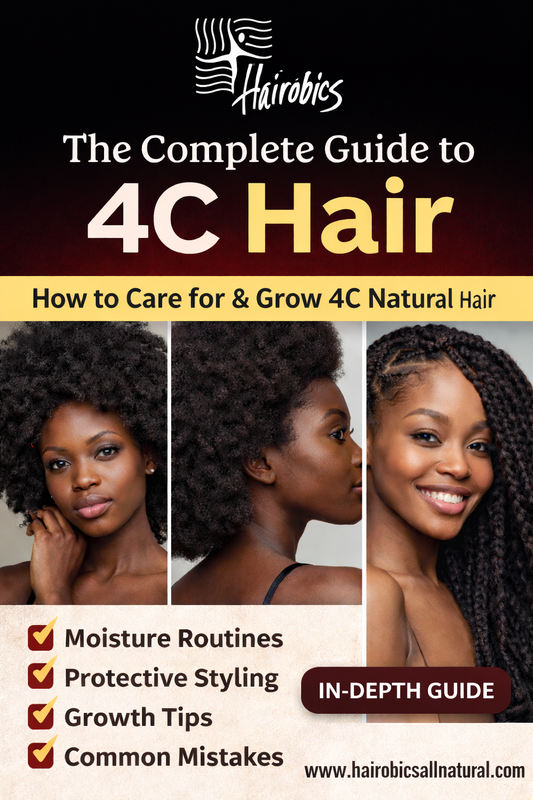
4C hair is one of the most beautiful, versatile, and misunderstood hair textures in the world. Known for its tight coils, incredible volume, and rich cultural significance, 4C hair requires specific care practices to stay healthy, moisturized, and strong.
Many people with 4C hair struggle with dryness, shrinkage, tangling, and breakage—not because their hair is difficult, but because most hair care advice was never designed for tightly coiled textures.
This complete guide to 4C hair will teach you everything you need to know about:
-
Understanding 4C hair structure
-
How to properly moisturize 4C hair
-
The best routines for growth
-
Protective styling tips
-
Common mistakes that damage 4C hair
-
Daily and weekly hair care routines
-
The best ingredients for healthy hair
If you have 4C hair or care for someone who does, this guide will help you build a routine that supports stronger, longer, and healthier natural hair.
What Is 4C Hair?
4C hair is part of the Type 4 hair category, which includes:
-
4A: Defined tight curls
-
4B: Z-shaped curls
-
4C: Extremely tight coils with minimal definition
4C hair has the tightest curl pattern of all hair types.
Characteristics of 4C hair include:
-
Very tight coils
-
High shrinkage (up to 75%)
-
Fragile strands
-
Dense volume
-
Naturally dry texture
-
Slow visible length retention
Because of the tight coil structure, natural scalp oils struggle to travel down the hair shaft, which is why 4C hair tends to be the driest hair type.
But with the right routine, 4C hair can grow very long and very strong.
The Unique Structure of 4C Hair
Understanding the structure of 4C hair helps explain why it needs specialized care.
1. Tight Coil Pattern
4C hair forms extremely tight coils that often appear zig-zag shaped.
This structure creates:
-
More bends in the strand
-
More friction between strands
-
Higher breakage risk
Each bend in the hair shaft is a weak point, making gentle handling essential.
2. High Density
Many people with 4C hair have high hair density, meaning there are many strands per square inch of scalp.
This gives 4C hair its beautiful fullness and volume.
However, it also means:
-
Moisture must reach many strands
-
Detangling requires patience
-
Products must distribute evenly
3. Natural Shrinkage
Shrinkage is when hair appears much shorter than its actual length.
4C hair can shrink 50–75%.
Example:
-
10 inches of hair may appear only 3–4 inches long
Shrinkage is actually a sign of healthy elasticity.
4. Slower Oil Distribution
The scalp produces sebum (natural oil), but in 4C hair:
-
The tight coils block oil movement
-
Oil stays near the scalp
-
Ends become dry
That’s why moisturizing products are essential.
Why 4C Hair Gets Dry So Easily
Dryness is the most common challenge for 4C hair.
Several factors contribute to this.
1. Tight Curl Structure
The tighter the curl pattern, the harder it is for oil to travel down the strand.
This leads to dry ends.
2. Environmental Exposure
Sun, wind, and cold weather strip moisture from hair.
4C hair is especially sensitive to:
-
Winter air
-
Indoor heating
-
Dry climates
3. Product Buildup
Heavy products can block moisture absorption.
Buildup often causes:
-
Dull hair
-
Flakes
-
Dry feeling strands
4. Overwashing
Frequent washing with harsh shampoos removes natural oils.
4C hair generally benefits from washing once every 7–14 days.
The Best Moisture Routine for 4C Hair
Keeping 4C hair moisturized is the foundation of healthy growth.
One of the most effective methods is the LOC method.
The LOC Method
LOC stands for:
-
L – Liquid
-
O – Oil
-
C – Cream
Step 1: Apply water or leave-in conditioner.
Step 2: Apply oil to seal moisture.
Step 3: Apply cream to lock hydration.
This routine traps moisture inside the hair shaft.
The LCO Method
Some people with 4C hair prefer:
-
Liquid
-
Cream
-
Oil
This method works well when hair absorbs moisture quickly.
Weekly 4C Hair Routine
A consistent routine improves growth and strength.
Step 1: Pre-Poo Treatment
Before washing:
Apply oils to protect hair from dryness.
Common oils:
-
Castor oil
-
Coconut oil
-
Jojoba oil
Leave on for 30 minutes.
Step 2: Gentle Shampoo
Use sulfate-free shampoo.
Focus on the scalp rather than the hair length.
Step 3: Deep Conditioning
Deep conditioning restores moisture and strength.
Leave conditioner on for 20–30 minutes.
Use heat or a shower cap for better penetration.
Step 4: Detangling
Detangle with:
-
Fingers
-
Wide-tooth comb
Always detangle while hair is wet and conditioned.
Step 5: Moisturize and Seal
Apply:
-
Leave-in conditioner
-
Oil
-
Cream
Daily Care Tips for 4C Hair
Healthy 4C hair thrives with gentle daily habits.
1. Moisturize Ends
The ends are the oldest part of the hair.
Hydrating them daily prevents breakage.
2. Use Protective Hairstyles
Protective styles reduce manipulation.
Examples include:
-
Twists
-
Braids
-
Bantu knots
-
Cornrows
3. Sleep Protection
Use:
-
Satin bonnet
-
Silk pillowcase
Cotton pillowcases absorb moisture.
4. Avoid Excess Heat
Frequent heat styling can damage the curl pattern.
Limit:
-
Flat irons
-
Blow dryers
-
Hot combs
The Best Ingredients for 4C Hair
Certain ingredients support moisture and strength.
Shea Butter
Deeply moisturizing.
Helps seal hydration into the hair shaft.
Castor Oil
Excellent for:
-
Scalp nourishment
-
Thickening hair appearance
-
Preventing dryness
Aloe Vera
Helps:
-
Hydrate scalp
-
Reduce irritation
-
Add shine
Coconut Oil
Penetrates the hair shaft to reduce protein loss.
Jojoba Oil
Similar to natural scalp oils.
Helps balance scalp hydration.
Protective Styles That Help 4C Hair Grow
Protective styles reduce manipulation and protect fragile ends.
Popular Protective Styles
1. Box Braids
Long-lasting and versatile.
2. Two-Strand Twists
Low tension and easy to maintain.
3. Cornrows
Great for protecting hair during busy weeks.
4. Bantu Knots
Stylish while protecting ends.
Common Mistakes That Damage 4C Hair
Many people unknowingly damage their hair through everyday habits.
1. Detangling Dry Hair
Dry detangling causes snapping.
Always detangle with moisture.
2. Tight Hairstyles
Tension can lead to:
-
Breakage
-
Thinning edges
-
Traction alopecia
3. Skipping Deep Conditioning
Deep conditioning strengthens the hair shaft.
Skipping it weakens strands.
4. Ignoring the Scalp
Healthy hair starts with the scalp.
Scalp care should include:
-
Massage
-
Hydration
-
Gentle cleansing
How to Grow Long 4C Hair
4C hair can grow just as long as any other hair type.
The key is length retention.
Hair grows about ½ inch per month, but breakage can prevent visible length.
Tips for Length Retention
-
Keep hair moisturized
-
Protect ends
-
Reduce manipulation
-
Trim damaged ends
-
Maintain scalp health
Consistency leads to long-term results.
Best Hairstyles for 4C Hair
4C hair is incredibly versatile.
Popular styles include:
-
Afro
-
Twist outs
-
Wash and go
-
Braided styles
-
Puff styles
-
Protective buns
These styles celebrate the natural beauty of tightly coiled hair.
How Often Should 4C Hair Be Washed?
There is no single rule.
Most people with 4C hair wash every:
-
7–10 days
-
10–14 days
Washing too frequently can strip natural oils.
However, scalp hygiene is still important.
Night Routine for 4C Hair
Protecting hair overnight prevents breakage.
Steps:
-
Lightly moisturize hair
-
Put hair into loose twists or braids
-
Wear a satin bonnet
-
Sleep on a silk pillowcase
This routine preserves styles and reduces friction.
Signs Your 4C Hair Is Healthy
Healthy 4C hair should:
-
Feel soft and hydrated
-
Stretch without snapping
-
Have minimal breakage
-
Maintain strong ends
-
Respond well to styling
Healthy hair grows consistently over time.
Final Thoughts: Embracing the Beauty of 4C Hair
4C hair is powerful, beautiful, and deeply connected to culture and identity.
Although it requires specialized care, the rewards are incredible:
-
Thick volume
-
Unique texture
-
Endless styling possibilities
With the right routine—hydration, gentle handling, protective styling, and scalp care—4C hair can grow strong, long, and vibrant.
Learning how to care for 4C hair isn’t about changing its texture.
It’s about celebrating it and giving it the care it deserves.