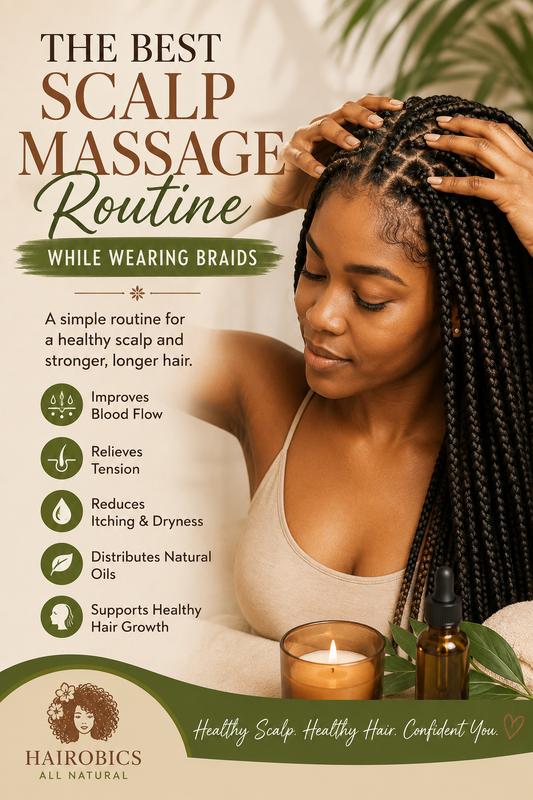
Braids are one of the most popular protective hairstyles because they help minimize daily manipulation, reduce breakage, and make hair care easier. Whether you're wearing box braids, knotless braids, cornrows, twists, or feed-in braids, taking care of your scalp is just as important as protecting your hair.
Unfortunately, many people focus entirely on keeping their braids neat while neglecting their scalp. Over time, this can lead to itchiness, dryness, product buildup, flakes, tension, and even slower hair retention.
One of the easiest ways to maintain a healthy scalp while wearing braids is by incorporating regular scalp massages into your routine.
A proper scalp massage can:
- Stimulate blood circulation
- Help distribute natural oils
- Reduce scalp tightness
- Relieve stress
- Improve moisture absorption
- Support healthier hair growth
- Reduce itching
- Keep follicles healthier
While a scalp massage alone won't magically grow inches of hair overnight, combining it with proper scalp care creates the ideal environment for stronger, healthier hair.
This guide explains everything you need to know.
Why Your Scalp Needs Attention While Wearing Braids
Protective styles hide your hair, but they don't stop your scalp from producing oil, sweat, and dead skin.
Your scalp is still working every day.
During several weeks of wearing braids, your scalp experiences:
- Sweat
- Dirt
- Dead skin buildup
- Oil production
- Friction
- Dry weather
- Sun exposure
- Product accumulation
Without regular care, this buildup may clog follicles and cause discomfort.
Healthy hair begins with a healthy scalp.
Benefits of Scalp Massage While Wearing Braids
1. Improves Blood Flow
Massage temporarily increases circulation near the hair follicles.
Better circulation delivers:
- Oxygen
- Nutrients
- Blood supply
This supports overall scalp health.
2. Reduces Tightness
Fresh braids often feel tight.
A gentle massage helps relax the surrounding skin without disturbing the style.
Never massage aggressively during the first few days after installation.
3. Helps Relieve Itching
Many braided styles itch because of:
- Dry scalp
- Sweat
- Synthetic hair irritation
- Product buildup
Gentle massage combined with light scalp hydration often reduces discomfort.
4. Helps Distribute Natural Oils
Even with braids, your scalp continues producing sebum.
Massaging helps spread these natural oils more evenly across exposed scalp areas.
5. Supports Healthy Hair Growth
Healthy follicles thrive in a clean, moisturized environment.
Scalp massage supports this environment by encouraging consistent scalp maintenance.
6. Reduces Stress
Massage relaxes muscles in the scalp.
Lower stress often means less tension placed on your hairline and scalp.
Many people sleep better after a relaxing scalp massage.
When Should You Massage Your Scalp?
For most people:
3–5 times per week
works well.
If your scalp becomes dry easily:
Daily gentle massages lasting only a few minutes can help.
Avoid excessive rubbing multiple times each day.
Best Time of Day
Many people enjoy scalp massages:
- Before bed
- After showering
- Before moisturizing
- Before applying scalp oil
- During wash day
Nighttime massages are especially relaxing.
How Long Should Each Massage Last?
Keep it simple.
Ideal length:
5–10 minutes
Longer sessions aren't necessarily better.
Consistency matters more than duration.
Step 1: Start With Clean Hands
Always wash your hands first.
Dirty fingertips transfer:
- Oil
- Bacteria
- Dirt
onto the scalp.
Step 2: Lightly Moisturize the Scalp
Never massage an extremely dry scalp.
Apply a light amount of:
- Water-based scalp mist
- Hydrating spray
- Aloe vera-based moisturizer
Avoid soaking your braids.
The goal is light hydration.
Step 3: Use Your Fingertips
Never use your fingernails.
Massage using:
- Finger pads
- Circular motions
- Gentle pressure
This protects your scalp from scratches.
Step 4: Work in Sections
Move around your scalp slowly.
Massage:
Front hairline
↓
Sides
↓
Crown
↓
Back
↓
Nape
Cover every area evenly.
Step 5: Apply Gentle Pressure
Imagine moving the skin—not scratching it.
Your scalp should feel relaxed afterward.
It should never feel sore.
Step 6: Finish With Light Moisture
If needed, lightly refresh your scalp after the massage.
Avoid applying excessive oil.
Too much oil attracts dirt and buildup.
Can You Massage With Oil?
Yes.
A light amount works well.
The goal isn't soaking your scalp.
Instead:
- Apply a few drops.
- Massage evenly.
- Let the scalp absorb it.
Heavy applications can clog follicles and attract lint.
Less is often more.
Should You Massage Every Day?
Daily massage is generally safe if:
- Pressure stays gentle.
- Braids aren't pulled.
- Scalp isn't irritated.
If your scalp becomes sore, reduce frequency.
Signs You're Massaging Too Hard
Watch for:
- Redness
- Pain
- Tenderness
- Hairline soreness
- Increased itching
- Braids loosening
Gentle is always better.
Areas That Need Extra Attention
Many people ignore:
- Crown
- Nape
- Behind ears
These areas often become dry faster.
Spend extra time there.
What If Your Braids Are Tight?
Wait 3–5 days before deeper massage.
During the first few days:
Use only very gentle pressure.
Aggressive rubbing can increase irritation.
Can Massage Help Hair Growth?
Massage doesn't directly create hair growth.
Instead, it supports healthy conditions that encourage stronger hair over time by:
- Improving circulation
- Encouraging consistent scalp care
- Reducing tension
- Supporting moisture retention
- Promoting a healthier scalp environment
Healthy follicles generally produce healthier hair.
Massage Routine for Dry Scalps
Monday
- Hydrating scalp spray
- Five-minute massage
Wednesday
- Gentle massage
- Light moisturizer
Friday
- Wash if needed
- Massage afterward
Sunday
- Moisturize
- Relaxing massage
Massage Routine for Oily Scalps
Massage:
3 times weekly
Avoid applying excess oils.
Focus instead on:
- Clean scalp
- Lightweight hydration
- Regular cleansing
Massage Routine for Active Lifestyles
If you exercise frequently:
Massage after workouts.
Sweat left sitting on the scalp may contribute to irritation.
Refresh with a lightweight scalp mist afterward.
Common Mistakes
Scratching Instead of Massaging
Fingernails damage skin.
Always use fingertips.
Using Too Much Oil
More oil doesn't equal healthier hair.
Excess oil:
- Attracts lint
- Builds up faster
- Makes washing harder
Skipping Wash Day
Braids still need cleansing.
Keeping the scalp clean is essential.
Pulling on Braids
Never tug while massaging.
Move only the scalp.
Ignoring Itching
Persistent itching may indicate:
- Product sensitivity
- Dryness
- Buildup
- Excessive tension
Address the cause rather than scratching.
Weekly Scalp Care Schedule
Monday
Moisturize
Massage 5 minutes
Tuesday
Leave scalp alone
Wednesday
Massage
Hydrate lightly
Thursday
Scalp check
Remove visible buildup
Friday
Massage
Moisturize
Saturday
Wash if necessary
Massage afterward
Sunday
Relaxing nighttime massage
Should You Use a Scalp Massager?
Soft silicone scalp massagers can be useful during shampooing or while applying a lightweight scalp treatment, but use caution with braids. If you choose to use one, make sure it has flexible, rounded silicone tips and use very light pressure so you don't snag or loosen your braids. Many people find that fingertips offer the best control for routine massages while wearing protective styles.
Nutrition Also Matters
Scalp care works best when paired with healthy habits.
Support healthy hair by eating foods rich in:
- Protein
- Iron
- Zinc
- Omega-3 fatty acids
- Vitamins A, C, D, and E
- Biotin (if appropriate for your needs)
Stay hydrated throughout the day, as overall hydration supports scalp health.
Frequently Asked Questions
Can I massage my scalp every day with braids?
Yes. Gentle daily massages lasting 3–5 minutes are generally fine if your scalp isn't irritated and your braids aren't being pulled.
Does scalp massage make braids frizzy?
Not if you massage carefully using your fingertips and avoid rubbing the braids themselves.
Should I oil my scalp after every massage?
No. Apply oil only when your scalp needs it. Overusing oil can cause buildup and attract lint.
Is itching normal while wearing braids?
Some mild itching is common, especially during the first week. Persistent itching may indicate dryness, buildup, irritation, or excessive tension.
When should I avoid scalp massage?
Avoid massaging if you have open sores, scalp infections, severe inflammation, or painful areas. If symptoms persist or worsen, consult a healthcare professional or dermatologist.
Can I massage tight braids?
Yes, but use only very gentle pressure during the first few days after installation.
Final Thoughts
A healthy scalp is the foundation of healthy hair, even when it's tucked away in a protective style. Incorporating a simple scalp massage routine into your braided hair care regimen can help relieve tension, reduce dryness, improve comfort, and encourage a cleaner, healthier environment for your hair.
The key is consistency rather than intensity. A few minutes of gentle massage several times a week, combined with regular cleansing and light hydration, can make a noticeable difference in how your scalp feels throughout the life of your braids.
By listening to your scalp, avoiding excessive buildup, and maintaining a balanced routine, you'll not only keep your braids looking fresh but also give your natural hair the care it needs underneath.