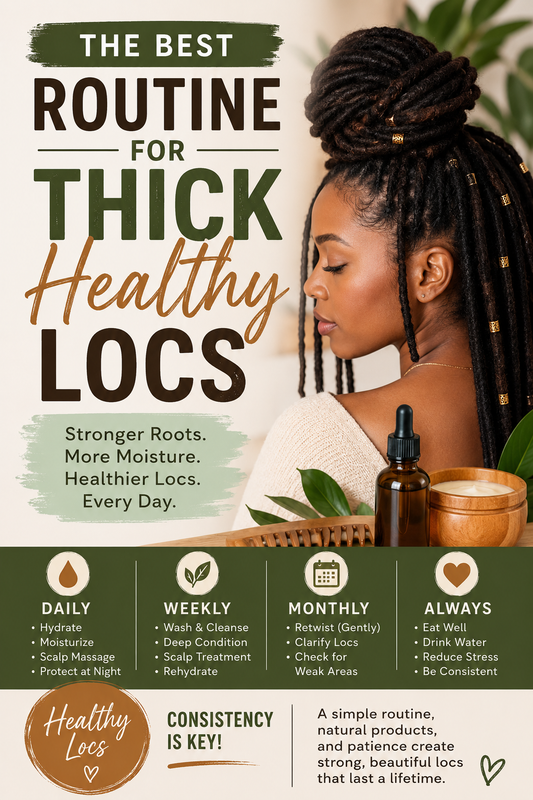
Locs are one of the most beautiful and versatile hairstyles, but growing thick, healthy locs requires more than simply allowing your hair to lock. Many people struggle with thinning locs, dryness, breakage, itchy scalp, and slow growth because they do not follow a proper loc care routine.
The truth is that healthy locs start with a healthy scalp. When your scalp is nourished and your locs receive the right balance of moisture, cleansing, protection, and maintenance, your hair can thrive.
In this complete guide, you'll learn the best routine for thick healthy locs, including daily, weekly, and monthly practices that promote stronger, fuller locs and long-term growth.
Why Loc Health Matters
Many people focus only on length, but thickness is equally important. Thick locs are generally stronger, more resilient, and less likely to break.
Healthy locs should be:
- Strong from root to tip
- Moisturized but not greasy
- Free of excessive buildup
- Flexible rather than brittle
- Attached to a healthy scalp
- Consistent in thickness
When locs become dry, weak, or neglected, they can begin thinning and eventually break.
The Foundation of Thick Healthy Locs
Before creating a routine, it's important to understand what actually affects loc thickness.
Major factors include:
Genetics
Genetics determine your natural hair density and strand thickness.
Scalp Health
An unhealthy scalp can restrict growth and contribute to thinning.
Moisture Levels
Dry locs become brittle and prone to breakage.
Nutrition
Hair needs vitamins, minerals, protein, and hydration to grow properly.
Hair Practices
Tight styles, over-retwisting, and excessive manipulation can weaken locs.
Daily Routine for Thick Healthy Locs
The best loc routines focus on consistency rather than complexity.
Morning Routine
1. Inspect Your Scalp
Take a moment to check for:
- Dryness
- Flaking
- Irritation
- Tender spots
Catching problems early prevents bigger issues later.
2. Hydrate Your Locs
Water is the most important moisturizer for locs.
Lightly mist your hair with:
- Distilled water
- Rose water
- Aloe vera water
Avoid soaking your locs daily.
The goal is hydration, not saturation.
3. Apply a Light Moisturizer
After hydrating, seal moisture into your locs.
Look for products containing:
- Aloe vera
- Jojoba oil
- Castor oil
- Coconut oil
- Grapeseed oil
A quality moisturizer helps maintain softness and flexibility.
4. Massage Your Scalp
Spend 3–5 minutes gently massaging your scalp.
Benefits include:
- Improved circulation
- Reduced tension
- Better nutrient delivery
- Healthier follicles
Regular scalp massages may support stronger growth over time.
Night Routine for Thick Healthy Locs
Your nighttime routine can make a huge difference in loc health.
Wear a Satin Bonnet
Cotton pillowcases absorb moisture from hair.
Instead use:
- Satin bonnet
- Silk bonnet
- Satin scarf
This reduces friction and moisture loss.
Use a Satin Pillowcase
Extra protection helps preserve moisture throughout the night.
Avoid Sleeping on Wet Locs
Wet locs can:
- Develop odor
- Encourage mildew
- Cause scalp issues
Always allow locs to dry completely before bed.
Weekly Routine for Thick Healthy Locs
Wash Your Scalp
A clean scalp is essential for healthy growth.
Depending on your lifestyle:
- Active individuals: every 1–2 weeks
- Less active individuals: every 2–4 weeks
Use a gentle shampoo designed to remove buildup without stripping moisture.
Benefits include:
- Cleaner follicles
- Less itching
- Reduced inflammation
- Better growth environment
Deep Moisturize
After washing, replenish lost moisture.
Focus on:
- Hair shaft
- Roots
- Ends
Hydrated locs are stronger and less likely to snap.
Scalp Treatment
Apply nourishing oils to the scalp.
Popular choices include:
- Jamaican Black Castor Oil
- Peppermint oil blends
- Rosemary oil blends
- Jojoba oil
A healthy scalp supports stronger loc development.
Monthly Routine for Thick Healthy Locs
Retwist Carefully
Retwisting helps maintain a neat appearance.
However, over-retwisting can cause:
- Traction alopecia
- Root thinning
- Weak locs
Most people should retwist every 4–8 weeks.
Less manipulation generally promotes healthier locs.
Clarify Locs
Buildup can weigh down locs and block moisture.
Monthly clarifying helps remove:
- Product residue
- Dirt
- Excess oil
This restores freshness and allows moisture to penetrate better.
Inspect for Weak Areas
Look for:
- Thin spots
- Weak roots
- Breakage
- Frayed ends
Addressing problems early can save a loc before significant damage occurs.
The Best Moisture Routine for Locs
Moisture is one of the most misunderstood aspects of loc care.
Many people apply oil daily but rarely add water.
Remember:
Water hydrates.
Oil seals.
A simple moisture routine:
Step 1
Mist with water.
Step 2
Apply moisturizer.
Step 3
Seal with a small amount of oil.
This method keeps locs soft without causing buildup.
Foods That Support Thick Healthy Locs
Healthy hair begins inside the body.
Focus on nutrient-rich foods.
Protein
Hair is primarily made of protein.
Sources include:
- Chicken
- Fish
- Eggs
- Beans
- Lentils
Iron
Low iron levels may contribute to shedding.
Sources include:
- Spinach
- Beef
- Liver
- Legumes
Omega-3 Fatty Acids
Support scalp health.
Sources include:
- Salmon
- Walnuts
- Chia seeds
Vitamin C
Supports collagen production.
Sources include:
- Oranges
- Strawberries
- Bell peppers
Water
Hydration is essential for healthy loc growth.
Aim to drink plenty of water daily.
Common Mistakes That Make Locs Thin
Over-Retwisting
Frequent retwisting places stress on roots.
Over time this can lead to permanent thinning.
Tight Hairstyles
Avoid styles that pull excessively on the scalp.
Examples:
- Tight ponytails
- Tight barrels
- Tight updos
Excessive Product Use
Heavy products create buildup.
Too much buildup prevents moisture from penetrating the loc.
Skipping Wash Days
Dirty follicles may become inflamed.
Healthy growth requires a clean scalp.
Sleeping Without Protection
Nighttime friction contributes to breakage.
Always protect your locs while sleeping.
How to Make Thin Locs Appear Fuller
If your locs seem thin, try:
Reduce Manipulation
Less twisting and styling often allows locs to strengthen naturally.
Focus on Moisture
Dry locs often appear thinner than hydrated locs.
Improve Nutrition
Hair health frequently improves when nutritional deficiencies are corrected.
Address Scalp Issues
Treat:
- Dandruff
- Irritation
- Chronic itching
These conditions may contribute to thinning.
Signs Your Loc Routine Is Working
Positive signs include:
- Reduced shedding
- Less breakage
- Softer locs
- Better moisture retention
- Fuller roots
- Increased growth
- Healthier scalp
Remember that noticeable improvements often take several months.
Consistency matters more than perfection.
Best Oils for Thick Healthy Locs
Jamaican Black Castor Oil
Popular for supporting thicker-looking hair and helping seal moisture.
Jojoba Oil
Lightweight and similar to natural scalp oils.
Grapeseed Oil
Excellent for those who prefer lighter products.
Coconut Oil
Helps reduce protein loss in hair.
Peppermint Oil Blend
Provides a refreshing sensation and supports scalp health when properly diluted.
How Stress Affects Loc Thickness
Stress can disrupt the hair growth cycle.
High stress levels may contribute to:
- Increased shedding
- Slower growth
- Scalp inflammation
Ways to reduce stress include:
- Exercise
- Meditation
- Quality sleep
- Healthy eating
- Scalp massages
Managing stress supports overall hair health.
How Long Does It Take to See Thicker Locs?
Results vary by person.
Most people notice improvements within:
30 Days
- Better moisture retention
- Less itching
60–90 Days
- Reduced breakage
- Healthier roots
3–6 Months
- Fuller appearance
- Stronger locs
6–12 Months
- Significant improvements in thickness and length retention
Consistency is the key to long-term success.
Sample Weekly Loc Care Schedule
Monday
- Hydrate locs
- Light scalp massage
Tuesday
- Moisturize locs
- Protect at night
Wednesday
- Hydrate locs
- Check scalp condition
Thursday
- Moisturize lightly
- Satin protection
Friday
- Hydrate and massage scalp
Saturday
- Wash day (if needed)
- Moisturize afterward
Sunday
- Rest and protect locs
Simple routines often outperform complicated routines because they're easier to maintain.
Frequently Asked Questions
Should I oil my locs every day?
Not usually. Too much oil can cause buildup. Focus on hydration first.
How often should I wash locs?
Most people benefit from washing every 1–4 weeks depending on lifestyle and scalp condition.
Why do my locs feel hard?
Hard locs are often caused by product buildup, dryness, or excessive residue.
Can thin locs become thicker?
In many cases, yes. Improving moisture, scalp health, nutrition, and reducing manipulation can help locs appear fuller and stronger.
What's the biggest mistake people make with locs?
Over-retwisting and neglecting moisture are two of the most common causes of thinning and breakage.
Final Thoughts
The best routine for thick healthy locs is not about using dozens of products. It's about consistently following the fundamentals: keeping your scalp clean, maintaining proper moisture levels, protecting your locs at night, eating a nutrient-rich diet, and avoiding damaging practices like over-retwisting and excessive tension.
Healthy locs thrive when given the right environment. By following a daily, weekly, and monthly routine focused on scalp health and moisture retention, you can build stronger, fuller locs that continue to grow and flourish for years to come.
For even better results, pair a healthy loc routine with high-quality natural hair care products that nourish the scalp, support moisture retention, and help maintain strong, beautiful locs.