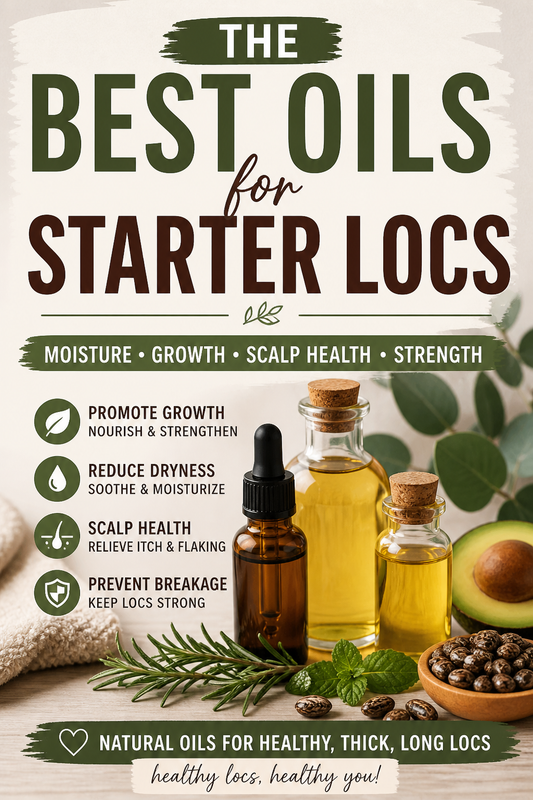
Starter locs are one of the most exciting parts of any loc journey. They represent a fresh beginning, a commitment to natural hair health, and the start of long-term hair growth. But one of the biggest mistakes people make during the starter loc phase is using the wrong oils—or using too much oil.
The right oils can help:
- Moisturize the scalp
- Reduce itching and flaking
- Strengthen roots
- Prevent breakage
- Encourage healthy hair growth
- Keep starter locs soft without causing buildup
The wrong oils can leave starter locs greasy, heavy, clogged, and difficult to lock properly.
In this complete guide, you'll learn:
- The best oils for starter locs
- Which oils help growth the most
- Which oils prevent dryness and itching
- Oils to avoid during the locking phase
- How often to oil starter locs
- The best oil combinations for healthy loc growth
- A weekly oil routine for starter locs
If you want healthy, thick, long locs, choosing the right oils early in your journey matters more than most people realize.
Why Oils Matter for Starter Locs
Starter locs behave differently from mature locs.
At this stage, your hair is:
- More delicate
- More prone to unraveling
- Adjusting to lower manipulation
- Beginning the matting and locking process
Because of this, your scalp and hair need moisture and nourishment without excessive buildup.
Good oils help create the perfect environment for:
- Healthy scalp circulation
- Strong follicles
- Moisture retention
- Reduced breakage
- Faster locking
But balance is important.
Too much oil can:
- Attract lint
- Cause buildup
- Slow locking
- Make locs feel sticky
- Trigger scalp irritation
The goal is lightweight nourishment—not soaking your locs.
What Makes an Oil Good for Starter Locs?
The best oils for starter locs usually have these qualities:
1. Lightweight Texture
Heavy oils can sit on the hair and create buildup.
Starter locs generally respond best to:
- Lightweight carrier oils
- Fast-absorbing oils
- Non-greasy formulas
2. Scalp-Friendly Ingredients
Your scalp health determines how healthy your locs become.
Look for oils that:
- Calm irritation
- Reduce inflammation
- Support circulation
- Fight dryness
3. Low Buildup Potential
Thick greasy oils can trap dirt and lint inside locs.
Good starter loc oils should absorb well and rinse relatively easily.
4. Strengthening Properties
Starter locs need support during the fragile locking phase.
The best oils help:
- Reduce shedding
- Prevent breakage
- Improve elasticity
The Best Oils for Starter Locs
1. Jojoba Oil
Jojoba oil is one of the BEST oils for starter locs.
Why?
Because it closely mimics your scalp's natural sebum.
Benefits:
- Lightweight
- Non-greasy
- Reduces dryness
- Helps control itchiness
- Absorbs quickly
- Excellent for sensitive scalps
Jojoba oil is perfect for people whose starter locs feel dry but get buildup easily.
Best For:
- Dry scalp
- Fine locs
- Low porosity hair
- Sensitive scalp
2. Jamaican Black Castor Oil
Jamaican Black Castor Oil is famous in the natural hair world for promoting thicker hair growth.
Benefits:
- Strengthens roots
- Helps thinning areas
- Encourages thicker locs
- Moisturizes scalp
- Reduces breakage
However, it is heavier than many oils.
For starter locs, it's best to:
- Use small amounts
- Focus mainly on the scalp
- Mix with lighter oils
Best For:
- Thin edges
- Slow hair growth
- Weak roots
- Dry scalp
3. Grapeseed Oil
Grapeseed oil is highly underrated for locs.
Benefits:
- Extremely lightweight
- Doesn't clog scalp
- Adds softness
- Helps seal moisture
- Contains antioxidants
It works especially well for people who dislike greasy hair products.
Best For:
- Oily scalp
- Fine hair
- Hot climates
- Starter locs prone to buildup
4. Rosemary Oil
Rosemary oil has become one of the most popular oils for hair growth.
Research suggests it may help stimulate circulation similarly to some hair growth treatments.
Benefits:
- Supports scalp circulation
- Encourages healthy growth
- Helps thinning areas
- Reduces scalp inflammation
- Helps itchy scalp
IMPORTANT:
Rosemary oil should always be diluted with a carrier oil before applying directly to the scalp.
Best Carrier Oils to Mix With:
- Jojoba oil
- Grapeseed oil
- Avocado oil
Best For:
- Hair growth
- Thin locs
- Slow-growing hair
- Scalp stimulation
Essential Oils That Help Starter Locs
Essential oils are powerful and concentrated. They should always be diluted before use.
Here are the best essential oils for starter loc care.
Peppermint Oil
Peppermint oil creates a cooling sensation that many people love.
Benefits:
- Refreshes scalp
- Helps itching
- Stimulates circulation
- Makes scalp feel cleaner
Use sparingly because too much can irritate sensitive scalps.
Tea Tree Oil
Tea tree oil is excellent for scalp health.
Benefits:
- Helps reduce flakes
- Supports scalp cleanliness
- Helps with itchy scalp
- Reduces buildup-causing bacteria
Perfect for people struggling with dandruff during the starter loc stage.
Lavender Oil
Lavender oil is calming and soothing.
Benefits:
- Helps dry scalp
- Reduces irritation
- Smells amazing
- Helps scalp balance
Great for sensitive scalps and nighttime scalp massages.
Cedarwood Oil
Cedarwood oil is commonly used in growth blends.
Benefits:
- Supports healthy follicles
- May reduce shedding
- Helps scalp balance
Works well combined with rosemary oil.
Best Carrier Oils for Starter Locs
Carrier oils dilute essential oils and provide moisture.
Here are the best carrier oils overall.
Avocado Oil
Rich in nutrients and penetrates hair well.
Benefits:
- Softens dry locs
- Helps brittle hair
- Adds shine
- Rich in vitamins
Sweet Almond Oil
A lightweight moisturizing oil.
Benefits:
- Smooths hair
- Reduces dryness
- Lightweight feel
- Good scalp oil
Argan Oil
Known as "liquid gold."
Benefits:
- Adds softness
- Lightweight shine
- Rich in antioxidants
- Helps frizz
Excellent for starter locs that look dull or rough.
Olive Oil
Olive oil can work for starter locs—but use lightly.
Benefits:
- Deep moisture
- Helps dry scalp
- Adds softness
Downside:
Too much can create buildup quickly.
Oils to Avoid for Starter Locs
Not every oil works well during the starter loc phase.
Heavy Grease Products
Avoid:
- Petroleum grease
- Mineral oil
- Thick pomades
These products:
- Cause buildup
- Trap lint
- Slow locking
- Feel sticky
Excessively Thick Oils
Some oils may be too heavy for daily use.
Examples:
- Pure castor oil in large amounts
- Thick butters
- Heavy oil blends
Use these sparingly.
How Often Should You Oil Starter Locs?
This depends on:
- Hair type
- Climate
- Scalp condition
- Porosity
But generally:
Dry Scalp
Oil 2–3 times weekly.
Normal Scalp
Oil 1–2 times weekly.
Oily Scalp
Oil once weekly or less.
Remember:
Over-oiling is one of the biggest mistakes in starter loc care.
How to Oil Starter Locs Properly
Step 1: Start With a Clean Scalp
Applying oil to dirty buildup makes problems worse.
Step 2: Use Small Amounts
A little goes a long way.
You do NOT want dripping oily locs.
Step 3: Focus on the Scalp
The scalp needs most of the nourishment.
Step 4: Massage Gently
Scalp massage helps:
- Circulation
- Relaxation
- Product distribution
Step 5: Avoid Constant Touching
Too much manipulation can unravel starter locs.
Best Oil Routine for Starter Locs
Daily
- Light water-based moisture spray
- Avoid heavy oils daily
2–3 Times Weekly
Apply lightweight oil blend:
- Jojoba oil
- Grapeseed oil
- Few drops rosemary oil
Massage scalp gently.
Weekly
Scalp cleanse if needed.
Avoid letting oils pile up week after week.
Best Oil Blends for Starter Locs
Growth Blend
Mix:
- 2 tbsp jojoba oil
- 1 tbsp Jamaican black castor oil
- 5 drops rosemary oil
- 3 drops peppermint oil
Benefits:
- Stimulates scalp
- Encourages growth
- Strengthens roots
Dry Scalp Blend
Mix:
- 2 tbsp avocado oil
- 2 tbsp sweet almond oil
- 4 drops lavender oil
- 3 drops tea tree oil
Benefits:
- Reduces flakes
- Soothes irritation
- Moisturizes scalp
Lightweight Everyday Blend
Mix:
- 3 tbsp grapeseed oil
- 1 tbsp argan oil
- 3 drops rosemary oil
Benefits:
- Lightweight moisture
- Less buildup
- Smooth shine
How Oils Affect the Locking Process
Many people worry oils will stop hair from locking.
The truth:
Too MUCH oil can slow the process.
But healthy moisturizing oils used correctly help maintain scalp and hair health while locs mature.
The key is moderation.
Starter locs need:
- Clean scalp
- Moisture balance
- Minimal buildup
Not drowning in grease.
Signs You're Using Too Much Oil
Watch for:
- Sticky locs
- Excess lint
- White buildup
- Heavy greasy feeling
- Frequent itching
- Slow drying after washing
If this happens:
- Reduce oil usage
- Clarify scalp
- Switch to lighter oils
Signs Your Starter Locs Need More Moisture
Watch for:
- Flaking
- Tight scalp
- Brittle locs
- Dull appearance
- Excess breakage
You may need:
- More hydration
- Better oil balance
- Water-based moisture before oils
Water vs Oil for Starter Locs
Many people think oil moisturizes hair.
Technically:
Water provides moisture.
Oil helps seal it in.
This is why healthy loc routines usually include:
- Water or water-based spray
- Light oil to seal moisture
Without water, excessive oil alone can actually make hair feel drier over time.
Best Oils for Different Hair Types
Low Porosity Hair
Best Oils:
- Jojoba oil
- Grapeseed oil
- Argan oil
Avoid overly heavy oils.
High Porosity Hair
Best Oils:
- Avocado oil
- Jamaican black castor oil
- Olive oil (light use)
These help retain moisture longer.
Fine Hair
Best Oils:
- Grapeseed oil
- Jojoba oil
- Sweet almond oil
Heavy oils may flatten or overload fine locs.
Thick Coarse Hair
Best Oils:
- Avocado oil
- Castor oil blends
- Olive oil blends
Thicker hair often tolerates richer oils better.
Seasonal Oil Tips for Starter Locs
Winter
Hair often becomes drier.
Use:
- Slightly richer oils
- More scalp protection
- Weekly deep moisture routines
Summer
Sweat and humidity increase buildup risk.
Use:
- Lightweight oils
- Smaller amounts
- More cleansing
Common Starter Loc Oil Mistakes
1. Using Too Many Products
Simple routines usually work best.
2. Applying Oil Every Day
This often causes buildup.
3. Ignoring Water-Based Moisture
Oil alone is not enough.
4. Using Thick Grease
Heavy grease can damage scalp health over time.
5. Constant Retwisting
Too much retwisting combined with heavy oils can thin roots.
Can Oils Help Starter Locs Grow Faster?
Healthy oils support the environment for growth.
But remember:
No oil can magically force instant hair growth.
What oils CAN do:
- Reduce breakage
- Improve scalp health
- Support follicle function
- Protect hair length retention
Healthy retention is what creates longer locs over time.
Best Hairobics Oils for Starter Locs
If you're looking for natural oil support for healthy starter locs, products from Hairobics All Natural can fit well into a loc care routine.
Popular options include:
- Hair & Scalp Booster
- Scalp Rejuvenator Oil
- Jamaican Black Castor Oil formulas
These types of blends help:
- Nourish the scalp
- Reduce dryness
- Support stronger hair
- Encourage healthy growth routines
Many people starting loc journeys prefer lightweight natural oil blends that avoid heavy greasy buildup.
Sample Weekly Starter Loc Routine
Monday
Light mist + jojoba oil scalp massage
Wednesday
Rosemary growth oil blend
Friday
Light moisture spray only
Sunday
Cleanse scalp + apply lightweight oil blend
Consistency matters more than overloading products.
How Long Do Starter Locs Take to Mature?
Loc maturation varies.
Average timeline:
- Starter stage: 3–6 months
- Budding stage: 6–12 months
- Mature locs: 12–24+ months
Healthy oil routines help support the process by reducing breakage and scalp problems during the transition.
Final Thoughts: The Best Oils for Starter Locs
The best oils for starter locs are lightweight, nourishing, and scalp-friendly.
Top choices include:
- Jojoba oil
- Rosemary oil
- Grapeseed oil
- Jamaican black castor oil
- Avocado oil
- Tea tree oil blends
The biggest key is balance.
Too little moisture can cause dryness and breakage.
Too much oil can create buildup and slow locking.
Healthy starter locs thrive with:
- Clean scalp care
- Light moisture
- Consistent routines
- Minimal buildup
- Patience
When treated properly from the beginning, starter locs can grow into strong, thick, healthy mature locs that last for years.