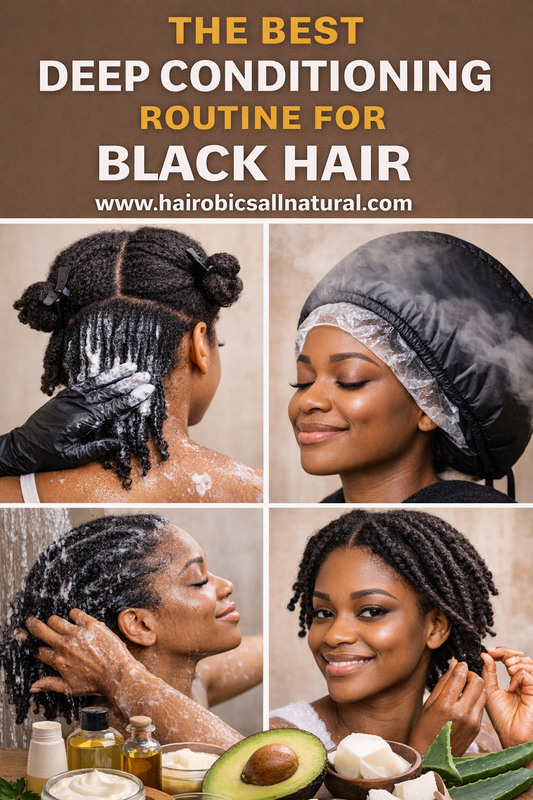
Deep conditioning is one of the most powerful, transformative steps in any natural hair care routine—especially for Black hair. Whether your hair is 4C, loc’d, relaxed, transitioning, braided, or color-treated, deep conditioning can mean the difference between dry, brittle strands and soft, thriving, length-retaining hair.
This guide will walk you through everything you need to know about deep conditioning Black hair, from the science behind it to a step-by-step routine, product selection, frequency, mistakes to avoid, and how to maximize growth and moisture retention.
Table of Contents
-
What Is Deep Conditioning?
-
Why Deep Conditioning Is Essential for Black Hair
-
Understanding Black Hair Structure
-
Signs Your Hair Needs Deep Conditioning
-
Types of Deep Conditioners
-
The Perfect Deep Conditioning Routine (Step-by-Step)
-
Pre-Deep Conditioning Prep
-
How Long Should You Deep Condition?
-
Heat vs No Heat: What Works Best?
-
Protein vs Moisture Deep Conditioning
-
Deep Conditioning for Different Hair Types (3A–4C)
-
Deep Conditioning for Locs
-
Deep Conditioning for Braids & Protective Styles
-
Deep Conditioning for Growth & Length Retention
-
Common Deep Conditioning Mistakes
-
Weekly vs Biweekly Deep Conditioning
-
DIY Deep Conditioning Recipes
-
How to Layer Products After Deep Conditioning
-
The Best Ingredients to Look For
-
Final Routine Blueprint for Maximum Results
1. What Is Deep Conditioning?
Deep conditioning is an intensive treatment designed to:
-
Restore moisture
-
Strengthen hair strands
-
Improve elasticity
-
Reduce breakage
-
Repair damage
Unlike regular conditioners, deep conditioners penetrate deeper into the hair shaft, delivering hydration, proteins, and nutrients that your hair needs to stay healthy.
2. Why Deep Conditioning Is Essential for Black Hair
Black hair—especially type 4 textures—is naturally:
-
More prone to dryness
-
More fragile
-
More prone to breakage
-
Less able to retain moisture
This is because natural oils from the scalp struggle to travel down the coils and bends of textured hair.
Deep conditioning replaces what your hair doesn’t naturally get enough of: moisture and strength.
Without it, you may experience:
-
Dryness
-
Split ends
-
Breakage
-
Stunted growth
-
Tangling
3. Understanding Black Hair Structure
To understand deep conditioning, you must understand how Black hair works.
Key characteristics:
-
Coiled structure → reduces oil distribution
-
Raised cuticles (often) → moisture escapes easily
-
High porosity (sometimes) → absorbs moisture quickly but loses it just as fast
Deep conditioning helps:
-
Seal moisture into the cuticle
-
Strengthen weak points along the strand
-
Improve elasticity
4. Signs Your Hair Needs Deep Conditioning
If your hair shows any of these signs, it’s time:
-
Feels dry even after moisturizing
-
Breaks easily when combing
-
Lacks shine
-
Feels rough or brittle
-
Tangles excessively
-
Doesn’t hold styles well
5. Types of Deep Conditioners
1. Moisturizing Deep Conditioners
-
Focus: hydration
-
Best for: dry, brittle hair
2. Protein Deep Conditioners
-
Focus: strengthening hair structure
-
Best for: damaged or chemically treated hair
3. Balanced Conditioners
-
Combine moisture + protein
6. The Perfect Deep Conditioning Routine (Step-by-Step)
Step 1: Start With Clean Hair
-
Use a sulfate-free shampoo
-
Remove buildup so the conditioner can penetrate
Step 2: Section Your Hair
Divide into 4–6 sections for even coverage.
Step 3: Apply Deep Conditioner Generously
-
Focus on ends (oldest part of hair)
-
Use a wide-tooth comb to distribute
Step 4: Cover Hair
Use:
-
Plastic cap
-
Shower cap
Step 5: Apply Heat (Optional but recommended)
-
Hooded dryer (best)
-
Heat cap
-
Warm towel
Step 6: Wait
-
20–45 minutes (depending on product)
Step 7: Rinse With Cool Water
-
Helps seal cuticle
Step 8: Follow With Leave-In Conditioner
Lock in moisture immediately.
7. Pre-Deep Conditioning Prep
Before you deep condition:
-
Detangle lightly
-
Remove shed hair
-
Pre-poo (optional with oils)
This prevents tangling during the process.
8. How Long Should You Deep Condition?
-
Minimum: 20 minutes
-
Ideal: 30–45 minutes
-
Overnight: Not recommended (can over-soften hair)
9. Heat vs No Heat
With Heat:
-
Opens cuticle
-
Better absorption
-
Faster results
Without Heat:
-
Still effective
-
Slower penetration
Best option: Use gentle heat for maximum results.
10. Protein vs Moisture Deep Conditioning
Use Protein If:
-
Hair is weak
-
Breaks easily
-
Feels mushy when wet
Use Moisture If:
-
Hair is dry
-
Feels stiff
-
Lacks shine
Balance is key.
11. Deep Conditioning for Different Hair Types
3A–3C Hair
-
Focus on hydration
-
Avoid heavy buildup
4A Hair
-
Balanced moisture + protein
4B Hair
-
Needs frequent moisture treatments
4C Hair
-
Requires heavy hydration
-
Deep condition weekly
12. Deep Conditioning for Locs
-
Use lightweight conditioners
-
Avoid buildup-heavy products
-
Rinse thoroughly
13. Deep Conditioning With Braids
-
Use diluted conditioner in applicator bottle
-
Focus on scalp and new growth
-
Rinse carefully
14. Deep Conditioning for Growth
Deep conditioning helps growth by:
-
Preventing breakage
-
Improving elasticity
-
Maintaining scalp health
Growth = retention, not just growth rate.
15. Common Deep Conditioning Mistakes
-
Skipping it
-
Not using enough product
-
Not using heat
-
Leaving it on too long
-
Using wrong type (protein vs moisture)
-
Not rinsing properly
16. Weekly vs Biweekly Deep Conditioning
Weekly (Best for):
-
4C hair
-
Dry hair
-
Damaged hair
Biweekly:
-
Healthier hair
-
Lower porosity hair
17. DIY Deep Conditioning Recipes
Avocado + Honey Mask
-
Moisture boost
Egg + Yogurt Mask
-
Protein treatment
Banana + Olive Oil
-
Softness and shine
18. What to Do After Deep Conditioning
Immediately:
-
Apply leave-in conditioner
-
Seal with oil
-
Style (twists, braids, etc.)
19. Best Ingredients to Look For
-
Shea butter
-
Aloe vera
-
Honey
-
Coconut oil
-
Castor oil
-
Keratin (for protein)
-
Silk amino acids
20. The Ultimate Deep Conditioning Routine Blueprint
Weekly Routine:
Day 1: Wash Day
-
Shampoo
-
Deep condition (with heat)
-
Leave-in
-
Seal
Midweek
-
Moisturize lightly
End of Week
-
Protective style maintenance
Final Thoughts
Deep conditioning isn’t optional—it’s foundational.
If you want:
-
Longer hair
-
Healthier strands
-
Less breakage
-
More moisture
You must commit to a consistent deep conditioning routine.
When done correctly, deep conditioning will:
-
Transform your hair texture
-
Improve manageability
-
Boost shine and softness
-
Help you retain every inch you grow
Want to Take Your Hair to the Next Level?
Pair your deep conditioning routine with:
-
Consistent moisture routines
-
Protective styling
-
Scalp care
That’s how you unlock real, visible growth.