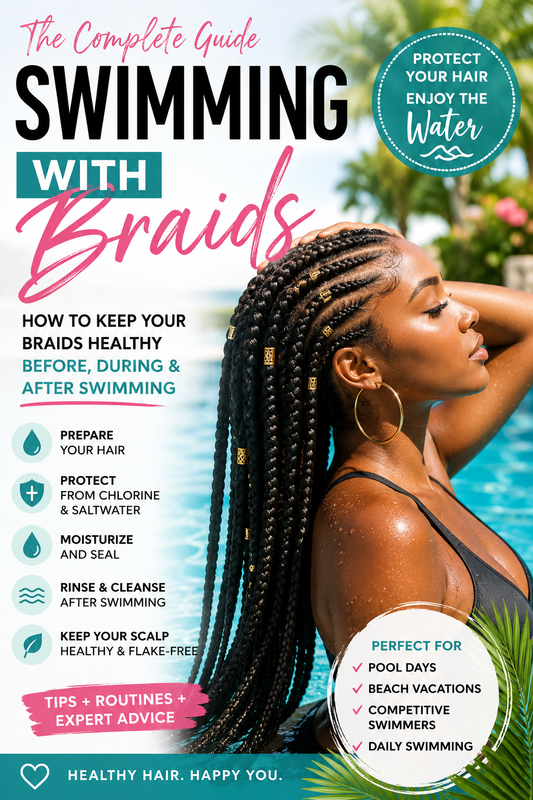
Can You Swim With Braids?
Absolutely! Swimming with braids is completely safe—as long as you properly protect and care for your hair before and after getting into the water.
Whether you're wearing:
- Box braids
- Knotless braids
- Cornrows
- Fulani braids
- Goddess braids
- Tribal braids
- Stitch braids
- Lemonade braids
- Crochet braids
...you can enjoy swimming without sacrificing healthy hair.
The biggest concern isn't swimming itself—it's what pool chemicals and saltwater can do to your natural hair hiding underneath your protective style.
This guide explains everything you need to know about swimming with braids while keeping your scalp healthy, your hair moisturized, and your style looking fresh.
Why Swimming Can Be Tough on Braided Hair
Braids protect your strands from daily manipulation, but they still absorb water.
When braids become saturated, several things happen:
- Hair swells
- Braids become heavier
- Moisture escapes during drying
- Hair cuticles lift
- Frizz increases
- Scalp may become dry
Pool chemicals and ocean water make these problems even worse.
What Chlorine Does to Braids
Swimming pools use chlorine to kill bacteria.
Unfortunately, chlorine doesn't know the difference between bacteria and your hair's natural protective oils.
Chlorine can:
- Strip moisture
- Dry out natural hair
- Cause brittleness
- Make braids stiff
- Increase scalp irritation
- Leave hair rough
Repeated exposure without proper care often leads to breakage after removing braids.
Is Saltwater Better?
Many people believe ocean water is healthier than pool water.
While it doesn't contain chlorine, saltwater has its own drawbacks.
Saltwater can:
- Pull moisture from hair
- Cause stiffness
- Leave salt crystals behind
- Increase tangles underneath braids
- Dry the scalp
However, many people find ocean water less damaging than frequent chlorinated pool swimming.
Should You Wet Your Hair Before Swimming?
Yes.
One of the best tricks professional swimmers use is soaking hair with clean water before entering the pool.
Hair acts like a sponge.
If your braids already contain clean water, they'll absorb less chlorinated or salty water.
This simple habit can dramatically reduce damage.
Apply a Leave-In Conditioner Before Swimming
A lightweight leave-in conditioner creates a protective layer around the hair.
Benefits include:
- Added moisture
- Less chlorine absorption
- Reduced dryness
- Softer braids afterward
- Easier detangling after removal
Avoid using extremely heavy creams that attract dirt.
Use Natural Oils for Extra Protection
Natural oils help lock moisture inside the hair.
Good options include:
- Coconut oil
- Jojoba oil
- Olive oil
- Avocado oil
- Jamaican black castor oil
Apply a small amount to:
- Hairline
- Ends
- Exposed braid sections
Don't saturate the braids.
Too much oil attracts dirt and sunscreen.
Wear a Swim Cap If Possible
Although many braided styles don't fit perfectly inside traditional swim caps, extra-large swim caps designed for braids and locs offer excellent protection.
Benefits include:
- Less chlorine exposure
- Less saltwater exposure
- Reduced frizz
- Cleaner scalp
- Longer-lasting style
Silicone swim caps generally work better than latex.
Tie Long Braids Up
Long braids become heavy underwater.
Instead of leaving them loose:
- Put braids into a bun.
- Create one large braid.
- Make two low braids.
- Use a loose ponytail.
This reduces pulling on your roots.
Can Braids Become Too Heavy?
Yes.
Water significantly increases braid weight.
Very long braids may:
- Pull edges
- Cause tension headaches
- Stress follicles
- Increase scalp soreness
If you're swimming often, consider medium-length braids.
How Long Should You Stay in the Water?
Occasional swimming is perfectly fine.
Problems usually happen when hair stays submerged for hours.
If spending the day swimming:
Take breaks.
Allow braids to dry partially before getting back into the water.
Rinse Immediately After Swimming
Never leave chlorine sitting on your braids.
Immediately rinse with clean water.
This simple habit removes:
- Chlorine
- Salt
- Sand
- Minerals
- Pool chemicals
The faster you rinse, the less damage occurs.
Wash Your Braids After Heavy Swimming
If you've spent hours swimming, wash your scalp.
Focus on:
- Scalp
- Hairline
- Braid roots
Use a diluted shampoo.
Avoid rough scrubbing.
Massage gently with fingertips.
Deep Moisturize After Swimming
Swimming removes moisture.
Replace it immediately.
After rinsing:
- Apply leave-in conditioner
- Spray moisturizing mist
- Seal with light oil
Your hair underneath your braids still needs hydration.
Dry Braids Completely
Never leave soaked braids overnight.
Wet braids create the perfect environment for:
- Mildew
- Odor
- Scalp irritation
- Itching
- Fungal growth
Dry thoroughly using:
- Microfiber towel
- Cotton T-shirt
- Cool blow dryer
- Air drying outdoors
Can Wet Braids Mold?
Unfortunately, yes.
Very thick braids that stay wet for long periods may develop mildew.
Signs include:
- Musty smell
- Persistent dampness
- Scalp irritation
Always allow braids to fully dry.
Swimming Every Day With Braids
Many athletes swim daily.
Daily swimmers should:
- Rinse immediately
- Moisturize daily
- Clean scalp weekly
- Dry thoroughly
- Protect edges
Consistency makes all the difference.
Protecting Your Edges
Edges experience the most friction.
Before swimming:
Apply a lightweight edge moisturizer.
Avoid tight ponytails after swimming.
Let edges rest.
How Often Should You Moisturize Braids?
If swimming regularly:
Moisturize every day.
If swimming occasionally:
Every 2–3 days is usually enough.
Your scalp will tell you when it needs hydration.
Signs include:
- Tightness
- Flaking
- Itching
- Dull braids
Swimming on Vacation
Vacations often involve:
- Pools
- Beaches
- Hot tubs
Bring:
- Satin bonnet
- Leave-in conditioner
- Moisturizing spray
- Natural oil
- Extra hair ties
- Microfiber towel
A small braid-care kit keeps your style looking fresh all week.
Braids and Sunscreen
Sunscreen protects skin but can leave buildup near your hairline.
After swimming:
Wipe excess sunscreen away from braid roots.
This reduces buildup and itching.
Should You Oil Your Scalp Before Swimming?
Yes—but lightly.
Heavy oil attracts dirt.
Use only a few drops.
Massage gently.
How Long Do Braids Last If You Swim?
Swimming may shorten braid lifespan.
Approximate lifespan:
- Rare swimming: 6–8 weeks
- Weekly swimming: 5–7 weeks
- Daily swimming: 3–5 weeks
Proper maintenance helps extend wear.
Best Hairstyles for Frequent Swimmers
Good choices include:
Knotless Braids
Lightweight and flexible.
Cornrows
Easy to dry.
Stitch Braids
Low maintenance.
Medium Box Braids
Less weight than jumbo braids.
Two Braids
Simple and quick to maintain.
Styles to Avoid
If swimming constantly, avoid:
- Extremely long braids
- Jumbo braids
- Extra-heavy extensions
- Tight hairstyles
These become extremely heavy underwater.
How to Sleep After Swimming
Always sleep with dry braids.
Wear:
- Satin bonnet
- Satin scarf
- Silk pillowcase
This reduces frizz while preserving moisture.
Can Kids Swim With Braids?
Absolutely.
Children with braids should:
- Wear swim caps if possible
- Rinse afterward
- Moisturize regularly
- Dry completely
Healthy habits start early.
Swimming Competitions
Competitive swimmers should establish a routine.
Every swim session:
- Wet hair first.
- Apply leave-in conditioner.
- Wear swim cap.
- Rinse immediately.
- Moisturize afterward.
- Dry thoroughly.
This routine dramatically reduces damage over time.
Common Mistakes
Avoid these mistakes:
- Leaving chlorine in braids
- Sleeping with wet braids
- Never moisturizing
- Tight ponytails after swimming
- Ignoring scalp itching
- Wearing heavy braids while swimming daily
- Waiting several days before rinsing
Signs Your Braids Need Moisture
Watch for:
- Frizz
- Dry appearance
- Itchy scalp
- Tight feeling
- Brittle ends
- Flaking
- Dull shine
Moisturize before damage worsens.
Ingredients That Help Hydrate Braids
Look for products containing:
- Aloe vera
- Glycerin
- Coconut oil
- Avocado oil
- Jojoba oil
- Vitamin E
- Rosemary
- Peppermint
- Tea tree oil
- Argan oil
These ingredients help replenish moisture and support a healthy scalp.
Frequently Asked Questions
Will swimming ruin my braids?
Not if you rinse, moisturize, and dry them properly after each swim.
Is chlorine worse than saltwater?
Chlorine typically causes more moisture loss, but both chlorine and saltwater can dry out your hair if left on the braids.
Can I swim every day with braids?
Yes. Daily swimmers simply need a consistent rinse, moisture, and drying routine.
Should I wash my braids after every swim?
You should rinse after every swim. Shampoo isn't necessary every time unless there is heavy chlorine buildup, sweat, sunscreen, or dirt.
Can I air dry braids?
Yes, but make sure they become completely dry before bedtime.
Why do braids smell after swimming?
Braids that stay damp for too long can develop mildew and bacteria, causing unpleasant odors. Thorough drying helps prevent this.
Should I remove braids before vacation?
Not necessarily. Well-maintained braids are one of the best protective styles for beach vacations and pool days.
Final Thoughts
Swimming and braids can go hand in hand with the right care routine. Whether you're enjoying a backyard pool, training for swim competitions, or relaxing at the beach, your braids can continue to protect your natural hair while looking beautiful.
The keys to success are simple: prepare your braids before swimming by saturating them with clean water and applying a lightweight leave-in conditioner, minimize exposure to chlorine and saltwater whenever possible, rinse immediately after every swim, replenish lost moisture, and always allow your braids to dry completely before sleeping.
By making these habits part of your routine, you'll reduce frizz, prevent dryness and breakage, protect your scalp, and extend the life of your braided style. Healthy hair doesn't have to take a vacation just because you're spending time in the water—with a little extra care, you can enjoy swimming all season long while keeping your braids fresh, comfortable, and beautiful.