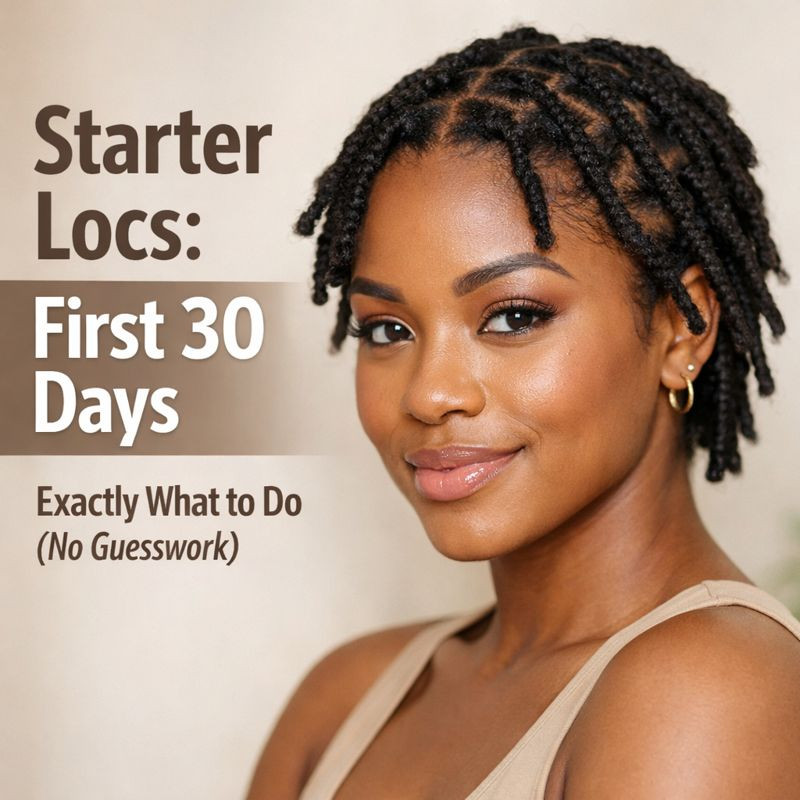
Starting locs is exciting… and stressful.
You’re officially on your loc journey, but suddenly every little thing feels risky:
-
Can I wash my hair yet?
-
Why does my scalp itch already?
-
Are my locs unraveling or is that normal?
-
Am I doing too much—or not enough?
If you’re in your first 30 days of starter locs, this guide is for you. No myths. No confusing advice. No “just trust the process” without explanation.
This is a clear, day-by-day breakdown of exactly what to do (and what NOT to do) so your locs form properly, stay healthy, and don’t thin, unravel, or dry out.
What Are Starter Locs (and Why the First 30 Days Matter So Much)
Starter locs are the foundation phase of your loc journey. This is when loose hair is first guided into sections using methods like:
-
Two-strand twists
-
Coils (comb or finger)
-
Braids
-
Interlocking
During the first 30 days, your hair is:
-
Learning its new pattern
-
Beginning the locking process
-
Extremely sensitive to manipulation, buildup, and dryness
What you do now determines:
-
How thick your locs become
-
Whether they thin at the root
-
How clean and itch-free your scalp stays
-
How fast your locs mature long-term
Mistakes in the first month don’t always show up immediately — but they will show up later.
Before Day 1: Set Your Locs Up for Success
If your starter locs are already installed, you can still adjust. But ideally, here’s what matters before day one:
1. Clean, Product-Free Hair Is Key
Starter locs should begin on clean hair, not coated hair.
Heavy creams, waxes, or butters:
-
Slow down locking
-
Cause buildup inside the loc
-
Lead to odor and flakes later
If you’re starting or restarting locs, always begin with a clean scalp and lightweight moisture only.
2. Your Starter Method Matters (But Isn’t Everything)
Each method has pros and cons:
-
Coils: Lock faster, unravel more easily
-
Two-strand twists: Fuller locs, slower locking
-
Braids: Great for soft textures, take longer to lock
-
Interlocking: Secure, less unraveling, but requires skill
No method is “better.” Consistency and care matter more than the method itself.
Days 1–7: The Adjustment Phase
This is when your scalp and hair are getting used to their new reality.
What’s Normal in Week 1
-
Tightness or mild tenderness
-
Slight unraveling at the ends
-
Scalp itching (yes, even on clean hair)
-
Frizz around the roots
None of this means something is wrong.
What to Do in Week 1
✔️ Keep Your Hands Out of Your Hair
Constant twisting, spinning, or retightening:
-
Weakens the root
-
Causes thinning over time
-
Delays locking
Rule: If it’s not scheduled maintenance, don’t touch it.
✔️ Moisturize Lightly (Not Daily Drenching)
Dry hair does not lock well — but over-moisturizing causes unraveling.
Use a lightweight, water-based spray like Hairobics Raaw Roots Moisturizing Spray to:
-
Hydrate the scalp
-
Prevent itch
-
Keep hair flexible without buildup
Mist 2–3 times per week max.
❌ What NOT to Do in Week 1
-
No washing (unless directed by a loctician)
-
No heavy oils or butters
-
No re-twisting yourself
-
No tight styles or ponytails
Days 8–14: The Itchy & Frizzy Phase
This is when most people panic.
Why Your Scalp Itches
Itching doesn’t always mean dryness. It can be:
-
Product residue surfacing
-
New airflow exposure
-
Sebum adjusting
-
Mild inflammation from tension
Scratching aggressively will damage your roots.
How to Relieve Itch the Right Way
Use a light, penetrating scalp oil like Hairobics Hair & Scalp Booster:
-
Apply sparingly to the scalp
-
Focus on itchy areas only
-
Massage gently with fingertips (not nails)
This supports circulation without clogging follicles or slowing the locking process.
What About Frizz?
Frizz means your hair is alive and moving.
Frizz ≠ failure.
Frizz ≠ unraveling.
Over-smoothing now leads to:
-
Flat locs
-
Weak roots
-
Buildup later
Let it be.
Days 15–21: Should You Wash Starter Locs?
This is one of the biggest debates — so here’s the truth.
Can You Wash Starter Locs in the First 30 Days?
Yes… if done correctly and if your scalp needs it.
You should consider washing if:
-
Your scalp itches excessively
-
You sweat heavily
-
You have dandruff or buildup
-
You work out often
How to Wash Starter Locs Safely
-
Dilute your shampoo (especially if clarifying)
-
Focus on the scalp only
-
Gently squeeze suds through locs
-
Rinse thoroughly
-
Do NOT twist, rub, or retwist afterward
Use a residue-free shampoo and avoid creamy formulas.
After Washing
-
Expect frizz (normal)
-
Expect some unraveling (normal)
-
Let hair air-dry completely
Never retwist soaking-wet starter locs.
Days 22–30: The “Trust the Process” Phase (But Smartly)
By now:
-
Your scalp should feel calmer
-
Your locs may look puffier
-
Sections may feel less defined
This is exactly where you should be.
Should You Retwist in the First 30 Days?
Usually, no more than once in the first month — and only if needed.
Over-retwisting leads to:
-
Thinning
-
Weak roots
-
Scalp stress
If you retwist:
-
Use minimal product
-
Retwist on damp (not wet) hair
-
Avoid palm-rolling aggressively
Starter Locs: Daily, Weekly & Monthly Care Checklist
Daily (or Every Other Day)
-
Sleep with a satin or silk bonnet
-
Keep hands out of your hair
-
Let locs breathe
Weekly
-
Light scalp oil if itchy
-
Moisturizing spray 2–3x max
-
Check for lint or residue
Monthly
-
Decide if you need a wash
-
Retwist only if necessary
-
Take progress photos (trust me — you’ll be glad you did)
Common Starter Locs Mistakes That Ruin Progress
1. Using Heavy Products
Waxes and thick creams:
-
Trap lint
-
Cause odor
-
Slow locking
Lightweight always wins.
2. Over-Manipulation
More touching = more problems.
3. Comparing Your Locs to Others
Everyone’s texture locks differently.
Your timeline is your own.
4. Panicking Too Early
Starter locs look messy before they look magical.
How Long Until Starter Locs Actually “Lock”?
On average:
-
Soft textures: 6–12 months
-
Coarser textures: 3–6 months
The first 30 days are about foundation, not appearance.
Final Thoughts: The First 30 Days Decide Everything
Starter locs don’t need:
-
Perfection
-
Constant fixing
-
Heavy products
They need:
-
Clean care
-
Light moisture
-
Patience
-
Consistency
If you protect your scalp, minimize buildup, and resist over-handling, your locs will mature thicker, healthier, and stronger than most.
And remember — locs reward restraint.