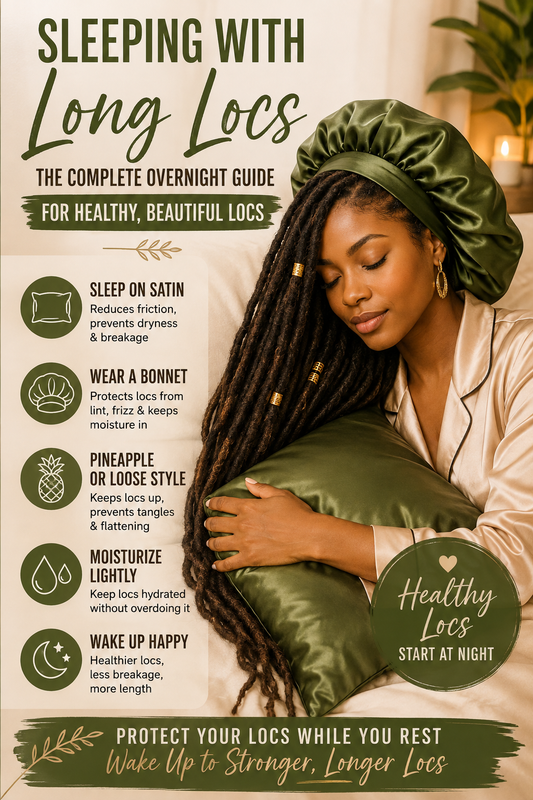
Growing long locs is an accomplishment that takes patience, consistency, and proper hair care. Whether your locs reach your shoulders, waist, hips, or even longer, nighttime care becomes one of the most important parts of maintaining healthy hair.
Many people spend hours moisturizing, retwisting, and protecting their locs during the day but unknowingly damage them every night while sleeping.
Cotton pillowcases pull moisture from your hair.
Loose locs become tangled.
Heavy locs strain your scalp.
Improper positioning causes breakage around the edges.
Fortunately, sleeping with long locs doesn't have to be difficult. With the right routine, you can wake up every morning with hydrated, smooth, comfortable locs that continue growing stronger over time.
This complete guide explains everything you need to know.
Why Sleeping Matters for Long Locs
Your body repairs itself while you sleep.
Your scalp also benefits during this recovery period.
However, your hair experiences six to eight hours of constant friction every night.
Without protection, this can lead to:
- Dry locs
- Frizz
- Lint buildup
- Weak roots
- Flattened locs
- Split ends
- Broken hairs around your hairline
- Tangling
Creating a healthy nighttime routine protects years of growth.
Challenges of Sleeping With Long Locs
As locs become longer, new challenges appear.
Increased Weight
Long locs can become surprisingly heavy.
That weight constantly pulls on the scalp while you move throughout the night.
Over time this may contribute to:
- Tender scalp
- Root stress
- Edge thinning
- Neck discomfort
Tangling
Loose waist-length locs naturally wrap around one another while sleeping.
Twisting and turning all night can create unnecessary knots.
Dryness
Cotton bedding absorbs moisture.
Instead of your oils staying inside the hair, much of that moisture transfers into your pillow.
Lint Collection
Long locs constantly rub blankets and sheets.
Fibers become trapped inside mature locs and may remain there permanently.
Flattened Locs
Sleeping directly on thick locs compresses them.
Some people wake up with flattened sections that take hours to regain shape.
The Best Fabric for Sleeping
One simple change dramatically improves overnight loc care.
Satin
Satin allows hair to glide across the fabric.
Benefits include:
- Less friction
- Reduced frizz
- Better moisture retention
- Fewer tangles
- More shine
Silk
Silk offers similar benefits while being breathable and luxurious.
Many people choose silk pillowcases if they sleep hot.
Avoid Cotton
Cotton:
- Absorbs moisture
- Creates friction
- Causes lint
- Roughens the cuticle
For long locs, cotton should never touch your hair overnight whenever possible.
Should You Wear a Bonnet?
Yes.
A satin bonnet remains one of the easiest ways to protect long locs.
Benefits include:
- Prevents lint
- Locks in moisture
- Minimizes friction
- Keeps styles neat
- Protects retwists
For extremely long locs, choose an oversized bonnet designed specifically for locs or braids.
Satin Scarves
Some people prefer scarves because they stay tighter.
Benefits include:
- Protects edges
- Reduces frizz
- Keeps roots neat
- Comfortable for shorter mature locs
Very long locs may require both a scarf around the roots and a bonnet over the length.
Extra-Large Bonnets
Long locs often outgrow standard bonnets.
Choose one designed for:
- Waist-length locs
- Hip-length locs
- Extra-thick locs
- Sisterlocks
- Traditional locs
The extra room prevents compression.
Pineapple Method for Long Locs
Gather your locs loosely at the top of your head.
Do not pull tightly.
This method:
- Protects roots
- Prevents flattening
- Keeps locs together
- Reduces tangling
Loose Low Ponytail
Some people sleep more comfortably with a low ponytail.
Use only soft satin scrunchies.
Never use rubber bands.
Loose Braids
Extremely long locs benefit from loosely braiding them before bed.
Advantages include:
- Less tangling
- Easier morning routine
- Reduced scalp pulling
- Better curl definition
Rope Twist Overnight
Two large rope twists work well for very long locs.
This minimizes movement while keeping the hair organized.
How Often Should You Moisturize Before Bed?
Not every night.
Over-moisturizing can encourage buildup.
Most people benefit from light moisturizing:
- 2–4 times weekly
- After washing
- Whenever locs feel dry
Nighttime Moisture Routine
A simple evening routine:
- Lightly mist locs.
- Massage the scalp.
- Seal moisture if needed.
- Cover with satin.
- Sleep on a satin pillowcase.
Best Sleeping Positions
Back Sleeping
Usually the best option.
Benefits include:
- Less tangles
- Reduced pressure
- Protects edges
- Even weight distribution
Side Sleeping
Still acceptable.
Simply move your locs behind your shoulder or into a bonnet before sleeping.
Stomach Sleeping
Least recommended.
This places pressure on:
- Hairline
- Neck
- Face
- Roots
What If Your Locs Reach Your Waist?
Separate them into two or three loose sections.
Avoid sleeping directly on one giant bundle.
This distributes weight evenly.
Hip-Length Locs
Very long locs often wrap around your body overnight.
Solutions include:
- Loose braid
- Jumbo bonnet
- Satin wrap
- Loose pineapple
Should You Tie Locs Up Every Night?
Generally yes.
Loose locs experience:
- More friction
- More lint
- More tangles
Keeping them contained reduces wear.
Morning Routine
When you wake:
Remove your bonnet.
Shake your locs gently.
Separate any sections.
Massage your scalp.
Apply a light mist if needed.
You're ready to go.
Preventing Neck Pain
Heavy locs sometimes create neck strain.
Helpful tips include:
- Divide locs evenly
- Sleep with supportive pillows
- Avoid sleeping directly on thick bundles
- Alternate sleeping positions
How to Prevent Lint
Lint prevention begins at night.
Always:
- Wear satin
- Wash bedding regularly
- Avoid fuzzy blankets
- Keep pets off your locs while sleeping
Can Sleeping Cause Breakage?
Yes.
Constant friction weakens the outer layer of the hair.
Years of rubbing eventually produce:
- Split ends
- Broken hairs
- Thin roots
- Frizz
Protection greatly reduces this damage.
Sleeping After a Fresh Retwist
Wait until the retwist has fully set.
Then:
- Wear a satin bonnet
- Avoid excessive movement
- Don't sleep with wet roots
Proper care helps the style last longer.
Sleeping With Wet Locs
Avoid it whenever possible.
Wet locs stay damp for many hours.
This can lead to:
- Odor
- Mildew
- Slow drying
- Scalp irritation
Always allow locs to dry completely before bedtime.
Children With Long Locs
Kids move constantly while sleeping.
Oversized satin bonnets work well.
Choose soft accessories that won't pull the scalp.
Protecting Edges Overnight
Your hairline is delicate.
Protect it by:
- Avoiding tight wraps
- Sleeping on satin
- Keeping tension low
- Moisturizing when needed
Seasonal Sleeping Tips
Summer
Use lightweight satin.
Avoid overheating.
Winter
Indoor heat causes dryness.
Increase moisture slightly while maintaining proper cleansing.
Travel Tips
Bring:
- Satin bonnet
- Satin pillowcase
- Travel spray bottle
- Soft scrunchie
Hotel cotton pillowcases can dry locs quickly.
Signs Your Night Routine Is Working
You'll notice:
- Softer locs
- Less lint
- Fewer tangles
- Better moisture
- Reduced breakage
- Longer-lasting styles
- Healthier scalp
Common Mistakes
Sleeping on Cotton
One of the biggest causes of dryness.
Tight Hairstyles
Too much tension weakens roots.
Wet Hair
Never sleep with soaking wet locs.
Skipping Protection
One unprotected night may not matter.
Months or years of friction certainly do.
Using Rubber Bands
Rubber bands create breakage.
Always use satin-covered accessories.
Frequently Asked Questions
Should long locs be tied up while sleeping?
Yes. A loose protective style combined with a satin bonnet helps reduce tangling, friction, and lint.
Can long locs break from sleeping?
Yes. Constant rubbing against cotton fabrics and excessive tension can weaken hair over time, leading to breakage.
Is a satin bonnet enough?
For most people, yes. Pairing a satin bonnet with a satin pillowcase offers even more protection in case the bonnet slips off during the night.
How do I stop my locs from flattening?
Gather them loosely on top of your head, use an oversized bonnet, and avoid sleeping directly on thick bundles of locs.
Can I braid my locs before bed?
Absolutely. Loose braids are one of the best ways to reduce tangling and keep extra-long locs organized overnight.
How often should I wash my bonnet?
Wash your satin bonnet every one to two weeks, or sooner if you use hair products frequently, to keep it clean and reduce product buildup.
Final Thoughts
Sleeping with long locs doesn't have to be uncomfortable or damaging. By making a few simple changes—such as switching to satin, wearing an oversized bonnet, loosely braiding or gathering your locs, and avoiding sleeping with wet hair—you can protect your investment and support long-term hair health.
Consistency is key. A nightly routine that minimizes friction, reduces tension, and helps retain moisture can keep your locs looking smooth, strong, and vibrant for years to come.
Whether your locs are shoulder length or reach your waist, treating nighttime care as an essential part of your regimen will help reduce breakage, maintain healthy roots, and preserve the beauty of your locs as they continue to grow.