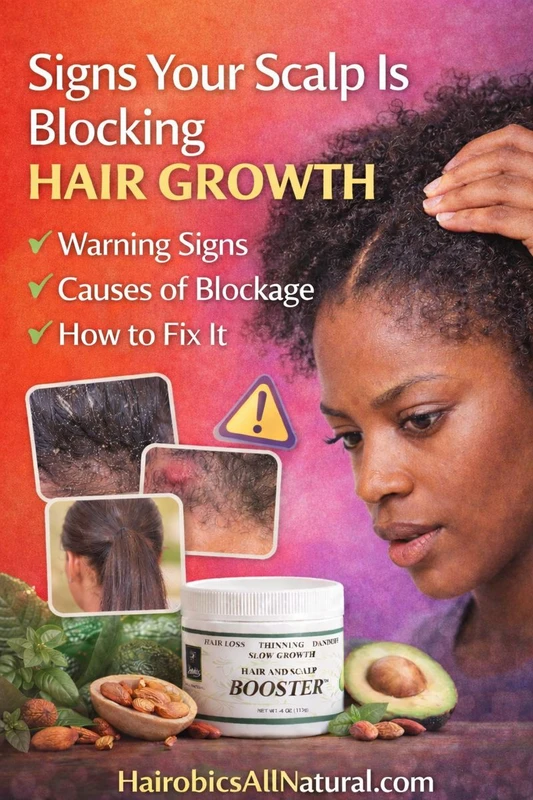
If your hair feels like it’s stuck at the same length, growing unevenly, or breaking faster than it grows, the problem may not be your hair at all.
It may be your scalp.
Hair growth starts at the scalp. When the scalp is unhealthy, congested, inflamed, or imbalanced, it can block hair follicles from producing strong, healthy strands — no matter how many products you apply to your hair.
In this guide, we’ll break down the most common signs your scalp is blocking hair growth, why it happens, and exactly how to restore your scalp so your hair can grow again.
Why Scalp Health Matters More Than Hair Products
Your scalp is living skin. It contains:
-
Hair follicles
-
Sebaceous (oil) glands
-
Blood vessels
-
Nerve endings
Each hair strand grows from a follicle embedded in your scalp. If that follicle is:
-
Clogged
-
Inflamed
-
Dry
-
Starved of nutrients
Hair growth slows down — or stops completely.
You can’t out-condition or out-oil a blocked scalp.
How a Blocked Scalp Prevents Hair Growth
When your scalp is compromised, several things happen:
-
Follicles become clogged with oil, dead skin, or product buildup
-
Blood circulation decreases
-
Inflammation weakens follicles
-
Hair sheds prematurely
-
New growth struggles to emerge
This creates the illusion that your hair “won’t grow,” when in reality, your scalp is preventing it.
15 Signs Your Scalp Is Blocking Hair Growth
1. Persistent Itching (Even After Washing)
If your scalp itches constantly, that’s a sign of:
-
Buildup
-
Dryness
-
Inflammation
-
Fungal imbalance
A healthy scalp should not itch regularly. Chronic itching means follicles are stressed — and stressed follicles don’t grow hair efficiently.
2. Flakes That Keep Coming Back
Recurring flakes may indicate:
-
Dandruff
-
Seborrheic dermatitis
-
Product buildup
-
Scalp dehydration
Flakes create a physical barrier over follicles, blocking new growth and weakening existing strands.
3. Greasy Roots but Dry Hair
This imbalance suggests your scalp is:
-
Overproducing oil to compensate for dryness
-
Coated with residue that blocks moisture absorption
When oil and buildup sit on the scalp, follicles become congested, slowing growth.
4. Hair Feels Thinner at the Roots
If hair looks full at the ends but thin near the scalp, it may be due to:
-
Weak follicles
-
Inflammation
-
Reduced blood flow
Healthy growth starts strong at the root.
5. Slow or No Length Retention
If your hair grows but breaks off at the same length, your scalp may be:
-
Producing weak strands
-
Not supplying enough nutrients to follicles
Growth without retention often begins with scalp issues.
6. Tender or Sore Scalp
A sore scalp is a major warning sign.
It can be caused by:
-
Inflammation
-
Tight styles
-
Chemical irritation
-
Poor circulation
Inflamed follicles cannot anchor hair properly, leading to shedding and thinning.
7. Bumps, Pimples, or Scalp Acne
Scalp bumps indicate:
-
Clogged follicles
-
Bacterial overgrowth
-
Product residue
These block hair from emerging and can permanently damage follicles if ignored.
8. Excessive Shedding Beyond Normal Levels
Some shedding is normal. Excessive shedding may signal:
-
Follicles entering resting phase too early
-
Scalp inflammation
-
Hormonal or nutritional stress
When follicles are unhealthy, hair sheds faster than it regrows.
9. Tight or Stiff Scalp Feeling
A healthy scalp should feel flexible, not tight.
Tightness suggests:
-
Poor circulation
-
Dehydration
-
Buildup
Poor blood flow means less oxygen and nutrients reach follicles.
10. Hair Grows Unevenly
Patchy or uneven growth often indicates:
-
Localized scalp blockage
-
Tension damage
-
Follicle stress in certain areas
This is common along edges, crown, and nape.
11. Chronic Dryness Despite Moisturizing
If your scalp stays dry no matter what you apply, buildup may be preventing absorption.
Blocked follicles can’t receive moisture — even from high-quality products.
12. Excessive Product Buildup
Layers of oils, butters, gels, and sprays can suffocate follicles.
Signs of buildup include:
-
Dull hair
-
White residue
-
Greasy feel without softness
13. Burning or Tingling Sensation
This can be a sign of:
-
Chemical irritation
-
Allergic reaction
-
Inflammation
Burning is never normal and can lead to long-term follicle damage.
14. Scalp Odor
An unhealthy scalp may develop odor due to:
-
Bacterial or fungal imbalance
-
Trapped sweat and oil
This environment blocks growth and weakens follicles.
15. Hairline or Crown Thinning
These areas are the most sensitive to scalp issues.
Thinning here often points to:
-
Chronic inflammation
-
Traction
-
Long-term blockage
Early intervention is critical.
What Causes the Scalp to Block Hair Growth?
Product Overload
Heavy oils, pomades, edge controls, and dry shampoos can clog follicles.
Infrequent Cleansing
Not washing often enough allows buildup to accumulate.
Harsh Ingredients
Sulfates, alcohols, and synthetic fragrances can irritate the scalp.
Tight Styles
Braids, wigs, and ponytails reduce circulation and inflame follicles.
Poor Diet & Hydration
Hair follicles need nutrients to function.
Stress
Stress restricts blood flow and pushes follicles into resting phase.
How to Unblock Your Scalp and Restore Hair Growth
Step 1: Cleanse Properly
Use a gentle cleanser that removes buildup without stripping.
Aim for:
-
Clean scalp
-
No residue
-
Comfortable, refreshed feeling
Step 2: Exfoliate the Scalp
Scalp exfoliation removes dead skin and clears follicles.
Methods:
-
Gentle scalp scrubs
-
Massage during shampoo
-
Monthly clarifying treatments
Step 3: Restore Moisture Balance
Hydrate the scalp with lightweight treatments that absorb easily.
Avoid thick layers that sit on top of the skin.
Step 4: Stimulate Blood Flow
Scalp massage increases circulation and nutrient delivery.
Massage 3–5 minutes daily or after applying treatments.
Step 5: Reduce Tension
Avoid tight styles and give your scalp time to breathe.
Protective styles should feel protective, not painful.
Step 6: Support Scalp Nutrition
Healthy follicles require:
-
Protein
-
Iron
-
Zinc
-
Omega fatty acids
-
Water
Hair growth is internal and external.
How Long Does It Take to See Results?
With consistent scalp care:
-
Itching and flakes improve within weeks
-
Shedding decreases in 1–2 months
-
New growth appears in 3–4 months
Patience is key — follicles need time to recover.
Common Myths About Scalp Health and Hair Growth
“My Hair Just Grows Slow”
Often false. Many people have blocked scalps without realizing it.
“Oil Alone Grows Hair”
Oil can help — but not on a dirty scalp.
“Scratching Is Normal”
Chronic itching is a sign of imbalance.
Final Thoughts: Hair Growth Begins at the Scalp
If your hair feels stuck, thin, or unhealthy, stop blaming your strands.
Fix the scalp first.
A healthy scalp:
✔️ Allows follicles to breathe
✔️ Improves circulation
✔️ Produces stronger hair
✔️ Supports long-term growth
Once your scalp is clear, balanced, and nourished, hair growth follows naturally.