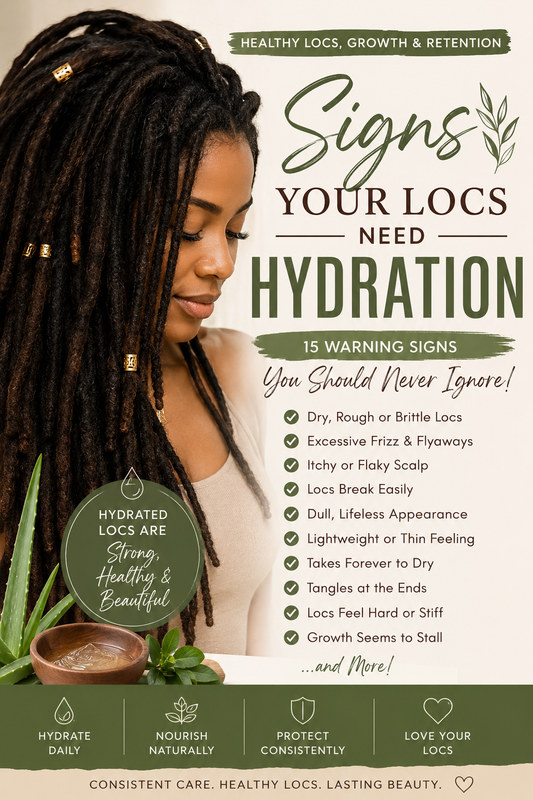
Healthy locs are built on healthy hair. While many people focus on retwisting, styling, or length retention, hydration is often overlooked. Unfortunately, dehydrated locs become brittle, weak, dull, and more prone to breakage over time.
Because locs naturally make it harder for your scalp's oils to travel down the hair shaft, maintaining proper hydration becomes even more important than it is for loose natural hair.
If you've been wondering why your locs feel rough, seem lighter than usual, or have started breaking, your hair may simply be thirsty.
In this complete guide, you'll learn:
- The biggest signs your locs need hydration
- Why locs dry out
- How dehydration affects loc health
- The best hydration routine
- Ingredients that actually work
- Mistakes that make dryness worse
- How to keep locs moisturized year-round
Why Hydration Matters for Locs
Hydration refers to the amount of water inside your hair fibers—not just the oils sitting on the surface.
Many people confuse moisture with oil.
Oil seals.
Water hydrates.
Without water, oils simply coat dry hair.
Healthy hydrated locs are:
- Flexible
- Strong
- Soft
- Full
- Less likely to snap
- Better at retaining length
Dry locs become:
- Brittle
- Stiff
- Dull
- Thin
- Weak
- Easily damaged
Sign #1: Your Locs Feel Extremely Dry
The most obvious sign is texture.
Healthy locs shouldn't feel crunchy every day.
If your locs constantly feel:
- Rough
- Dry
- Scratchy
- Straw-like
they're asking for moisture.
Run your fingers down a loc.
Does it glide smoothly?
Or does it feel rough from root to tip?
That's one of the biggest hydration clues.
Sign #2: Your Locs Snap Easily
Hydrated hair bends.
Dry hair breaks.
Take a single strand that has shed naturally.
Gently stretch it.
Healthy hair stretches slightly before breaking.
Dry hair snaps almost immediately.
When entire locs begin breaking during styling, dehydration is often involved.
Sign #3: Your Locs Look Dull
Healthy hydrated locs have a natural glow.
Not greasy.
Not oily.
Just healthy.
Dry locs often appear:
- Ashy
- Faded
- Lifeless
- Dusty
- Flat
If your locs never seem vibrant anymore, hydration may be missing.
Sign #4: Your Ends Are Fraying
The oldest part of every loc is the end.
That makes the ends the driest section.
When hydration decreases, you may notice:
- Splitting
- Loose fibers
- Thin ends
- Fraying
- Breakage
Hydrating consistently helps reduce damage.
Sign #5: Your Locs Feel Lightweight
Hydrated locs have substance.
Dry locs often feel unusually light because they lack internal moisture.
Many people notice:
"My locs used to feel fuller."
Often that's dehydration—not thinning.
Sign #6: Excessive Frizz
Some frizz is normal.
But severe frizz often happens because dry hairs try to escape the loc.
Hydrated hair remains more elastic and stays within the loc structure better.
Sign #7: Constant Itchy Scalp
Dry scalp usually accompanies dry locs.
Signs include:
- Itching
- Tightness
- Flaking
- Irritation
Hydrating your scalp can significantly improve comfort.
Sign #8: Increased Breakage During Retwists
If every retwist seems to produce broken hairs, dryness could be the culprit.
Hydrated hair handles manipulation much better.
Sign #9: Your Locs Feel Hard
Healthy mature locs should feel firm—not rock hard.
When locs become stiff and inflexible, they're often dehydrated.
Sign #10: White Dry Residue
Sometimes what appears to be buildup is actually dry hair reflecting light.
Hydrating sprays often restore a healthier appearance.
Sign #11: Your Locs Tangle at the Ends
Dry fibers catch onto one another more easily.
Hydration helps hair remain smoother.
Sign #12: Your Hair Takes Forever to Dry
Ironically, extremely dry locs sometimes repel water.
Instead of absorbing moisture, water sits on the outside.
Regular hydration improves absorption.
Sign #13: Your Locs Shrink More Than Normal
Dry hair loses elasticity.
Hydrated locs stretch naturally.
Sign #14: Your Locs Feel Hot in the Sun
Dehydrated hair heats up faster because it contains less internal moisture.
Protective styles and hydration help reduce this effect.
Sign #15: Your Loc Growth Seems to Stall
Hair continues growing from the scalp.
However, dehydration increases breakage, making it appear that growth has stopped.
Reducing breakage improves length retention.
Why Locs Become Dehydrated
Several factors contribute:
Weather
- Winter air
- Summer heat
- Wind
- Low humidity
Product Buildup
Heavy waxes prevent moisture from entering the hair.
Washing Too Infrequently
Clean locs absorb moisture better.
Hard Water
Minerals coat the hair and reduce moisture penetration.
Heat Styling
Frequent blow drying removes moisture.
Chlorine
Pools strip hydration from hair.
Salt Water
Ocean water can leave locs feeling dry if not rinsed afterward.
Best Ingredients for Hydrating Locs
Look for products containing:
- Aloe vera
- Distilled water
- Vegetable glycerin (moderate humidity)
- Rose water
- Marshmallow root
- Slippery elm
- Chamomile
- Green tea
- Panthenol
- Coconut water
Ingredients That Seal Moisture
After hydration comes sealing.
Popular natural sealants include:
- Jojoba oil
- Grapeseed oil
- Avocado oil
- Sweet almond oil
- Jamaican black castor oil (use sparingly)
- Olive oil
Daily Hydration Routine
Morning
Mist locs lightly.
Massage scalp.
Seal with a few drops of oil if needed.
Afternoon
Avoid touching locs constantly.
Hands transfer dirt and remove moisture.
Evening
Cover locs with:
- Satin bonnet
- Satin scarf
- Satin pillowcase
This reduces overnight moisture loss.
Weekly Hydration Routine
Every week:
- Wash scalp gently
- Use a residue-free cleanser
- Mist daily
- Deep hydrate
- Air dry completely
Monthly Maintenance
Once monthly:
- Clarify if buildup exists
- Inspect ends
- Trim damaged fibers if necessary
- Evaluate scalp health
Hydration vs Product Buildup
Many confuse the two.
Dry Locs
- Rough
- Brittle
- Light
- Dull
Product Buildup
- Sticky
- Heavy
- Waxy
- White residue
- Slow drying
Sometimes both problems exist simultaneously.
Common Hydration Mistakes
Using Oil Only
Oil without water does not hydrate.
Oversaturating Daily
Too much moisture can encourage mildew if locs stay wet.
Mist lightly.
Ignoring the Scalp
Healthy locs begin with a healthy scalp.
Sleeping Without Protection
Cotton pillowcases absorb moisture every night.
Heavy Creams
Creams often remain on the surface instead of penetrating locs.
Seasonal Hydration Tips
Winter
Hydrate more often.
Wear satin-lined hats.
Avoid extremely hot showers.
Summer
Hydrate after sweating.
Rinse after swimming.
Protect locs from prolonged sun exposure.
Foods That Support Hair Hydration
Internal hydration matters too.
Focus on:
- Water
- Cucumbers
- Watermelon
- Leafy greens
- Salmon
- Walnuts
- Berries
- Sweet potatoes
- Eggs
- Pumpkin seeds
How Long Does It Take to Rehydrate Dry Locs?
Most people notice improvement within:
- 1 week: softer feel
- 2–4 weeks: improved flexibility
- 1–3 months: healthier appearance and reduced breakage
Consistency is more important than occasional intensive treatments.
Frequently Asked Questions
Can I hydrate locs every day?
Yes. A light water-based mist is generally suitable for most locs, provided they dry properly and are not left constantly damp.
Is oil enough?
No. Oil helps seal in moisture but does not replace water.
Why are my locs dry after washing?
Shampoo cleanses but doesn't always replenish moisture. Follow washing with a water-based hydrating spray and, if needed, a light oil to help lock in hydration.
Can over-hydration damage locs?
Yes. Keeping locs wet for extended periods can lead to mildew or weaken the loc structure. Aim for balanced hydration and allow locs to dry thoroughly.
How often should I wash my locs?
The ideal schedule depends on your lifestyle and scalp, but many people benefit from cleansing every 2–4 weeks with a residue-free shampoo.
Final Thoughts
Your locs are constantly giving you clues about their health. Rough texture, excessive breakage, dullness, frizz, itching, and stiffness are all signs that hydration may be lacking. The good news is that dry locs can often recover with a consistent routine centered on water-based hydration, gentle cleansing, and proper moisture retention.
Remember these essentials:
- Hydrate with water-based products first.
- Seal moisture with lightweight natural oils.
- Protect locs while you sleep.
- Wash regularly to prevent buildup.
- Stay hydrated from the inside out.
- Be consistent—healthy locs are built through daily care, not occasional treatments.
By recognizing the early signs of dehydration and responding with the right routine, you can keep your locs soft, resilient, healthy, and growing strong for years to come.