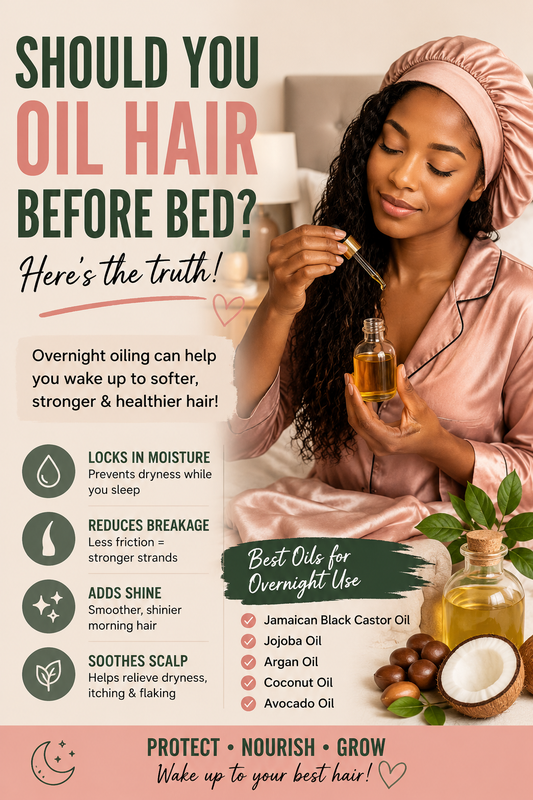
If you've ever wondered whether applying oil before going to sleep is good for your hair, you're not alone. Overnight hair oiling has become one of the most popular natural hair care practices, especially among people with curly hair, coily hair, kinky hair, locs, braids, and dry or damaged hair.
But is sleeping with oil in your hair actually beneficial?
The answer is yes—for most people, when it's done correctly.
Applying natural oils before bed gives your hair and scalp several uninterrupted hours to absorb moisture and nutrients while protecting your strands from overnight friction. However, not every oil works for every hair type, and using too much can sometimes cause buildup or greasy hair.
In this complete guide, you'll learn:
- Should you oil your hair before bed?
- Benefits of overnight hair oiling
- Possible disadvantages
- Best oils for different hair types
- How often to oil
- Common mistakes
- Best overnight routine
- Frequently asked questions
Why Overnight Hair Oiling Works
Your hair experiences surprisingly high levels of stress while you sleep.
During the night your hair rubs against:
- Cotton pillowcases
- Blankets
- Sheets
- Your shoulders
- Your own hands as you move
This friction causes:
- Dryness
- Breakage
- Split ends
- Frizz
- Tangles
Natural oils create a protective barrier that helps reduce moisture loss while lubricating the hair shaft.
Many people wake up with hair that feels:
- Softer
- Shinier
- Easier to manage
- Less tangled
- Better moisturized
Benefits of Oiling Hair Before Bed
1. Reduces Moisture Loss
Hair loses moisture continuously.
Sleeping with a light layer of oil slows down water evaporation, allowing hair to remain hydrated longer.
This is especially important for:
- Type 3 curls
- Type 4 coils
- Chemically treated hair
- Color-treated hair
- High porosity hair
2. Helps Reduce Breakage
Dry hair snaps easily.
Oil creates lubrication between strands, reducing friction during sleep.
Less friction means:
- Less breakage
- Fewer split ends
- Better length retention
Remember:
Hair doesn't need to grow faster if you're no longer breaking it.
3. Makes Hair Easier to Detangle
Anyone with natural hair knows morning tangles can become a nightmare.
Applying oil before bed keeps strands slippery enough that knots don't form as easily.
Morning detangling becomes:
- Faster
- Less painful
- Less damaging
4. Supports a Healthy Scalp
A healthy scalp creates the ideal environment for healthy hair.
Certain oils can help soothe:
- Dry scalp
- Tightness
- Itching
- Mild flaking
Hydrated skin functions better than dry, irritated skin.
5. Adds Shine
Hair reflects more light when the cuticle lies flat.
Natural oils smooth rough cuticles, giving hair a healthier shine without synthetic silicones.
6. Protects Curly Hair Overnight
Curly hair dries out much faster than straight hair.
Overnight oiling helps curls retain moisture while reducing:
- Morning frizz
- Puffy roots
- Dry ends
- Flat curls
7. Helps Preserve Protective Styles
People wearing:
- Braids
- Twists
- Locs
often struggle with dryness.
Applying lightweight oil before bed helps maintain moisture without ruining the style.
Can Hair Grow Faster from Overnight Oiling?
This is one of the biggest myths in hair care.
Hair oil does not magically increase the speed at which follicles produce hair.
However, oiling may help you retain more length by reducing:
- Breakage
- Split ends
- Dryness
- Mechanical damage
Over time, healthier hair appears to "grow faster" because you're keeping more of the hair you already grow.
Best Oils for Overnight Hair Care
Jamaican Black Castor Oil
Excellent for:
- Dry hair
- Thick hair
- Natural hair
- Locs
- Braids
Benefits:
- Thick consistency
- Helps seal moisture
- Great for edges
- Ideal for coarse textures
Jojoba Oil
Best for:
- Oily scalps
- Fine hair
- Sensitive skin
Because jojoba closely resembles your scalp's natural sebum, it's lightweight and absorbs well.
Argan Oil
Perfect for:
- Frizz
- Heat damage
- Shine
Argan oil is lightweight and won't usually leave hair overly greasy.
Coconut Oil
Great for:
- Protein loss reduction
- Thick hair
- Pre-shampoo treatments
Use sparingly if your hair becomes stiff with protein-sensitive routines.
Avocado Oil
Rich in:
- Vitamin E
- Healthy fats
- Antioxidants
Excellent for dry, brittle hair.
Grapeseed Oil
Ideal for:
- Fine hair
- Low porosity hair
Lightweight without weighing strands down.
Which Hair Types Benefit Most?
Type 4 Hair
This hair type benefits tremendously because natural scalp oils have difficulty traveling through tight coils.
Curly Hair
Curly hair loses moisture rapidly.
Overnight oiling helps preserve curl definition.
Locs
Oil helps reduce dryness while keeping the scalp comfortable.
Avoid excessive amounts that may cause buildup inside mature locs.
Braids
Oiling the scalp before bed helps prevent:
- Tightness
- Dryness
- Itching
Color-Treated Hair
Hair coloring increases porosity.
Natural oils help reduce moisture loss while adding softness.
Who Should Avoid Heavy Overnight Oiling?
Heavy oiling isn't ideal for everyone.
You may want to avoid excessive overnight oiling if you have:
- Very oily scalp
- Fine hair
- Frequent scalp acne
- Seborrheic dermatitis that worsens with oils
In these cases, lighter oils usually work better.
How to Oil Hair Before Bed
Step 1: Start With Dry or Slightly Damp Hair
Hair should not be soaking wet.
Slight dampness helps lock in moisture.
Step 2: Warm the Oil
Rub a small amount between your palms.
Warm oil spreads more evenly.
Step 3: Focus on the Ends
Hair ends are the oldest and driest part.
They need the most protection.
Step 4: Massage the Scalp
Use gentle circular motions.
Massage for 3–5 minutes.
This feels relaxing and distributes oil evenly.
Step 5: Protect Your Hair
Wear:
- Satin bonnet
- Silk scarf
- Satin pillowcase
Avoid cotton whenever possible.
Should You Wash It Out the Next Morning?
That depends on how much oil you applied.
Light Oil
A few drops usually don't require washing.
Simply style as usual.
Heavy Oil Treatment
Wash with a gentle shampoo if hair feels greasy.
How Often Should You Oil Hair Before Bed?
Dry Hair
2–3 nights weekly
Normal Hair
1–2 nights weekly
Oily Hair
Once weekly or less
Braids
2–3 times weekly on the scalp
Locs
1–2 times weekly
Common Overnight Oiling Mistakes
Using Too Much Oil
More oil doesn't equal healthier hair.
Too much creates buildup.
Ignoring the Ends
Most people focus only on the scalp.
The ends usually need more moisture.
Sleeping on Cotton
Cotton absorbs moisture.
Switching to satin can dramatically reduce breakage.
Using Heavy Oils Daily
Daily heavy oiling often causes greasy buildup.
Moderation works better.
Applying Oil to Dirty Hair for Weeks
Oil isn't a replacement for washing.
Scalp health still requires regular cleansing.
Should You Oil Your Scalp or Just Hair?
Both approaches can work.
Scalp Oiling
Best for:
- Dry scalp
- Flakes
- Tightness
Hair Oiling
Best for:
- Dry strands
- Split ends
- Frizz
- Shine
Many people benefit from doing both in moderation.
The Best Overnight Routine
- Lightly mist hair with water.
- Apply a leave-in conditioner if needed.
- Seal moisture with a small amount of natural oil.
- Massage your scalp.
- Braid or twist long hair loosely.
- Cover with a satin bonnet or silk scarf.
- Sleep on a satin pillowcase for extra protection.
This routine minimizes friction, helps retain moisture, and makes morning styling easier.
Why Quality Ingredients Matter
Not all hair oils are created equal. Many products on the market rely heavily on mineral oil, petroleum, or synthetic fillers that mainly coat the hair instead of nourishing it.
Choosing products made with natural botanical oils and plant-based ingredients can help keep your hair moisturized without unnecessary additives. For those looking for a complete overnight hair care routine, a lightweight moisturizer paired with a nutrient-rich scalp treatment can help hydrate both the scalp and strands while reducing breakage.
Frequently Asked Questions
Is it okay to sleep with oil in your hair every night?
Most people don't need to. One to three nights per week is enough for maintaining moisture without excessive buildup.
Does overnight oiling make hair greasy?
It can if you use too much. A small amount is usually all that's needed.
Should I oil dirty hair?
You can, but avoid allowing oil and product buildup to accumulate for long periods without washing your scalp.
Can overnight oiling help with dandruff?
If your flakes are caused by dryness, moisturizing may help. If the flakes are due to a medical scalp condition, oil alone may not solve the problem.
Is coconut oil the best overnight oil?
It works well for many people, but the best choice depends on your hair's porosity, texture, and individual response.
Do I need a satin bonnet?
It's highly recommended. Satin reduces friction and helps your hair retain moisture while you sleep.
Final Thoughts
So, should you oil your hair before bed? For many people—especially those with natural, curly, coily, braided, or loc'd hair—the answer is yes.
Overnight oiling can help reduce moisture loss, minimize breakage, improve softness, tame frizz, and support a healthier-looking scalp when done with the right products and in the right amount. The key is consistency rather than excess. Use lightweight applications, focus on your ends, protect your hair with satin while you sleep, and maintain a regular cleansing routine to avoid buildup.
Healthy hair isn't about using the most oil—it's about creating a balanced routine that keeps your hair hydrated, protected, and strong over time.