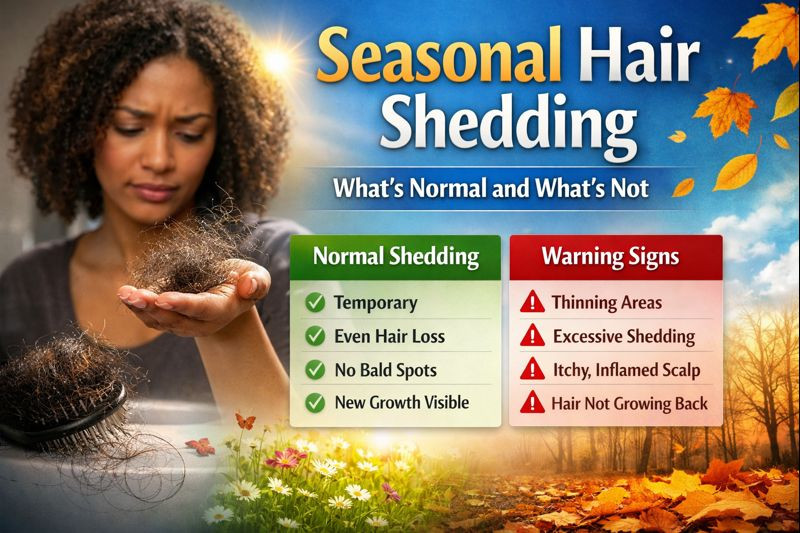
If you’ve noticed more hair in your shower drain, on your pillow, or wrapped around your fingers lately, you’re not alone. Many people panic when they see increased shedding, assuming something is seriously wrong. But in many cases, what you’re experiencing is seasonal hair shedding—a natural, temporary process your body goes through every year.
The tricky part? Normal shedding and unhealthy hair loss can look very similar at first.
In this guide, we’ll break down:
-
What seasonal hair shedding really is
-
When shedding is completely normal
-
Red flags that signal something isn’t normal
-
Why fall and spring trigger shedding
-
How to reduce excessive shedding naturally
-
What to do if shedding doesn’t stop
If you’ve ever asked, “Is this normal or am I losing my hair?”—this article is for you.
What Is Seasonal Hair Shedding?
Seasonal hair shedding refers to temporary increases in hair fall that happen during certain times of the year, most commonly late summer into fall and sometimes early spring.
Your hair grows in cycles, and seasonal changes can shift more hairs into the telogen (resting/shedding) phase at the same time. When this happens, shedding becomes more noticeable—but it doesn’t mean your hair follicles are damaged.
The Hair Growth Cycle (Quick Breakdown)
Hair grows in three main phases:
-
Anagen (Growth Phase)
-
Lasts 2–7 years
-
Hair actively grows from the follicle
-
-
Catagen (Transition Phase)
-
Lasts 2–3 weeks
-
Growth slows and detaches from blood supply
-
-
Telogen (Resting/Shedding Phase)
-
Lasts about 3 months
-
Hair eventually falls out to make room for new growth
-
At any given time, 10–15% of your hair is normally in the telogen phase.
Seasonal shedding happens when more hairs than usual enter telogen together.
How Much Hair Shedding Is Normal?
On average, it’s normal to shed:
-
50–100 hairs per day
-
Slightly more on wash days
-
More noticeable if your hair is long, thick, or tightly coiled
During seasonal shedding, that number may temporarily increase to 150–200 hairs per day.
What Normal Seasonal Shedding Looks Like
✔ Hair falls evenly from all over the scalp
✔ No bald spots or thinning patches
✔ Shedding lasts 6–12 weeks
✔ Hair density looks mostly the same
✔ New baby hairs appear along hairline and part
If this describes your situation, chances are your hair is simply cycling as it should.
Why Does Seasonal Hair Shedding Happen?
Seasonal shedding isn’t random—it’s influenced by biology, hormones, and environmental changes.
1. Hormonal Shifts From Sunlight
During summer, increased sunlight boosts vitamin D and estrogen levels, which keep hair in the growth phase longer.
As daylight decreases in fall:
-
Estrogen levels drop
-
More hairs enter the resting phase
-
Shedding increases a few months later
This delayed response is why people often notice shedding in September, October, and November.
2. Scalp Stress From Summer Damage
Sun exposure, sweat, chlorine, salt water, and frequent washing can weaken the scalp and hair strands during summer months.
By fall:
-
Fragile hairs break or shed
-
Scalp inflammation increases
-
Follicles temporarily pause growth
Without proper scalp care, seasonal shedding can become excessive shedding.
3. Dehydration & Nutrient Depletion
Hot weather often leads to:
-
Dehydration
-
Poor scalp circulation
-
Lower iron, zinc, or protein intake
Hair is one of the first systems affected when nutrients are low.
Seasonal Hair Shedding vs Hair Loss: Key Differences
Understanding the difference between shedding and hair loss is critical.
Seasonal Hair Shedding
-
Temporary
-
Even across scalp
-
Follicles remain healthy
-
Hair grows back naturally
Hair Loss (Alopecia or Chronic Shedding)
-
Progressive and ongoing
-
Thinning at crown, edges, or part
-
No regrowth in affected areas
-
Follicles may shrink or close
If shedding lasts longer than 3 months, it’s time to investigate further.
When Seasonal Shedding Is NOT Normal
Shedding becomes a concern when it’s paired with other warning signs.
Red Flags to Watch For
? Shedding lasts longer than 12 weeks
? Hairline or edges appear thinner
? Crown looks sparse or see-through
? Excess breakage mixed with shedding
? Scalp itching, pain, or inflammation
? Sudden clumps of hair coming out
These signs may point to telogen effluvium, hormonal imbalance, traction alopecia, thyroid issues, or scalp inflammation.
Common Causes of Excessive Shedding (Beyond Seasons)
If shedding seems extreme, consider these triggers:
-
Emotional or physical stress
-
Rapid weight loss or dieting
-
Postpartum hormone shifts
-
Tight protective styles
-
Poor scalp hygiene
-
Product buildup clogging follicles
-
Inflammatory scalp conditions
Seasonal shedding can expose underlying issues that were already developing.
How Long Does Seasonal Hair Shedding Last?
For most people:
-
6–8 weeks is typical
-
Up to 12 weeks can still be normal
You should begin noticing:
-
Less hair in the shower
-
Reduced daily shedding
-
Small regrowth hairs along the hairline
If shedding continues past 3 months, it’s no longer seasonal.
How to Reduce Seasonal Hair Shedding Naturally
While you can’t completely stop seasonal shedding, you can minimize it and protect your hair density.
1. Focus on Scalp Health First
Healthy hair starts at the scalp. A congested or inflamed scalp causes follicles to shed prematurely.
What helps:
-
Gentle scalp massage
-
Lightweight oils that penetrate (not clog)
-
Regular cleansing without stripping
Using a targeted scalp oil or booster helps maintain circulation and follicle strength during shedding seasons.
2. Reduce Tension & Manipulation
Hair in the telogen phase is easier to pull out.
Avoid:
-
Tight braids or ponytails
-
Excessive brushing
-
Rough detangling
-
Heavy extensions
Protective styles should be protective, not stressful.
3. Hydrate Your Scalp Consistently
Dry scalp = fragile follicles.
Daily or every-other-day hydration using:
-
Water-based scalp sprays
-
Aloe or herbal infusions
-
Lightweight oils to seal moisture
This keeps follicles flexible and reduces premature shedding.
4. Strengthen Hair From the Inside
Seasonal shedding worsens when your body lacks nutrients.
Prioritize:
-
Protein
-
Iron
-
Zinc
-
Omega-3 fatty acids
-
Vitamin D
Hair is non-essential to survival—your body will redirect nutrients away from it first.
5. Cleanse Away Buildup Regularly
Product buildup blocks oxygen and nutrients from reaching follicles.
Use:
-
Gentle, sulfate-free cleansers
-
Scalp-focused washing (not just hair)
-
Monthly clarifying if needed
A clean scalp sheds less hair over time.
Does Seasonal Shedding Mean Your Hair Isn’t Growing?
No—and this is a common misconception.
Shedding is a sign that:
-
Old hairs are exiting
-
New growth is preparing to enter
As long as follicles are healthy, shedding and growth happen simultaneously.
The goal is to:
-
Reduce inflammation
-
Keep follicles nourished
-
Support regrowth
How Hairobics Supports Hair During Shedding Seasons
Seasonal shedding is when scalp care matters most.
Hairobics products are formulated to:
-
Stimulate circulation at the follicle level
-
Reduce inflammation that triggers excess shedding
-
Hydrate and strengthen the scalp barrier
-
Support regrowth without clogging pores
Using a consistent scalp routine during fall and spring can dramatically shorten shedding cycles and protect hair density.
When to See a Professional
Consider seeing a dermatologist or trichologist if:
-
Shedding lasts longer than 3 months
-
You notice thinning at the crown or edges
-
Shedding began after illness or childbirth
-
You have scalp pain or itching
Early intervention preserves follicles.
Final Thoughts: Don’t Panic—Pay Attention
Seasonal hair shedding is normal, temporary, and manageable. The key is knowing when shedding crosses the line into something more serious.
If you:
✔ Support your scalp
✔ Reduce stress and tension
✔ Maintain hydration and nutrition
✔ Act early when shedding increases
You can move through shedding seasons without losing progress—or density.
Healthy hair growth isn’t about avoiding shedding altogether.
It’s about making sure new growth always replaces what’s shed.