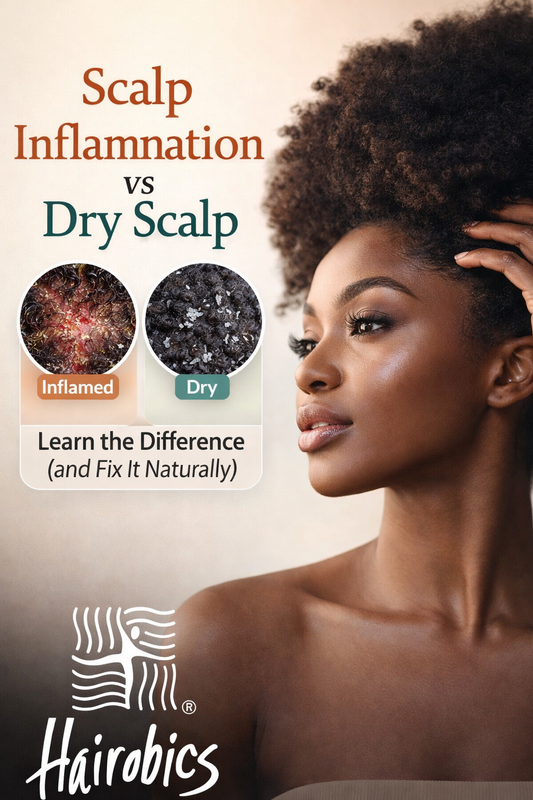
If you’re dealing with itching, flakes, tenderness, or slow hair growth, you may be asking yourself: Is this just dry scalp… or is my scalp inflamed?
For women and men with natural hair, especially those with curls, coils, braids, or locs, understanding the difference between scalp inflammation vs dry scalp is critical. These two conditions look similar on the surface, but they behave very differently underneath — and treating them the same way can make things worse.
In this comprehensive guide, you’ll learn:
-
What dry scalp really is
-
What scalp inflammation actually means
-
Key symptoms and how to identify each
-
Why inflammation can block hair growth
-
How braids, stress, weather, and hormones play a role
-
Natural remedies that actually work
-
A step-by-step recovery plan for long-term scalp health
If your goal is thicker, longer, healthier natural hair, it starts at the scalp.
What Is Dry Scalp?
A dry scalp happens when your scalp lacks moisture. Just like dry skin on your arms or legs, your scalp can become dehydrated and tight.
Common Causes of Dry Scalp
-
Cold weather or seasonal changes
-
Overwashing with harsh shampoos
-
Sulfates and alcohol-based products
-
Not sealing moisture properly
-
Low humidity environments
-
Dehydration
For natural hair, dryness is especially common because:
-
Coily textures make it harder for scalp oils to travel down the hair shaft
-
Protective styles sometimes reduce scalp access to moisture
-
Many people focus on hair moisture but forget scalp hydration
Symptoms of Dry Scalp
-
Small, white powdery flakes
-
Tight or stretched feeling
-
Mild itching
-
Dull scalp appearance
-
No redness or swelling
Dry scalp is uncomfortable, but it’s usually not painful. It also typically improves quickly when moisture is restored.
What Is Scalp Inflammation?
Scalp inflammation is different. It’s an immune response. Your body detects irritation, imbalance, or stress — and reacts.
Inflammation means the scalp is in a state of irritation and defense.
What Triggers Scalp Inflammation?
-
Product buildup
-
Allergic reactions
-
Tight braids or protective styles
-
Chronic scratching
-
Hormonal shifts
-
Stress and high cortisol
-
Fungal overgrowth
-
Poor scalp circulation
-
Gut inflammation
Unlike dryness, inflammation involves internal biological activity. Blood flow increases. Immune cells activate. The area becomes sensitive.
Symptoms of Scalp Inflammation
-
Redness
-
Tenderness or soreness
-
Burning or stinging sensation
-
Swelling
-
Thick, greasy flakes
-
Pain when touching or moving hair
-
Slow hair growth or shedding
Inflammation can quietly damage hair follicles over time if ignored.
Scalp Inflammation vs Dry Scalp: Key Differences
| Feature | Dry Scalp | Scalp Inflammation |
|---|---|---|
| Flakes | Small, white, powdery | Larger, sometimes greasy |
| Itching | Mild | Intense or burning |
| Pain | Rare | Common |
| Redness | No | Often present |
| Swelling | No | Possible |
| Hair Growth Impact | Minimal | Can slow or disrupt growth |
| Cause | Lack of moisture | Immune response / irritation |
If your scalp feels tight but calm, it’s probably dryness.
If it feels irritated, tender, or hot, inflammation is likely involved.
Why Inflammation Is More Serious for Hair Growth
Healthy hair grows from healthy follicles. When inflammation persists:
-
Blood flow becomes restricted
-
Nutrient delivery decreases
-
Hair follicles shrink
-
Growth cycles shorten
-
Shedding increases
Chronic inflammation can push hair prematurely into the resting (telogen) phase. Over time, this creates:
-
Thinning edges
-
Uneven growth
-
Breakage at the root
-
Growth plateaus
For those trying to retain length, inflammation is often the hidden enemy.
How Braids and Protective Styles Affect Both Conditions
Protective styles are powerful tools for retention — but they can contribute to both dryness and inflammation.
Dryness from Protective Styles
-
Limited access to scalp moisture
-
Long-term oil buildup without cleansing
-
Sweat accumulation
Inflammation from Protective Styles
-
Tight tension on edges
-
Follicle strain
-
Constant pulling
-
Inadequate scalp cleansing
If your scalp hurts after getting braids, that’s inflammation — not dryness.
If it just feels tight and flaky after weeks, that’s more likely dehydration.
The Role of Stress and Hormones
Stress increases cortisol levels. High cortisol can:
-
Trigger inflammatory responses
-
Disrupt hair growth cycles
-
Increase scalp sensitivity
-
Reduce circulation
Hormonal changes (pregnancy, postpartum, stopping birth control, aging) also increase scalp reactivity.
This is why many women notice:
-
Sudden itching
-
Increased shedding
-
Tender scalp
-
Texture changes
It’s not “just dryness.” It’s internal shifts showing up externally.
Weather and Seasonal Shifts
Cold air pulls moisture from the scalp, leading to dryness.
However, extreme heat and sweat in summer can cause:
-
Salt buildup
-
Irritation
-
Inflammatory reactions
Understanding your seasonal triggers helps you respond correctly.
Natural Remedies for Dry Scalp
If your scalp is dry (not inflamed), focus on hydration.
1. Gentle Cleansing
Use a sulfate-free shampoo that cleans without stripping.
2. Water-Based Hydration
Mist scalp with water or aloe vera before applying oils.
3. Seal with Lightweight Oils
Jojoba or light botanical oils help lock in moisture.
4. Reduce Overwashing
Washing too frequently removes natural protection.
5. Increase Internal Hydration
Drink more water consistently.
Dryness responds quickly to consistent moisture layering.
Natural Remedies for Scalp Inflammation
Inflammation requires a different approach.
1. Remove the Trigger
-
Loosen tight styles
-
Stop irritating products
-
Wash out buildup
2. Cool and Calm the Scalp
-
Aloe vera gel
-
Chamomile-infused water
-
Green tea rinse
3. Stimulate Circulation Gently
Light scalp massage — no aggressive scratching.
4. Reduce Internal Inflammation
-
Anti-inflammatory diet
-
Omega-3 fatty acids
-
Lower stress levels
5. Avoid Heavy Oils on Inflamed Scalp
Thick oils can trap heat and worsen irritation.
Inflammation improves when you calm, not coat.
When It’s Not Just Dryness or Inflammation
Sometimes flakes are caused by seborrheic dermatitis or fungal imbalance. If you notice:
-
Yellowish flakes
-
Oily scalp patches
-
Severe itching
-
Spreading irritation
You may need medicated treatment.
If inflammation persists beyond 2–3 weeks, consult a dermatologist.
How to Reset Your Scalp in 14 Days
Here’s a simple 2-week reset plan:
Day 1: Gentle cleanse
Day 2–3: Aloe-based hydration
Day 4: Light massage
Day 5: Rest scalp (no heavy products)
Day 6: Anti-inflammatory rinse
Day 7: Cleanse again
Repeat week two with consistent hydration and low tension styling.
Most mild inflammation improves within 10–14 days when triggers are removed.
Long-Term Prevention Strategy
To prevent both dryness and inflammation:
-
Cleanse regularly (every 7–14 days)
-
Avoid overly tight styles
-
Clarify monthly to remove buildup
-
Balance moisture and protein
-
Manage stress levels
-
Eat nutrient-dense foods
-
Protect scalp during seasonal changes
Healthy hair begins with a balanced scalp ecosystem.
Frequently Asked Questions
Can dry scalp turn into inflammation?
Yes. Persistent dryness can cause micro-cracks in the scalp barrier, allowing irritants in.
Does oil fix scalp inflammation?
Not always. Oils help dryness, but inflammation often needs calming first.
Why does my scalp hurt after braids?
That’s inflammation from tension.
Can inflammation stop hair growth?
Yes. Chronic inflammation can disrupt follicle function.
How long does scalp inflammation last?
Mild cases improve in 1–2 weeks with proper care.
Final Thoughts: Listen to Your Scalp
Dryness whispers.
Inflammation screams.
If your scalp feels tight and flaky, restore moisture.
If it feels hot, tender, and irritated, calm it first.
Your hair cannot thrive on a stressed foundation.
When you support your scalp consistently, you create the ideal environment for thicker, stronger, longer natural hair growth.