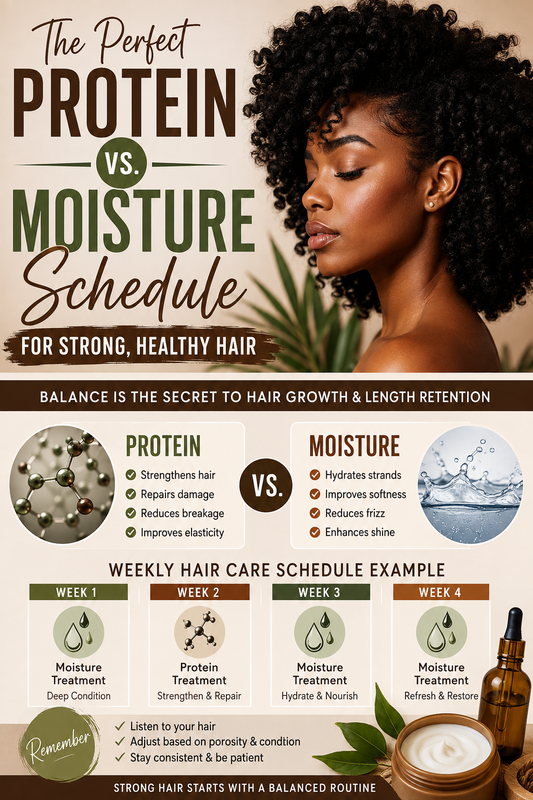
Healthy hair isn't just about buying the right products—it's about maintaining the right balance between protein and moisture. Too much protein can make hair stiff and brittle, while too much moisture can leave it weak, limp, and prone to breakage.
Whether you have 4C hair, curls, locs, twists, braids, relaxed hair, or color-treated hair, understanding how protein and moisture work together is one of the biggest secrets to stronger, healthier hair.
In this complete guide, you'll learn:
- What protein does for hair
- Why moisture is equally important
- Signs your hair needs protein
- Signs your hair needs moisture
- Weekly, monthly, and seasonal schedules
- Best routines for natural hair
- How to balance treatments without overdoing either one
Why Hair Needs Both Protein and Moisture
Hair is primarily made of keratin, a structural protein that gives each strand strength and elasticity.
As hair ages, daily activities slowly wear away that protective structure.
Hair loses protein from:
- Heat styling
- Coloring
- Bleaching
- UV exposure
- Chemical treatments
- Tight hairstyles
- Friction
- Weather
- Frequent washing
At the same time, hair constantly loses moisture through evaporation.
Healthy hair needs both.
Think of protein as the framework of a house, while moisture is the flexibility that keeps the structure from cracking.
Without one, the other cannot perform properly.
Understanding Protein
Protein treatments help strengthen weakened strands by temporarily filling damaged areas along the hair shaft.
Benefits include:
- Less breakage
- Increased strength
- Better curl definition
- Improved elasticity
- Reduced split ends
- Stronger ends
- Healthier-looking hair
Understanding Moisture
Moisture treatments replenish water that naturally escapes from the hair.
Proper hydration makes hair:
- Softer
- Shinier
- More flexible
- Easier to detangle
- Less frizzy
- More manageable
Moisture also reduces mechanical damage during styling.
What Happens When Hair Lacks Protein?
Protein-deficient hair often feels:
- Mushy
- Weak
- Overly stretchy
- Limp
- Thin
You may notice:
- Hair snapping while wet
- Curls refusing to spring back
- Excessive shedding from breakage
- Flat hairstyles
- Ends splitting rapidly
What Happens When Hair Lacks Moisture?
Dry hair often feels:
- Rough
- Brittle
- Crunchy
- Dull
- Hard
Symptoms include:
- Tangles
- Knots
- Frizz
- Split ends
- Excessive breakage
- Difficulty combing
Protein Overload
Using protein too frequently can cause:
- Stiff hair
- Crunchy texture
- Reduced elasticity
- Breakage
- Dryness
- Hair that feels like straw
This is one reason balancing your routine matters.
Moisture Overload
Too much moisture can make hair feel:
- Mushy
- Gummy
- Weak
- Lifeless
Hair stretches excessively before breaking.
This often happens after repeated deep conditioning without strengthening treatments.
The Stretch Test
A simple stretch test helps determine your hair's needs.
Take one clean strand.
If it stretches slightly and returns
Your balance is healthy.
If it snaps immediately
You likely need moisture.
If it stretches excessively
Your hair may benefit from protein.
Weekly Protein vs. Moisture Schedule
Week One
- Shampoo
- Moisturizing conditioner
- Deep moisture mask
Week Two
- Shampoo
- Protein treatment
- Moisturizing leave-in
Week Three
- Moisture focus
Week Four
- Deep moisture treatment
Repeat monthly while adjusting based on your hair's condition.
Schedule for Healthy Natural Hair
Most healthy natural hair only needs:
- Protein every 4–6 weeks
- Moisture weekly
This keeps hair strong without becoming stiff.
Schedule for Damaged Hair
If your hair has been:
- Colored
- Bleached
- Heat damaged
- Relaxed
A better schedule may be:
Weekly:
- Moisture treatment
Every 2–3 weeks:
- Light protein
Monthly:
- Strong protein treatment if needed
Schedule for High Porosity Hair
High-porosity hair loses moisture quickly.
Ideal routine:
Weekly
- Moisture mask
Every 3–4 weeks
- Protein treatment
Daily
- Moisturizing spray
- Leave-in conditioner
- Light oil sealant
Schedule for Low Porosity Hair
Low-porosity hair often struggles to absorb products.
Recommended:
Weekly
- Steam treatment
- Moisturizing conditioner
Every 6–8 weeks
- Mild protein
Avoid heavy protein products unless necessary.
Protein vs. Moisture for 4C Hair
Because 4C hair naturally bends more along the strand, it is more vulnerable to breakage.
Suggested schedule:
Every wash day
- Hydrating shampoo
- Moisturizing conditioner
Weekly
- Deep conditioning
Monthly
- Protein treatment
Daily
- Moisturizing spray
Protein vs. Moisture for Curly Hair
Curly hair benefits from:
Weekly
- Moisture mask
Monthly
- Protein treatment
Refresh curls with lightweight hydration between wash days.
Protein vs. Moisture for Locs
Locs require balance too.
Protein every:
6–8 weeks
Moisture:
2–4 times weekly using a lightweight moisturizing spray.
Avoid heavy creams that leave buildup inside locs.
Protein vs. Moisture for Braids
Protective styles still require maintenance.
While wearing braids:
- Moisturize scalp several times weekly
- Use lightweight sprays
- Avoid heavy protein unless hair is exposed
After removing braids:
- Clarify
- Deep condition
- Perform a protein treatment if needed
Seasonal Schedule
Winter
Dry air increases moisture loss.
Focus on:
- Weekly deep conditioning
- Leave-in conditioner
- Protective styles
Protein only as needed.
Summer
Swimming, sweat, and UV exposure weaken hair.
Maintain:
Weekly moisture
Monthly protein
Clarify after chlorine exposure.
Wash Day Protein Schedule
Example:
- Shampoo
- Protein treatment
- Moisturizing conditioner
- Leave-in conditioner
- Hair oil
- Protective style
Wash Day Moisture Schedule
- Shampoo
- Deep conditioner
- Leave-in
- Moisturizing cream
- Seal with oil
Ingredients That Add Protein
Look for:
- Hydrolyzed keratin
- Wheat protein
- Silk protein
- Rice protein
- Oat protein
- Soy protein
- Collagen
- Amino acids
Ingredients That Improve Moisture
Excellent moisturizing ingredients include:
- Aloe vera
- Glycerin
- Honey
- Marshmallow root
- Slippery elm
- Coconut water
- Panthenol
- Shea butter
- Mango butter
Oils That Help Seal Moisture
Oils don't hydrate hair—they help reduce moisture loss.
Popular choices include:
- Jamaican black castor oil
- Avocado oil
- Olive oil
- Grapeseed oil
- Sweet almond oil
- Argan oil
- Jojoba oil
How Often Should You Deep Condition?
Healthy hair:
Weekly
Dry hair:
Once or twice weekly
Damaged hair:
Every wash day
How Often Should You Use Protein?
Healthy hair:
Every 4–6 weeks
Color-treated hair:
Every 2–4 weeks
Bleached hair:
Every 2–3 weeks
Always follow protein treatments with moisture.
Common Mistakes
Many people unknowingly damage their hair by:
- Using protein every wash day
- Never using protein
- Skipping deep conditioning
- Applying oil to dry hair without moisture
- Ignoring porosity
- Overwashing
- Using excessive heat
- Not trimming damaged ends
Creating Your Personalized Schedule
Ask yourself:
Does my hair feel:
Soft?
Stretchy?
Hard?
Dry?
Weak?
Adjust your schedule accordingly.
Hair needs change throughout the year.
Sample Monthly Calendar
Week 1
Moisture deep conditioning
Week 2
Regular wash
Week 3
Protein treatment
Week 4
Moisture mask
Repeat.
Signs Your Routine Is Working
You'll notice:
- Less breakage
- Softer hair
- Better elasticity
- More shine
- Easier detangling
- Healthier curls
- Fuller appearance
- Improved length retention
Frequently Asked Questions
Can you use protein every week?
Most healthy hair doesn't need weekly protein. Frequent protein treatments can lead to stiffness and breakage unless your hair is severely damaged.
Should protein come before or after deep conditioning?
Protein treatments are generally followed by a moisturizing conditioner or deep conditioner to restore softness and balance.
Is moisture more important than protein?
Both are essential. Most people need moisture more often, while protein is used periodically to strengthen the hair.
Can protective styles replace protein treatments?
No. Braids, twists, and locs protect hair from physical damage but do not replace the need for proper hydration and occasional protein.
How do I know if my schedule is working?
Look for reduced breakage, improved elasticity, softer hair, and better manageability over several wash cycles.
Final Thoughts
A balanced protein vs. moisture schedule is one of the most effective ways to achieve healthier, stronger hair over time. Instead of relying on a one-size-fits-all routine, pay attention to your hair's texture, elasticity, and porosity. Most natural hair thrives with weekly moisture treatments and periodic protein treatments every four to six weeks, while damaged or chemically treated hair may need additional strengthening. By consistently adjusting your routine based on your hair's needs, you can reduce breakage, retain length, improve curl definition, and enjoy softer, more resilient hair year-round.