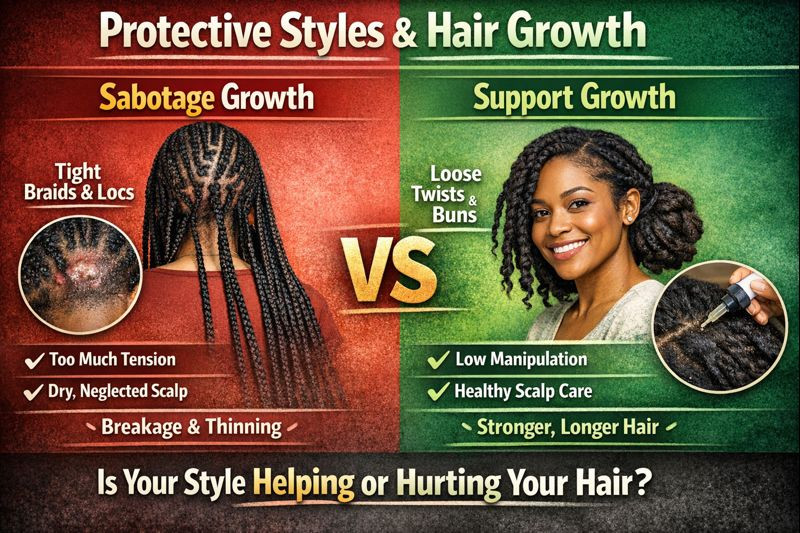
Protective styles are supposed to protect your hair — yet for many people, hair seems to stall, thin, or break while wearing them.
So what gives?
The truth is this:
Not all protective styles are protective — and some quietly sabotage growth.
In this guide, we’ll break down:
-
Why some protective styles stop hair growth
-
The hidden mistakes that cause thinning, shedding, and breakage
-
Which styles truly support length retention
-
How to wear protective styles the right way so your hair actually grows
Let’s clear the confusion once and for all.
What “Protective Style” Actually Means
A protective style isn’t defined by how neat, trendy, or long-lasting it is.
A style is truly protective only if it:
-
Reduces daily manipulation
-
Protects the ends (the oldest, weakest part of hair)
-
Does not stress the scalp or hairline
-
Allows moisture to stay inside the hair strand
If a style looks good but causes tension, dryness, or scalp inflammation — it’s not protective, no matter how popular it is.
Why Hair Often Stops Growing in Protective Styles
Before blaming the style itself, understand what’s really happening.
Hair growth issues during protective styles usually come from:
1. Tension at the Root
Constant pulling inflames follicles and restricts blood flow. Over time, this weakens growth signals.
2. Dryness Disguised as “Low Manipulation”
Hair may be left alone, but not moisturized — leading to breakage when the style is removed.
3. Scalp Neglect
Dirty, inflamed, or clogged scalps slow growth even if hair is “protected.”
4. Overextended Wear Time
Styles kept in too long cause matting, breakage, and shedding that looks like “no growth.”
Growth doesn’t stop — retention does.
Protective Styles That Often PREVENT Growth
These styles aren’t automatically bad — but they’re commonly done in ways that harm hair.
Tight Box Braids (Especially Small or Long)
Why they hurt growth:
-
Heavy tension at the root
-
Synthetic hair causes friction and dryness
-
Edges and crown take the most damage
Warning signs:
-
Scalp soreness beyond 48 hours
-
Red bumps or itching
-
Thinning edges after removal
Bottom line:
If your braids hurt, itch, or pull — growth is being compromised.
Knotless Braids (When Done Wrong)
Knotless braids can be safer, but:
-
They’re often installed too tight
-
Hair is pulled continuously from the root
-
Lightweight feel ≠ low tension
Common mistake:
Braiders pull tighter to make styles last longer.
Sew-Ins (With Tight Braiding Patterns)
Why they block growth:
-
Cornrows underneath are often braided too tightly
-
Hair is hidden but not moisturized
-
Scalp access is limited
Hidden risk:
Dry, matted hair underneath the install breaks during takedown.
Faux Locs & Distressed Locs
Issues:
-
Heavy weight
-
Constant friction
-
Excessive scalp tension
These styles are especially risky for:
-
Fine hair
-
Thinning edges
-
Sensitive scalps
High-Tension Cornrows
Cornrows are only protective if:
-
They’re loose
-
Not worn repeatedly in the same pattern
Repeated tight cornrows = slow follicle damage.
Protective Styles That ACTUALLY Help Growth
These styles prioritize scalp health, moisture retention, and low tension.
Loose Two-Strand Twists
Why they work:
-
Minimal tension
-
Easy access to scalp
-
Ends stay tucked
Perfect for:
-
Fine hair
-
Growth phases
-
Breakage recovery
Medium-Sized Flat Twists
Flat twists:
-
Distribute tension evenly
-
Protect ends
-
Allow airflow to the scalp
They’re gentler than cornrows and ideal for sensitive scalps.
Low-Tension Mini Twists
Mini twists support growth when installed loosely and moisturized regularly.
Pro tip:
-
Use your natural hair only (no synthetic hair)
-
Re-twist as needed instead of keeping them in too long
Loose Buns & Low Manipulation Styles
Sometimes the best “protective style” isn’t braided at all.
Examples:
-
Low buns
-
Claw-clip styles
-
Loose pineapple styles
These reduce stress while keeping ends protected.
Wigs (Done Correctly)
Wigs can support growth if:
-
Cornrows underneath are loose
-
Hair is moisturized weekly
-
Wig caps aren’t tight
Key:
Your real hair must be treated — not ignored.
The #1 Reason Protective Styles Fail: Scalp Neglect
You can wear the perfect style and still stunt growth if your scalp is unhealthy.
Healthy growth requires:
-
Clean follicles
-
Oxygen flow
-
Consistent stimulation
If oil, sweat, and buildup sit on the scalp for weeks — follicles slow down.
This is why scalp care is non-negotiable during protective styles.
How to Maintain Growth While Wearing Protective Styles
1. Moisturize the Scalp (Lightly but Consistently)
Use lightweight oils or scalp serums that:
-
Absorb quickly
-
Reduce inflammation
-
Don’t clog follicles
Massage gently 2–3x per week.
2. Hydrate the Hair Underneath
Even hidden hair needs moisture.
Best methods:
-
Water-based leave-ins
-
Light oils to seal
-
Focus on exposed hairline and nape
3. Clean the Scalp Every 1–2 Weeks
Use:
-
Diluted shampoo
-
Scalp cleansers
-
Applicator bottles
A clean scalp = faster growth cycles.
4. Limit Wear Time
Ideal wear times:
-
Braids: 4–6 weeks max
-
Twists: 2–4 weeks
-
Sew-ins: 6–8 weeks
Longer wear ≠ more growth.
5. Give Your Hair a Break Between Styles
At least 1–2 weeks between installs allows:
-
Follicle recovery
-
Moisture restoration
-
Shedding normalization
Growth happens during rest periods.
Signs Your Protective Style Is Damaging Your Growth
Pay attention to these red flags:
-
Persistent scalp pain
-
Excessive shedding during takedown
-
Thinning edges or crown
-
Dry, brittle hair underneath
-
Short broken hairs near the root
These mean your style is costing you length, not protecting it.
Growth Isn’t About the Style — It’s About the SYSTEM
Protective styles don’t grow hair.
Healthy habits do.
Hair thrives when:
-
Scalp inflammation is low
-
Moisture levels are balanced
-
Tension is minimal
-
Breakage is controlled
The best protective style is one that supports your entire hair growth system — scalp, strands, and lifestyle.
Final Takeaway: Choose Protection, Not Just Style
If your hair:
-
Feels thinner after every install
-
Breaks during takedown
-
Never seems to retain length
It’s time to rethink how you’re wearing protective styles.
Protection should feel comfortable, nourishing, and sustainable.
When you choose low tension, consistent scalp care, and moisture retention — growth follows naturally.