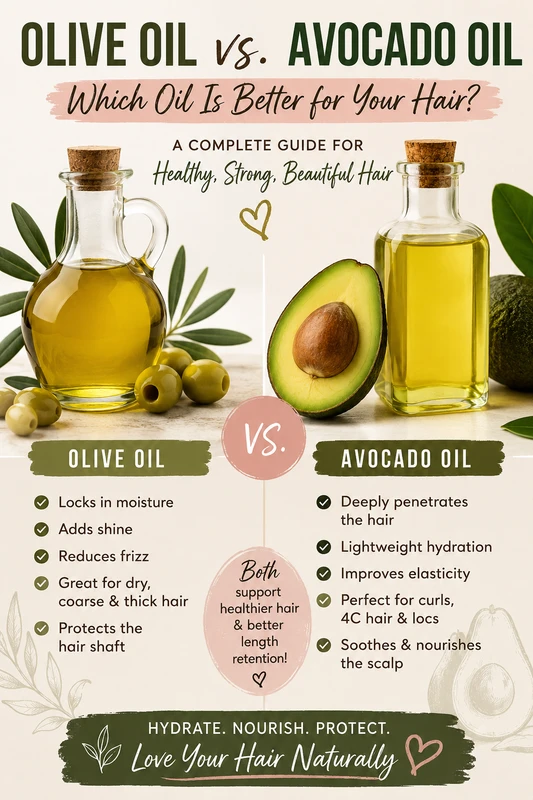
Natural oils have been used for centuries to nourish hair and improve scalp health. Among the most popular are olive oil and avocado oil. Both are packed with vitamins, antioxidants, and healthy fatty acids, but they don't perform exactly the same way on every hair type.
If you have natural hair, curly hair, coily hair, locs, twists, or protective styles, choosing the right oil can make a noticeable difference in moisture retention, softness, shine, and breakage prevention.
In this complete guide, you'll learn:
- The benefits of olive oil
- The benefits of avocado oil
- Which oil penetrates hair better
- Which works best for Black hair
- Which oil is better for locs
- Which oil helps dry scalp
- Which is better for hair growth
- How to use each oil correctly
- Whether you should combine both oils
By the end, you'll know exactly which oil deserves a place in your hair routine.
What Is Olive Oil?
Olive oil is extracted from olives and has been used for thousands of years for cooking, skincare, and hair care.
Extra virgin olive oil is considered the highest-quality form because it undergoes minimal processing and retains the greatest amount of nutrients.
Olive oil contains:
- Vitamin E
- Vitamin K
- Oleic acid
- Polyphenols
- Antioxidants
- Healthy monounsaturated fats
These nutrients help nourish both the scalp and hair strands.
What Is Avocado Oil?
Avocado oil is extracted from the flesh of ripe avocados rather than the seed.
It contains many nutrients beneficial for healthy hair, including:
- Vitamins A, D, and E
- Potassium
- Magnesium
- Biotin (small amounts)
- Oleic acid
- Linoleic acid
- Antioxidants
Avocado oil is often considered one of the most penetrating natural oils available.
Olive Oil vs. Avocado Oil at a Glance
| Feature | Olive Oil | Avocado Oil |
|---|---|---|
| Moisturizing | Excellent | Excellent |
| Lightweight | Moderate | Yes |
| Penetrates Hair | Moderate | Excellent |
| Shine | Excellent | Excellent |
| Scalp Care | Very Good | Excellent |
| Heat Protection | Moderate | Better |
| Vitamin Content | High | Very High |
| Best for Dry Hair | Yes | Yes |
| Best for Fine Hair | Can feel heavy | Better |
| Best for Thick Hair | Excellent | Excellent |
Which Oil Penetrates Hair Better?
This is where avocado oil usually has the advantage.
Because avocado oil contains a high concentration of monounsaturated fatty acids, it penetrates deeper into the hair shaft than many heavier oils.
Benefits include:
- Longer-lasting moisture
- Improved elasticity
- Less breakage
- Softer curls
- Reduced dryness
Olive oil tends to coat the outside of the hair more effectively, creating a protective barrier that locks moisture inside.
Which Oil Is Better for Dry Natural Hair?
Both oils work well, but they solve dryness differently.
Olive Oil
Olive oil excels at sealing moisture.
It helps:
- Reduce moisture loss
- Increase shine
- Smooth rough cuticles
- Minimize frizz
Avocado Oil
Avocado oil helps moisturize from within.
It supports:
- Deep hydration
- Improved softness
- Flexible curls
- Better elasticity
For extremely dry hair, many people benefit from using avocado oil first and olive oil afterward to seal everything in.
Olive Oil Benefits for Black Hair
Black hair naturally has a tighter curl pattern that makes it harder for scalp oils to travel down the hair shaft.
Olive oil helps by:
- Locking in moisture
- Adding shine
- Reducing frizz
- Softening coarse strands
- Preventing split ends
- Improving manageability
Many people also enjoy using warm olive oil treatments before shampooing.
Avocado Oil Benefits for Black Hair
Avocado oil has become increasingly popular because it feels lighter while still delivering deep nourishment.
Benefits include:
- Soft curls
- Reduced breakage
- Better curl definition
- Lightweight hydration
- Improved elasticity
- Less stiffness
Many people with type 3 and type 4 hair appreciate that avocado oil doesn't leave hair feeling overly greasy.
Which Oil Helps Hair Growth?
Neither olive oil nor avocado oil directly causes hair to grow faster.
However, both create healthier conditions for growth.
Healthy hair grows best when it experiences:
- Less breakage
- Better moisture retention
- A healthier scalp
- Reduced inflammation
- Stronger strands
Hair length retention often improves dramatically when hair stays moisturized.
Olive Oil for Scalp Health
Olive oil can help soothe dry, flaky scalps.
Benefits include:
- Moisturizing dry skin
- Reducing tightness
- Softening buildup before washing
- Supporting a healthier scalp barrier
Avoid applying excessive amounts, as heavy oil buildup can attract dirt over time.
Avocado Oil for Scalp Health
Avocado oil is rich in antioxidants and vitamin E.
It may help:
- Calm irritated skin
- Nourish dry scalp
- Improve scalp softness
- Reduce dryness
Because it absorbs well, it often leaves less residue.
Which Oil Is Better for Curly Hair?
Curly hair typically needs both moisture and protection.
Avocado oil excels at hydration.
Olive oil excels at sealing.
For many curl routines:
- Apply a water-based moisturizer.
- Use avocado oil.
- Seal with a small amount of olive oil.
This combination often provides longer-lasting moisture.
Which Oil Is Better for 4C Hair?
4C hair usually requires maximum moisture retention.
Both oils perform well.
Olive oil works especially well for:
- Thick hair
- Protective styles
- Overnight treatments
Avocado oil works especially well for:
- Daily moisturizing
- Twist-outs
- Wash-and-go styles
- Lightweight hydration
Olive Oil for Protective Styles
Protective styles can become dry over time.
Olive oil helps:
- Reduce dryness
- Add shine
- Minimize frizz
- Keep braids flexible
Use only a small amount to avoid buildup.
Avocado Oil for Protective Styles
Avocado oil works well because it feels lighter.
It helps keep:
- Braids moisturized
- Twists soft
- Locs conditioned
- Scalp hydrated
Which Oil Is Better for Locs?
Locs require moisture without excessive residue.
Avocado oil is often preferred because:
- It absorbs quickly.
- It feels lighter.
- It reduces stiffness.
- It leaves less buildup.
Olive oil can still be useful occasionally, especially for dry mature locs.
Which Oil Is Better for Braids?
Braids often expose the scalp while keeping hair tucked away.
Both oils work well.
Olive oil helps prevent moisture loss.
Avocado oil moisturizes the scalp without feeling excessively heavy.
Which Oil Is Better for Twist-Outs?
Twist-outs require softness and definition.
Avocado oil often produces:
- Softer twists
- Better movement
- Less stiffness
Olive oil provides:
- Shine
- Humidity protection
- Moisture sealing
Many people combine both.
Which Oil Is Better Before Shampooing?
Pre-poo treatments help protect hair during washing.
Olive oil is excellent for:
- Thick curls
- Dry ends
- Damaged hair
Avocado oil is ideal for:
- Fine curls
- Medium-density hair
- Frequent washing routines
Leave either oil on for 20–60 minutes before shampooing.
Which Oil Is Better for Hot Oil Treatments?
Both are excellent choices.
Warm—not hot—the oil slightly before application.
Massage gently into:
- Scalp
- Mid-lengths
- Ends
Cover with a shower cap for about 30 minutes before cleansing.
Can You Mix Olive Oil and Avocado Oil?
Absolutely.
A blend offers the best of both worlds:
- Deep hydration
- Improved softness
- Moisture sealing
- Better shine
- Less breakage
Many DIY hair oil blends combine these two oils.
How Often Should You Use These Oils?
Frequency depends on your hair type.
Dry Hair
2–4 times weekly
Curly Hair
1–3 times weekly
Locs
Once or twice weekly
Braids
Every few days on the scalp and exposed hair
Fine Hair
Once weekly using small amounts
Common Mistakes
Avoid these common problems:
Using Too Much Oil
Heavy application can attract dirt and create buildup.
Applying Oil to Dry Hair
Hair absorbs oils better when slightly damp.
Skipping Shampoo
Natural oils should still be washed out regularly.
Expecting Overnight Growth
Healthy oils improve hair health—not overnight growth speed.
Best Hair Types for Olive Oil
Olive oil works especially well for:
- Thick hair
- Coarse curls
- Dry hair
- High-porosity hair
- Mature locs
Best Hair Types for Avocado Oil
Avocado oil works especially well for:
- Fine curls
- Medium-density hair
- Low-porosity hair
- Wash-and-go styles
- Daily moisturizing
Can These Oils Reduce Breakage?
Yes.
Hair that stays moisturized becomes more flexible.
Flexible strands resist snapping during:
- Combing
- Detangling
- Styling
- Protective styling removal
Reduced breakage often results in longer-looking hair over time.
Should You Use Oil Every Day?
Not necessarily.
Hair generally benefits more from:
- Proper cleansing
- Conditioning
- Water-based moisturizers
- Occasional oil sealing
Too much oil can weigh hair down.
Building the Perfect Hair Routine
For healthy natural hair:
- Cleanse regularly.
- Deep condition weekly.
- Apply a leave-in conditioner.
- Use avocado oil for hydration.
- Seal with olive oil if needed.
- Protect hair while sleeping with satin or silk.
- Minimize excessive heat styling.
Consistency matters more than using large amounts of oil.
Frequently Asked Questions
Is olive oil or avocado oil better for hair growth?
Neither directly speeds growth. Both support healthier hair by reducing breakage and improving moisture retention.
Can I use both oils together?
Yes. Many people enjoy combining avocado oil for hydration with olive oil to help seal in moisture.
Which oil is better for low-porosity hair?
Avocado oil is often preferred because it is lighter and tends to absorb more readily.
Which oil is better for high-porosity hair?
Olive oil is excellent for helping reduce moisture loss by coating the hair shaft.
Will these oils make hair greasy?
Only if applied in excess. Use a few drops at a time and focus on the mid-lengths and ends unless your scalp specifically needs moisture.
Final Verdict: Olive Oil vs. Avocado Oil
There is no single winner because each oil has unique strengths.
Choose olive oil if your priority is:
- Locking in moisture
- Adding shine
- Protecting very dry or coarse hair
- Supporting high-porosity strands
Choose avocado oil if your priority is:
- Lightweight hydration
- Deep nourishment
- Improved elasticity
- Softer curls and easier manageability
- Moisturizing locs or low-porosity hair
For many people with natural hair, the most effective approach is using both oils strategically. Apply avocado oil to help hydrate the hair, then use a small amount of olive oil to seal in that moisture. Combined with regular cleansing, deep conditioning, and gentle styling, this routine can help reduce breakage, improve softness, and support long-term length retention.
Conclusion
Olive oil and avocado oil are both valuable additions to a healthy hair care routine. Rather than viewing them as competitors, think of them as complementary tools. Avocado oil excels at penetrating and nourishing the hair, while olive oil shines at protecting and sealing in moisture.
The best choice depends on your hair type, porosity, styling routine, and moisture needs. Experiment with each oil—or a combination of both—to discover what leaves your curls, coils, braids, or locs looking and feeling their healthiest. Consistent care, proper hydration, and patience will always produce better results than relying on any single ingredient alone.