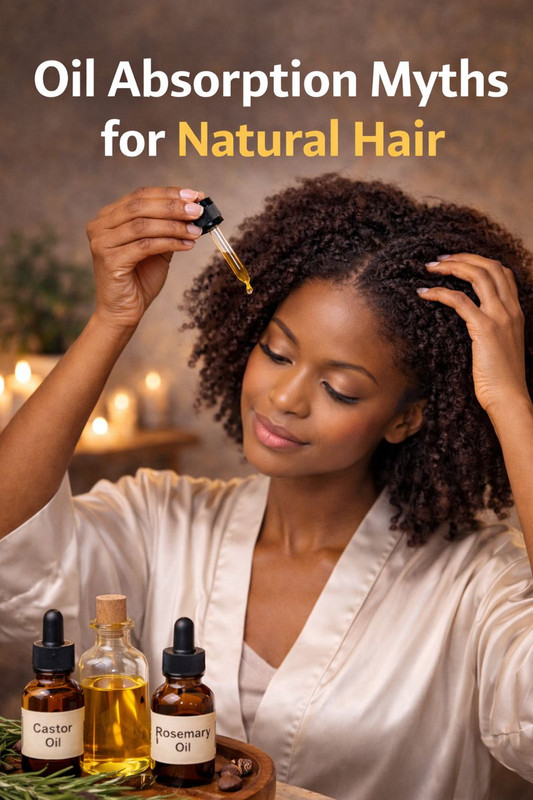
If you’ve ever heard that “oil moisturizes hair” or that certain oils “absorb deep into the strands,” you’re not alone. Oil absorption myths are some of the most widespread—and damaging—beliefs in natural hair care.
For many people with natural hair, especially 4A, 4B, and 4C textures, misunderstanding how oil actually works leads to:
-
Chronic dryness
-
Breakage
-
Slow growth
-
Product buildup
In this in-depth guide, we’ll break down the biggest oil absorption myths, explain what oils really do for natural hair, and show you how to use oils correctly for moisture retention, scalp health, and length retention.
Why Oil Myths Are So Common in Natural Hair Care
Oil has been used in hair care for centuries, especially in Black and natural hair communities. Because oils improve shine and softness temporarily, many people assume oils:
-
Moisturize hair
-
Absorb into dry strands
-
Replace water
But shine is not moisture, and oil does not behave the way most people think it does.
Understanding the science behind oils is the key to healthier hair.
Myth #1: Oils Moisturize Natural Hair
This is the most damaging myth of all.
The Truth:
Oil does not moisturize hair.
Water moisturizes hair. Oil does not add moisture—it seals it.
Hair moisture comes from:
-
Water
-
Water-based products
Oil’s role is to slow down moisture loss, not replace water.
Why this myth causes dryness:
When oil is applied to dry hair:
-
It locks out water
-
Prevents hydration
-
Creates a false sense of moisture
Over time, hair becomes brittle and prone to breakage.
? If your hair feels dry after oiling, this is why.
Myth #2: Oils Absorb Deep Into Hair Strands
Many oils are marketed as “penetrating” or “absorbing,” but this claim is often exaggerated.
The Truth:
Most oils sit on the surface of the hair shaft.
Hair strands are made of tightly packed keratin layers. Oil molecules are:
-
Too large to fully penetrate dry hair
-
Unable to hydrate hair internally
Some oils can partially penetrate under specific conditions, but penetration does not equal moisture.
Myth #3: Heavier Oils Are Better for Natural Hair
Many people believe thick oils work best for kinky and coily hair.
The Truth:
Heavy oils can:
-
Weigh hair down
-
Cause buildup
-
Block moisture absorption
-
Make hair feel dry over time
For natural hair, especially 4C, lightweight oils used correctly are far more effective.
Hair thrives when it can:
-
Absorb water
-
Retain flexibility
-
Stay balanced—not coated
Myth #4: Oiling Your Hair Every Day Prevents Breakage
Daily oiling is often recommended, but it’s not always helpful.
The Truth:
Excessive oiling:
-
Blocks moisture entry
-
Attracts dirt
-
Leads to buildup
-
Weakens strands over time
Breakage is usually caused by dryness, friction, and tension, not a lack of oil.
More oil does not equal healthier hair.
Myth #5: Oils Replace Leave-In Conditioners
Some people skip leave-in conditioners entirely and rely on oils.
The Truth:
Leave-in conditioners:
-
Contain water
-
Provide slip
-
Improve elasticity
-
Support detangling
Oils do none of these things on their own.
Using oil without a water-based product underneath leaves hair unprotected and brittle.
Myth #6: If Oil Makes Hair Soft, It Must Be Working
Softness can be misleading.
The Truth:
Oil creates:
-
Temporary softness
-
Surface-level shine
-
Reduced friction
But underneath, hair may still be dehydrated.
True moisture is measured by:
-
Elasticity
-
Flexibility
-
Reduced breakage
Hair that snaps easily is not moisturized—even if it feels soft.
How Oil Actually Works on Natural Hair
Oil plays an important role—but only when used correctly.
What oils actually do:
-
Seal in moisture
-
Reduce friction
-
Improve manageability
-
Protect hair from environmental stress
Oil is a supporting player, not the main character.
The Difference Between Sealing and Absorbing
Understanding this distinction changes everything.
Sealing:
-
Oil coats the hair shaft
-
Slows water evaporation
-
Locks in existing moisture
Absorbing:
-
Water enters the hair shaft
-
Improves elasticity
-
Prevents breakage
Oil cannot replace absorption—it can only help retain what’s already there.
Oils That Behave Differently (And Why It Matters)
Not all oils act the same way.
Lightweight oils:
-
Jojoba oil
-
Grapeseed oil
-
Argan oil
These oils:
-
Mimic natural sebum
-
Absorb faster on the scalp
-
Are less likely to cause buildup
Heavy oils:
-
Castor oil
-
Olive oil
-
Shea butter blends
These oils:
-
Seal aggressively
-
Work best when layered lightly
-
Should never be used on dry hair
The Biggest Oil Mistake Natural Hair Makes
The most common mistake is using oil first.
Correct order:
-
Water or water-based leave-in
-
Cream (optional)
-
Oil to seal
This method keeps hair flexible and hydrated longer.
How Oil Myths Affect 4C Hair the Most
4C hair is naturally:
-
Tightly coiled
-
Low-porosity for many people
-
Prone to dryness
When oil is misused:
-
Moisture can’t enter
-
Hair becomes stiff
-
Breakage increases—especially at the crown and ends
This is why many 4C naturals feel like their hair “doesn’t respond” to products.
Oil and Scalp Health: Another Common Myth
Myth: Oil hydrates the scalp
Truth:
Scalp skin needs:
-
Cleansing
-
Water-based hydration
-
Balanced oil production
Over-oiling the scalp can:
-
Clog follicles
-
Trap bacteria
-
Cause itching and flakes
Healthy growth starts with a clean, balanced scalp, not excessive oil.
How to Use Oils Correctly for Natural Hair
Here’s the right way to use oil—without sabotaging moisture.
1. Always Apply Oil to Damp Hair
This allows oil to lock in hydration.
2. Use Small Amounts
A few drops go a long way.
3. Focus on Ends First
Ends are oldest and driest.
4. Cleanse Regularly
Remove buildup so moisture can enter.
5. Choose Oils Based on Your Hair’s Needs
Not trends.
Signs You’re Overusing Oil
If you notice:
-
Hair feels dry but greasy
-
Products stop working
-
Hair repels water
-
Increased breakage
It’s time to clarify and reset your routine.
How Long It Takes to Reverse Oil-Related Dryness
With proper care:
-
Improved moisture balance: 2–3 weeks
-
Reduced breakage: 4–6 weeks
-
Better elasticity: 6–8 weeks
Consistency matters more than products.
Common Oil Myths That Refuse to Die
❌ “Oil equals moisture”
❌ “The thicker the oil, the better”
❌ “Oiling daily speeds growth”
❌ “Oil penetrates dry hair”
Understanding the truth puts you ahead of most routines.
Final Thoughts: Oil Isn’t the Enemy—Misinformation Is
Oil isn’t bad for natural hair. Using oil incorrectly is.
When you stop expecting oil to moisturize and start using it as a sealant, your hair becomes:
-
Softer
-
More flexible
-
Easier to retain length
-
Less prone to breakage
? Water builds moisture. Oil protects it. Growth happens when both work together.