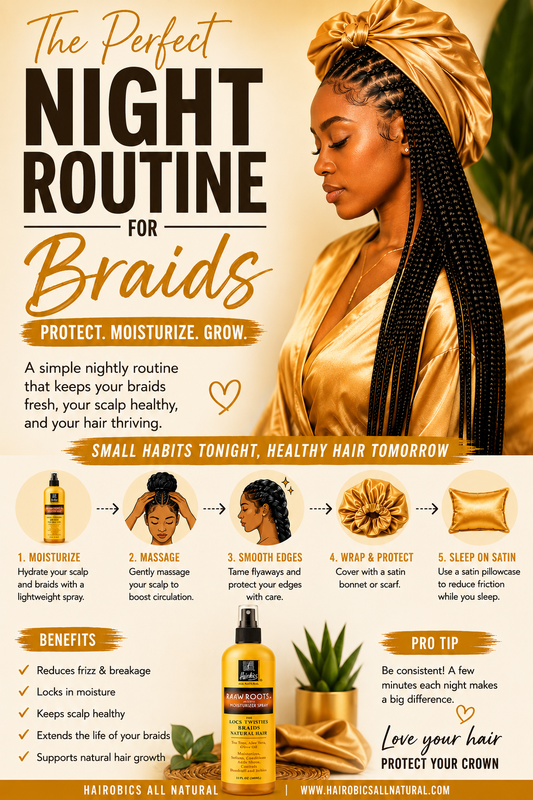
Braids are one of the best protective hairstyles for promoting healthy hair, reducing daily styling, and helping retain length. Whether you wear knotless braids, box braids, cornrows, goddess braids, twists, or feed-in braids, your nighttime routine plays a major role in how long your style lasts.
Many people spend hundreds of dollars installing beautiful braids only to watch them become frizzy, dry, itchy, and loose within a couple of weeks. The biggest reason isn't poor installation—it's poor nighttime care.
While you sleep, your hair constantly rubs against your pillow. Cotton fabrics absorb moisture, create friction, and roughen the braid surface. Without protection, this nightly friction gradually destroys the neat appearance of your style.
The good news is that preventing these problems is simple.
A consistent night routine can:
- Extend the life of your braids by several weeks
- Reduce frizz dramatically
- Keep your scalp hydrated
- Minimize breakage
- Reduce itching
- Prevent tension around the edges
- Help retain natural hair growth
- Keep braids shiny and neat
In this complete guide, you'll learn exactly what to do every evening before bed so your braids continue looking salon-fresh for as long as possible.
Why Sleeping Correctly Matters
Your nighttime routine is when your hair either recovers or experiences damage.
Every toss and turn creates friction between your braids and your pillow. Over time, this friction causes:
- Flyaways
- Frizz
- Loose roots
- Dry scalp
- Dull-looking braids
- Broken baby hairs
- Edge thinning
Because protective styles are meant to reduce manipulation, your goal should be minimizing unnecessary movement while sleeping.
Think of your nighttime routine as preserving the investment you've already made.
What Happens When You Skip a Night Routine?
Many people simply lie down and go to sleep without wrapping their braids.
After only a few nights they begin noticing:
Increased Frizz
Loose synthetic fibers start sticking out.
The smooth finish disappears.
Instead of looking freshly installed, braids begin appearing old much sooner.
Dry Hair
Natural hair still needs moisture—even when braided.
Without nightly hydration, the hair inside the braid becomes brittle.
Dry hair breaks more easily.
Length retention becomes difficult.
Itchy Scalp
A dry scalp often becomes itchy.
Many people scratch aggressively, which creates irritation and can even loosen braids.
Healthy scalp care reduces the urge to scratch.
Thinning Edges
Constant rubbing against cotton pillowcases weakens delicate baby hairs.
Eventually the edges become thinner.
Protecting them every night significantly reduces unnecessary stress.
Step 1: Moisturize Before Bed
The first step of any braid night routine should always be moisturizing.
Many people assume braids don't require moisture.
Actually, the opposite is true.
Your natural hair is tucked away for weeks.
Without hydration, it slowly becomes dry.
A lightweight moisturizer designed for protective styles is ideal because it refreshes both the scalp and the length of the braids without leaving heavy buildup.
A botanical spray made with nourishing ingredients can help:
- Restore moisture
- Reduce dryness
- Calm itchy scalp
- Improve softness
- Add shine
- Refresh older braids
Lightly mist the scalp and braid lengths.
Avoid soaking them.
Too much moisture can increase drying time and encourage buildup.
Why Lightweight Moisture Wins
Heavy oils seem moisturizing initially.
However, they often attract lint and dust.
This leaves braids looking dull.
Instead, choose hydration first.
Use oils sparingly only when your scalp specifically needs additional nourishment.
Hydrated braids remain flexible instead of stiff.
Flexible braids experience less breakage.
Step 2: Massage Your Scalp
After moisturizing, gently massage your scalp.
Use only your fingertips.
Avoid scratching with your nails.
Massaging increases circulation while helping distribute moisture evenly.
Benefits include:
- Reduced scalp tightness
- Better product absorption
- Less itching
- Relaxation before sleep
- Improved scalp comfort
Even two or three minutes makes a noticeable difference.
Step 3: Smooth Flyaways
Loose hairs create the appearance of older braids.
Before wrapping your hair, smooth flyaways using your hands or a soft edge brush.
If necessary, apply a tiny amount of lightweight braid mousse.
Avoid excessive gel every night.
Too much product causes flakes and buildup.
Your goal is simply smoothing—not stiffening.
Step 4: Protect Your Edges
Your edges are the most delicate hairs on your head.
They deserve extra protection.
If your braids are installed tightly, avoid pulling them backward every night.
Instead:
- Lay edges gently.
- Avoid excessive tension.
- Wrap loosely.
- Allow delicate hairs to rest.
Healthy edges contribute to fuller-looking hairstyles long after braids are removed.
Step 5: Wrap Your Braids Correctly
Wrapping is arguably the most important part of your nighttime routine.
It keeps braids compressed, reduces movement, and prevents friction.
The best materials include:
- Satin scarves
- Silk scarves
- Satin bonnets
- Silk bonnets
These smooth fabrics glide across the hair instead of absorbing moisture.
Cotton should never touch your braids overnight whenever possible.
How to Wrap Long Braids
If your braids reach your waist or lower:
Fold them upward.
Do not tightly bend them.
Gather them loosely at the top or back of your head.
Secure them comfortably before covering with a satin bonnet.
This prevents unnecessary pulling during sleep.
How to Wrap Short Braids
Short braids require less manipulation.
Simply smooth them downward.
Place a satin bonnet over the entire hairstyle.
Ensure every braid fits comfortably inside.
Nothing should feel compressed or painful.
Step 6: Sleep on Satin Anyway
Even if you wear a bonnet, accidents happen.
It may slide off overnight.
Using a satin pillowcase provides backup protection.
If your bonnet comes off, your braids remain protected.
This small investment greatly extends braid longevity.
Many hairstylists recommend using both a satin bonnet and satin pillowcase together for maximum protection.
Common Night Routine Mistakes
Many braid wearers unintentionally shorten the life of their style by making simple mistakes.
Some of the most common include:
- Sleeping with wet braids
- Skipping moisture completely
- Using cotton pillowcases
- Wrapping braids too tightly
- Applying too much oil
- Scratching the scalp aggressively
- Ignoring lint buildup
- Leaving scarves loose enough to slip off
Fortunately, every one of these habits is easy to correct with a consistent nighttime routine.
Step 7: Protect Your Scalp Overnight
Your scalp is the foundation of healthy hair growth. Even though your natural hair is tucked inside your braids, your scalp still needs regular care. A neglected scalp can become dry, itchy, flaky, or irritated, making your protective style uncomfortable.
Before bed, take a moment to inspect your scalp. If it feels dry, lightly mist it with a moisturizing braid spray. A lightweight formula like Hairobics Raaw Roots Moisturizing Spray can help hydrate the scalp without leaving behind heavy residue or making your braids greasy.
Avoid overloading your scalp with thick oils every night. While oils have their place, too much can attract dirt, clog hair follicles, and create buildup that is difficult to remove while wearing braids.
Signs Your Scalp Needs Moisture
Watch for these common signs:
- Persistent itching
- Tight feeling scalp
- White flakes
- Dull-looking braids
- Hair that feels stiff
- Increased shedding around the hairline
Hydrating your scalp consistently helps prevent these issues before they become bigger problems.
Step 8: Keep Braids Loose While Sleeping
One of the biggest misconceptions about braid maintenance is that tighter is better.
It isn't.
Wrapping your braids too tightly can:
- Increase scalp tension
- Cause headaches
- Stress hair follicles
- Contribute to thinning edges
- Create unnecessary breakage
Instead, gently gather your braids into a loose ponytail or pineapple if they are long enough. Secure them with a satin scrunchie rather than a rubber band.
Your scarf or bonnet should be snug enough to stay in place but never tight enough to leave marks on your forehead.
Step 9: Keep Your Bedroom Comfortable
Believe it or not, your sleeping environment affects your hair.
A room that is excessively hot can cause sweating, which may lead to:
- Frizz
- Itchy scalp
- Odor
- Product buildup
- Loose roots
Try to sleep in a cool, well-ventilated room whenever possible.
If you tend to sweat while sleeping, choose a breathable satin bonnet that allows airflow while still protecting your braids.
Weekly Night Maintenance Schedule
Following a simple weekly routine makes braid care easy and consistent.
Monday
- Lightly mist scalp
- Wrap with satin scarf
- Sleep on satin pillowcase
Tuesday
- Moisturize braid lengths
- Massage scalp for two minutes
- Protect edges
Wednesday
- Inspect for lint
- Remove loose fibers
- Refresh flyaways with braid mousse if needed
Thursday
- Hydrate scalp
- Check roots for excessive tension
- Wrap hair loosely
Friday
- Moisturize entire hairstyle
- Smooth edges
- Massage scalp
Saturday
- Deep braid refresh
- Clean scalp if needed
- Reapply moisturizer
Sunday
- Give your scalp extra attention
- Moisturize
- Massage
- Prepare for another healthy week
This schedule takes less than ten minutes each evening but can dramatically improve how long your braids stay fresh.
How to Prevent Frizz Overnight
Frizz is inevitable over time, but you can slow it down significantly.
Professional stylists recommend:
- Sleeping in satin every night
- Avoiding excessive touching
- Keeping braids moisturized
- Preventing sweat buildup
- Wrapping braids consistently
- Refreshing with mousse only when necessary
The fewer times your braids rub against rough surfaces, the smoother they remain.
Don't Forget Your Edges
Your edges deserve their own nighttime routine.
Before wrapping your hair:
- Apply a small amount of edge control if desired.
- Brush gently with a soft edge brush.
- Never force baby hairs into tight styles.
- Avoid pulling your scarf tightly across the hairline.
Healthy edges help your entire braid style look newer for longer.
Hydration vs. Oil: What's the Difference?
Many people confuse hydration with oiling.
Hydration means adding water-based moisture to your hair.
Oils help seal in that moisture but cannot replace it.
Think of it this way:
- Moisturizer = gives hair water.
- Oil = helps keep that water inside.
For braided styles, a lightweight moisturizing spray is often more beneficial for daily use than heavy oils.
Should You Wear Two Bonnets?
If you have extra-long braids, wearing two satin bonnets can sometimes help keep everything contained comfortably.
Another option is:
- Satin scarf first
- Extra-large satin bonnet second
This combination helps reduce movement throughout the night.
How Often Should You Moisturize Braids?
Most people benefit from moisturizing two to four times per week.
However, you may need more frequent hydration if:
- You live in a dry climate.
- You spend lots of time outdoors.
- Your scalp becomes itchy easily.
- Your braids are several weeks old.
Pay attention to how your hair feels instead of following a strict schedule.
The Best Products for a Night Routine
Keeping your nighttime routine simple often produces the best results.
A few essentials include:
- Satin bonnet
- Satin scarf
- Satin pillowcase
- Soft edge brush
- Lightweight braid mousse
- Wide-tooth comb (for natural hair after braid removal)
- Hairobics Raaw Roots Moisturizing Spray for regular hydration and scalp refresh
You don't need a shelf full of products. Consistency matters far more than quantity.
Professional Tips for Longer-Lasting Braids
Hair professionals recommend these habits to maximize the lifespan of your protective style:
- Never go to bed without wrapping your braids.
- Keep your scalp clean.
- Moisturize consistently.
- Avoid overusing gels.
- Don't scratch with your fingernails.
- Protect your edges.
- Sleep on satin every night.
- Refresh braids before they become excessively dry.
- Remove braids before excessive buildup or matting develops.
- Maintain a healthy diet and stay hydrated to support strong natural hair growth.
Following these practices helps your braids stay beautiful while protecting the health of your natural hair underneath.
How to Clean Your Scalp Without Ruining Your Braids
One of the biggest misconceptions about wearing braids is that you shouldn't wash them. In reality, a clean scalp is essential for healthy hair growth. Dirt, sweat, excess oil, and product buildup can clog hair follicles and lead to itching, flakes, unpleasant odors, and even inflammation.
The key is cleaning your scalp gently without creating excessive frizz.
Step-by-Step Scalp Cleaning Routine
Before bed is an excellent time to refresh your scalp if it's wash day.
Step 1: Dilute Your Shampoo
Mix a sulfate-free shampoo with water in an applicator bottle. This allows you to apply the cleanser directly to your scalp without oversaturating your braids.
Step 2: Massage Gently
Using your fingertips—not your nails—massage the shampoo into your scalp with small circular motions.
This helps lift dirt and oil while stimulating blood circulation.
Step 3: Rinse Thoroughly
Rinse until the water runs clear. Product left behind can cause itching and buildup.
Step 4: Remove Excess Water
Wrap your braids in a microfiber towel. Avoid rubbing, as friction creates unnecessary frizz.
Step 5: Dry Completely
Never go to sleep with damp braids.
Wet braids can:
- Develop mildew odors
- Encourage bacteria growth
- Cause scalp irritation
- Weaken your natural hair
- Lead to excessive frizz
If needed, use a blow dryer on a cool or low-heat setting until your scalp and braids are completely dry.
Why Sleeping With Wet Braids Is a Bad Idea
Many people wash their braids late in the evening and head straight to bed.
Unfortunately, this is one of the quickest ways to shorten the life of your protective style.
Sleeping with wet braids can cause:
- Musty smells
- Prolonged dampness
- Frizz
- Mold or mildew inside thick braids
- Scalp discomfort
- Weakened braid structure
Always allow enough drying time before wrapping your hair for the night.
Seasonal Night Routines for Braids
Your nighttime routine should change slightly depending on the season.
Summer
Heat and humidity increase sweating.
Focus on:
- Washing your scalp more frequently
- Using lightweight moisturizing sprays
- Wearing breathable satin bonnets
- Keeping braids clean after outdoor activities
Fall
As the air becomes drier:
- Increase moisture slightly.
- Massage your scalp more often.
- Check for dryness around the hairline.
Winter
Cold air and indoor heating can strip moisture from your hair.
During winter:
- Moisturize more frequently.
- Protect braids with satin every night.
- Avoid overusing heavy oils.
- Drink plenty of water to support hydration from within.
Spring
Spring often brings increased humidity and pollen.
Keep your scalp clean and refresh your braids regularly to remove environmental debris.
Night Routine for Knotless Braids
Knotless braids place less tension on the scalp, but they still require proper nighttime care.
To keep them looking neat:
- Moisturize your scalp two to three times weekly.
- Wrap your braids every night.
- Avoid tight ponytails while sleeping.
- Protect your edges.
- Sleep on a satin pillowcase.
Because knotless braids start with your natural hair, keeping the roots smooth helps them maintain a fresh appearance longer.
Night Routine for Box Braids
Box braids are durable but can become frizzy over time.
Before bed:
- Smooth braid lengths with your hands.
- Refresh flyaways with a lightweight braid mousse if necessary.
- Mist your scalp with a hydrating spray.
- Cover with a satin bonnet or scarf.
Consistent care helps box braids maintain their polished look for weeks.
Night Routine for Cornrows
Cornrows sit close to the scalp, making scalp health especially important.
Each evening:
- Check for dry areas.
- Moisturize lightly.
- Wrap with a satin scarf to keep the rows flat.
- Avoid sleeping directly on cotton pillowcases.
Flat cornrows stay neater when protected from friction.
Night Routine for Goddess Braids
Because goddess braids include loose curly strands, they require a little extra attention.
Protect the curls by:
- Gently separating tangled sections.
- Applying a curl-friendly moisturizing mist.
- Gathering the braids loosely.
- Covering with an oversized satin bonnet.
Avoid crushing the curls under tight scarves.
Night Routine for Passion Twists and Senegalese Twists
Twists are more prone to unraveling than traditional braids.
Every evening:
- Gather twists loosely.
- Wrap securely but comfortably.
- Avoid excessive tossing and turning.
- Refresh the scalp when needed.
Twists maintain their definition much longer with consistent nighttime protection.
Foods That Support Healthy Hair While Wearing Braids
Healthy hair starts from within.
Even with the perfect nighttime routine, your hair still needs proper nutrition.
Focus on foods rich in:
- Protein
- Iron
- Zinc
- Vitamin D
- Vitamin E
- Biotin
- Omega-3 fatty acids
Examples include:
- Salmon
- Eggs
- Spinach
- Avocados
- Sweet potatoes
- Berries
- Nuts
- Beans
- Greek yogurt
Staying hydrated is equally important. Drinking enough water helps keep your scalp and hair hydrated from the inside out.
Lifestyle Habits That Improve Hair Growth
Protective styles help retain length, but healthy growth also depends on your daily habits.
Support your hair by:
- Getting enough sleep
- Managing stress
- Exercising regularly
- Eating balanced meals
- Avoiding smoking
- Drinking plenty of water
- Limiting excessive heat styling between braid installs
Healthy habits work together with a consistent braid routine to create the best environment for stronger, longer hair.
Signs It's Time to Remove Your Braids
Even the best nighttime routine can't make braids last forever.
Watch for these signs:
- Excessive new growth
- Heavy product buildup
- Persistent itching
- Matted roots
- Loose braids
- Noticeable breakage
- Unpleasant odor
Leaving braids in too long can do more harm than good. Most protective styles should be removed within the recommended timeframe advised by your stylist, depending on the braid type and the condition of your natural hair.
A Simple 10-Minute Night Routine
If you're busy, follow this quick routine every night:
- Check your scalp.
- Lightly moisturize if needed.
- Massage your scalp for two minutes.
- Smooth flyaways.
- Protect your edges.
- Gather long braids loosely.
- Put on a satin bonnet or scarf.
- Sleep on a satin pillowcase.
Ten minutes of care can help your braids stay neat for weeks while protecting the health of your natural hair.
Frequently Asked Questions
Should I wrap my braids every night?
Yes. Wrapping your braids every night is one of the easiest and most effective ways to reduce friction, prevent frizz, retain moisture, and extend the life of your protective style. Even one night of sleeping without protection can lead to unnecessary flyaways and dryness.
Is a satin bonnet better than a silk bonnet?
Both are excellent choices because they reduce friction compared to cotton pillowcases.
A high-quality satin bonnet is typically:
- More affordable
- Easier to wash
- Widely available
- Excellent for nightly use
Silk is a premium natural fiber, while satin refers to the weave and is often made from polyester or other synthetic materials. Either option works well as long as it fits comfortably and stays in place while you sleep.
How often should I moisturize my braids?
Most people benefit from moisturizing their scalp and braid lengths 2–4 times per week.
If you live in a dry climate, exercise frequently, or notice itching, you may need to moisturize more often.
The goal is to keep your hair hydrated without causing product buildup.
Can I oil my scalp every night?
It's generally better to avoid applying heavy oils every night.
Too much oil can:
- Attract dirt
- Cause buildup
- Make braids feel greasy
- Increase the need for washing
Instead, use a lightweight moisturizing spray regularly and reserve oils for occasional use when your scalp needs additional nourishment.
Why do my braids become frizzy so quickly?
Common causes include:
- Sleeping without a bonnet
- Cotton pillowcases
- Frequent touching
- Excessive sweating
- Poor installation
- Lack of moisture
- Sleeping with loose braids
Improving your nighttime routine often makes a noticeable difference in how long your braids stay neat.
Can braids help hair grow faster?
Braids don't increase the rate at which hair grows, but they can help you retain more of the hair you grow by reducing breakage and daily manipulation.
Healthy hair retention often makes it seem like your hair is growing faster because you're losing less length.
How long should I keep braids installed?
The ideal wear time depends on your braid type, hair health, and maintenance routine. As a general guideline, most protective styles should be removed before excessive new growth, buildup, or tangling develops.
Pay attention to your scalp and natural hair rather than trying to maximize the number of weeks.
Is it okay to exercise with braids?
Absolutely.
After workouts:
- Let your scalp dry completely.
- Refresh with a lightweight moisturizing spray if needed.
- Wrap your braids before bed.
- Wash your scalp when buildup becomes noticeable.
Sweat itself isn't harmful, but allowing it to remain on your scalp for long periods may contribute to itching and odor.
The Biggest Nighttime Mistakes to Avoid
Even with the best intentions, these habits can shorten the lifespan of your braids.
Avoid:
- Sleeping without a bonnet or scarf
- Using cotton pillowcases
- Going to bed with wet braids
- Wrapping your braids too tightly
- Applying excessive oil
- Ignoring scalp care
- Scratching with your fingernails
- Leaving braids in for too long
- Skipping moisturizing for weeks
- Pulling braids into tight hairstyles before sleeping
Replacing these habits with a consistent nighttime routine helps protect both your style and your natural hair.
Your Complete Night Routine Checklist
Use this checklist every evening:
✅ Lightly inspect your scalp
✅ Moisturize if needed
✅ Massage your scalp gently
✅ Smooth flyaways
✅ Protect your edges
✅ Gather long braids loosely
✅ Wear a satin bonnet or satin scarf
✅ Sleep on a satin pillowcase
✅ Avoid sleeping with wet braids
✅ Stay consistent
Why Consistency Matters More Than Expensive Products
Many people believe they need dozens of products for healthy braids.
The truth is that consistency beats complexity.
A simple routine performed every night is far more effective than using many products only occasionally.
Healthy braid maintenance comes down to:
- Keeping your scalp clean
- Maintaining moisture
- Reducing friction
- Avoiding unnecessary tension
- Protecting your natural hair while it's tucked away
These habits support healthier hair over time and help your protective style look fresh from installation to removal.
Recommended Products for a Healthy Night Routine
To keep your braid routine simple, consider keeping these essentials together in a nighttime hair-care basket:
- Satin bonnet
- Satin scarf
- Satin pillowcase
- Soft edge brush
- Lightweight braid mousse
- Microfiber towel
- Spray bottle for refreshing braids
- Hairobics Raaw Roots Moisturizing Spray
The Hairobics Raaw Roots Moisturizing Spray is a great addition to a braid routine because its lightweight formula helps refresh your scalp and braid lengths without leaving behind a heavy, greasy residue. Regular use can help combat dryness, improve softness, and keep your protective style looking healthier between salon visits.
Final Thoughts
Your nighttime routine has a greater impact on your braids than almost any other daily habit.
Every evening is an opportunity to protect your investment, reduce frizz, retain moisture, and support the health of your natural hair underneath.
By following a consistent routine—moisturizing your scalp, protecting your edges, wrapping your braids with satin, and sleeping on a satin pillowcase—you can enjoy longer-lasting protective styles while minimizing breakage and dryness.
Remember, healthy hair is built through small, consistent habits. Spending just a few minutes caring for your braids before bed can save you time, money, and frustration while helping your hair remain strong and beautiful.
Whether you're wearing knotless braids, box braids, cornrows, goddess braids, or twists, these simple nighttime practices will help your style stay fresh and your natural hair thrive.
Shop Hairobics for Healthy Braids
Looking for an easy way to keep your braids hydrated and your scalp feeling refreshed?
Hairobics Raaw Roots Moisturizing Spray is formulated to help moisturize protective styles without weighing them down. It's an excellent addition to your nightly braid-care routine and can help keep your hair looking and feeling its best between wash days.
Visit www.hairobicsallnatural.com to explore more natural hair-care solutions, and be sure to browse our blog for additional guides on braids, locs, curls, natural hair, and healthy hair growth.