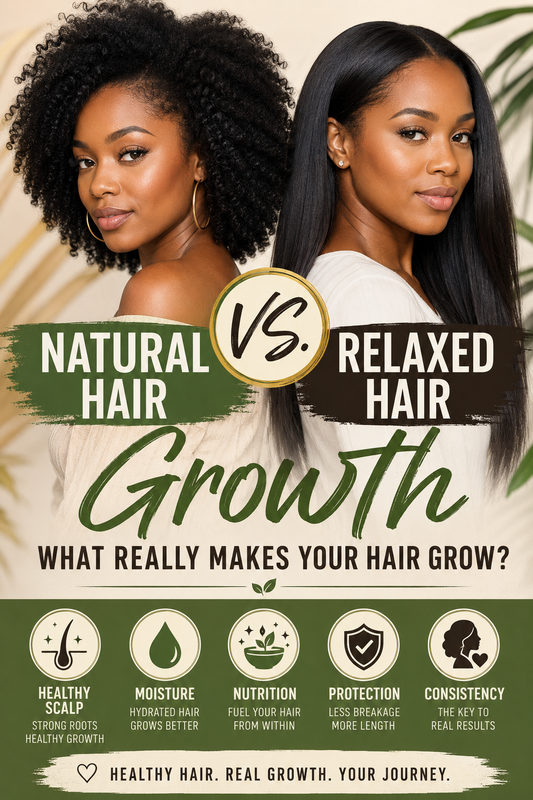
One of the biggest debates in the Black hair community is whether natural hair grows faster than relaxed hair. Some people believe relaxed hair grows longer because it appears straighter, while others insist natural hair is healthier and therefore grows more.
The truth is more interesting than either argument.
Your hair grows from the scalp—not from whether it's natural or chemically relaxed. However, your hairstyle, maintenance routine, moisture levels, and breakage determine how much of that growth you actually keep.
If you've ever wondered why someone with relaxed hair has waist-length hair while another person with natural hair struggles to reach shoulder length—or vice versa—this guide explains exactly why.
Does Natural Hair Grow Faster Than Relaxed Hair?
The simple answer is:
No.
Hair growth happens inside the hair follicle beneath your scalp. Hair cells divide, harden into keratin, and push the strand upward.
Whether your hair is:
- Natural
- Relaxed
- Transitioning
- Color-treated
…the average growth rate remains approximately:
- ½ inch per month
- 6 inches per year
Some people naturally grow:
- 4 inches yearly
- 8 inches yearly
thanks to genetics, health, hormones, nutrition, and age—not their hairstyle.
Why Relaxed Hair Looks Like It Grows Faster
Many people believe relaxed hair grows quicker because it appears longer almost immediately.
Why?
Relaxers permanently straighten curls.
A curly strand that measures:
- 6 inches stretched
may appear only:
- 3–4 inches when coiled.
Once relaxed, that same strand hangs straight.
Nothing actually grew.
The curl pattern simply disappeared.
Hair Growth vs Hair Retention
This is where most people get confused.
There is a huge difference between:
Hair Growth
Hair coming from the scalp.
and
Hair Retention
Keeping the hair that has already grown.
Many people grow six inches every year but only retain:
- 2 inches
- 3 inches
- 4 inches
because the ends constantly break off.
Length retention—not growth—is usually the real problem.
Why Natural Hair Often Breaks More
Natural hair is incredibly beautiful but also structurally delicate.
Every bend in a curl creates a weak point.
Hair types with tighter curls have:
- More twists
- More bends
- More friction
- More tangles
These factors increase:
- Knots
- Split ends
- Breakage
Without proper care, natural hair loses length even while growing normally.
Why Relaxed Hair Can Also Break
Relaxers permanently change hair structure.
The relaxing process breaks protein bonds that make curls possible.
While this creates smooth hair, it also weakens each strand.
Relaxed hair becomes more vulnerable to:
- Heat damage
- Split ends
- Protein loss
- Overprocessing
- Chemical burns
Poorly maintained relaxed hair often breaks faster than healthy natural hair.
Which Hair Type Is Healthier?
Healthy hair depends far more on maintenance than texture.
Healthy natural hair:
- Moisturized
- Protected
- Trimmed regularly
can become extremely long.
Healthy relaxed hair:
- Deep conditioned
- Protein balanced
- Carefully retouched
can also grow waist length.
Neither hair type automatically wins.
The Biggest Cause of Slow Hair Growth
People often blame:
- genetics
- relaxers
- curl pattern
when the actual issue is:
Breakage.
Signs include:
- Hair everywhere after styling
- Thin ends
- Split ends
- Hair snapping while combing
- Short pieces throughout your hair
Your hair may actually be growing perfectly.
You're simply losing it as fast as it grows.
Moisture Matters
Moisture is one of the biggest differences between healthy and unhealthy hair.
Natural hair struggles because oils from the scalp have difficulty traveling around curls.
Relaxed hair struggles because chemical processing removes some natural protection.
Both require regular moisturizing.
A good routine includes:
- Water-based moisturizers
- Leave-in conditioner
- Sealing oils
- Deep conditioning
Protein Balance
Hair is mostly protein.
Too little protein leads to:
- Mushy strands
- Stretching
- Weakness
Too much protein causes:
- Stiffness
- Brittleness
- Snapping
Both natural and relaxed hair benefit from occasional protein treatments based on individual needs.
Scalp Health Controls Hair Growth
Healthy follicles grow stronger hair.
Poor scalp health can reduce growth due to:
- Heavy buildup
- Inflammation
- Severe dandruff
- Tight hairstyles
- Chronic scratching
Healthy scalp habits include:
- Gentle cleansing
- Massage
- Proper hydration
- Avoiding excessive product buildup
Protective Styling Helps Both Hair Types
Protective styles reduce daily manipulation.
Popular options include:
- Twists
- Braids
- Wigs
- Buns
- Flat twists
- Roller sets
These styles reduce breakage when installed properly.
However, styles that are too tight may damage edges and follicles.
Does Relaxed Hair Require More Maintenance?
Many people think relaxed hair is easier.
In reality, it requires different maintenance.
Relaxed hair needs:
- Timely touch-ups
- Protein treatments
- Heat protection
- Moisture
- Gentle detangling
Overlapping relaxers can permanently weaken strands.
Does Natural Hair Require More Time?
Natural hair usually requires:
- Detangling
- Moisturizing
- Stretching
- Protective styling
depending on curl pattern.
Some routines take longer.
Others become quick once healthy habits develop.
The Role of Diet
Hair needs nutrients to grow.
Focus on foods rich in:
- Protein
- Iron
- Zinc
- Vitamin D
- Omega-3 fatty acids
- Vitamin C
Balanced nutrition supports healthier follicles.
Hydration Is Essential
Hair contains moisture.
Not drinking enough water won't instantly stop growth, but dehydration may contribute to:
- Dry scalp
- Brittle strands
- Poor overall hair health
Aim to stay consistently hydrated throughout the day.
Sleep Can Affect Hair
Hair repair occurs while you sleep.
Poor sleep may increase stress hormones that can negatively affect the hair growth cycle.
Aim for:
- 7–9 hours of quality sleep
Most nights.
Stress and Hair Growth
Chronic stress may contribute to increased shedding through conditions such as telogen effluvium.
Stress management techniques include:
- Walking
- Meditation
- Exercise
- Prayer
- Journaling
- Deep breathing
Reducing stress supports overall wellness, including healthy hair.
Should You Relax Your Hair to Grow It Longer?
Not necessarily.
Relax your hair if you:
- Prefer straight styles
- Enjoy easier silk presses
- Understand proper maintenance
Stay natural if you:
- Love curls
- Prefer chemical-free hair
- Enjoy versatility
Choose the routine you'll maintain consistently—not the one you think grows faster.
Signs Your Hair Is Retaining Length
You're likely retaining growth if:
- Ponytails become thicker.
- Ends remain full.
- Less hair breaks during washing.
- Styles last longer.
- Split ends decrease.
- Hair measurements steadily increase.
Signs You're Losing Length
Watch for:
- Thin see-through ends
- Constant snapping
- Excessive shedding mixed with breakage
- Rough ends
- Hair that never seems longer
If these continue, review your routine and consider reducing heat, chemical processing, and excessive manipulation.
Weekly Routine for Natural Hair
Wash Day
- Cleanse scalp.
- Apply conditioner.
- Detangle gently.
Deep Condition
Use a moisturizing treatment for 20–30 minutes.
Moisturize
Apply a water-based leave-in and seal if desired.
Style
Choose a low-manipulation style such as twists or braids.
Protect at Night
Sleep with a satin bonnet or on a satin pillowcase.
Weekly Routine for Relaxed Hair
Wash
Use a gentle shampoo.
Condition
Alternate moisturizing and protein treatments as needed.
Moisturize
Keep hair hydrated between washes.
Minimize Heat
Limit direct heat styling and always use a heat protectant.
Wrap Hair at Night
Preserve styles with a satin scarf or bonnet.
Common Myths
Myth 1: Relaxed Hair Grows Faster
False.
It only appears longer because curls are permanently straightened.
Myth 2: Natural Hair Can't Grow Long
False.
With consistent care, natural hair can reach waist length and beyond.
Myth 3: Relaxers Always Damage Hair
Not always.
When applied correctly and maintained properly, many people successfully maintain healthy relaxed hair.
Myth 4: Oils Make Hair Grow
Oils do not directly increase the growth rate of hair.
They can help reduce dryness, minimize breakage, and support a healthy scalp, which may improve length retention.
Myth 5: Trimming Stops Growth
Hair grows from the scalp, not the ends.
Regular trims remove damaged ends and help prevent splits from traveling up the hair shaft, improving retention.
Tips to Maximize Hair Growth and Retention
- Cleanse your scalp regularly.
- Deep condition consistently.
- Moisturize your hair based on its needs.
- Avoid excessive heat styling.
- Limit tight hairstyles.
- Trim damaged ends when necessary.
- Eat a balanced diet.
- Stay hydrated.
- Sleep on satin or silk.
- Be patient and consistent with your routine.
Frequently Asked Questions
Can relaxed hair grow as long as natural hair?
Yes. Hair length depends largely on genetics, hair care practices, and how well you retain growth—not whether the hair is relaxed or natural.
Is natural hair stronger?
Natural hair has intact chemical bonds, but its curls create more points where breakage can occur. Strength depends on hair health and maintenance.
How often should relaxed hair be touched up?
Most people wait 8–12 weeks between relaxer touch-ups to reduce the risk of overlapping previously relaxed hair. Follow the guidance of a qualified stylist.
Can protective styles help both natural and relaxed hair?
Yes. Properly installed protective styles can reduce daily manipulation and help minimize breakage for both hair types.
What is the biggest reason hair seems to stop growing?
In many cases, the issue is not slow growth but poor length retention caused by breakage, split ends, excessive heat, tight styles, or chemical damage.
Final Thoughts
When it comes to natural hair vs. relaxed hair growth, the evidence is clear: both hair types generally grow at about the same rate. The real difference is how much of that growth you keep.
Natural hair may require extra moisture and gentle detangling to reduce breakage, while relaxed hair needs careful chemical maintenance, protein balance, and protection from heat damage. Neither approach is inherently better—they simply require different care.
The key to achieving longer, healthier hair is consistency. A healthy scalp, a balanced routine, regular conditioning, protective styling, and minimizing breakage will do far more for your length goals than whether your hair is natural or relaxed.
If you focus on retaining every inch your hair grows, you'll be much more likely to see steady progress over time, regardless of your chosen hairstyle.