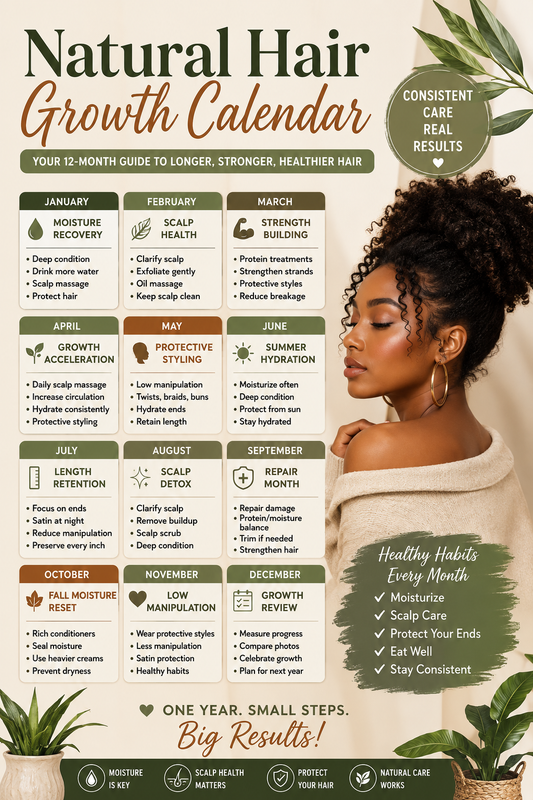
Growing natural hair isn't about finding one miracle product—it's about creating healthy habits and sticking with them throughout the year. Whether your goal is waist-length hair, thicker edges, healthier locs, stronger curls, or simply reducing breakage, consistency always wins.
A Natural Hair Growth Calendar gives your hair exactly what it needs every month while adjusting for changing weather, humidity, and seasonal challenges.
Instead of guessing what your hair needs, you'll follow a proven schedule that supports:
- Healthy scalp circulation
- Moisture retention
- Reduced breakage
- Stronger strands
- Better length retention
- Fuller-looking hair
- Healthier edges
- Balanced protein and moisture
If followed consistently, many people notice healthier hair within 90 days and significantly longer hair within 12 months.
Why Hair Growth Calendars Work
Hair grows continuously.
The average person grows approximately ½ inch every month, but many people never see that growth because the ends break at the same rate new hair grows.
A growth calendar focuses on:
- Preventing damage
- Strengthening hair fibers
- Keeping the scalp healthy
- Creating routines instead of random treatments
Remember:
Hair growth happens at the scalp. Hair retention happens at the ends.
You need both.
Your Annual Natural Hair Growth Calendar
January: Moisture Recovery Month
Winter weather often causes severe dryness.
Focus on rebuilding moisture after holiday stress.
Goals:
- Deep condition weekly
- Drink more water
- Wear satin-lined hats
- Massage scalp 5 minutes daily
- Trim damaged ends if needed
Best hairstyles:
- Twists
- Flat twists
- Loose buns
- Low manipulation styles
Avoid:
- Excessive heat
- Tight ponytails
- Alcohol-heavy styling products
February: Scalp Health Month
Healthy hair begins with a healthy scalp.
This month focuses on removing buildup.
Weekly Routine:
- Gentle shampoo
- Scalp exfoliation
- Light scalp oil massage
- Deep conditioning
Signs of a healthy scalp:
- No itching
- No flakes
- No soreness
- No excessive oil
March: Strength Building Month
Spring is the perfect time to strengthen hair before increased outdoor activity.
Focus on:
- Protein treatments every 4–6 weeks
- Leave-in conditioner
- Lightweight oils
- Protective styling
Great strengthening ingredients:
- Hydrolyzed proteins
- Aloe vera
- Rosemary
- Jamaican black castor oil
- Peppermint
April: Growth Acceleration Month
Now your hair is hydrated and stronger.
Increase scalp stimulation.
Routine:
Morning:
- Mist hair lightly
- Moisturize ends
Evening:
- Scalp massage
- Satin bonnet
- Protective braid
Growth tip:
Massage increases circulation without damaging follicles.
May: Protective Styling Month
Protective styles help preserve length.
Good options:
- Two-strand twists
- Flat twists
- Low buns
- Cornrows
- Wigs (properly installed)
Avoid:
- Heavy extensions
- Tight braids
- Tight ponytails
Protective styles should protect—not stress—the hair.
June: Summer Hydration Month
Heat and sun increase moisture loss.
Increase hydration.
Routine:
- Moisturize every other day
- Wash every 7–10 days
- Deep condition weekly
- Wear hats in direct sunlight
Hydrating ingredients:
- Aloe vera
- Glycerin (in moderate humidity)
- Honey
- Marshmallow root
- Coconut water
July: Length Retention Month
Mid-year is when breakage often increases.
Focus on preserving every inch you've grown.
Daily habits:
- Finger detangle
- Moisturize ends
- Satin pillowcase
- Protective bedtime styles
Avoid:
- Rough towels
- Cotton pillowcases
- Frequent manipulation
August: Scalp Detox Month
Sweat, sunscreen, chlorine, and product buildup accumulate during summer.
Use:
- Clarifying shampoo
- Scalp scrub
- Apple cider vinegar rinse (occasionally)
- Deep conditioner afterward
Healthy scalp = better environment for growth.
September: Repair Month
Repair damage before cooler weather arrives.
Focus on:
- Protein/moisture balance
- Trimming split ends
- Hydration
- Protective styles
Watch for:
- White dots
- Split ends
- Thin ends
- Excessive shedding
October: Fall Moisture Reset
Cooler temperatures reduce moisture retention.
Switch to:
- Richer conditioners
- Cream-based moisturizers
- Butter-based sealants
Excellent sealants:
- Shea butter
- Mango butter
- Babassu oil
November: Low Manipulation Month
Less touching equals less breakage.
Wear:
- Twists
- Braids
- Buns
- Loc styles
Avoid changing hairstyles daily.
Hair thrives when left alone.
December: Growth Review Month
Review your progress.
Ask yourself:
Did I:
- Deep condition regularly?
- Moisturize consistently?
- Wear satin nightly?
- Eat nutritious foods?
- Reduce heat?
Take comparison pictures.
Measure length.
Celebrate progress.
Weekly Hair Growth Calendar
Monday
Scalp massage
Moisturize ends
Protective style
Tuesday
Mist hair
Finger detangle
Seal moisture
Wednesday
Check scalp health
Massage
Wear low manipulation style
Thursday
Moisturize
Protect ends
Limit touching
Friday
Pre-poo treatment
Oil scalp lightly
Saturday
Wash day
Deep condition
Detangle carefully
Trim if necessary
Sunday
Stretch hair
Protective style
Prepare for next week
Daily Hair Growth Routine
Morning
✔ Refresh curls
✔ Moisturize
✔ Protect ends
✔ Avoid excessive brushing
Evening
✔ Satin bonnet
✔ Scalp massage
✔ Loose pineapple or twists
✔ Hydrate body
Hair Growth Habits to Build Every Month
Drink enough water.
Sleep 7–9 hours.
Exercise regularly.
Reduce stress.
Eat protein.
Massage your scalp.
Deep condition weekly.
Protect hair at night.
Trim damaged ends.
Stay consistent.
Seasonal Adjustments
Winter
Increase moisture.
Reduce shampoo frequency.
Use heavier creams.
Avoid hot water.
Spring
Clarify buildup.
Strengthen strands.
Trim winter damage.
Summer
Protect from UV exposure.
Increase hydration.
Wash more frequently if sweating heavily.
Fall
Repair damage.
Seal moisture.
Prepare for winter dryness.
Foods That Support Hair Growth
Hair is primarily made of protein, so your diet matters.
Eat more:
- Eggs
- Salmon
- Chicken
- Beans
- Spinach
- Sweet potatoes
- Avocados
- Walnuts
- Pumpkin seeds
- Greek yogurt
- Berries
Healthy nutrition supports healthy follicles.
Best Ingredients for Natural Hair Growth
Look for products containing:
Rosemary
Supports scalp circulation.
Peppermint
Creates a refreshing scalp environment.
Aloe Vera
Hydrates scalp and hair.
Castor Oil
Helps reduce dryness and supports stronger-looking hair.
Coconut Oil
Helps reduce protein loss in hair strands.
Shea Butter
Excellent moisture sealant.
Tea Tree Oil
Helps maintain a clean scalp.
Argan Oil
Adds shine while reducing frizz.
Monthly Hair Growth Checklist
January
☐ Moisture reset
☐ Deep condition
☐ Trim
February
☐ Clarify scalp
☐ Massage daily
March
☐ Protein treatment
☐ Protective style
April
☐ Increase hydration
☐ Daily scalp massage
May
☐ Install healthy protective style
June
☐ Hydration boost
☐ UV protection
July
☐ Focus on ends
☐ Reduce manipulation
August
☐ Clarify
☐ Detox scalp
September
☐ Repair damage
☐ Protein balance
October
☐ Rich moisturizers
☐ Seal moisture
November
☐ Low manipulation
☐ Satin protection
December
☐ Measure progress
☐ Compare photos
☐ Plan next year's goals
Common Hair Growth Mistakes
Changing Products Too Often
Hair needs consistency.
Skipping Wash Day
Dirty scalps don't automatically grow hair faster.
Clean follicles function better.
Tight Protective Styles
Too much tension may contribute to hairline damage and breakage.
Using Too Much Heat
Repeated heat weakens strands.
Ignoring Split Ends
Split ends continue traveling upward.
Trim when needed.
Over-Oiling the Scalp
More oil does not necessarily mean more growth.
Keep the scalp clean and balanced.
Hair Growth Goals by Hair Type
4C Hair
Focus on:
- Moisture
- Stretching
- Gentle detangling
- Protective styles
Curly Hair
Prioritize:
- Hydration
- Curl definition
- Weekly masks
Locs
Maintain:
- Clean scalp
- Regular retwists (not too frequent)
- Lightweight hydration
- Reduced lint buildup
Relaxed Hair
Protect:
- Ends
- Protein balance
- Moisture levels
Frequently Asked Questions
Does hair grow faster in summer?
Some research suggests hair growth may increase slightly during warmer months due to seasonal biological changes, but the difference is modest. Consistent care year-round has a much greater impact than the season itself.
Should I oil my scalp every day?
Not necessarily. Most people benefit from oiling only when their scalp feels dry or as part of a balanced routine. Over-oiling can contribute to buildup if the scalp is not cleansed regularly.
How often should I deep condition?
Most natural hair types benefit from deep conditioning once a week. Very dry or chemically treated hair may benefit from more frequent treatments based on its condition.
Can protective styles make hair grow?
Protective styles do not increase the rate of hair growth, but they help retain length by reducing breakage and minimizing daily manipulation.
How long does it take to see results?
Many people notice improved moisture, softness, and manageability within a few weeks. Visible length retention often becomes more noticeable after three to six months of consistent care.
Final Thoughts
A natural hair growth calendar takes the guesswork out of healthy hair care. Rather than relying on trends or constantly switching products, a structured month-by-month routine helps you build the habits that support stronger, healthier hair over time.
The key is consistency. Cleanse your scalp regularly, maintain a balance between moisture and protein, protect your ends, wear satin at night, eat a nutrient-rich diet, and avoid unnecessary breakage. While everyone's growth rate is different, following a consistent yearly plan can help you retain more of the hair you naturally grow.
Whether you have 4C coils, loose curls, locs, braids, or another natural texture, this calendar provides a practical roadmap to healthier hair all year long.