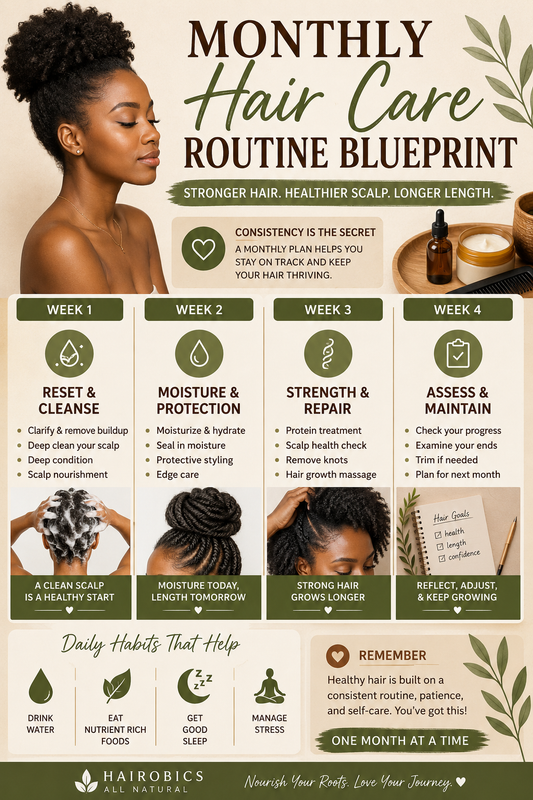
Healthy hair does not happen by accident. Whether you wear natural curls, coils, locs, braids, twists, or relaxed hair, consistency is what separates thriving hair from hair that constantly breaks, sheds, and struggles to retain length.
Many people focus on daily hair care products or weekly routines, but the secret to long-term success is having a monthly hair care blueprint. A monthly plan allows you to stay organized, address your hair's changing needs, and prevent small issues from turning into major problems.
Think of your hair like a garden. Daily watering helps, but regular maintenance, trimming, nourishment, and care throughout the month determine whether it flourishes or struggles.
This guide provides a complete monthly hair care routine blueprint designed to help you:
- Promote healthy hair growth
- Reduce breakage
- Improve moisture retention
- Strengthen weak strands
- Maintain a healthy scalp
- Retain length consistently
- Build a sustainable routine
Let's create the ultimate monthly plan for healthier hair.
Why Monthly Hair Care Matters
Many people focus only on what they do today or this week. However, hair growth is a long-term process.
Hair grows approximately ½ inch per month on average. While you cannot dramatically speed up your natural growth rate, you can maximize retention.
Retention means keeping the hair that grows from breaking off.
A monthly routine helps you:
- Track progress
- Prevent setbacks
- Adjust for seasonal changes
- Maintain moisture balance
- Reduce scalp issues
- Improve hair strength
Without a plan, many people experience:
- Excessive shedding
- Dryness
- Split ends
- Thin edges
- Scalp irritation
- Slow length retention
Understanding Your Hair's Monthly Needs
Every month your hair needs four essential things:
1. Cleansing
Your scalp accumulates:
- Dirt
- Oil
- Sweat
- Product buildup
- Environmental pollutants
A clean scalp creates the best environment for healthy growth.
2. Moisture
Dry hair breaks.
Moisture improves:
- Elasticity
- Softness
- Manageability
- Length retention
3. Strength
Hair needs protein and nourishment to remain strong.
Strong hair resists:
- Breakage
- Splitting
- Snapping
4. Protection
Protective styles and proper handling reduce damage and preserve growth.
Week 1: Reset and Cleanse
The first week of every month should focus on starting fresh.
Clarifying Wash
Use a clarifying shampoo once monthly to remove buildup.
Benefits include:
- Cleaner scalp
- Better product absorption
- Reduced itching
- Improved moisture penetration
Signs you need a clarifying wash:
- Hair feels coated
- Products stop working
- Excessive itching
- Dull appearance
Deep Clean Your Scalp
Massage your scalp during washing.
Benefits:
- Stimulates circulation
- Removes buildup
- Supports healthy follicles
Spend 3–5 minutes gently massaging your scalp.
Deep Conditioning Treatment
After clarifying, replenish moisture immediately.
Deep conditioning:
- Restores hydration
- Improves elasticity
- Reduces breakage
- Enhances shine
Allow conditioner to sit for 20–30 minutes.
Scalp Nourishment
Apply a lightweight scalp oil.
Focus on:
- Hairline
- Crown
- Nape area
These areas commonly experience thinning and breakage.
Week 2: Moisture and Protection
Week two focuses on maintaining hydration.
Moisturizing Session
Refresh your hair with:
- Water-based moisturizer
- Leave-in conditioner
- Moisturizing spray
Hydration is essential for healthy hair growth.
Seal in Moisture
After moisturizing, seal with natural oils.
Benefits include:
- Reduced moisture loss
- Increased softness
- Better elasticity
Focus on the ends since they are the oldest part of your hair.
Protective Styling
Week two is ideal for protective styles such as:
- Twists
- Flat twists
- Buns
- Braids
- Loc styles
Protective styles help reduce manipulation.
Edge Care
Your edges are delicate.
Avoid:
- Tight styles
- Excessive brushing
- Heavy gels
Instead:
- Moisturize regularly
- Massage gently
- Use lightweight products
Week 3: Strength and Repair
Week three focuses on strengthening hair.
Protein Treatment
Protein helps reinforce weakened strands.
Benefits include:
- Reduced breakage
- Increased strength
- Better elasticity
Signs you need protein:
- Mushy hair
- Excessive shedding
- Hair snapping easily
Use protein treatments in moderation.
Scalp Health Check
Inspect your scalp for:
- Flaking
- Redness
- Tenderness
- Buildup
Healthy scalp equals healthy hair growth.
Trim Single-Strand Knots
Natural hair often develops knots.
Remove them carefully before they worsen.
This prevents:
- Tangling
- Breakage
- Split ends
Hair Growth Massage
Massage your scalp for 5 minutes daily during week three.
Benefits:
- Improved circulation
- Relaxation
- Better scalp awareness
Week 4: Assessment and Maintenance
Week four is all about evaluation.
Measure Progress
Take photos monthly.
Track:
- Length
- Thickness
- Hairline improvements
- Density
Pictures reveal progress better than memory.
Examine Your Ends
Look for:
- Splits
- Fraying
- Thin ends
Healthy ends are critical for retention.
Dusting or Trimming
Trim only when necessary.
Benefits:
- Reduces breakage
- Prevents splits from traveling
- Maintains healthier hair
Plan for the Next Month
Ask yourself:
- What worked?
- What caused dryness?
- Did your scalp feel healthy?
- Did you experience breakage?
Adjust accordingly.
Monthly Routine for Natural Hair
Natural hair thrives with consistency.
Monthly goals:
- Clarify once
- Deep condition weekly
- Moisturize multiple times weekly
- Protective style often
- Monitor scalp health
Consistency beats perfection.
Monthly Routine for Locs
Locs require maintenance and moisture.
Monthly priorities:
- Thorough cleansing
- Scalp massage
- Retwisting if desired
- Moisturizing spray use
- Lint prevention
Healthy locs begin with a healthy scalp.
Monthly Routine for Braids
Braids protect hair but still require maintenance.
Monthly tasks:
- Clean scalp
- Hydrate regularly
- Protect edges
- Remove styles on time
Never keep braids longer than recommended if your hair begins matting or breaking.
Monthly Routine for Relaxed Hair
Relaxed hair requires additional strengthening.
Focus on:
- Moisture balance
- Protein treatments
- Reduced heat usage
- Gentle handling
Relaxed hair can thrive when properly maintained.
Best Monthly Habits for Hair Growth
Drink More Water
Hydration affects:
- Scalp health
- Hair elasticity
- Overall wellness
Improve Nutrition
Hair benefits from:
- Protein
- Iron
- Zinc
- Biotin
- Vitamins A, C, D, and E
Healthy hair begins internally.
Prioritize Sleep
Sleep supports:
- Hormone balance
- Recovery
- Hair growth cycles
Aim for 7–9 hours nightly.
Reduce Stress
Stress can contribute to:
- Excessive shedding
- Hair thinning
- Scalp inflammation
Incorporate:
- Exercise
- Meditation
- Prayer
- Relaxation techniques
Common Monthly Hair Care Mistakes
Skipping Deep Conditioning
Moisture is essential.
Deep conditioning should be a regular part of your routine.
Ignoring the Scalp
Many focus only on hair strands.
Hair grows from the scalp.
Healthy follicles require proper care.
Overusing Heat
Heat damage can undo months of progress.
Limit:
- Flat irons
- Curling irons
- Excessive blow drying
Tight Protective Styles
Protective styles should protect—not damage.
Avoid excessive tension.
Product Overload
Too many products can create buildup.
Focus on quality over quantity.
Seasonal Adjustments to Your Monthly Routine
Spring
Focus on:
- Repairing winter dryness
- Scalp detoxification
Summer
Prioritize:
- Hydration
- UV protection
- Sweat management
Fall
Prepare for cooler temperatures.
Increase moisture retention efforts.
Winter
Focus heavily on:
- Deep conditioning
- Protective styling
- Humidity control
Winter is often the driest season for hair.
Sample Monthly Hair Care Calendar
Week 1
- Clarify
- Deep condition
- Scalp massage
Week 2
- Moisturize
- Protective style
- Edge care
Week 3
- Protein treatment
- Scalp assessment
- Growth massages
Week 4
- Trim if needed
- Progress photos
- Plan next month
Repeat monthly.
Building a Routine That Lasts
The best routine is the one you can consistently follow.
Avoid chasing trends.
Focus on:
- Moisture
- Strength
- Scalp health
- Protection
- Consistency
Small improvements each month lead to significant results over time.
Remember, hair growth is a marathon, not a sprint.
Final Thoughts
A monthly hair care routine blueprint gives your hair the structure it needs to thrive. Instead of randomly trying products or switching routines every few weeks, create a consistent schedule that supports healthy growth and length retention.
By cleansing properly, moisturizing consistently, strengthening strands, protecting your hair, and monitoring progress every month, you create the foundation for stronger, longer, healthier hair.
Healthy hair is built one day, one week, and one month at a time. Stay consistent, stay patient, and trust the process. Over the course of a year, those monthly habits can completely transform the health, strength, and appearance of your hair.