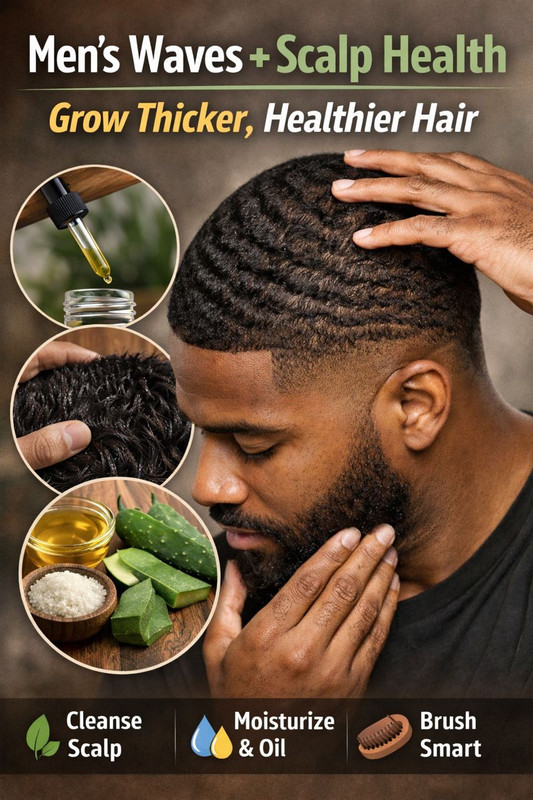
Waves don’t start with a brush—they start with your scalp.
If your waves look thin, patchy, dry, or refuse to connect no matter how much brushing you do, the issue usually isn’t your technique. It’s what’s happening underneath your hair.
Healthy waves require:
-
Clean, balanced follicles
-
Proper moisture levels
-
Strong hair strands
-
Consistent scalp care
In this guide, you’ll learn exactly how scalp health affects wave growth, why many men struggle with thinning or slow wave development, and how to build a natural routine that promotes thicker, healthier hair.
Why Scalp Health Is Everything for Waves
Your scalp is living skin, not just a surface your hair grows out of. Each wave pattern comes from follicles that must be:
-
Unclogged
-
Properly hydrated
-
Well-nourished
-
Free from inflammation
When the scalp is unhealthy, waves suffer—no matter how often you brush.
Signs your scalp is hurting your waves:
-
Dry flakes or dandruff
-
Excess oil buildup
-
Itching or irritation
-
Thin or weak wave lines
-
Slow or uneven growth
Waves thrive when the scalp is balanced, not stripped or overloaded.
The Science Behind Wave Growth
Wave patterns form because of the shape of your hair follicle and the way hair curls as it grows. But thickness and definition depend on:
-
Hair strand strength
-
Growth cycle length
-
Moisture retention
-
Scalp circulation
If follicles are blocked or inflamed, hair grows:
-
Thinner
-
Slower
-
More fragile
Healthy scalp = stronger hair = deeper waves.
Common Wave Problems Caused by Poor Scalp Care
1. Thin or Fading Waves
Usually caused by:
-
Product buildup
-
Overwashing
-
Dry scalp
2. Patchy Wave Connections
Often linked to:
-
Inconsistent moisture
-
Poor circulation
-
Excessive brushing on dry hair
3. Excessive Flaking
Typically from:
-
Stripped natural oils
-
Harsh shampoos
-
Lack of hydration
4. Itchy or Oily Scalp
Often a sign of:
-
Imbalanced oil production
-
Clogged pores
-
Heavy pomades
Why Brushing Alone Won’t Fix Your Waves
Brushing trains your hair—but it doesn’t fix scalp problems.
Overbrushing on a dry or irritated scalp can:
-
Cause breakage
-
Increase thinning
-
Create inflammation
-
Set back growth
Brushing works only when paired with proper scalp care.
The Men’s Waves + Scalp Health Routine (Step-by-Step)
This routine is designed for:
-
180s, 360s, and 540s
-
Beginners and elite wavers
-
Straight, coarse, or coarse-curly hair
-
Men experiencing thinning or dryness
Step 1: Cleanse Without Stripping (2–3x per Week)
A healthy scalp starts with the right cleanser.
Look for a sulfate-free shampoo that:
-
Removes buildup gently
-
Preserves natural oils
-
Won’t dry out your scalp
How to wash properly:
-
Use lukewarm water
-
Massage with fingertips
-
Focus on scalp, not hair length
-
Rinse thoroughly
? Avoid:
-
Daily shampooing
-
Bar soap
-
Alcohol-based cleansers
Step 2: Remove Buildup (Once Weekly)
Waves + pomades often equal clogged follicles.
Buildup blocks growth and suffocates the scalp.
Safe ways to exfoliate:
-
Scalp massager
-
Pre-wash oil massage
-
Gentle exfoliating shampoo
This improves:
-
Blood flow
-
Product absorption
-
Hair thickness
Step 3: Hydrate Your Scalp (Every Wash Day)
Water is moisture—oil alone isn’t enough.
After washing:
-
Apply a lightweight, water-based leave-in or spray
-
Massage into scalp while hair is damp
This prevents:
-
Dry flakes
-
Tight scalp feeling
-
Breakage
Hydration is key for wave depth and shine.
Step 4: Seal With the Right Oils (3–4x per Week)
Oil locks in moisture and strengthens strands.
Best oils for waves:
-
Jojoba oil (closest to scalp’s natural oil)
-
Jamaican black castor oil (thickens hair appearance)
-
Grapeseed oil (lightweight, non-greasy)
-
Moringa oil (anti-inflammatory, nutrient-rich)
Use a few drops only and massage gently.
Step 5: Brush Smart (Not Aggressively)
Brushing should stimulate—not stress—the scalp.
Best practices:
-
Brush on moisturized hair
-
Use medium or soft brush
-
Brush in consistent pattern
-
Stop if scalp feels sore
? Healthy waves grow faster with less force, more consistency.
How Moisture Affects Wave Thickness
Dry hair = thin-looking waves.
When hair is properly hydrated:
-
Strands swell slightly
-
Waves appear deeper
-
Hair becomes more elastic
-
Breakage decreases
This creates the illusion—and reality—of thicker hair.
Pomades: Friend or Foe?
Pomades aren’t bad—but misuse is.
Problems with heavy pomades:
-
Clogged pores
-
Greasy buildup
-
Dull waves
If you use pomade:
-
Apply sparingly
-
Wash weekly
-
Balance with hydration
Many wavers get better results switching to lighter creams or oils.
Nutrition and Lifestyle for Thicker Waves
Your hair reflects your internal health.
Nutrients that support wave growth:
-
Omega-3 fatty acids
-
Zinc
-
Biotin
-
Vitamin D
-
Iron
Habits that hurt scalp health:
-
Chronic stress
-
Poor sleep
-
Dehydration
-
Excess sugar
? Tip: If waves thin during stressful periods, scalp inflammation—not brushing—is the issue.
How Long Before You See Results?
With consistent scalp care:
-
Reduced flakes: 1–2 weeks
-
Softer hair: 2 weeks
-
Thicker-looking waves: 30–45 days
-
Stronger growth cycle: 60–90 days
Hair growth is slow—but scalp healing happens fast.
Can You Reverse Thinning Waves?
In many cases, yes.
If thinning is caused by:
-
Dry scalp
-
Buildup
-
Inflammation
Improving scalp health can restore:
-
Density
-
Strength
-
Wave definition
Genetic hair loss is different—but even then, scalp care slows progression.
The Biggest Wave + Scalp Mistakes to Avoid
❌ Overwashing
❌ Using grease daily
❌ Ignoring hydration
❌ Brushing dry hair aggressively
❌ Sleeping without a durag
Every mistake adds up at the follicle level.
Why a Natural Routine Works Best for Waves
Natural routines:
-
Support scalp balance
-
Reduce inflammation
-
Encourage consistent growth
-
Work long-term
This is why many wave-focused men transition to scalp-first hair care systems instead of product stacking.
Final Thoughts: Waves Are Built at the Scalp
Elite waves aren’t about genetics or brushes—they’re about discipline and scalp care.
When your scalp is:
-
Clean
-
Hydrated
-
Nourished
-
Calm
Your hair grows:
-
Thicker
-
Stronger
-
Healthier
-
More defined
Brush less aggressively. Moisturize more intentionally. Treat your scalp like skin—not concrete.
That’s how waves really form.