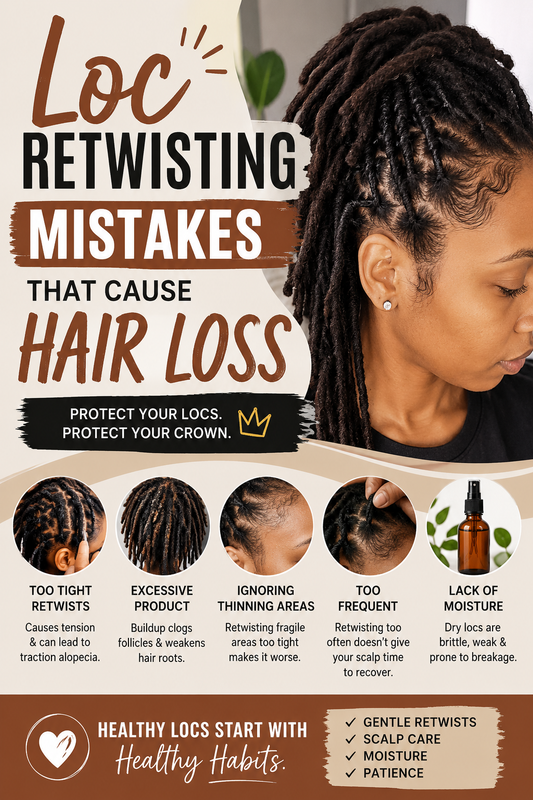
Locs are one of the most beautiful and versatile hairstyles, offering a low-maintenance way to embrace natural hair while promoting length retention. However, many people unknowingly damage their hair during the maintenance process. One of the biggest causes of thinning locs, receding hairlines, and even permanent hair loss is improper retwisting.
A fresh retwist can make locs look neat and polished, but when done incorrectly or too often, it can place excessive stress on the scalp and hair follicles. Over time, this tension can lead to breakage, thinning roots, weak locs, and even traction alopecia.
The unfortunate reality is that many people blame their genetics, products, or aging when their locs begin thinning, when the real culprit is often their retwist routine.
In this comprehensive guide, you'll learn the most common loc retwisting mistakes that cause hair loss, how to identify early warning signs, and what you can do to maintain healthy, thick locs for years to come.
Understanding How Loc Retwisting Affects Hair Health
Before discussing mistakes, it's important to understand what happens during a retwist.
As your hair grows, new growth emerges at the roots. Retwisting organizes this new growth and encourages it to continue locking into the existing loc.
While retwisting itself isn't harmful, problems arise when:
- Too much tension is applied
- Retwists happen too frequently
- Hair is manipulated aggressively
- The scalp is stressed repeatedly
Every hair follicle has limits. When tension exceeds those limits repeatedly, follicles become inflamed, weakened, and eventually stop producing healthy hair.
Mistake #1: Retwisting Too Frequently
One of the biggest causes of thinning locs is retwisting too often.
Many people schedule retwists every 2–3 weeks because they love the fresh look.
The problem?
Your scalp never gets a chance to recover.
Frequent retwisting creates repeated tension on the same follicles, causing:
- Root thinning
- Hairline recession
- Breakage
- Scalp irritation
Ideal Retwist Frequency
Most locticians recommend:
- Every 4–6 weeks for mature locs
- Every 6–8 weeks for established locs
- Longer intervals for thicker hair types
Allowing more time between retwists helps preserve hair density and scalp health.
Mistake #2: Retwisting Too Tight
If your scalp hurts after a retwist, it's too tight.
Pain is not a sign of a good retwist.
Unfortunately, many people believe tightness means the style will last longer.
Common symptoms of excessive tension include:
- Headaches
- Scalp soreness
- Red bumps
- Hairline sensitivity
- Difficulty sleeping
Tight retwists pull directly on follicles and can trigger traction alopecia.
Traction alopecia is one of the few forms of hair loss that can become permanent if ignored long enough.
Mistake #3: Using Excessive Gel
Many stylists use large amounts of gel to create a sleek retwist.
While it may look neat initially, excessive gel can:
- Cause buildup
- Attract dirt
- Block moisture absorption
- Weaken roots
Heavy residue often accumulates near the scalp, creating an unhealthy environment for hair growth.
Over time, buildup can make locs feel heavy and increase breakage risk.
Instead, use lightweight products designed specifically for loc maintenance.
Mistake #4: Retwisting Wet, Fragile Hair Aggressively
Hair is most vulnerable when wet.
When hair absorbs water:
- It stretches more easily
- It becomes weaker
- Breakage risk increases
Aggressive twisting on soaking wet hair can weaken strands and cause root damage.
A gentle approach is always best.
Allow hair to be damp rather than dripping wet before beginning a retwist.
Mistake #5: Ignoring Scalp Health
Healthy locs begin with a healthy scalp.
Many people focus entirely on appearance while ignoring scalp issues like:
- Dryness
- Inflammation
- Itching
- Dandruff
- Product buildup
A compromised scalp creates a poor environment for healthy growth.
Signs of scalp problems include:
- Flaking
- Excessive itching
- Tenderness
- Burning sensations
Maintaining scalp health is just as important as maintaining the locs themselves.
Mistake #6: Retwisting Weak or Thinning Areas
One of the worst mistakes is applying the same tension everywhere.
Areas that are already thinning need special care.
Common thinning zones include:
- Temples
- Nape
- Crown
- Hairline
Retwisting these sections tightly can accelerate hair loss.
Instead:
- Use minimal tension
- Retwist less often
- Consider protective styles that reduce stress
Mistake #7: Combining Tight Retwists with Tight Styles
A fresh retwist followed immediately by a tight style is a recipe for damage.
Examples include:
- High buns
- Tight ponytails
- Barrel twists
- Updos
This creates double tension:
- The retwist pulls the roots.
- The style adds even more strain.
Over time this dramatically increases the likelihood of traction alopecia.
Mistake #8: Not Moisturizing Between Retwists
Many people mistakenly believe locs shouldn't be moisturized.
Dry locs become brittle and prone to breakage.
Signs of dryness include:
- Rough texture
- Dull appearance
- Excessive shedding
- Fragile ends
Keeping locs moisturized helps maintain elasticity and strength.
Focus on:
- Water-based moisturizers
- Natural oils
- Lightweight hydrating sprays
Mistake #9: Scratching the Scalp Excessively
A tight retwist often causes itching.
Many people respond by scratching aggressively.
Repeated scratching can:
- Damage follicles
- Cause inflammation
- Create scalp wounds
- Increase infection risk
Instead of scratching:
- Use scalp sprays
- Apply soothing oils
- Massage gently
Mistake #10: Ignoring Early Signs of Thinning
Hair loss rarely happens overnight.
The body usually provides warning signs.
Watch for:
- Smaller roots
- Sparse edges
- Thinning crown
- Increased shedding
- Looser locs
Early intervention can prevent permanent damage.
Mistake #11: Retwisting During Active Hair Loss
If you're already experiencing significant shedding, frequent retwisting can worsen the situation.
Hair loss may result from:
- Stress
- Hormonal changes
- Illness
- Nutritional deficiencies
During these periods, reducing manipulation is often beneficial.
Focus on scalp recovery rather than appearance.
Mistake #12: Using Untrained Locticians
Not all locticians understand scalp health.
Some prioritize appearance over long-term hair preservation.
Warning signs include:
- Extremely tight retwists
- Painful styling
- Excessive product use
- Ignoring thinning areas
A knowledgeable loctician should prioritize follicle health above everything else.
Mistake #13: Constantly Re-Twisting New Growth
Many people retwist between appointments.
This repeated manipulation stresses the roots unnecessarily.
Remember:
New growth is healthy.
It doesn't always need immediate correction.
Allowing some natural growth helps protect follicles.
Mistake #14: Neglecting Nutrition
Healthy locs require internal support.
Hair follicles need nutrients such as:
- Protein
- Iron
- Zinc
- Vitamin D
- Biotin
Poor nutrition can weaken hair regardless of your retwist routine.
A healthy diet supports stronger roots and better retention.
Mistake #15: Sleeping Without Protection
Retwisting creates organized roots.
Sleeping without protection can create friction and dryness.
Cotton pillowcases absorb moisture and increase breakage.
Protect your locs with:
- Satin bonnets
- Silk scarves
- Satin pillowcases
This helps preserve moisture and reduce stress on the roots.
Signs Your Retwist Routine Is Causing Hair Loss
Pay attention to these warning signs:
Receding Hairline
Edges begin moving backward.
Thinning Roots
Roots appear smaller than the loc itself.
Visible Scalp
More scalp becomes visible between locs.
Excessive Breakage
Short broken hairs appear around roots.
Persistent Scalp Pain
Discomfort lasting days after maintenance.
Loc Slippage Near Roots
Weak roots struggle to support the loc.
How to Reverse Damage from Retwisting
If caught early, some damage can improve.
Reduce Retwist Frequency
Move appointments farther apart.
Avoid Tight Styles
Choose low-tension styles.
Moisturize Consistently
Hydration supports elasticity.
Improve Scalp Care
Keep follicles healthy.
Massage the Scalp
Gentle massage increases circulation.
Address Nutritional Deficiencies
Ensure proper nutrient intake.
Consult a Dermatologist
Persistent thinning may require professional evaluation.
Best Practices for Healthy Retwists
Follow these guidelines:
Retwist Every 4–8 Weeks
Less manipulation equals healthier roots.
Avoid Pain
Retwists should never hurt.
Use Lightweight Products
Prevent buildup and residue.
Prioritize Scalp Health
Healthy follicles produce stronger hair.
Be Gentle
Handle new growth carefully.
Protect Hair at Night
Reduce friction and moisture loss.
Monitor Changes
Catch thinning early.
Frequently Asked Questions
Can Retwisting Cause Permanent Hair Loss?
Yes. Chronic tension can lead to traction alopecia, which may become permanent if untreated.
How Often Should I Retwist My Locs?
Most people benefit from retwisting every 4–8 weeks.
Is It Normal for My Scalp to Hurt After a Retwist?
No. Pain usually indicates excessive tension.
Can Thin Locs Become Thick Again?
If follicles remain healthy, density may improve after reducing tension and improving scalp care.
Should I Retwist My Own Locs?
You can, provided you use gentle techniques and avoid excessive manipulation.
Final Thoughts
Locs can thrive for decades when maintained properly, but the wrong retwisting habits can slowly destroy even the healthiest hair. Tight retwists, excessive manipulation, heavy product use, and ignoring scalp health are among the leading causes of thinning locs and hair loss.
The good news is that most retwist-related damage develops gradually, which means you have time to make changes before permanent hair loss occurs. By reducing tension, extending time between retwists, moisturizing regularly, and paying attention to early warning signs, you can preserve your hairline, maintain thick roots, and enjoy healthy locs for years to come.
Remember: the healthiest retwist is not the tightest retwist. Long-term hair health will always matter more than a perfectly neat look.