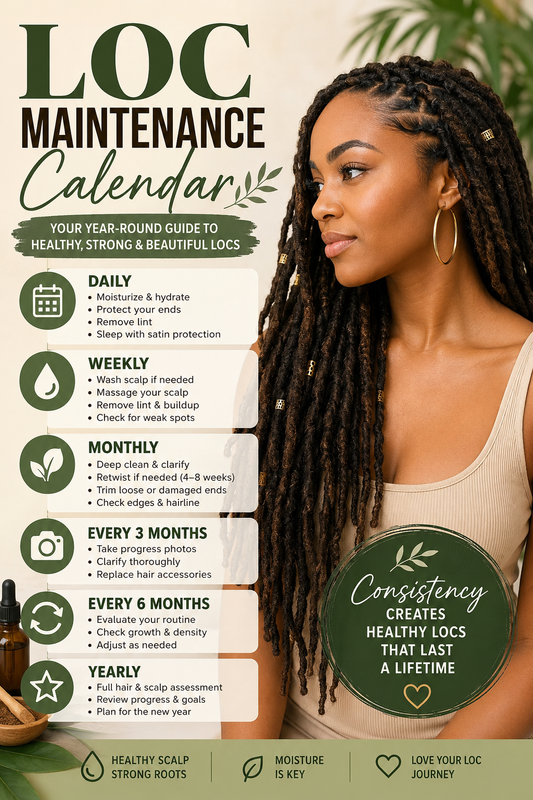
Healthy locs don't happen by accident—they happen through consistency.
Whether you've just started your loc journey or you've had mature locs for years, having a structured maintenance schedule helps reduce breakage, dryness, thinning, lint buildup, and scalp problems while encouraging steady growth.
Many people only think about washing or retwisting their locs, but healthy loc maintenance involves much more than that. Your scalp, moisture balance, nutrition, protective styling, nighttime routine, and seasonal care all work together.
This complete Loc Maintenance Calendar gives you an easy-to-follow roadmap that keeps your locs looking their best every day of the year.
Why Your Locs Need a Maintenance Calendar
A maintenance schedule helps you:
- Prevent dryness
- Reduce breakage
- Maintain healthy roots
- Keep buildup under control
- Reduce thinning edges
- Strengthen weak locs
- Improve scalp health
- Encourage steady hair growth
- Keep locs soft and flexible
Without consistency, even the healthiest locs can begin to suffer.
Daily Loc Maintenance Checklist
Every day should include a few simple habits.
Morning
Inspect your scalp.
Look for:
- Dry patches
- Flaking
- Tightness
- Irritation
If your scalp feels dry, lightly moisturize it instead of waiting until it becomes itchy.
Moisturize Your Locs
Healthy locs need hydration.
A lightweight moisturizing spray keeps locs flexible while preventing brittleness.
Focus on:
- Mid-lengths
- Ends
- Dry sections
Avoid soaking your locs daily.
Light moisture is enough.
Protect Your Ends
The oldest part of your hair is the ends.
Dry ends eventually become weak ends.
Keep them moisturized consistently.
Drink Water
Hair health begins inside the body.
Aim for adequate daily water intake to support scalp health.
Evening Routine
Before bed:
- Remove lint
- Check for tangles
- Moisturize if needed
- Cover locs with satin or silk
- Sleep on a satin pillowcase
Nighttime protection dramatically reduces friction damage.
Weekly Loc Maintenance
Wash Your Scalp If Needed
Not everyone needs weekly washing.
However, active lifestyles may require it.
Signs it's time:
- Excess oil
- Sweat
- Odor
- Itching
Always focus on cleansing the scalp first.
Massage Your Scalp
A gentle scalp massage:
- Improves circulation
- Helps distribute natural oils
- Relaxes scalp tension
Massage for 5–10 minutes.
Remove Lint
Check:
- Tips
- Crown
- Back of neck
Removing lint early prevents permanent buildup.
Inspect Weak Locs
Look for:
- Thinning roots
- Weak spots
- Loose hairs
- Split locs
Early repairs prevent breakage.
Every Two Weeks
Evaluate moisture levels.
Ask yourself:
- Do my locs feel stiff?
- Are they brittle?
- Do they bend easily?
- Are the ends dry?
Adjust your moisturizing routine if necessary.
Monthly Loc Maintenance
Monthly maintenance is where long-term health develops.
Deep Clean Your Scalp
Clarify if product buildup exists.
Signs include:
- Dull locs
- Sticky texture
- White residue
- Heavy feeling
Avoid excessive product use between washes.
Retwist (Only When Necessary)
Over-retwisting causes:
- Thinning roots
- Breakage
- Tension alopecia
Most people benefit from retwisting every 4–8 weeks depending on hair type and style.
Trim Loose Ends (If Needed)
Do not trim healthy locs unnecessarily.
Remove:
- Broken strands
- Damaged ends
- Weak hanging fibers
Check Your Edges
Healthy edges require:
- Low tension
- Moisture
- Gentle styling
Avoid tight ponytails.
Every Three Months
Take progress photos.
Photographs reveal growth that mirrors often hide.
Capture:
- Front
- Side
- Back
- Crown
Compare every quarter.
Clarify Thoroughly
A quarterly clarifying wash helps remove:
- Oils
- Heavy products
- Sweat residue
- Environmental buildup
Clean locs absorb moisture better.
Replace Hair Accessories
Old accessories collect:
- Dirt
- Oils
- Lint
- Bacteria
Replace or wash:
- Satin bonnets
- Scarves
- Pillowcases
- Head wraps
Every Six Months
Evaluate your entire routine.
Ask:
- Are my locs thicker?
- Are they softer?
- Is my scalp healthier?
- Am I retaining length?
If not, identify what needs improvement.
Yearly Loc Health Check
Once a year, review everything.
Look at:
- Density
- Thickness
- Moisture
- Scalp health
- Growth
- Breakage
- Lifestyle habits
This yearly review keeps your routine evolving with your hair.
Seasonal Loc Maintenance Calendar
Spring
Spring is the perfect time to:
- Clarify buildup
- Deep cleanse
- Increase hydration
- Remove winter dryness
Summer
Heat increases:
- Sweat
- UV exposure
- Salt buildup
- Chlorine exposure
Summer priorities:
- Wash more frequently if needed
- Protect locs from direct sunlight
- Moisturize after swimming
- Wear breathable protective styles
Fall
Fall prepares locs for colder weather.
Focus on:
- Moisture retention
- Deep conditioning treatments suitable for locs
- Trimming damaged fibers
- Strengthening weak areas
Winter
Winter air is extremely drying.
Increase:
- Moisture
- Satin protection
- Indoor humidity if possible
- Protective styling
Avoid going outside with wet locs in freezing temperatures.
Monthly Growth Goals
January
Start fresh.
Create your maintenance schedule.
Take beginning photos.
February
Focus on scalp health.
Healthy growth starts at the roots.
March
Increase hydration.
Dry winter hair needs recovery.
April
Inspect thinning areas.
Repair problems early.
May
Clarify product buildup.
Reset your locs before summer.
June
Protect from sun damage.
Wear hats when appropriate.
July
Maintain moisture despite heat.
Avoid excessive product layering.
August
Evaluate growth progress.
Adjust routines if needed.
September
Reduce summer buildup.
Clarify thoroughly.
October
Prepare for colder weather.
Increase moisture.
November
Focus on protective nighttime routines.
Replace worn satin accessories.
December
Review yearly progress.
Celebrate consistency.
Plan goals for the next year.
Nutrition Calendar for Healthy Locs
Daily:
- Water
- Protein
- Fruits
- Vegetables
Weekly:
Include foods rich in:
- Iron
- Zinc
- Omega-3 fatty acids
- Vitamin C
- Vitamin D
- Biotin-containing foods
Healthy hair reflects overall wellness.
Exercise and Loc Care
Sweating isn't bad for locs.
Leaving sweat on the scalp too long can contribute to irritation and odor.
After workouts:
- Let your scalp dry
- Cleanse as needed
- Rehydrate your locs lightly
Common Maintenance Mistakes
Over-Retwisting
Too much manipulation weakens roots.
Using Heavy Products
Heavy waxes attract buildup.
Ignoring the Scalp
Healthy locs begin with healthy follicles.
Sleeping Without Protection
Cotton pillowcases absorb moisture.
Satin helps preserve hydration.
Waiting Too Long to Wash
A clean scalp supports healthy hair growth.
Signs Your Calendar Is Working
You'll notice:
- Softer locs
- Less breakage
- Fewer split locs
- Better moisture retention
- Reduced itching
- Healthy shine
- Fuller appearance
- Stronger roots
Consistency creates results.
Frequently Asked Questions
How often should I wash my locs?
It depends on your activity level, scalp condition, and lifestyle. Many people wash every 2–4 weeks, while others who exercise frequently may wash more often.
Should I moisturize every day?
Only if your locs need it. Over-moisturizing can slow drying and encourage buildup.
How often should I retwist?
Most people benefit from every 4–8 weeks rather than frequent retwisting.
Can I oil my scalp daily?
Usually not. Apply oil only when your scalp needs it and avoid excessive use that can contribute to buildup.
How do I know if my locs are healthy?
Healthy locs generally feel flexible, have minimal breakage, a clean scalp, balanced moisture, and strong roots.
Final Thoughts
A loc maintenance calendar removes the guesswork from caring for your hair. By following a consistent daily, weekly, monthly, and seasonal routine, you create the conditions your locs need to thrive.
Remember that healthy locs are built through patience and small habits repeated over time. Staying consistent with cleansing, moisturizing, scalp care, and gentle handling will help reduce breakage, maintain strong roots, and support long-term length retention.
No matter where you are in your loc journey—starter locs, budding locs, or mature locs—a well-planned maintenance calendar is one of the most effective tools for keeping your hair healthy, resilient, and beautiful all year long.