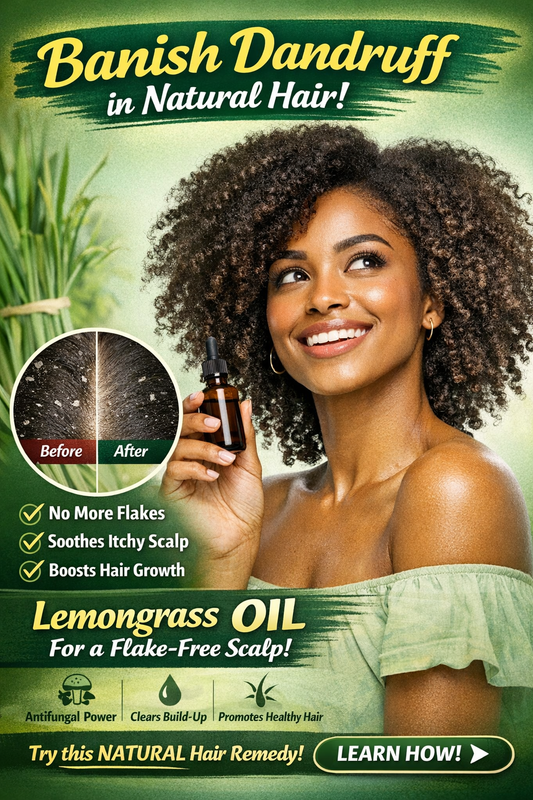
Introduction: Why Dandruff Is So Common in Natural Hair
If you have natural hair—especially Type 3 or Type 4 textures—you’ve probably dealt with dandruff at some point. Those annoying white flakes, itchy scalp, and dryness can make even the healthiest hair routine feel like it’s failing.
But here’s the truth:
? Dandruff in natural hair isn’t just about dryness
? It’s often caused by fungal imbalance, buildup, and scalp inflammation
And this is exactly where lemongrass oil shines.
Used correctly, lemongrass oil can:
- Fight dandruff-causing microbes
- Balance scalp oil production
- Reduce itching and inflammation
- Support a healthier environment for hair growth
In this guide, you’ll learn exactly:
- Why lemongrass oil works for dandruff
- How to use it safely on natural hair
- The best DIY recipes for real results
- Mistakes to avoid (that cause MORE flakes)
- How to build a dandruff-free hair routine
What Is Lemongrass Oil?
Lemongrass oil is an essential oil extracted from the leaves of the lemongrass plant (Cymbopogon citratus). It has a fresh, citrusy scent and powerful medicinal properties.
Key Properties of Lemongrass Oil
- Antifungal
- Antibacterial
- Anti-inflammatory
- Astringent (tightens pores and reduces excess oil)
These properties make it one of the most effective natural remedies for dandruff—especially for textured hair types that struggle with buildup and scalp imbalance.
What Causes Dandruff in Natural Hair?
Before treating dandruff, you need to understand the root cause.
1. Fungal Overgrowth (Malassezia)
A yeast-like fungus lives naturally on your scalp. When it overgrows, it causes:
- Flaking
- Itching
- Irritation
2. Product Buildup
Heavy oils, creams, and gels (especially in natural hair routines) can clog pores and trap bacteria.
3. Dry Scalp vs Dandruff Confusion
Many people mistake dryness for dandruff—but they’re different:
- Dry scalp = small, white flakes (no irritation)
- Dandruff = larger flakes + itching + inflammation
4. Infrequent Cleansing
Protective styles like braids and locs often lead to less washing, which can worsen buildup.
5. Scalp Inflammation
Sensitive scalps react to:
- Harsh shampoos
- Synthetic ingredients
- Environmental stress
Why Lemongrass Oil Works for Dandruff
1. Powerful Antifungal Action
Lemongrass oil directly targets the fungus responsible for dandruff.
? This is the KEY reason it works better than basic oils like coconut or olive oil.
2. Balances Oil Production
If your scalp is:
- Too oily → feeds fungus
- Too dry → causes flaking
Lemongrass oil helps regulate both.
3. Reduces Itching Instantly
Its anti-inflammatory properties soothe irritated scalp tissue.
4. Deep Cleansing Effect
Lemongrass acts like a natural detox for your scalp, removing buildup without stripping moisture.
Benefits of Lemongrass Oil for Natural Hair
1. Eliminates Visible Flakes
With consistent use, flakes reduce within 1–2 weeks.
2. Promotes a Healthier Scalp Environment
Healthy scalp = better hair growth.
3. Reduces Odor from Buildup
Especially helpful for:
- Braids
- Wigs
- Locs
4. Improves Hair Growth Potential
By clearing blocked follicles, your hair can grow without restriction.
5. Adds Shine Without Greasiness
Unlike heavy oils, lemongrass oil feels light and refreshing.
How to Use Lemongrass Oil for Dandruff Control
⚠️ Important: Never apply essential oils directly to your scalp without diluting.
1. Lemongrass Scalp Treatment Oil
Ingredients
- 2 tablespoons carrier oil (jojoba, castor, or grapeseed)
- 3–5 drops lemongrass oil
How to Use
- Part your hair into sections
- Apply directly to scalp
- Massage for 3–5 minutes
- Leave in for at least 30 minutes (or overnight)
Frequency
2–3 times per week
2. Lemongrass Oil in Shampoo
How to Use
- Add 5–10 drops to your shampoo bottle
- Shake well before use
Best For
- Removing buildup
- Keeping scalp fresh between treatments
3. Lemongrass Scalp Spray (Perfect for Protective Styles)
Ingredients
- 1 cup distilled water
- 1 tablespoon aloe vera juice
- 5 drops lemongrass oil
How to Use
- Spray directly onto scalp
- Use daily or every other day
4. Hot Oil Treatment for Severe Dandruff
Steps
- Warm your carrier oil slightly
- Add lemongrass oil
- Apply to scalp and hair
- Cover with plastic cap
- Leave for 30–45 minutes
Best Carrier Oils to Mix with Lemongrass Oil
Jojoba Oil
Closest to your scalp’s natural oils—perfect for balance.
Castor Oil
Great for:
- Thickening edges
- Deep moisture
Grapeseed Oil
Lightweight and ideal for oily scalps.
Coconut Oil
Penetrates hair shaft—but use lightly to avoid buildup.
Lemongrass Oil vs Other Oils for Dandruff
| Oil | Best For | Weakness |
|---|---|---|
| Lemongrass Oil | Fungus + buildup | Needs dilution |
| Tea Tree Oil | Strong antifungal | Can be harsh |
| Peppermint Oil | Cooling effect | Doesn’t remove buildup |
| Castor Oil | Moisture | Can clog pores |
? Conclusion: Lemongrass oil is one of the BEST all-around solutions.
How Long Does It Take to See Results?
- First use: Reduced itching
- 1 week: Less flaking
- 2–3 weeks: Noticeably healthier scalp
- 4+ weeks: Long-term dandruff control
Consistency is key.
Common Mistakes That Make Dandruff Worse
❌ Using Too Much Oil
Over-oiling feeds fungus.
❌ Not Washing Regularly
Even natural hair needs consistent cleansing.
❌ Applying Essential Oil Directly
Can cause burns or irritation.
❌ Ignoring Product Buildup
Your scalp can’t breathe.
Best Hair Routine for a Flake-Free Scalp
Weekly Routine
2–3x per week
- Lemongrass oil scalp treatment
1–2x per week
- Gentle cleansing shampoo
Daily
- Lightweight scalp spray
Is Lemongrass Oil Safe for All Hair Types?
Yes—but:
- Always dilute
- Do a patch test first
- Avoid if you have sensitive skin reactions
Who Should Use Lemongrass Oil?
✅ People with chronic dandruff
✅ Natural hair (Type 3–4)
✅ Protective styles
✅ Itchy scalp issues
✅ Product buildup problems
When NOT to Use Lemongrass Oil
? Open scalp wounds
? Severe skin conditions (consult dermatologist)
? Allergic reactions
DIY Lemongrass Anti-Dandruff Hair Routine (Step-by-Step)
Step 1: Pre-Treatment
Apply lemongrass oil mix to scalp
Step 2: Cleanse
Use sulfate-free shampoo
Step 3: Condition
Deep condition hair (not scalp-heavy)
Step 4: Moisturize
Apply leave-in treatment
Step 5: Maintain
Use scalp spray throughout the week
How Lemongrass Oil Supports Hair Growth
Healthy scalp = optimal growth.
Lemongrass oil:
- Clears clogged follicles
- Improves circulation
- Reduces inflammation
? This creates the perfect environment for longer, thicker hair.
Pairing Lemongrass Oil with Hairobics All Natural Products
For best results, combine lemongrass oil treatments with:
- Hairobics Leave-In Treatment → moisture without buildup
- Hairobics Scalp Booster → stimulates growth
- Raaw Roots Spray → daily hydration
? This creates a complete growth + scalp health system
FAQs About Lemongrass Oil for Dandruff
Can I use it every day?
Yes, in diluted spray form.
Will it dry out my hair?
No—if mixed with a carrier oil.
Can I use it on braids or locs?
Yes, it’s excellent for protective styles.
Is it better than medicated shampoo?
For many people, yes—without harsh chemicals.
Final Thoughts: Is Lemongrass Oil Worth It?
Absolutely.
If you’re struggling with dandruff in natural hair, lemongrass oil is one of the most effective natural solutions available.
It doesn’t just mask flakes—it fixes the root cause.
✨ Ready to eliminate dandruff and grow healthier hair?
Upgrade your routine with Hairobics All Natural:
- Lightweight moisture
- Scalp-focused formulas
- Growth-supporting ingredients
Visit: www.hairobicsallnatural.com