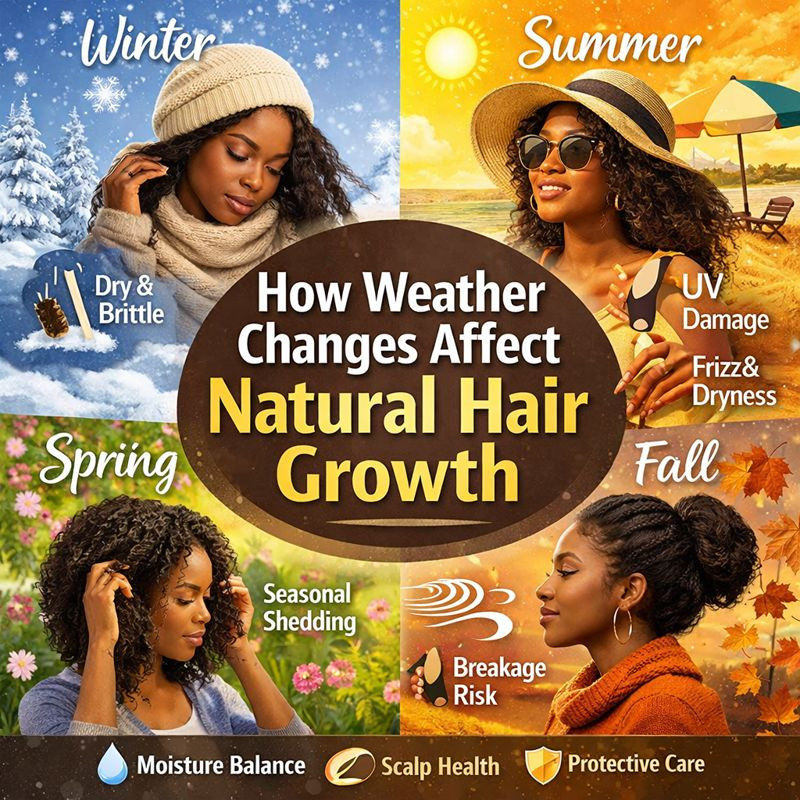
If your hair seems to grow faster in some seasons and stall in others, you’re not imagining things. Weather changes have a direct, measurable impact on natural hair growth, retention, moisture balance, and scalp health.
Temperature shifts, humidity levels, wind exposure, and even sunlight can influence how your hair behaves — sometimes helping growth, sometimes quietly sabotaging it.
Understanding how weather affects your natural hair allows you to adjust your routine proactively, protect your strands year-round, and retain the length you’re already growing.
In this guide, we’ll break down exactly how each season affects natural hair growth, why hair often feels different throughout the year, and how to protect your hair so growth stays consistent no matter the forecast.
The Truth About Hair Growth vs Hair Retention
Before we dive into weather effects, it’s important to clarify one thing:
Hair growth happens at the scalp. Hair length is determined by retention.
Your scalp produces hair at a fairly consistent biological rate — roughly ½ inch per month for most people. Weather doesn’t usually stop hair from growing entirely. Instead, it affects:
-
Moisture levels
-
Scalp circulation
-
Breakage risk
-
Shed cycles
-
Cuticle behavior
When weather conditions damage the hair shaft faster than new growth appears, it feels like your hair isn’t growing, even when it technically is.
How Weather Directly Impacts Natural Hair
Weather affects natural hair in four major ways:
-
Moisture absorption and loss
-
Cuticle expansion and contraction
-
Scalp oil production
-
Breakage and shedding patterns
Natural hair — especially curly, coily, and kinky textures — is more vulnerable because oils have a harder time traveling down the hair shaft.
Let’s break it down by season.
Winter: Dry Air, Slow Retention
Winter is one of the hardest seasons for natural hair growth — not because hair stops growing, but because breakage skyrockets.
Why Winter Is Tough on Natural Hair
Cold air holds very little moisture. When combined with indoor heating, winter creates an extremely dry environment that pulls moisture out of your hair and scalp.
This leads to:
-
Brittle strands
-
Dry scalp
-
Increased breakage
-
Tight, rough hair texture
-
Slower visible length retention
Your hair cuticle remains raised in dry air, allowing moisture to escape faster than you can replace it.
Winter Scalp Changes
In winter, the scalp often:
-
Produces less sebum
-
Becomes tighter and less flexible
-
Experiences more flaking and itching
Poor scalp flexibility can reduce optimal blood flow to follicles, indirectly impacting growth efficiency.
How to Protect Growth in Winter
-
Moisturize more frequently (not heavier — more often)
-
Use warm water, not hot
-
Seal moisture immediately after washing
-
Reduce manipulation and tight styles
-
Protect hair from cold air with silk-lined hats
Winter is all about moisture retention and protection, not constant styling.
Spring: Growth Picks Up — But So Does Shedding
Spring often brings a burst of hair growth, but many naturals experience seasonal shedding at the same time.
Why Shedding Happens in Spring
Your body adjusts its growth cycles based on light exposure and hormones. Increased daylight in spring can trigger follicles to enter a new growth phase — which means old hairs shed to make room for new ones.
This is normal and temporary.
Spring Weather Effects on Hair
-
Increased humidity improves flexibility
-
Moisture absorption improves
-
Scalp circulation increases
However, inconsistent temperatures can cause:
-
Moisture imbalance
-
Frizz
-
Product buildup from over-layering
How to Support Growth in Spring
-
Clarify gently to remove winter buildup
-
Rebalance moisture and protein
-
Massage scalp regularly
-
Trim split ends caused by winter dryness
Spring is a reset season — what you do here sets the tone for summer retention.
Summer: Fast Growth, High Risk
Summer is often the fastest growth season for natural hair — but also one of the most damaging if not managed properly.
Why Hair Grows Faster in Summer
-
Increased blood circulation
-
Higher vitamin D exposure
-
Increased scalp activity
-
More sweat and oil production
All of this creates a more active follicle environment.
Summer Hair Risks
Unfortunately, summer also brings:
-
UV damage
-
Excessive dryness from sun exposure
-
Saltwater and chlorine damage
-
Humidity overload
-
Friction from frequent washing
High humidity causes the hair cuticle to swell, making strands weaker and more prone to breakage when manipulated.
How to Protect Growth in Summer
-
Use UV protection for hair and scalp
-
Rinse hair after swimming immediately
-
Avoid over-washing
-
Deep condition consistently
-
Keep styles low-manipulation
Summer growth is real — but only stays if you protect the length.
Fall: Retention Opportunity (If You Adjust)
Fall is one of the best seasons for length retention — if you transition your routine correctly.
Why Fall Is Ideal for Growth Retention
-
Cooler temperatures reduce moisture loss
-
Less sun exposure minimizes UV damage
-
Scalp activity stabilizes
However, many people don’t adjust fast enough after summer, leading to:
-
Lingering dryness
-
Breakage from damaged cuticles
-
Product imbalance
Fall Hair Strategy
-
Increase moisture layering gradually
-
Repair summer damage with deep conditioning
-
Reduce high-tension styles
-
Prep hair for winter dryness
Fall is where growth either stays or disappears depending on how well you prepare.
Humidity: Friend or Enemy?
Humidity is one of the most misunderstood weather factors for natural hair.
Low Humidity
-
Causes dryness
-
Increases breakage
-
Reduces elasticity
High Humidity
-
Swells the cuticle
-
Causes frizz
-
Weakens strands when stretched
-
Leads to moisture overload
The key isn’t avoiding humidity — it’s balancing moisture and sealing properly so your hair doesn’t absorb too much or lose too much.
Wind: The Silent Growth Killer
Wind causes:
-
Tangling
-
Friction
-
Cuticle damage
-
Breakage at the ends
Protective styles and covered hair are essential in windy climates — especially for fine or fragile strands.
Sun Exposure and Natural Hair Growth
Sunlight helps vitamin D production, which supports follicle health. But too much sun damages hair protein.
UV exposure:
-
Weakens keratin
-
Fades color
-
Dries hair out
-
Causes split ends
Protecting hair from UV damage is just as important as protecting skin.
Why Weather Makes Hair Feel Like It “Stops Growing”
Most weather-related growth complaints come from:
-
Increased breakage
-
Excess shedding
-
Moisture imbalance
-
Poor scalp circulation
Hair rarely stops growing — it just doesn’t stay.
How to Create a Weather-Proof Hair Growth Routine
To maintain growth year-round:
-
Adjust moisture levels with the season
-
Protect hair from environmental exposure
-
Focus on scalp health consistently
-
Reduce manipulation during extreme weather
-
Listen to how your hair responds, not the calendar
Growth thrives with consistency, not trend-hopping.
Final Thoughts: Growth Is Seasonal, But Retention Is Strategic
Weather changes will always affect natural hair — but they don’t have to control your growth results.
When you understand how temperature, humidity, and environment impact your hair, you stop reacting and start preventing damage before it happens.
Healthy hair growth isn’t about fighting the weather — it’s about working with it.