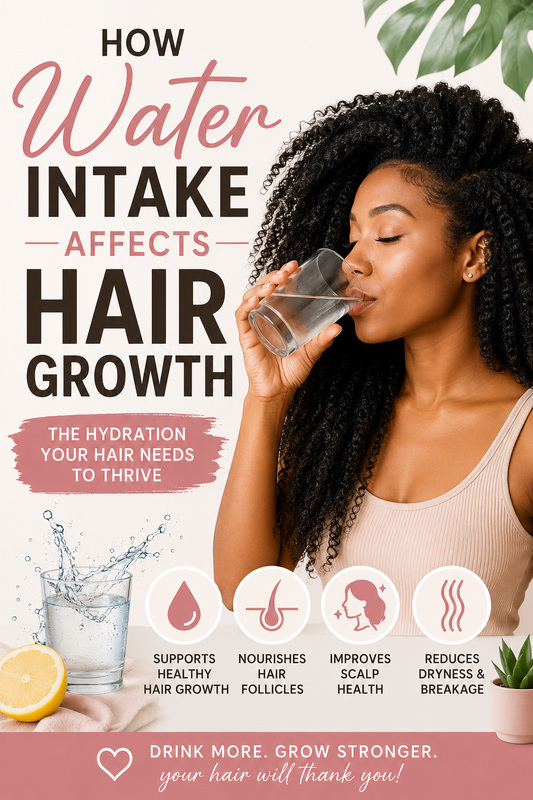
If you've been searching for natural ways to grow longer, thicker, healthier hair, you've probably heard someone say, "Drink more water."
But does drinking water actually make your hair grow faster?
The answer is yes—and no.
Water alone won't magically make your hair grow inches overnight. However, proper hydration creates the ideal environment for healthy hair follicles, a balanced scalp, stronger strands, and reduced breakage. Without enough water, your body prioritizes essential organs, leaving your hair with fewer nutrients and less moisture.
For women with natural hair, curly hair, coils, locs, and protective styles, hydration plays an even bigger role because textured hair naturally loses moisture more quickly than straight hair.
In this guide, you'll learn exactly how water intake affects hair growth, what dehydration does to your scalp, how much water you should drink, and simple ways to keep both your body and hair hydrated.
Why Hair Needs Water
Your hair is made primarily of keratin, a strong protein. Although the hair shaft itself is not living tissue, the hair follicle beneath your scalp is very much alive.
Hair follicles require:
- Oxygen
- Nutrients
- Vitamins
- Minerals
- Blood circulation
- Water
Every single hair growing from your scalp depends on healthy follicle function.
Water helps transport nutrients through your bloodstream to these follicles, supporting normal hair growth and overall scalp health.
Without adequate hydration, your body becomes less efficient at delivering what your follicles need.
The Hair Growth Cycle
Understanding hair growth helps explain why hydration matters.
Anagen (Growth Phase)
Hair actively grows from the follicle.
This phase can last:
- 2–7 years
Longer anagen phases generally mean longer hair.
Catagen (Transition Phase)
Hair growth slows.
The follicle begins shrinking.
This phase lasts only a few weeks.
Telogen (Resting Phase)
Hair rests before shedding naturally.
New hair begins forming underneath.
Every healthy scalp cycles through these stages continuously.
Healthy follicles perform this process more efficiently when the body is properly nourished and hydrated.
What Happens When You're Dehydrated?
When your body doesn't receive enough water, it protects your vital organs first.
Hair isn't considered essential for survival.
As a result:
- Blood flow may become less efficient.
- Nutrient delivery slows.
- Skin becomes dry.
- Scalp moisture decreases.
- Hair feels brittle.
- Breakage increases.
This doesn't necessarily stop hair growth immediately.
Instead, dehydration contributes to poor hair quality and greater hair loss from breakage.
Does Drinking Water Make Hair Grow Faster?
Not directly.
Water doesn't "turn on" hair growth.
Instead, hydration supports the biological processes responsible for healthy hair production.
Think of it like watering a plant.
Water doesn't force the plant to grow overnight.
But without water, growth slows and the plant becomes weak.
Your scalp works similarly.
Water Helps Deliver Nutrients
Hair follicles require nutrients like:
- Iron
- Zinc
- Vitamin D
- Protein
- Biotin
- Vitamin C
- Omega-3 fatty acids
Water transports these nutrients throughout your body.
Even the healthiest diet becomes less effective if hydration is poor.
Hydration Supports Blood Circulation
Healthy circulation is critical for hair growth.
Blood delivers:
- Oxygen
- Nutrients
- Hormones
- Growth factors
Proper hydration helps maintain normal blood volume, allowing these nutrients to reach your follicles efficiently.
Dry Scalp vs. Dry Hair
Many people confuse the two.
Dry Scalp
Symptoms include:
- Flaking
- Tightness
- Itching
- Irritation
Dry scalp can worsen if you're dehydrated.
Dry Hair
Hair strands may feel:
- Rough
- Britle
- Frizzy
- Tangled
Drinking water helps support internal hydration, but external moisture through conditioners and leave-in products is still essential.
Why Black Hair Needs More Moisture
Natural hair has unique characteristics.
The twists and curves of curly and coily hair make it harder for scalp oils to travel down each strand.
This means:
- Moisture escapes faster.
- Ends dry out sooner.
- Breakage becomes more common.
Internal hydration combined with proper hair care helps maintain softness and elasticity.
Signs You May Not Be Drinking Enough Water
You may notice:
- Dry lips
- Headaches
- Fatigue
- Dark urine
- Dry skin
- Brittle nails
- Itchy scalp
- Dull hair
- Increased breakage
These symptoms don't automatically mean dehydration, but together they can indicate your body needs more fluids.
Can Dehydration Cause Hair Loss?
Severe dehydration may contribute indirectly to hair shedding.
When your body experiences stress from dehydration:
- Nutrient delivery declines.
- Circulation becomes less efficient.
- The scalp environment becomes less healthy.
Over time, chronic dehydration may contribute to increased shedding and weaker hair.
Water Supports Scalp Health
A healthy scalp is the foundation of healthy hair.
Proper hydration supports:
- Skin barrier function
- Natural oil balance
- Reduced dryness
- Improved comfort
- Better elasticity
A healthy scalp provides a better environment for hair follicles to thrive.
Does Water Help With Dandruff?
Sometimes.
If flakes are caused by simple dryness, hydration may help improve scalp moisture.
However, dandruff caused by yeast overgrowth or skin conditions usually requires targeted treatment.
Water and Hair Elasticity
Healthy hair stretches before returning to its original shape.
This flexibility is called elasticity.
Well-hydrated hair generally has better elasticity, making it less likely to snap during:
- Detangling
- Styling
- Washing
- Protective styling
Hydration and Protective Styles
Braids, twists, wigs, and locs don't eliminate your hair's need for moisture.
Drink water consistently while also:
- Moisturizing your scalp
- Using lightweight leave-ins
- Protecting hair overnight
- Avoiding product buildup
Does Drinking More Water Cure Split Ends?
No.
Split ends cannot be repaired.
They must be trimmed.
However, proper hydration may reduce future dryness that contributes to split ends.
Water Intake and Hair Thickness
Hydration won't change the number of follicles you have.
However, healthier follicles often produce stronger strands that appear fuller because they break less frequently.
How Much Water Should You Drink?
There's no one-size-fits-all number.
Water needs depend on:
- Body size
- Activity level
- Climate
- Diet
- Health conditions
A practical approach is to drink enough fluids so your urine is generally pale yellow and you rarely feel thirsty. People who exercise heavily, spend time in hot weather, or are pregnant or breastfeeding often need more fluids.
Foods That Help Hydrate You
Water isn't your only source of hydration.
Water-rich foods include:
- Cucumbers
- Watermelon
- Strawberries
- Oranges
- Lettuce
- Tomatoes
- Celery
- Bell peppers
- Zucchini
These foods also provide vitamins and antioxidants that support healthy hair.
Drinks That Support Hydration
Good choices include:
- Plain water
- Sparkling water (unsweetened)
- Herbal tea
- Coconut water (in moderation)
- Milk
Try to limit sugary drinks if they make up a large portion of your daily fluid intake.
Lifestyle Habits That Improve Hair Hydration
Combine good hydration with healthy hair practices:
- Deep condition regularly.
- Use a sulfate-free cleanser if it suits your hair type.
- Seal moisture with lightweight oils or creams.
- Sleep on a satin or silk pillowcase.
- Avoid excessive heat styling.
- Trim damaged ends.
- Eat enough protein.
- Manage stress.
- Get enough sleep.
- Exercise regularly to support circulation.
A Simple Daily Hydration Routine
Morning:
- Drink a glass of water after waking.
Throughout the day:
- Sip water consistently instead of waiting until you're very thirsty.
Meals:
- Include fruits and vegetables with high water content.
Exercise:
- Replace fluids lost through sweat.
Evening:
- Finish your hydration earlier in the evening if late-night drinking interrupts your sleep.
Common Myths About Water and Hair Growth
Myth 1: Drinking a gallon of water daily guarantees faster hair growth.
False. Drinking excessive water won't force hair to grow faster.
Myth 2: Hair is hydrated only by drinking water.
False. Healthy hair benefits from both internal hydration and external moisturizing.
Myth 3: Water fixes damaged hair.
False. Water supports healthy hair, but it cannot repair split ends or severely damaged strands.
Myth 4: Only dry climates require extra hydration.
False. Your fluid needs can increase with exercise, illness, heat, and individual differences regardless of where you live.
Hair Care Products Still Matter
While hydration begins from within, your hair also benefits from consistent external care.
Using products that help moisturize the scalp, reduce dryness, and strengthen strands can complement healthy habits like drinking enough water, eating a balanced diet, and protecting your hair from unnecessary damage.
A complete routine that includes cleansing, conditioning, moisturizing, and maintaining a healthy scalp gives your hair the best opportunity to grow to its fullest potential while minimizing breakage.
Frequently Asked Questions
Can drinking more water regrow bald spots?
Water alone cannot regrow hair lost from conditions such as pattern hair loss or scarring alopecia. However, staying hydrated supports overall scalp health.
How long does it take to notice healthier hair after improving hydration?
Hair grows gradually, so changes may take several weeks to a few months. You may notice improvements in scalp comfort and overall hair feel sooner.
Does coffee dehydrate your hair?
Moderate coffee intake generally contributes to your daily fluid intake. Balance caffeinated beverages with plenty of water throughout the day.
Can dehydration make natural hair brittle?
Yes. Dehydration can contribute to dryness, which may increase brittleness and breakage—especially when combined with harsh styling practices.
Should people with locs drink more water?
People with locs don't necessarily need more water than anyone else, but maintaining good hydration supports scalp health and helps keep new growth healthy.
Final Thoughts
Understanding how water intake affects hair growth can help you build healthier habits that benefit both your body and your hair.
While drinking water isn't a miracle solution, it plays an important role in supporting healthy hair follicles, maintaining scalp balance, transporting nutrients, and reducing the dryness that can lead to breakage.
If your goal is longer, stronger, healthier natural hair, remember that hydration works best as part of a complete hair-care routine. Pair consistent water intake with nutritious foods, gentle hair care, regular scalp maintenance, and moisturizing products that help protect your strands from everyday damage.
By making hydration a daily priority, you'll create a healthier foundation for stronger, more resilient hair over time.