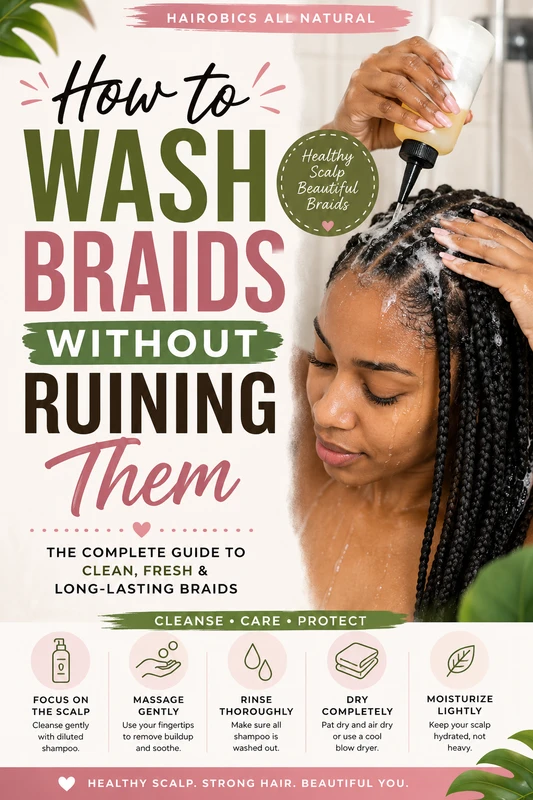
Braids are one of the most popular protective styles for natural hair. Whether you're wearing box braids, knotless braids, cornrows, twists, crochet braids, or feed-in braids, the style offers convenience, versatility, and protection for your natural hair.
However, many people avoid washing their braids because they fear ruining the style. Some worry their braids will become frizzy, unravel, or lose their neat appearance. Others simply don't know the proper way to clean braided hair.
The truth is that braids should be washed regularly. Leaving your scalp dirty for weeks can lead to product buildup, itching, unpleasant odors, flakes, scalp irritation, and even hair loss in severe cases.
The good news is that you can wash your braids without destroying them. With the right techniques and products, your braids can stay clean, fresh, and beautiful while protecting your natural hair underneath.
In this complete guide, you'll learn exactly how to wash braids without ruining them, how often to wash them, what mistakes to avoid, and how to keep your scalp healthy throughout your braided style.
Why Washing Braids Is Important
Many people mistakenly believe that braids should never be washed. This myth can actually cause more damage than washing itself.
When your scalp isn't cleaned regularly, several problems can occur:
- Product buildup
- Excess oil accumulation
- Sweat deposits
- Dead skin cells
- Itchy scalp
- Odor
- Scalp inflammation
- Clogged follicles
Healthy hair growth starts with a healthy scalp.
Even though your hair is tucked away in braids, your scalp still produces oil and sheds skin cells. If these aren't removed regularly, your scalp environment becomes unhealthy.
Regular cleansing helps:
- Maintain scalp health
- Reduce itching
- Prevent odor
- Minimize dandruff
- Support healthy hair growth
- Extend the lifespan of your braids
How Often Should You Wash Braids?
The ideal washing schedule depends on your lifestyle and scalp condition.
Every 1-2 Weeks
Recommended for:
- Active individuals
- Gym-goers
- People who sweat heavily
- Oily scalp types
Every 2-3 Weeks
Recommended for:
- Most braid wearers
- Normal scalp conditions
Weekly
Recommended for:
- Very oily scalps
- Heavy exercisers
- People living in hot climates
Signs Your Braids Need Washing
Look for:
- Itching
- Scalp odor
- Visible buildup
- Excessive flakes
- Greasy roots
- Sweat accumulation
Your scalp will usually tell you when it's time.
Common Mistakes That Ruin Braids
Before learning the proper washing process, it's important to understand what causes braids to become messy.
Mistake #1: Scrubbing Too Aggressively
Many people scrub their scalp like they're washing loose hair.
This creates:
- Frizz
- Loose braids
- Tangling
- Unraveling
Always use gentle pressure.
Mistake #2: Using Too Much Shampoo
Excess shampoo can become trapped inside braids.
This leads to:
- Residue buildup
- Dull appearance
- Product flakes
Less is more.
Mistake #3: Skipping Drying
One of the biggest mistakes braid wearers make is allowing braids to remain damp.
Wet braids can develop:
- Mildew smells
- Odor
- Scalp irritation
- Mold growth
Always dry thoroughly.
Mistake #4: Rough Towel Drying
Aggressive rubbing causes:
- Frizz
- Fuzziness
- Premature aging of the style
Pat instead of rub.
Mistake #5: Washing Too Frequently
Overwashing can:
- Increase frizz
- Shorten braid lifespan
- Cause unraveling
Balance is key.
What You'll Need Before Washing Braids
Gather these supplies:
Clarifying or Gentle Shampoo
Choose:
- Sulfate-free formulas
- Lightweight cleansers
- Scalp-friendly products
Applicator Bottle
This helps target the scalp directly.
Microfiber Towel
Microfiber reduces frizz and absorbs water efficiently.
Scalp Moisturizer
A lightweight moisturizing spray can help restore hydration after washing.
Hair Dryer (Optional)
Useful for speeding up drying.
Step-by-Step Guide: How to Wash Braids Without Ruining Them
Step 1: Dilute Your Shampoo
Mix:
- 1 part shampoo
- 3 parts water
This allows easier scalp application while reducing buildup.
Diluted shampoo spreads evenly and rinses more easily.
Step 2: Focus on the Scalp
Apply shampoo directly to:
- Hairline
- Crown
- Nape
- Part lines
Your scalp needs cleaning more than the braids themselves.
Use fingertips—not nails.
Step 3: Massage Gently
Use circular motions.
Avoid:
- Scratching
- Pulling
- Rubbing aggressively
Think of cleansing the scalp rather than scrubbing the braids.
Step 4: Clean the Length of Braids
Allow shampoo to run down the braids naturally.
Gently squeeze the braids.
Do not:
- Twist
- Wring
- Ball them up
This helps maintain braid structure.
Step 5: Rinse Thoroughly
This step is critical.
Leftover shampoo causes:
- Flaking
- Itching
- Product buildup
Rinse until water runs clear.
Step 6: Repeat If Necessary
If heavy buildup exists, perform a second gentle cleanse.
Avoid over-cleansing.
Should You Condition Braids?
Yes—but carefully.
Heavy conditioners can become trapped inside braided hair.
Instead:
Choose lightweight conditioners.
Apply primarily to:
- Natural hair roots
- Exposed hair sections
Avoid coating the entire braid excessively.
Rinse thoroughly.
The Best Way to Dry Braids
Drying determines whether your braids remain fresh or become smelly.
Step 1: Squeeze Out Excess Water
Gently squeeze each section.
Avoid twisting.
Step 2: Use a Microfiber Towel
Pat dry.
Do not rub.
Step 3: Air Dry Partially
Allow several hours of air drying.
Step 4: Finish with a Dryer
Use:
- Cool setting
- Medium setting
Focus on the roots.
The scalp should be completely dry.
How to Prevent Frizz After Washing
Many people fear washing because of frizz.
Fortunately, frizz can be minimized.
Sleep With Satin
Use:
- Satin bonnet
- Satin scarf
- Satin pillowcase
Avoid Excess Touching
Constant manipulation increases fuzziness.
Moisturize Lightly
Heavy products attract buildup.
Use lightweight moisture instead.
Lay Edges Sparingly
Too much gel creates residue.
Keep styling simple.
How to Wash Knotless Braids
Knotless braids require extra care.
Because they begin with your natural hair, aggressive washing can loosen the style.
Tips:
- Use diluted shampoo
- Avoid excessive rubbing
- Focus on scalp cleansing
- Handle roots gently
Knotless braids often benefit from gentler washing techniques than traditional box braids.
How to Wash Box Braids
Box braids are generally durable.
You can:
- Clean the scalp thoroughly
- Rinse completely
- Dry carefully
Box braids typically withstand washing very well when installed correctly.
How to Wash Cornrows
Cornrows require targeted scalp cleansing.
Use an applicator bottle to reach:
- Between rows
- Hairline
- Nape
Rinse thoroughly and dry completely.
How to Wash Crochet Braids
Crochet styles require special attention.
Avoid excessive friction.
Instead:
- Clean scalp carefully
- Gently squeeze synthetic hair
- Dry completely
This prevents tangling and frizz.
How to Deal With Itchy Braids
Itching is one of the most common braid complaints.
Possible causes include:
- Product buildup
- Dry scalp
- Sweat
- Allergic reactions
- Dirty scalp
Regular cleansing often solves the problem.
Moisturizing the scalp can also help.
How to Remove Buildup From Braids
White residue can accumulate over time.
Causes include:
- Heavy oils
- Gels
- Edge control
- Dry shampoo
- Conditioner residue
A gentle clarifying wash can help remove buildup safely.
Always follow with hydration.
Can Washing Braids Make Hair Grow Faster?
Washing alone does not increase growth speed.
However, a clean scalp creates a healthier environment for hair growth.
Healthy scalp habits support:
- Reduced inflammation
- Better follicle function
- Improved moisture balance
All of these factors help maximize growth retention.
Signs Your Braids Need To Come Out
Even with proper washing, braids shouldn't stay in forever.
Remove braids if you notice:
- Severe frizz
- Excessive shedding
- Matting
- Persistent odor
- Scalp irritation
- Significant new growth
Most braid styles should be removed within 6-8 weeks.
Healthy Scalp Habits While Wearing Braids
To maximize braid longevity:
Keep Scalp Moisturized
Hydrated scalps experience less itching.
Protect Hair At Night
Wear satin every night.
Avoid Excess Product Use
Too many products create buildup.
Clean Regularly
Consistent cleansing supports scalp health.
Stay Hydrated
Water intake affects overall hair health.
Frequently Asked Questions
Can I Wash Braids Every Week?
Yes, especially if you sweat heavily or have an oily scalp.
Will Washing Cause Frizz?
Some frizz is normal, but proper techniques minimize it.
Can Dirty Braids Cause Hair Loss?
Poor scalp health can contribute to inflammation and breakage over time.
Is Dry Shampoo Enough?
Dry shampoo helps temporarily but does not replace proper cleansing.
Can I Wash New Braids Immediately?
It's best to wait several days after installation.
This allows the style to settle.
Final Thoughts
Learning how to wash braids without ruining them is essential for maintaining a healthy scalp and beautiful protective style. Clean braids not only look better but also create an environment where your natural hair can thrive underneath.
The key is to focus on the scalp, use diluted shampoo, cleanse gently, rinse thoroughly, and dry completely. When done correctly, washing your braids can actually help them last longer while keeping your scalp comfortable and healthy.
Remember, protective styles are only truly protective when the scalp underneath remains clean and cared for. By following the techniques outlined in this guide, you can enjoy fresh, healthy braids from installation day until takedown day while supporting stronger, healthier hair growth along the way.