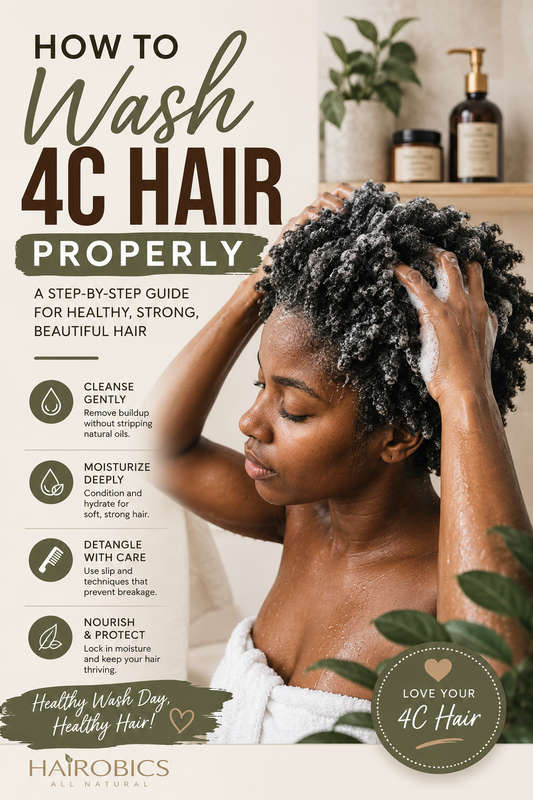
If you have 4C hair, you've probably heard conflicting advice about washing your hair. Some people say wash it every week. Others recommend washing once a month. Some believe shampoo dries out 4C hair, while others insist regular cleansing is the key to healthy growth.
The truth is that properly washed 4C hair is healthier, more moisturized, and more likely to retain length than hair that isn't cleaned regularly.
4C hair is naturally delicate because of its tight curl pattern. Dirt, sweat, styling products, and excess oil can build up on the scalp over time. If that buildup isn't removed, it may contribute to dryness, itching, flakes, and an unhealthy environment for growing strong hair.
The good news is that washing 4C hair doesn't have to be complicated. With the right routine and gentle techniques, you can cleanse your hair without stripping moisture or causing unnecessary breakage.
In this guide, you'll learn:
- Why washing 4C hair matters
- How often to wash 4C hair
- The best products to use
- A step-by-step wash day routine
- Common mistakes to avoid
- Tips for keeping your hair moisturized after washing
Let's dive in.
Understanding 4C Hair
4C hair has the tightest curl pattern among the Type 4 hair categories. Instead of forming defined curls, many strands create tiny zig-zag bends that make shrinkage extremely noticeable.
Characteristics of 4C hair include:
- High shrinkage
- Naturally dry texture
- Fragile strands
- Excellent volume
- Dense appearance
- High versatility
Because natural scalp oils struggle to travel down the twists and bends of 4C strands, this hair type often requires extra moisture.
That doesn't mean washing should be avoided.
Instead, washing should be done correctly.
Why Washing 4C Hair Is Important
Many people avoid shampoo because they're afraid it will dry their hair out.
In reality, dirty hair isn't healthier.
Regular washing helps remove:
- Sweat
- Dead skin
- Dirt
- Product buildup
- Environmental pollution
- Excess oil
A clean scalp creates a healthier environment for healthy hair growth.
Benefits include:
- Less itching
- Reduced flakes
- Better moisture absorption
- Improved curl softness
- Easier detangling
- Stronger hair over time
How Often Should You Wash 4C Hair?
The ideal schedule depends on your lifestyle.
Once Every 7–10 Days
Ideal if you:
- Exercise frequently
- Sweat heavily
- Use styling products often
Every Two Weeks
Great for:
- Protective styles
- Low-manipulation routines
- Moderate product use
Once Per Month
Only recommended if:
- Hair stays clean
- Minimal product buildup
- Protective style remains fresh
Waiting several months between washes generally allows buildup to accumulate, making moisture harder to retain.
What You'll Need Before Wash Day
Gather your supplies before starting.
You'll need:
- Sulfate-free shampoo
- Moisturizing conditioner
- Wide-tooth comb
- Spray bottle
- Hair clips
- Microfiber towel or cotton T-shirt
- Deep conditioner
- Leave-in conditioner
- Hair oil or butter
Preparing ahead of time makes wash day smoother and reduces unnecessary manipulation.
Step 1: Divide Hair Into Sections
Never attempt to wash dense 4C hair as one large section.
Instead:
- Divide into 4–8 sections.
- Secure each section with clips or loose twists.
Benefits include:
- Less tangling
- Better shampoo distribution
- Easier detangling
- Reduced breakage
Step 2: Pre-Poo (Optional but Helpful)
A pre-poo treatment helps protect hair before shampooing.
Apply:
- Conditioner
- Aloe vera gel
- Lightweight oil
Allow it to sit for 20–30 minutes.
Benefits include:
- Softer hair
- Easier detangling
- Reduced moisture loss
- Less breakage
Step 3: Saturate Hair With Warm Water
Warm water helps lift buildup and prepares hair for cleansing.
Avoid:
- Hot water
- Extremely cold water
Warm—not hot—is ideal.
Step 4: Shampoo the Scalp First
Focus shampoo on your scalp rather than the hair lengths.
Use your fingertips to gently massage the scalp.
Avoid scratching with your nails.
As you rinse, the shampoo naturally cleanses the rest of your hair.
Step 5: Cleanse Twice if Necessary
If you've used:
- Heavy gels
- Oils
- Grease
- Butters
A second gentle shampoo may help remove buildup.
Don't scrub aggressively.
Gentle cleansing is enough.
Step 6: Apply Conditioner Generously
Conditioner restores softness after shampooing.
Work from:
Ends → Mid-length → Roots
Leave it on for several minutes.
This allows moisture to penetrate the strands.
Step 7: Detangle Carefully
Conditioner provides slip for easier detangling.
Start:
Ends
↓
Middle
↓
Roots
Use:
- Fingers first
- Wide-tooth comb second
Avoid ripping through knots.
Take your time.
Step 8: Deep Condition
Deep conditioning is one of the most important steps for 4C hair.
Use a moisturizing deep conditioner.
Cover with:
- Plastic cap
- Warm towel
- Hooded dryer (optional)
Leave on:
20–30 minutes
Then rinse thoroughly.
Benefits include:
- Improved elasticity
- Softer curls
- Less breakage
- Better moisture retention
Step 9: Rinse With Cool Water
Cool water helps smooth the hair cuticle.
Benefits include:
- Reduced frizz
- Better shine
- Softer texture
- Moisture retention
Step 10: Dry Gently
Never rub your hair vigorously with a regular towel.
Instead use:
- Cotton T-shirt
- Microfiber towel
Blot gently.
Allow hair to air dry whenever possible.
Step 11: Moisturize Immediately
Moisture should be added while hair is still slightly damp.
A simple routine includes:
- Leave-in conditioner
- Cream
- Oil to seal moisture
Many people follow the LOC or LCO method depending on what works best for their hair.
Protective Styling After Wash Day
Freshly washed hair is easier to style.
Protective styles include:
- Flat twists
- Two-strand twists
- Mini twists
- Braids
- Bantu knots
- Loose buns
Avoid excessive tension around the hairline.
Common Wash Day Mistakes
Washing Too Infrequently
Dirty hair doesn't absorb moisture as effectively.
A clean scalp supports healthier hair.
Using Harsh Shampoo
Choose moisturizing, sulfate-free cleansers whenever possible.
Skipping Conditioner
Conditioner helps replenish softness and manageability.
Skipping it can leave hair feeling rough and more prone to tangles.
Detangling Dry Hair
Dry detangling can increase breakage.
Always detangle with conditioner or another product that provides slip.
Using Very Hot Water
Hot water may leave hair feeling dry.
Warm water is a gentler choice.
Over-Manipulating Hair
Constant combing and brushing during wash day can lead to unnecessary breakage.
Handle your hair gently.
Signs Your Wash Routine Is Working
Over time, you may notice:
- Less shedding
- Softer texture
- Easier detangling
- Fewer knots
- Better moisture retention
- Stronger strands
- Improved length retention
- Healthier-looking scalp
Consistency matters more than perfection.
Frequently Asked Questions
Is shampoo bad for 4C hair?
No. A gentle, moisturizing shampoo helps cleanse the scalp and remove buildup without unnecessarily stripping the hair.
Can I wash 4C hair every week?
Yes. Weekly washing works well for many people, especially if they exercise often or use styling products regularly.
Should I oil my hair before washing?
A pre-poo treatment with a light oil or conditioner can reduce tangles and help maintain softness during wash day.
Why does my hair feel dry after washing?
Possible reasons include:
- Harsh shampoo
- Skipping deep conditioner
- Not moisturizing immediately afterward
- Using very hot water
Adjusting these steps often improves moisture retention.
Is cold water necessary?
You don't need ice-cold water, but a cool final rinse can help smooth the cuticle and reduce frizz.
Final Thoughts
Learning how to wash 4C hair properly is one of the best investments you can make in your hair care routine. Clean hair and a healthy scalp provide the foundation for moisture retention, reduced breakage, and stronger strands over time.
The key isn't washing less—it's washing gently and consistently. By cleansing your scalp with a mild shampoo, conditioning thoroughly, deep conditioning regularly, and moisturizing while your hair is still damp, you create the conditions your 4C hair needs to thrive.
Remember that every head of hair is unique. Pay attention to how your hair responds, adjust your routine as needed, and focus on healthy habits rather than chasing quick results. With patience and consistency, your wash day can become the starting point for healthier, softer, and more manageable 4C hair.