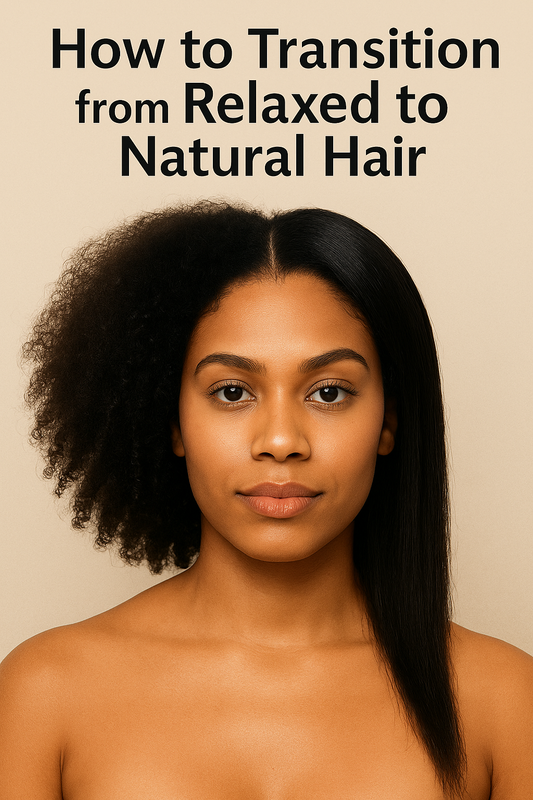
Transitioning from relaxed to natural hair can feel like starting a new journey — exciting, empowering, but also a bit intimidating. Whether you’ve had relaxed hair for years or you’re just ready for a change, the process of returning to your natural texture requires patience, care, and the right products.
The good news? With the right routine and mindset, you can make this transition smooth, healthy, and even enjoyable. In this guide, we’ll walk you through everything you need to know about transitioning from relaxed to natural hair — from what to expect, to how to care for both textures, and the best Hairobics products to help you along the way.
Understanding the Transition Process
Transitioning from relaxed to natural hair means growing out your natural texture while gradually trimming away your relaxed ends. Unlike the “big chop,” where you cut off all relaxed hair at once, transitioning allows you to keep your length while your natural curls grow in.
However, this period creates what’s called a line of demarcation — the point where your natural hair meets the relaxed hair. This area is fragile and prone to breakage, so gentle care is essential.
The key to success during this time is moisture, strength, and protection. By giving your hair the nourishment it needs, you’ll maintain healthy growth and make your transition much easier.
1. Set Realistic Expectations
Your natural hair texture may surprise you — in a good way! But patience is essential. On average, hair grows about half an inch per month, so depending on your desired length, transitioning can take anywhere from 6 months to 2 years.
During this time:
-
You’ll deal with two textures — relaxed and natural — which require different care.
-
You’ll need to avoid excessive heat and harsh chemicals.
-
Your haircare routine will likely change completely.
Remember: this is a process of rediscovery. Every curl, coil, and kink tells a story about your natural beauty.
2. Start with a Trim (and Keep Trimming Regularly)
Healthy ends make all the difference. Begin your transition with a good trim to remove damaged or split ends. Then, continue trimming every 6–8 weeks to gradually remove relaxed portions and prevent breakage.
Trimming regularly will help you:
-
Maintain neat, healthy-looking hair.
-
Reduce tangling between textures.
-
Slowly transition without a drastic chop.
If your goal is to keep as much length as possible, take small trims — about ¼ inch at a time. Eventually, you’ll be left with 100% natural hair.
3. Focus on Moisture and Hydration
Moisture is the cornerstone of a successful transition. Relaxed ends tend to be dry and brittle, while new natural growth often needs extra hydration to stay soft and manageable.
To keep both textures healthy:
-
Moisturize daily or every other day.
-
Use products rich in natural oils, humectants, and conditioning agents.
-
Seal in moisture with light oils or creams.
Product Spotlight: Hairobics Leave-In Treatment
The Hairobics Leave-In Treatment is perfect for transitioners because it provides lasting hydration without weighing down the hair. Formulated with natural ingredients, it softens both natural and relaxed textures, making detangling easier and breakage less likely.
After washing, apply a generous amount from root to tip. Use your fingers or a wide-tooth comb to distribute evenly. You’ll notice your hair feels smoother, more manageable, and better protected against dryness.
4. Nourish the Scalp for Healthy Growth
Your scalp is the foundation for healthy hair growth. During your transition, focus on keeping it clean, balanced, and nourished.
Avoid heavy product buildup, which can clog pores and slow growth. Instead, use lightweight oils and gentle massages to stimulate blood flow and encourage stronger strands.
Product Spotlight: Hairobics Hair & Scalp Booster
The Hairobics Hair & Scalp Booster is a must-have for anyone transitioning. It promotes growth, strengthens follicles, and helps combat dryness and dandruff. Use it 2–3 times per week to nourish your scalp and protect your new natural roots.
Simply apply a small amount directly to your scalp, then massage for 3–5 minutes. This not only increases circulation but also helps the product absorb deeply. The result? A healthier scalp and stronger, more resilient hair.
5. Gentle Cleansing Is Key
As your natural hair grows in, your scalp may produce more oil while your relaxed ends stay dry. This imbalance can make finding the right wash routine tricky.
Aim to cleanse your hair once a week or every 10 days using a gentle, sulfate-free shampoo or a natural cleanser. Harsh shampoos can strip moisture, leaving both textures brittle.
For extra nourishment, follow each wash with your Hairobics Leave-In Treatment to replenish hydration and protect your hair as it dries.
6. Master Detangling (Without Breakage)
Detangling is often one of the most challenging parts of transitioning, but it doesn’t have to be painful.
Here’s how to detangle safely:
-
Always detangle on damp or moisturized hair — never dry.
-
Apply your Hairobics Leave-In Treatment to add slip and softness.
-
Use your fingers or a wide-tooth comb, starting from the ends and working your way up.
-
Be patient and gentle to avoid unnecessary breakage.
Regular detangling prevents knots, reduces shedding, and keeps your curls looking smooth and defined.
7. Try Low-Manipulation and Protective Styles
Managing two textures daily can be tiring, so protective styling is your best friend during this stage. Low-manipulation styles reduce stress on your strands and help maintain moisture.
Some great transitional styles include:
-
Bantu knots
-
Twist-outs and braid-outs
-
Flat twists or cornrows
-
Wigs and crochet styles (as long as your hair is cared for underneath)
Keep in mind that protective styles should not be too tight, and your scalp should always be moisturized — especially with your Hairobics Hair & Scalp Booster.
Between styles, give your hair breaks to breathe and stretch.
8. Deep Condition Regularly
Deep conditioning is crucial to strengthen your strands and add elasticity, especially where the relaxed and natural hair meet.
Aim to deep condition every 1–2 weeks. Look for conditioners that include proteins for strength and natural oils for moisture. After rinsing, seal the hydration with Hairobics Leave-In Treatment to maintain softness and shine.
This combination helps fortify your hair against breakage while encouraging strong, healthy growth.
9. Limit Heat Styling
Heat can weaken your hair’s natural curl pattern and cause breakage at the line of demarcation. During your transition, it’s best to minimize or avoid flat irons, blow dryers, and curling wands.
If you do use heat occasionally, always apply a heat protectant and keep the temperature moderate. Try heatless stretching methods instead, such as braiding, banding, or twist-outs, to achieve a smoother look without damage.
10. Stay Consistent and Celebrate Progress
Transitioning is more than just a change in your hair — it’s a journey toward self-confidence and natural beauty. You may face challenges like dryness, tangling, or uneven textures, but consistency will get you through.
Take photos every few months to track your growth and progress. Celebrate milestones — your first inch of new growth, your first defined curl, or your first full natural twist-out.
The more consistent you are with moisturizing, trimming, and scalp care, the faster you’ll see results.
11. Build a Simple Transition Routine
Here’s a sample weekly routine using Hairobics products to guide you:
Weekly Routine for Transitioning Hair
Day 1 (Wash Day):
-
Cleanse gently with a sulfate-free shampoo.
-
Deep condition for 20–30 minutes.
-
Apply Hairobics Leave-In Treatment on damp hair to lock in moisture.
-
Style in braids, twists, or a protective style.
Day 3–4:
-
Spritz hair with water and refresh with a small amount of Leave-In Treatment.
-
Massage Hairobics Hair & Scalp Booster into your scalp to stimulate growth.
Day 6–7:
-
Repeat scalp massage.
-
Refresh ends with Leave-In Treatment before bed, especially if they feel dry.
Consistency with this routine helps keep your new growth soft, your scalp healthy, and your relaxed ends protected.
12. Be Patient — Your Natural Hair is Worth It
The most important part of transitioning from relaxed to natural hair is patience. Every curl that grows in is a step closer to your goal. You’ll learn what your hair loves, what it needs, and how it thrives.
Transitioning isn’t just about hair — it’s about embracing your natural beauty and confidence. With proper care, moisture, and the help of products like the Hairobics Leave-In Treatment and Hairobics Hair & Scalp Booster, your journey to healthy natural hair will be rewarding and transformative.
Final Thoughts
Transitioning from relaxed to natural hair can be challenging, but it’s one of the most empowering beauty journeys you’ll ever take. Remember to be gentle, consistent, and kind to yourself throughout the process.
Stay committed to nourishing your scalp, moisturizing your strands, and using the right products — and you’ll soon see your natural curls flourish in full health and beauty.
With the help of Hairobics Leave-In Treatment and Hairobics Hair & Scalp Booster, your transition can be smooth, stress-free, and full of confidence — just like your beautiful, natural hair deserves.