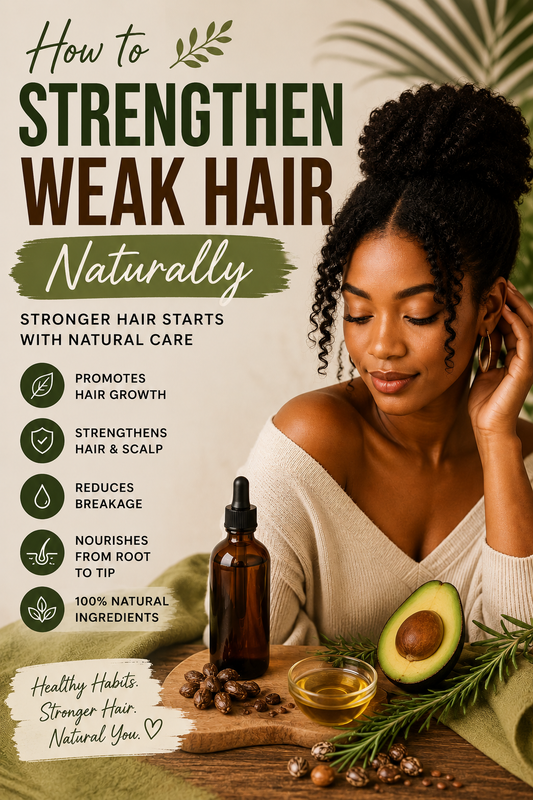
Weak hair can be frustrating. Whether your hair constantly breaks, feels thin, snaps while detangling, or struggles to retain length, you're not alone. Many people with natural hair, curly hair, coily hair, locs, and protective styles experience weakened strands at some point.
The good news is that weak hair doesn't have to stay weak. By improving your hair care routine, nourishing your scalp, and using natural ingredients consistently, you can dramatically improve your hair's strength over time.
In this comprehensive guide, you'll learn exactly how to strengthen weak hair naturally, reduce breakage, and create healthier, thicker-looking hair.
What Causes Weak Hair?
Before strengthening your hair, it's important to understand what causes weakness.
Common causes include:
- Dryness
- Protein loss
- Moisture imbalance
- Heat damage
- Chemical treatments
- Tight hairstyles
- Poor scalp health
- Nutritional deficiencies
- Excessive manipulation
- Product buildup
- Environmental damage
When multiple factors combine, hair becomes fragile and begins breaking before reaching its full length.
Signs Your Hair Is Weak
Your hair may be weakened if you notice:
- Excessive shedding
- Hair snapping during brushing
- Thin ends
- Split ends
- Hair that stretches then breaks
- Constant tangles
- Difficulty retaining length
- Rough texture
- Dull appearance
- Frizz that won't stay moisturized
Recognizing these signs early allows you to prevent more serious damage.
Why Healthy Hair Starts at the Scalp
Your scalp is where every strand begins.
A healthy scalp creates the ideal environment for stronger hair growth.
Healthy scalps are:
- Clean
- Moisturized
- Free from excessive buildup
- Well circulated
- Balanced in oil production
Massaging your scalp several times per week encourages circulation while helping natural oils spread across your hair.
Keep Your Hair Properly Moisturized
Dry hair becomes brittle.
Brittle hair breaks.
Natural moisture is one of the biggest keys to stronger hair.
Focus on:
- Water-based moisturizers
- Leave-in conditioners
- Natural oils
- Creams that seal moisture
- Weekly deep conditioning
Moisturized hair bends instead of snapping.
Deep Condition Every Week
Deep conditioning restores softness while improving elasticity.
Benefits include:
- Less breakage
- Better moisture retention
- Easier detangling
- Increased flexibility
- Healthier curls
Use gentle heat during deep conditioning for better penetration.
Consistency matters more than expensive products.
Seal Moisture with Natural Oils
Natural oils help reduce moisture loss.
Excellent choices include:
- Coconut oil
- Jamaican black castor oil
- Avocado oil
- Olive oil
- Argan oil
- Grapeseed oil
These oils create a protective barrier around each strand while helping reduce friction.
Eat Hair-Friendly Foods
Strong hair starts from within.
Focus on foods rich in:
Protein
Hair consists mostly of keratin protein.
Good sources include:
- Eggs
- Fish
- Chicken
- Beans
- Lentils
Iron
Iron supports healthy oxygen delivery.
Foods include:
- Spinach
- Lean beef
- Pumpkin seeds
Healthy Fats
Healthy fats improve scalp hydration.
Examples:
- Salmon
- Walnuts
- Avocados
- Chia seeds
Vitamin C
Supports collagen production.
Sources:
- Oranges
- Strawberries
- Bell peppers
Zinc
Supports tissue repair.
Foods include:
- Oysters
- Pumpkin seeds
- Chickpeas
Drink Plenty of Water
Hydration affects every cell in your body.
When dehydrated, your scalp and hair often become dry.
Aim to drink water consistently throughout the day rather than consuming large amounts all at once.
Reduce Heat Styling
Frequent heat weakens the hair cuticle.
Repeated exposure leads to:
- Split ends
- Dryness
- Protein damage
- Breakage
If you use heat:
- Apply heat protectant
- Use lower temperatures
- Limit heat styling
- Air dry whenever possible
Avoid Overwashing
Washing too frequently strips natural oils.
Most people benefit from washing every 7–14 days depending on hair type and activity level.
Use a gentle sulfate-free shampoo that cleans without excessive drying.
Detangle Carefully
Aggressive detangling is one of the biggest causes of breakage.
Instead:
- Detangle on damp hair
- Use conditioner
- Separate into sections
- Start from the ends
- Work upward slowly
Patience saves hair.
Protect Hair While Sleeping
Cotton pillowcases absorb moisture.
Switch to:
- Satin pillowcases
- Silk pillowcases
- Satin bonnets
- Silk scarves
These reduce friction that causes breakage overnight.
Wear Protective Styles Correctly
Protective styles help when installed properly.
Good protective styles include:
- Twists
- Braids
- Flat twists
- Buns
- Locs
Avoid:
- Styles that are too tight
- Excessive tension
- Leaving styles in too long
Protection should never cause pain.
Trim Damaged Ends
Split ends travel upward.
Regular trims:
- Prevent additional splitting
- Reduce tangles
- Improve appearance
- Support length retention
Healthy ends help hair appear fuller.
Avoid Excessive Manipulation
Every time you touch your hair, friction occurs.
Limit:
- Constant brushing
- Daily combing
- Playing with hair
- Tight ponytails
- Frequent restyling
Low manipulation often leads to better retention.
Strengthen Hair with Natural Ingredients
Many natural ingredients support stronger strands.
Helpful ingredients include:
Aloe Vera
Provides hydration while soothing the scalp.
Rosemary
Popular for supporting healthy scalp circulation.
Peppermint
Creates a refreshing sensation while supporting scalp health.
Jamaican Black Castor Oil
Helps seal moisture and reduce dryness.
Coconut Oil
Penetrates the hair shaft and may reduce protein loss.
Use Protein Treatments Sparingly
Hair needs both moisture and protein.
Too little protein:
- Mushy hair
- Stretchy strands
Too much protein:
- Hard hair
- Brittle strands
Use strengthening protein treatments occasionally based on your hair's needs.
Manage Stress
High stress may contribute to increased hair shedding.
Support your overall health through:
- Exercise
- Meditation
- Quality sleep
- Healthy nutrition
- Relaxation
Healthy bodies often produce healthier hair.
Keep Your Scalp Clean
Product buildup blocks healthy scalp function.
Regular cleansing removes:
- Dirt
- Sweat
- Oils
- Dead skin
- Styling products
A clean scalp supports healthier hair growth.
Don't Ignore Hair Breakage
Breakage is a warning sign.
Investigate:
- Moisture levels
- Hair products
- Styling habits
- Nutrition
- Scalp condition
Addressing problems early prevents long-term damage.
Hair Strengthening Routine
Daily
- Drink water
- Protect hair
- Avoid unnecessary manipulation
Weekly
- Shampoo
- Deep condition
- Moisturize
- Massage scalp
Monthly
- Clarify if needed
- Evaluate ends
- Trim damaged hair
Best Natural Habits for Stronger Hair
The strongest hair routines are surprisingly simple.
Focus on consistency.
Small habits performed every week create dramatic improvements over several months.
Frequently Asked Questions
Can weak hair become strong again?
Yes. If the hair follicle is healthy and the damage isn't permanent, proper care can significantly improve hair strength over time.
How long does it take?
Most people notice less breakage within 4–8 weeks, while significant improvements often appear after 3–6 months of consistent care.
Does oil strengthen hair?
Natural oils primarily help reduce moisture loss and protect the hair shaft. They work best when combined with proper cleansing, conditioning, and a healthy diet.
Is weak hair always caused by genetics?
No. Lifestyle, nutrition, hair care habits, stress, heat styling, and chemical processing are common contributors to weak hair.
Common Mistakes That Keep Hair Weak
Avoid these habits:
- Sleeping without a satin bonnet
- Skipping deep conditioner
- Using excessive heat
- Wearing tight hairstyles
- Ignoring split ends
- Overwashing
- Using harsh shampoos
- Detangling dry hair
- Not moisturizing consistently
- Picking products based only on trends
Natural Ingredients to Look For
When choosing hair care products, look for formulas containing nourishing botanicals and oils such as:
- Aloe vera
- Rosemary
- Peppermint
- Jamaican black castor oil
- Coconut oil
- Olive oil
- Avocado oil
- Tea tree oil
- Moringa oil
- Vitamin E
These ingredients can help support scalp health, reduce dryness, and improve the overall condition of your hair when used as part of a consistent routine.
Final Thoughts
Learning how to strengthen weak hair naturally isn't about finding one miracle product—it's about creating healthy habits that work together over time.
Prioritize scalp health, maintain moisture, reduce breakage, eat a balanced diet, and protect your hair from unnecessary damage. With patience and consistency, your hair can become stronger, healthier, and more resilient.
Whether you wear your hair natural, curly, coily, in braids, or locs, these natural strengthening techniques can help you reduce breakage, retain length, and enjoy healthier hair for years to come.