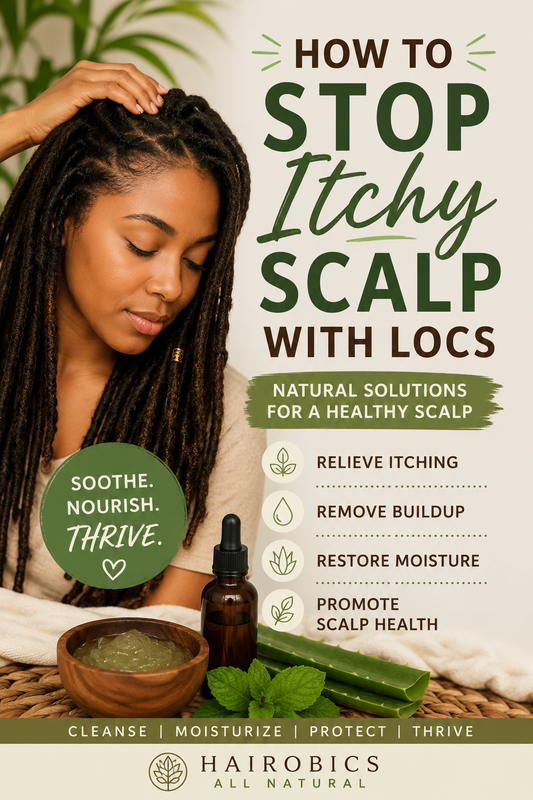
An itchy scalp is one of the most common complaints among people with locs. Whether you're new to your loc journey or have had mature locs for years, scalp itch can turn a beautiful hairstyle into a daily frustration. Constant scratching can lead to irritation, flakes, inflammation, thinning edges, and even hair loss if left untreated.
The good news is that an itchy scalp with locs is usually fixable once you identify the root cause. Many people assume scalp itch is simply dryness, but several factors can contribute, including product buildup, lack of moisture, dandruff, sweat accumulation, allergies, and improper scalp care.
In this comprehensive guide, you'll learn why your scalp becomes itchy with locs, how to stop the itching naturally, and the best practices for maintaining a healthy scalp while protecting your locs.
Why Does Your Scalp Itch When You Have Locs?
Before you can solve the problem, it's important to understand what causes it.
Common causes include:
- Dry scalp
- Product buildup
- Dandruff
- Scalp inflammation
- Allergic reactions
- Sweat and dirt accumulation
- Infrequent washing
- Tight retwisting
- Seasonal weather changes
- Poor hydration
Many people experience more than one cause at the same time.
Sign #1: Your Scalp Is Too Dry
Dryness is one of the leading causes of itchy locs.
Unlike loose natural hair, locs can make it harder for natural scalp oils to distribute evenly. As a result, the scalp may become dry and irritated.
Symptoms of Dry Scalp
- Tight feeling scalp
- White flakes
- Itching after washing
- Dull-looking locs
- Increased shedding
How to Fix Dry Scalp
Focus on hydration rather than heavy oils.
Use:
- Water-based moisturizers
- Aloe vera spray
- Rose water mist
- Lightweight scalp oils
Avoid applying thick oils directly to a dry scalp because they can seal in dryness instead of adding moisture.
Sign #2: Product Buildup Is Causing Irritation
Many loc wearers use too many products.
Heavy creams, waxes, gels, and butters can accumulate inside locs and on the scalp.
Over time buildup can:
- Trap dirt
- Clog follicles
- Cause itching
- Lead to scalp odor
- Create flakes
Signs of Buildup
- White residue
- Greasy scalp
- Dull locs
- Persistent itching
- Unpleasant smell
How to Remove Buildup
Use a clarifying shampoo once every few weeks.
You can also try a loc detox using:
- Warm water
- Apple cider vinegar
- Baking soda
Follow with a moisturizing treatment.
Sign #3: You're Not Washing Your Locs Enough
Many people fear washing locs because they think it will cause unraveling.
However, an unwashed scalp often becomes itchy.
Sweat, oil, dirt, and environmental pollutants accumulate over time.
What Happens When You Don't Wash Locs?
- Increased itching
- Excess oil
- Dandruff growth
- Follicle irritation
- Unpleasant odor
How Often Should You Wash Locs?
Starter Locs:
Every 2-4 weeks
Mature Locs:
Every 1-2 weeks
Active Lifestyle:
Weekly
Consistency is key.
Sign #4: Dandruff Is Triggering the Itch
Dandruff is different from dry scalp.
Dry scalp produces small white flakes.
Dandruff often creates:
- Larger flakes
- Oily patches
- Redness
- Intense itching
What Causes Dandruff?
- Yeast overgrowth
- Excess oil production
- Scalp imbalance
Solutions
Use:
- Tea tree oil
- Peppermint oil
- Anti-dandruff shampoo
- Regular cleansing
These ingredients help restore balance while reducing irritation.
Sign #5: Your Retwists Are Too Tight
A fresh retwist should never be painful.
If your scalp feels sore or itchy after maintenance, tension may be the problem.
Symptoms
- Tender scalp
- Red bumps
- Tight feeling
- Hairline discomfort
What to Do
- Loosen hairstyles
- Avoid excessive retwisting
- Give your scalp recovery time
Overly tight styles can damage follicles and lead to traction alopecia.
The Best Natural Ingredients for Itchy Scalp Relief
Aloe Vera
Aloe vera contains soothing compounds that calm irritation.
Benefits include:
- Hydration
- Reduced inflammation
- Scalp cooling
Apply aloe vera gel directly to problem areas.
Tea Tree Oil
Tea tree oil has antimicrobial properties.
Benefits:
- Helps reduce flakes
- Controls scalp microbes
- Soothes itch
Always dilute before use.
Peppermint Oil
Peppermint oil creates a cooling sensation.
Benefits:
- Instant itch relief
- Improved circulation
- Refreshing scalp feeling
Rosemary Oil
Rosemary supports scalp health while helping maintain healthy follicles.
Benefits:
- Reduced irritation
- Better circulation
- Healthier scalp environment
Jojoba Oil
Jojoba closely resembles the scalp's natural oils.
Benefits:
- Lightweight hydration
- Reduced dryness
- Non-greasy moisture
How Hydration Impacts Scalp Itch
Many people focus on products while ignoring hydration.
Your scalp is skin.
When the body is dehydrated, scalp dryness often follows.
Tips
- Drink more water daily
- Eat hydrating fruits
- Limit excessive alcohol
- Reduce sugary beverages
Hydration supports overall scalp health.
Foods That Help Reduce Scalp Irritation
Nutrition affects your scalp more than most people realize.
Omega-3 Rich Foods
- Salmon
- Sardines
- Walnuts
- Flaxseed
Vitamin A Foods
- Sweet potatoes
- Carrots
- Spinach
Vitamin E Foods
- Almonds
- Avocados
- Sunflower seeds
Zinc Sources
- Pumpkin seeds
- Lean meats
- Beans
A nutrient-rich diet supports healthier skin and scalp function.
How Sweat Causes Itchy Locs
Sweat contains salt.
When sweat dries on the scalp, irritation can occur.
This is especially common for:
- Athletes
- Gym-goers
- Outdoor workers
Prevention
- Rinse scalp after intense workouts
- Use scalp sprays
- Wash regularly
- Wear breathable head coverings
Seasonal Causes of Scalp Itch
Winter
Cold air reduces moisture.
Results:
- Dry scalp
- Flaking
- Tightness
Solution
Increase moisturizing treatments.
Summer
Heat increases sweating.
Results:
- Irritation
- Product buildup
- Scalp odor
Solution
Wash more frequently and keep the scalp clean.
How Stress Can Make Your Scalp Itch
Stress affects inflammation throughout the body.
When stress rises:
- Skin becomes more reactive
- Itching may worsen
- Dandruff can increase
Stress Management Tips
- Exercise regularly
- Sleep 7-9 hours
- Practice meditation
- Spend time outdoors
Healthy stress levels support a healthier scalp.
Daily Itchy Scalp Routine for Locs
Morning
- Light scalp mist
- Gentle scalp massage
- Drink water
Midday
- Avoid scratching
- Keep scalp cool
Evening
- Apply lightweight moisturizer
- Cover locs with satin bonnet
Consistency produces long-term results.
Mistakes That Make Scalp Itching Worse
Over-Oiling
Too much oil traps dirt and buildup.
Scratching Constantly
Scratching damages scalp tissue.
Skipping Wash Days
Dirty scalps become irritated.
Using Heavy Products
Heavy products often worsen buildup.
Tight Hairstyles
Tension can trigger inflammation.
Avoiding these mistakes can dramatically reduce itching.
Best Hair Care Practices for Healthy Loc Scalp
Keep Your Scalp Clean
Regular washing removes irritants.
Moisturize Properly
Hydration should come before oils.
Protect Locs at Night
Use:
- Satin bonnet
- Satin scarf
- Satin pillowcase
Use Natural Products
Choose products that support scalp health without causing buildup.
When to See a Dermatologist
Seek professional help if you experience:
- Severe redness
- Open sores
- Persistent flakes
- Bleeding
- Hair loss
- Extreme itching
These symptoms may indicate an underlying scalp condition requiring treatment.
How Hairobics Supports a Healthy Loc Scalp
A healthy scalp is the foundation of healthy locs.
Using natural scalp-supporting products can help:
- Reduce dryness
- Improve moisture retention
- Support healthier follicles
- Minimize irritation
- Encourage stronger hair growth
The key is choosing lightweight, natural formulas that nourish the scalp without creating excessive buildup.
Final Thoughts
If your scalp constantly itches while wearing locs, don't ignore it. An itchy scalp is usually a sign that your scalp needs attention. Whether the issue is dryness, buildup, dandruff, tension, or poor scalp care habits, the solution starts with identifying the cause.
Focus on cleansing regularly, moisturizing properly, staying hydrated, and avoiding heavy products that clog the scalp. Small changes in your routine can make a huge difference in comfort and overall scalp health.
Healthy locs begin with a healthy scalp. Once you create the right environment, you'll experience less itching, fewer flakes, stronger roots, and locs that thrive for years to come.