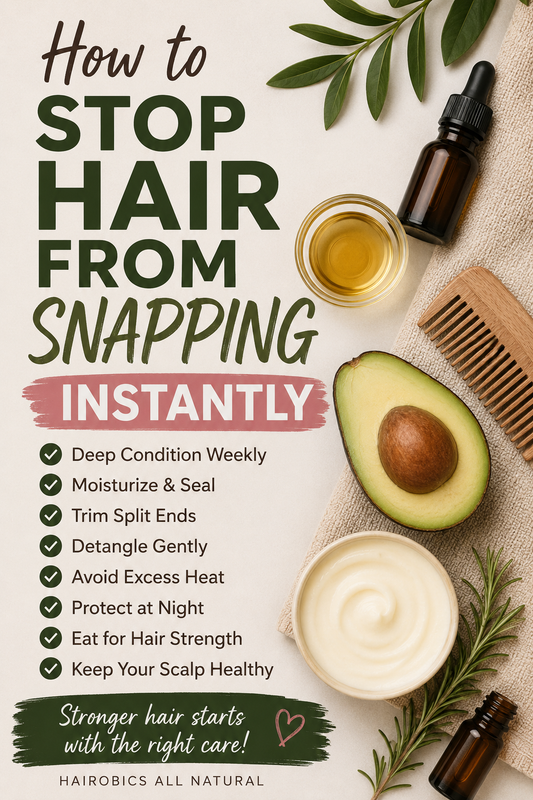
Hair that snaps instantly when you comb, brush, detangle, or stretch it is one of the biggest warning signs that your hair is severely weakened. Whether you have natural hair, relaxed hair, curly hair, locs, braids, or color-treated hair, snapping strands usually mean your hair is lacking moisture, protein, strength, or proper scalp care.
The good news is that snapped, weak hair can often be repaired with the right routine, ingredients, and healthy hair practices.
In this complete guide, you’ll learn:
- Why hair snaps instantly
- The difference between shedding and breakage
- The biggest causes of weak hair
- How to repair snapping hair fast
- The best oils and ingredients for strengthening hair
- How to prevent breakage permanently
- The best routine for natural hair, braids, and locs
- Foods and vitamins that support stronger hair growth
If your goal is healthier, thicker, longer hair, this guide will help you rebuild your hair from root to tip.
What Does It Mean When Hair Snaps Instantly?
Hair snapping happens when strands break easily under minimal tension. Instead of stretching slightly and bouncing back, weak hair breaks immediately.
Healthy hair has elasticity. Weak hair does not.
Signs your hair is snapping include:
- Hair breaking during detangling
- Tiny broken pieces in the sink
- Ends that look thin or frayed
- Hair that feels rough and dry
- Split ends everywhere
- Hair snapping when wet
- Excessive breakage after protective styles
- Short broken hairs throughout your head
If your hair breaks instantly, it means the hair shaft has become compromised.
Hair Shedding vs Hair Breakage
Many people confuse normal shedding with breakage.
Hair Shedding
Shedding is natural hair fall from the root.
Signs:
- White bulb at the end
- Full strand length
- Happens daily
- Usually 50–100 hairs per day
Hair Breakage
Breakage occurs when hair snaps somewhere along the strand.
Signs:
- No white bulb
- Different hair lengths
- Tiny broken pieces
- Hair feels weaker over time
Breakage is the real enemy of hair growth retention.
You may be growing hair from your scalp, but if your strands keep snapping, your hair will never appear longer.
Top Causes of Hair Snapping Instantly
1. Severe Dryness
Dry hair is brittle hair.
When hair lacks moisture:
- The cuticle becomes rough
- Elasticity disappears
- Strands become stiff
- Hair cracks easily
Natural hair especially needs consistent hydration because curls and coils make it harder for scalp oils to travel down the hair shaft.
Signs of Dry Hair
- Dull appearance
- Rough texture
- Tangling constantly
- Crunchy feeling
- Hair feels straw-like
2. Protein Damage
Hair is made mostly of keratin protein.
Too little protein causes weak mushy hair.
Too much protein causes stiff brittle hair.
Both can lead to snapping.
Signs of Protein Deficiency
- Hair feels limp
- Overly soft strands
- Hair stretches too much before breaking
Signs of Protein Overload
- Hard hair
- Stiff texture
- Dry brittle snapping
Balance is everything.
3. Heat Damage
Flat irons, blow dryers, curling irons, and hot combs can weaken the hair cuticle over time.
Excess heat:
- Burns moisture from hair
- Weakens protein bonds
- Causes split ends
- Destroys elasticity
Hair that has severe heat damage often snaps instantly when combed.
4. Chemical Damage
Relaxers, bleach, hair dye, perms, and texturizers can break down the hair structure.
Overprocessing weakens:
- The cuticle
- Cortex
- Protein bonds
This leaves hair fragile and vulnerable to snapping.
5. Tight Hairstyles
Tight braids, ponytails, wigs, sew-ins, and loc retwists can stress the hair shaft and roots.
Constant tension causes:
- Breakage
- Thinning edges
- Mid-shaft snapping
- Traction alopecia
Protective styles should protect your hair — not damage it.
6. Poor Detangling Habits
Aggressive detangling is one of the fastest ways to snap hair.
Using:
- Fine-tooth combs
- Dry brushing
- Pulling through knots
- Rushing detangling
can destroy fragile strands.
7. Lack of Scalp Health
A neglected scalp creates weak hair growth.
Issues like:
- Dandruff
- Inflammation
- Product buildup
- Poor circulation
- Dry scalp
can affect the strength of new hair strands.
Healthy hair starts with a healthy scalp.
8. Overwashing
Washing too often strips natural oils from the hair.
This causes:
- Dryness
- Weakness
- Frizz
- Snapping
Especially with harsh sulfate shampoos.
9. Sleeping Without Protection
Cotton pillowcases absorb moisture and create friction.
This leads to:
- Dry ends
- Tangles
- Breakage
- Split ends
Nighttime protection matters more than most people realize.
10. Nutritional Deficiencies
Your hair needs nutrients to remain strong.
Low levels of:
- Iron
- Vitamin D
- Protein
- Zinc
- Biotin
- Omega-3 fatty acids
can weaken strands dramatically.
How to Stop Hair From Snapping Instantly
Now let’s talk about real solutions.
1. Deep Condition Weekly
Deep conditioning restores moisture and flexibility.
Look for ingredients like:
- Aloe vera
- Shea butter
- Honey
- Avocado oil
- Coconut oil
- Jamaican black castor oil
How to Deep Condition Properly
- Shampoo hair gently
- Apply deep conditioner generously
- Cover with plastic cap
- Leave on 20–40 minutes
- Rinse with cool water
Consistency is key.
2. Use Oils That Strengthen Hair
Certain oils help reduce breakage while improving softness and elasticity.
Best Oils for Snapping Hair
Jamaican Black Castor Oil
Helps strengthen strands and seal moisture.
Rosemary Oil
Supports scalp circulation and healthier growth.
Peppermint Oil
May improve blood flow to follicles.
Argan Oil
Adds softness without heaviness.
Avocado Oil
Rich in vitamins and penetrates deeply.
Coconut Oil
Helps reduce protein loss in hair.
3. Trim Split Ends
Split ends travel upward if ignored.
Once hair splits:
- The strand weakens
- Tangling increases
- Snapping worsens
Regular trims help stop breakage from spreading.
How Often Should You Trim?
Usually every:
- 8–12 weeks for healthy hair
- 6–8 weeks for damaged hair
4. Stop Using Excessive Heat
Reducing heat usage can dramatically improve hair strength.
Safer Heat Practices
- Use heat protectant
- Lower temperature settings
- Limit heat styling
- Air dry more often
The less heat damage, the stronger your hair becomes.
5. Moisturize Your Hair Properly
Moisture keeps hair flexible instead of brittle.
The LOC Method
Many naturals use:
- L = Liquid
- O = Oil
- C = Cream
This layering technique helps lock in hydration.
6. Detangle Gently
Gentle detangling prevents unnecessary snapping.
Best Detangling Tips
- Detangle in sections
- Use fingers first
- Start from the ends
- Use conditioner or detangler
- Never rip through knots
Patience saves hair.
7. Protect Your Hair at Night
Nighttime protection is essential.
Best Options
- Satin bonnet
- Silk scarf
- Satin pillowcase
These reduce friction and preserve moisture.
8. Strengthen Hair With Protein Treatments
Protein treatments can temporarily repair weak areas in the hair shaft.
Signs You Need Protein
- Excessive breakage
- Hair feels mushy
- Weak elasticity
Good Protein Ingredients
- Hydrolyzed keratin
- Rice protein
- Silk protein
- Collagen
Do not overuse protein treatments.
Usually:
- Light protein: every 2–4 weeks
- Strong protein: every 6–8 weeks
9. Avoid Tight Protective Styles
Protective styles should never hurt.
If styles feel:
- Painful
- Tight
- Heavy
they can damage follicles and strands.
Choose styles that allow your scalp and hair to breathe.
10. Focus on Scalp Care
Healthy follicles produce stronger hair.
Good Scalp Care Habits
- Massage scalp regularly
- Keep scalp clean
- Use lightweight oils
- Avoid heavy buildup
Scalp massages may also help circulation.
Best Ingredients for Preventing Hair Breakage
Aloe Vera
Hydrates and soothes the scalp.
Shea Butter
Excellent for sealing moisture.
Rosemary Oil
Popular for hair growth support.
Tea Tree Oil
Helps reduce scalp irritation and buildup.
Castor Oil
Strengthens and thickens the appearance of hair.
Biotin
Supports keratin production.
Rice Water
Contains amino acids that may strengthen hair.
How to Repair Extremely Damaged Hair
If your hair is severely snapping, focus on recovery instead of styling.
Recovery Routine
Week 1–2
- Gentle shampoo
- Deep condition twice weekly
- Avoid heat
- Moisturize daily
Week 3–4
- Add light protein treatment
- Continue moisture routine
- Trim damaged ends
Month 2+
- Protective low-tension styles
- Weekly deep conditioning
- Scalp massages
- Limit manipulation
Hair recovery takes patience.
Best Routine for Natural Hair That Snaps
Weekly Routine
Wash Day
- Sulfate-free shampoo
- Deep conditioner
- Leave-in conditioner
- Oil sealant
During the Week
- Light moisturizing spray
- Protective nighttime routine
- Minimal manipulation
Best Routine for Braided Hair
Braids can help retain length — but only if maintained properly.
Tips
- Moisturize scalp regularly
- Use lightweight braid sprays
- Avoid keeping braids too long
- Don’t install braids too tightly
Healthy hair under braids matters most.
Best Routine for Locs
Locs can snap too when neglected.
Prevent Loc Breakage
- Keep locs moisturized
- Avoid excessive retwisting
- Protect locs while sleeping
- Clarify buildup regularly
Thin weak locs often result from dryness and tension.
Foods That Help Strengthen Hair
Healthy hair starts internally.
Best Foods for Stronger Hair
Eggs
Rich in protein and biotin.
Salmon
Contains omega-3 fatty acids.
Spinach
High in iron and vitamins.
Nuts and Seeds
Contain zinc and healthy fats.
Sweet Potatoes
Rich in beta-carotene.
Greek Yogurt
Provides protein and nutrients.
Vitamins That May Help Reduce Breakage
Biotin
Supports keratin structure.
Iron
Low iron may contribute to weak hair.
Vitamin D
Important for follicle function.
Zinc
Supports scalp health.
Omega-3s
Help support moisture and shine.
Always consult a healthcare professional before starting supplements.
Common Mistakes That Make Hair Snap Worse
Over-Manipulating Hair
Constant styling weakens strands.
Ignoring Split Ends
Split ends continue traveling upward.
Using Harsh Shampoos
Sulfates can strip moisture.
Skipping Deep Conditioning
Hair needs consistent hydration.
Excessive Protein
Too much protein creates brittleness.
Tight Styles
Constant tension damages hair.
Can Snapped Hair Grow Back?
Yes — in many cases.
If the follicles remain healthy, hair can regrow after breakage.
However:
- Severe traction alopecia
- Scarring scalp conditions
- Chronic inflammation
may require professional treatment.
The sooner you address breakage, the better your chances of restoring healthy hair.
How Long Does It Take to Repair Snapping Hair?
Hair recovery depends on:
- Damage level
- Routine consistency
- Nutrition
- Product choices
Many people notice improvement within:
- 2–4 weeks for softness
- 2–3 months for reduced breakage
- 6–12 months for major length retention
Consistency matters more than perfection.
Signs Your Hair Is Becoming Stronger
You’ll know your routine is working when:
- Hair feels softer
- Less breakage occurs
- Ends look healthier
- Hair retains moisture longer
- Detangling becomes easier
- Hair stretches without snapping
- Length retention improves
Healthy hair becomes more resilient over time.
Final Thoughts
Hair snapping instantly is your hair’s way of telling you something is wrong.
In most cases, the root causes are:
- Dryness
- Damage
- Excess tension
- Poor moisture balance
- Weak scalp health
- Heat or chemical overprocessing
The key to stronger hair is consistency.
Focus on:
- Deep conditioning
- Moisture retention
- Gentle handling
- Healthy scalp care
- Low manipulation
- Proper nutrition
Over time, your hair can become softer, stronger, healthier, and more resistant to breakage.
Healthy hair growth is not just about growing hair faster — it’s about keeping the hair you already grow.
For more natural hair care tips, scalp care routines, and healthy hair growth solutions, visit Hairobics All Natural