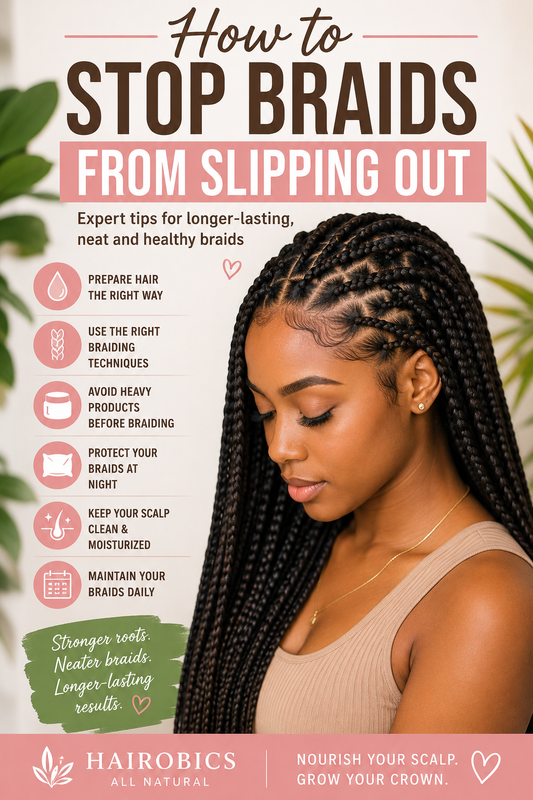
Few things are more frustrating than spending hours getting your hair braided only to notice braids slipping out within a few days. Whether it's knotless braids, box braids, cornrows, or individual plaits, braid slippage is a common problem—especially for people with fine strands, silky edges, damaged hair, or loose curl patterns.
The good news is that braid slippage is usually preventable. By preparing your hair correctly, choosing the right braiding techniques, maintaining proper moisture, and protecting your hair while you sleep, you can significantly extend the life of your protective style.
This guide explains exactly why braids slip and provides practical solutions to help your braids stay neat, secure, and healthy for weeks.
Table of Contents
- Why Do Braids Slip Out?
- Which Hair Types Experience More Slippage?
- Signs Your Braids Are Starting to Slip
- How to Prepare Hair Before Braiding
- The Best Wash Routine Before Braids
- Should You Stretch Your Hair First?
- Why Product Buildup Makes Braids Slip
- Braiding Techniques That Prevent Slippage
- How Tight Is Too Tight?
- Edge Care Without Causing Slippage
- Daily Maintenance Tips
- Nighttime Protection
- Healthy Hair Habits That Improve Grip
- Common Mistakes to Avoid
- Frequently Asked Questions
- Final Thoughts
Why Do Braids Slip Out?
Braids stay in place because the braided hair grips your natural strands. When there isn't enough grip, the braid slowly loosens until it slides down the hair shaft.
Common causes include:
- Hair that's too soft or silky
- Excess conditioner before installation
- Heavy oils applied before braiding
- Damaged or over-moisturized hair
- Incorrect braiding tension
- Hair that wasn't stretched evenly
- Using extensions that are too heavy
- Naturally loose curl patterns
- Extremely fine strands
- New growth pushing older braids loose
Understanding the cause makes it much easier to prevent future slippage.
Which Hair Types Experience More Slippage?
Although anyone can experience braid slippage, it is generally more common with:
- Fine natural hair
- Low-density hair
- Straightened natural hair
- Heat-damaged hair
- Type 3 curls
- Looser curl patterns
- Soft baby hairs around the hairline
People with tightly coiled Type 4 hair often experience less slippage because the natural curl creates additional friction.
Signs Your Braids Are Starting to Slip
Watch for these warning signs:
- Loose roots
- Extensions sliding downward
- Frizz appearing unusually early
- Gaps at the base of braids
- Braids feeling lighter at the root
- Individual braids moving freely
- Hair sticking out near the scalp
Fixing a braid early is much easier than reinstalling an entire style.
How to Prepare Hair Before Braiding
Preparation is one of the biggest factors in braid longevity.
Before your appointment:
- Wash thoroughly.
- Remove all buildup.
- Deep condition lightly.
- Detangle completely.
- Trim damaged ends if necessary.
- Stretch your hair if recommended.
- Allow hair to dry completely.
Hair that is clean and balanced—not overly oily or overly dry—provides the best foundation.
The Best Wash Routine Before Braids
Many people accidentally cause braid slippage by leaving too much conditioner or oil on their hair.
A good routine includes:
- Clarifying shampoo if buildup is present.
- Moisturizing shampoo.
- Lightweight conditioner.
- Rinse thoroughly.
- Dry hair completely.
Avoid coating your hair with butter, grease, or thick oils immediately before braiding.
Should You Stretch Your Hair First?
Stretching helps create a more even braid foundation.
Popular methods include:
- Blow drying on low heat
- Banding
- African threading
- Large twists
- Large braids
Stretching reduces tangles and allows braiders to maintain consistent tension.
Why Product Buildup Makes Braids Slip
Heavy products can create a slippery coating around the hair shaft.
Common offenders include:
- Thick butters
- Heavy grease
- Petroleum products
- Excess edge control
- Thick leave-in creams
Instead, choose lightweight moisturizing products before installation.
Braiding Techniques That Prevent Slippage
Professional braiders often use specific methods to improve hold.
Helpful techniques include:
- Smaller starting sections
- Even tension
- Proper anchor braid
- Clean parting
- Correct extension placement
- Matching extension size to hair density
Large extensions attached to tiny sections often loosen quickly.
How Tight Is Too Tight?
Tighter is not always better.
Excessively tight braids can cause:
- Breakage
- Hairline damage
- Tender scalp
- Traction-related hair loss
- Headaches
The goal is secure—not painful.
Edge Care Without Causing Slippage
Your edges are often the first area where braids loosen.
Protect them by:
- Avoiding daily gel application
- Using satin scarves
- Sleeping with a satin bonnet
- Limiting excessive brushing
- Moisturizing lightly
Healthy edges help braids stay secure longer.
Daily Maintenance Tips
Daily care dramatically affects braid longevity.
Every day:
- Keep your scalp clean.
- Moisturize lightly.
- Avoid touching braids constantly.
- Don't pull braids into tight ponytails every day.
- Protect against excessive sweat when possible.
Consistency matters more than using many products.
Nighttime Protection
Sleeping without protection creates friction that loosens braids.
Protect your style with:
- Satin bonnet
- Silk scarf
- Satin pillowcase
- Loose pineapple method for longer braids
Reducing friction helps maintain neat roots.
Healthy Hair Habits That Improve Grip
Healthy hair naturally holds styles better.
Focus on:
- Regular trims
- Consistent moisture
- Balanced protein treatments
- Gentle detangling
- Healthy scalp care
- Nutritious diet
- Hydration
Hair that is strong from the inside supports longer-lasting protective styles.
Can Sweat Make Braids Slip?
Yes.
Frequent sweating softens the roots and gradually loosens braid tension.
If you exercise regularly:
- Wear a moisture-wicking headband.
- Dry your scalp after workouts.
- Cleanse your scalp as needed.
- Avoid letting sweat remain overnight.
How Long Should Braids Last?
With proper care:
- Knotless braids: 4–8 weeks
- Box braids: 6–8 weeks
- Cornrows: 2–4 weeks
- Individual braids: 6–8 weeks
The exact timing depends on hair texture, lifestyle, and maintenance.
Can Hair Texture Change Braid Longevity?
Absolutely.
Heat damage, chemical processing, aging, hormones, and excessive manipulation can all change how well your hair grips extensions.
If your braids suddenly begin slipping when they never did before, your hair texture may have changed.
Mistakes That Cause Braids to Slip
Avoid these common errors:
- Installing braids on oily hair
- Using too much leave-in conditioner
- Skipping clarifying shampoo
- Choosing extensions that are too heavy
- Sleeping without protection
- Constantly pulling on braids
- Leaving braids in too long
- Ignoring scalp buildup
Small changes often make a big difference.
Frequently Asked Questions
Why do my knotless braids keep slipping?
Knotless braids rely on gradual extension feeding, so fine or silky hair may require additional grip and proper preparation.
Does freshly washed hair hold braids better?
Yes, as long as it is free of heavy conditioners and oils.
Should I oil my scalp before braiding?
Light moisture is fine, but avoid saturating the roots before installation.
Can braid spray make braids slip?
Heavy sprays can contribute to buildup. Use lightweight moisturizing sprays instead.
Is braid slippage normal?
Some loosening over time is expected, but excessive slipping within the first week usually indicates preparation or installation issues.
Final Thoughts
Braids should protect your natural hair—not become a constant source of frustration. While every hair type is different, most braid slippage can be prevented by preparing your hair correctly, avoiding heavy products before installation, choosing an experienced braider, and maintaining a healthy scalp and hair care routine.
Long-lasting braids begin long before the first extension is added. Clean hair, balanced moisture, proper tension, and consistent maintenance all work together to help your protective style remain neat, comfortable, and secure.
If your goal is stronger, healthier natural hair underneath your braids, focus on nourishing your scalp year-round. Healthy hair creates a better foundation for every protective style.
At Hairobics All Natural, we believe beautiful braids begin with healthy hair. Supporting your scalp with natural ingredients, gentle care, and consistent routines can help improve overall hair health while allowing your favorite protective styles to look their best from day one to take-down day.