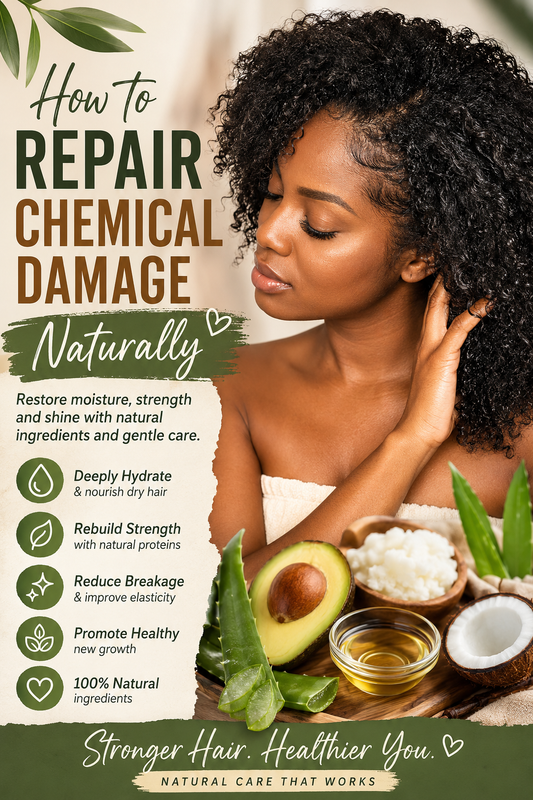
Chemical treatments can transform your hair's appearance, but they can also leave it dry, weak, brittle, and prone to breakage. Whether you've used relaxers, hair dye, bleach, texturizers, or chemical straighteners, the good news is that healthy hair is possible again.
While severely damaged hair cannot magically "heal" because hair is made of dead keratin cells, you can dramatically improve its condition, reduce breakage, strengthen new growth, and create an environment where healthier hair thrives.
In this complete guide, you'll learn how to repair chemical damage naturally using gentle routines, nourishing ingredients, and consistent care that works for natural hair, curly hair, coily hair, locs, braids, and relaxed hair transitioning back to natural.
What Is Chemical Hair Damage?
Chemical damage occurs when products alter the hair's natural structure. These treatments break down protein bonds inside the hair shaft, making hair weaker and more porous.
Common causes include:
- Hair bleach
- Permanent hair color
- Relaxers
- Texturizers
- Perms
- Keratin treatments
- Repeated chemical processing
- At-home chemical mistakes
Each treatment removes some of the hair's natural protection, making it more vulnerable to moisture loss and breakage.
Signs of Chemical Damage
Your hair may be chemically damaged if you notice:
- Extreme dryness
- Hair snapping while combing
- Split ends
- Rough texture
- Elastic, gummy strands when wet
- Excessive shedding from breakage
- Loss of curl pattern
- Thin ends
- Tangles that never seem to disappear
- Dull appearance
- Increased frizz
- Scalp irritation after treatments
The earlier you begin repairing the damage, the better your long-term results.
Can Chemically Damaged Hair Be Repaired Naturally?
Yes—but with realistic expectations.
Natural treatments cannot permanently fuse broken hair fibers together.
Instead, they:
- Improve moisture retention
- Reduce future breakage
- Smooth damaged cuticles
- Increase flexibility
- Strengthen weak areas
- Protect healthy new growth
- Improve shine
- Reduce tangles
Think of it as restoring your hair's condition while allowing healthy hair to replace damaged lengths over time.
Step 1: Stop Chemical Processing Immediately
The first step toward recovery is giving your hair a break.
Avoid:
- Relaxers
- Bleach
- Permanent dyes
- Texturizers
- Multiple coloring sessions
- Chemical straightening
Even one additional treatment can worsen existing damage.
Allow your hair several months—or longer—to rebuild its strength before considering any future chemical services.
Step 2: Trim the Most Damaged Ends
Split ends never repair themselves.
Instead, they continue splitting upward.
Regular trims help by:
- Preventing further splitting
- Reducing tangles
- Making detangling easier
- Improving overall appearance
- Keeping healthy hair from unraveling
A small trim every 8–12 weeks often makes a noticeable difference.
Step 3: Restore Moisture
Chemical treatments strip natural oils and damage the cuticle.
Hydration becomes your highest priority.
Focus on:
- Water-based leave-in conditioners
- Deep conditioning
- Hair steaming
- Moisturizing sprays
- Protective styling
Healthy hair starts with moisture.
Natural Ingredients That Restore Moisture
Excellent moisturizing ingredients include:
Aloe Vera
Aloe vera hydrates the hair and scalp while soothing irritation.
Benefits include:
- Softness
- Reduced dryness
- Improved flexibility
- Easier detangling
Vegetable Glycerin
Glycerin attracts moisture from the air, helping hair stay hydrated longer.
Best used in humid environments.
Honey
Honey is a natural humectant.
It helps:
- Reduce dryness
- Improve shine
- Increase softness
Coconut Water
Rich in minerals, coconut water refreshes dehydrated hair between wash days.
Step 4: Rebuild Protein Carefully
Chemical treatments remove protein from the hair shaft.
Protein helps strengthen weak areas.
Natural protein sources include:
- Rice water
- Hydrolyzed oat protein
- Hydrolyzed wheat protein
- Yogurt masks
- Egg treatments (used sparingly)
Too much protein, however, makes hair stiff.
Balance protein with moisture for the best results.
Step 5: Use Natural Oils
Natural oils don't moisturize hair directly—they help seal in moisture.
Excellent choices include:
Jamaican Black Castor Oil
Helps reduce dryness and supports healthier-looking hair.
Great for:
- Edges
- Ends
- Scalp massages
Jojoba Oil
Very similar to natural scalp oils.
Benefits include:
- Lightweight moisture sealing
- Less buildup
- Softer hair
Argan Oil
Adds shine while reducing frizz.
Avocado Oil
Rich in vitamins and fatty acids that soften damaged hair.
Grapeseed Oil
A lightweight option perfect for fine hair.
Step 6: Deep Condition Every Week
Deep conditioning is one of the fastest ways to improve chemically damaged hair.
Look for conditioners containing:
- Shea butter
- Aloe vera
- Coconut oil
- Avocado oil
- Panthenol
- Glycerin
Leave on for 20–30 minutes using gentle heat for better penetration.
Step 7: Protect Hair While Sleeping
Nighttime friction causes unnecessary breakage.
Use:
- Satin bonnet
- Silk scarf
- Satin pillowcase
These reduce moisture loss and prevent tangles.
Step 8: Reduce Heat Styling
Flat irons, curling irons, and blow dryers worsen chemical damage.
Instead try:
- Air drying
- Roller sets
- Twist-outs
- Braid-outs
- Flexi rods
When heat is necessary:
- Always use heat protectant.
- Keep temperatures below 350°F.
- Limit heat to occasional use.
Step 9: Handle Wet Hair Gently
Wet chemically damaged hair is extremely fragile.
Instead of brushing immediately:
- Finger detangle first
- Use a wide-tooth comb
- Work from ends upward
- Apply conditioner before detangling
Never yank through knots.
Step 10: Wear Protective Styles
Protective styles reduce daily manipulation.
Good options include:
- Two-strand twists
- Flat twists
- Loose braids
- Buns
- Wigs (properly installed)
- Low-manipulation styles
Avoid styles that pull tightly on your edges.
Foods That Support Hair Recovery
Healthy hair starts from within.
Focus on eating:
Protein
Hair is mostly protein.
Choose:
- Chicken
- Fish
- Eggs
- Beans
- Lentils
Iron
Iron deficiency contributes to hair shedding.
Eat:
- Spinach
- Lean beef
- Pumpkin seeds
Omega-3 Fatty Acids
Support scalp health.
Sources include:
- Salmon
- Walnuts
- Flaxseed
Vitamin C
Supports collagen production.
Eat:
- Oranges
- Strawberries
- Bell peppers
Zinc
Supports healthy hair growth.
Sources include:
- Pumpkin seeds
- Chickpeas
- Cashews
Ingredients to Avoid During Recovery
Temporarily avoid products containing:
- Harsh sulfates
- Drying alcohols
- Excessive silicones
- Heavy mineral oil buildup
- Formaldehyde-releasing treatments
Gentle cleansing helps preserve moisture.
Wash Routine for Chemically Damaged Hair
Weekly routine:
- Pre-poo with a lightweight natural oil.
- Cleanse using a sulfate-free shampoo.
- Apply a moisturizing deep conditioner.
- Detangle gently.
- Rinse with cool water.
- Apply a leave-in conditioner.
- Seal with a natural oil.
- Air dry or diffuse on low heat.
Consistency matters more than using expensive products.
The LOC Method
Many people with chemically damaged hair benefit from the LOC method:
- L: Leave-in conditioner
- O: Oil
- C: Cream
This layering technique helps lock moisture into the hair.
Some people prefer the LCO method depending on hair porosity.
Experiment to see which works best for your hair.
Natural DIY Hair Mask
Ingredients:
- 2 tablespoons aloe vera gel
- 1 tablespoon honey
- 1 tablespoon avocado oil
- 1 ripe avocado
Mix thoroughly.
Apply to damp hair.
Leave for 30 minutes.
Rinse well before shampooing.
Use every two weeks.
How Long Does Recovery Take?
Hair recovery depends on:
- Severity of damage
- Hair length
- Daily habits
- Consistency
- Overall health
Most people notice:
2–4 weeks
- Softer hair
- Less frizz
1–3 months
- Reduced breakage
- Improved elasticity
- Better moisture retention
6–12 months
- Significant healthy new growth
- Fuller appearance
- Easier styling
Complete recovery often happens as damaged hair is gradually trimmed away while healthier hair grows in.
Common Mistakes That Slow Recovery
Avoid these common setbacks:
- Overwashing
- Protein overload
- Skipping deep conditioner
- Tight hairstyles
- Excessive brushing
- Daily heat styling
- Sleeping without satin protection
- Applying chemicals too soon
- Ignoring split ends
- Not drinking enough water
Best Habits for Healthy Hair Growth
Simple daily habits make the biggest difference:
- Moisturize consistently.
- Massage your scalp several times a week.
- Drink enough water.
- Eat nutrient-rich foods.
- Minimize heat.
- Trim damaged ends regularly.
- Protect hair at night.
- Use gentle, sulfate-free products.
- Be patient with the process.
Healthy hair grows from consistent care, not quick fixes.
Frequently Asked Questions
Can chemically damaged hair return to normal?
Damaged portions of the hair shaft cannot be permanently restored, but their appearance and manageability can improve significantly with proper care. Healthy new growth will gradually replace damaged hair over time.
Should I cut all my damaged hair off?
Not necessarily. If the damage is severe, a larger trim may help. Otherwise, regular trims while maintaining a healthy routine allow you to retain length as healthier hair grows in.
Is coconut oil good for chemically damaged hair?
Coconut oil can help reduce protein loss in hair and seal in moisture for some hair types. However, because it may feel heavy or stiff on certain textures, it's worth testing on a small section first.
How often should I deep condition damaged hair?
Most people benefit from deep conditioning once a week. If your hair is extremely dry, alternating weekly moisturizing and light protein treatments may provide the best balance.
Can natural oils repair split ends?
No. Oils can temporarily smooth split ends and reduce friction, but the only permanent solution for split ends is trimming them.
Final Thoughts
Recovering from chemical damage takes time, but your hair can become softer, stronger, and healthier with a consistent natural routine. Focus on restoring moisture, maintaining the right protein balance, protecting your strands from further stress, and trimming damaged ends as needed.
Rather than chasing overnight results, build habits that support long-term hair health. Gentle cleansing, weekly deep conditioning, protective styling, and nourishing natural ingredients can dramatically reduce breakage and help you retain more length as healthy new hair grows.
By treating your hair with patience and care, you'll create the ideal environment for stronger, more resilient strands—and enjoy healthier hair for years to come.