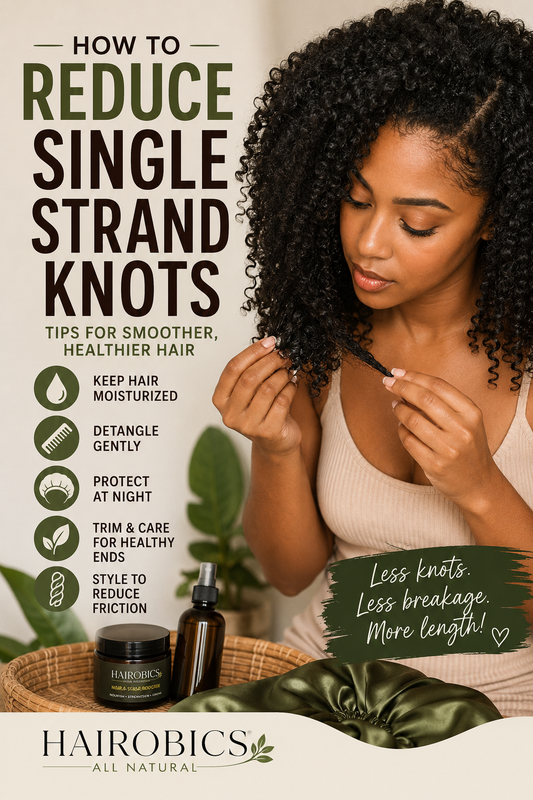
If you have natural hair, you've probably experienced the frustration of single strand knots, often called fairy knots. These tiny knots form when one strand of hair wraps around itself, creating a knot that can lead to tangles, breakage, split ends, and difficulty detangling.
Single strand knots are especially common among people with curly, coily, and kinky hair textures because the curls naturally spiral and twist. While it's nearly impossible to eliminate them completely, you can dramatically reduce how often they occur by following the right hair care routine.
In this complete guide, you'll learn:
- Why single strand knots happen
- Which hair types are most affected
- The biggest mistakes that cause more knots
- Daily habits that prevent knots
- The best wash routine
- Moisturizing techniques
- Protective styling strategies
- Nighttime care
- Long-term hair health tips
Let's get started.
What Are Single Strand Knots?
Single strand knots occur when one individual strand curls around itself and forms a tiny knot near the end of the hair.
Unlike regular tangles that involve multiple hairs, these involve just one strand.
They often look like:
- Tiny white dots
- Small loops
- Tight little knots
- Bent or twisted ends
Sometimes they're difficult to notice until you're detangling.
Why Do Single Strand Knots Form?
Several factors contribute to single strand knots.
Natural Curl Pattern
The curlier your hair is, the more likely it is to wrap around itself.
Type 4 hair experiences this most often because every strand has multiple bends and coils.
These coils naturally intertwine.
Dry Hair
Dry hair creates friction.
Without moisture, strands grab onto themselves and neighboring hairs.
This increases knot formation dramatically.
Wind
Hair blowing freely in the wind constantly twists and wraps around itself.
Loose hair during windy weather is one of the biggest causes of new knots.
Split Ends
Damaged ends catch on healthy strands.
Instead of sliding smoothly, they snag and twist.
This creates more knots over time.
Excessive Manipulation
Constant touching, combing, brushing, or styling increases friction.
More friction equals more tangles.
Sleeping Without Protection
Cotton pillowcases pull moisture from hair.
The constant rubbing causes hair to wrap around itself overnight.
Hair Types Most Prone to Single Strand Knots
Although anyone can experience them, they are especially common in:
- Type 3C curls
- Type 4A hair
- Type 4B hair
- Type 4C hair
- Long natural hair
- Dry hair
- High-porosity hair
The tighter the curl pattern, the higher the chance of knot formation.
Signs You Have Too Many Single Strand Knots
Watch for these symptoms:
- Hair catches while combing
- Ends feel rough
- Frequent breakage
- Split ends
- Difficulty retaining length
- Tiny knots at hair ends
- Hair feels tangled immediately after washing
If you notice several of these signs, your routine may need adjustment.
Mistake #1: Wearing Hair Loose Every Day
Loose curls constantly rub together.
Every movement creates friction.
While wearing your hair out occasionally is perfectly fine, doing so every day increases knot formation.
Instead, rotate with:
- Twists
- Braids
- Buns
- Twist-outs
- Braid-outs
Protective styles help reduce daily friction.
Mistake #2: Skipping Moisturizer
Moisture helps strands glide past one another.
Dry strands grip.
Well-moisturized hair slides.
Keeping hair hydrated is one of the easiest ways to reduce knots.
Mistake #3: Waiting Too Long Between Detangling Sessions
Small tangles become larger tangles.
Large tangles become knots.
Gentle weekly detangling prevents problems before they become severe.
Mistake #4: Rough Towel Drying
Traditional bath towels create friction.
Instead use:
- Cotton T-shirt
- Microfiber towel
Pat—not rub—your hair dry.
Mistake #5: Ignoring Your Ends
The oldest part of your hair is the ends.
They're also the driest.
Giving extra attention to your ends greatly reduces knot formation.
How to Wash Hair to Prevent Single Strand Knots
Step 1: Separate Into Sections
Wash hair in four to eight sections.
Sectioning keeps strands organized.
Step 2: Finger Detangle Before Shampoo
Remove shed hairs first.
This prevents them from wrapping around healthy strands.
Step 3: Shampoo the Scalp
Focus shampoo mainly on the scalp.
Avoid piling hair on top of your head.
Instead let the lather flow down the length.
Step 4: Use Conditioner Generously
Conditioner adds slip.
Slip reduces friction.
Allow conditioner to sit several minutes before detangling.
Step 5: Detangle Slowly
Start at the ends.
Gradually work upward.
Never rush through tangles.
Moisture Is Your Best Defense
Healthy hydrated hair forms fewer knots.
Try this simple routine:
- Water
- Leave-in conditioner
- Hair cream
- Lightweight oil to seal moisture
Pay extra attention to the last two inches of your hair.
Deep Condition Weekly
Deep conditioning improves:
- Elasticity
- Softness
- Moisture retention
- Manageability
Healthier hair tangles less.
Aim for weekly treatments.
Keep Your Ends Protected
Ends experience:
- Sun exposure
- Clothing friction
- Dry air
- Wind
- Constant rubbing
Protect them whenever possible.
Popular options include:
- Flat twists
- Two-strand twists
- Braids
- Buns
- Updos
Trim When Necessary
You don't need excessive trimming.
However, damaged ends won't repair themselves.
Removing worn-out ends prevents:
- More knots
- Split ends
- Breakage
- Tangles
Small maintenance trims every few months can improve overall hair health.
Finger Detangle More Often
Many people rely solely on combs.
Finger detangling lets you feel knots before pulling through them.
Benefits include:
- Less breakage
- Better curl preservation
- Fewer ripped hairs
- Improved length retention
Use Satin Every Night
Nighttime protection makes a huge difference.
Choose:
- Satin bonnet
- Satin scarf
- Satin pillowcase
These reduce moisture loss and friction while you sleep.
Pineapple Your Hair
If your curls are long enough, loosely gather them near the top of your head before bed.
This prevents excessive rubbing overnight.
Avoid Tiny Split Ends
Split ends easily wrap around neighboring hairs.
Prevent them by:
- Moisturizing regularly
- Limiting heat
- Gentle detangling
- Sleeping with protection
Healthy ends stay smoother longer.
Protective Styles That Help
Protective styles reduce daily manipulation.
Examples include:
- Two-strand twists
- Flat twists
- Cornrows
- Braids
- Low buns
Avoid styles that pull excessively at the scalp.
Hydration Starts Inside
Healthy hair begins internally.
Drink adequate water and eat a balanced diet rich in:
- Protein
- Iron
- Zinc
- Vitamin C
- Vitamin D
- Healthy fats
Hair grows strongest when your body has the nutrients it needs.
Limit Heat Styling
Frequent heat can dry the hair shaft.
Dry strands knot more easily.
If you use heat:
- Apply a heat protectant
- Use the lowest effective temperature
- Avoid repeated passes over the same section
Choose Gentle Hair Accessories
Avoid accessories with rough edges or exposed metal.
Instead use:
- Satin scrunchies
- Silk scrunchies
- Seamless hair ties
- Smooth clips
These reduce snagging and friction.
Don't Overload Hair With Products
Using too many heavy products can create buildup, making strands stick together and increasing tangles.
Clarify occasionally if you notice:
- Dullness
- Sticky texture
- Heavy residue
- Reduced curl definition
Follow clarifying with a deep conditioner to restore moisture.
Seasonal Tips
Summer
- Wear protective styles in windy conditions.
- Rinse after swimming to remove chlorine or salt.
- Moisturize more often in the sun.
Winter
- Increase deep conditioning.
- Seal moisture into the ends.
- Protect hair from dry indoor heating with satin accessories.
Weekly Routine to Reduce Single Strand Knots
Wash Day
- Cleanse the scalp.
- Condition thoroughly.
- Detangle in sections.
- Apply leave-in conditioner.
- Seal moisture.
- Style in twists or braids.
Midweek
- Lightly mist hair with water.
- Reapply moisturizer to the ends.
- Check for tangles using your fingers.
Nightly
- Loosely gather hair if appropriate.
- Cover with a satin bonnet or scarf.
- Sleep on a satin pillowcase for added protection.
Frequently Asked Questions
Can single strand knots stop hair growth?
They don't stop growth at the scalp, but they can increase breakage at the ends. Excessive breakage makes it seem like your hair isn't growing because you're losing length as quickly as it grows.
Should I cut off every knot?
If a knot cannot be gently untangled, trimming that individual strand is often the best option to prevent further damage.
Does moisturizing eliminate knots?
No, but consistently moisturized hair experiences less friction and tangles, which can significantly reduce the number of knots.
Are single strand knots normal?
Yes. They're common for curly and coily hair, especially longer natural hair. The goal is to reduce them, not expect them to disappear completely.
Key Takeaways
Reducing single strand knots is all about lowering friction and keeping your hair healthy. Focus on these habits:
- Keep your hair moisturized.
- Wash and detangle in sections.
- Deep condition weekly.
- Protect your ends with low-manipulation styles.
- Sleep with satin.
- Finger detangle before using tools.
- Trim damaged ends as needed.
- Handle your hair gently every day.
With consistency, you'll notice fewer knots, easier detangling, reduced breakage, and better length retention over time.
Final Thoughts
Single strand knots are a common part of caring for curly, coily, and natural hair, but they don't have to dominate your routine. Healthy hair habits—consistent moisture, gentle cleansing, protective styling, and mindful detangling—can greatly reduce the number of knots you experience.
Remember that progress comes from consistency rather than perfection. By making small improvements to your weekly routine and giving special attention to your ends, you'll enjoy smoother hair, easier wash days, and stronger strands that retain length more effectively. Healthy hair starts with healthy habits, and every gentle step you take today helps support beautiful, manageable hair tomorrow.