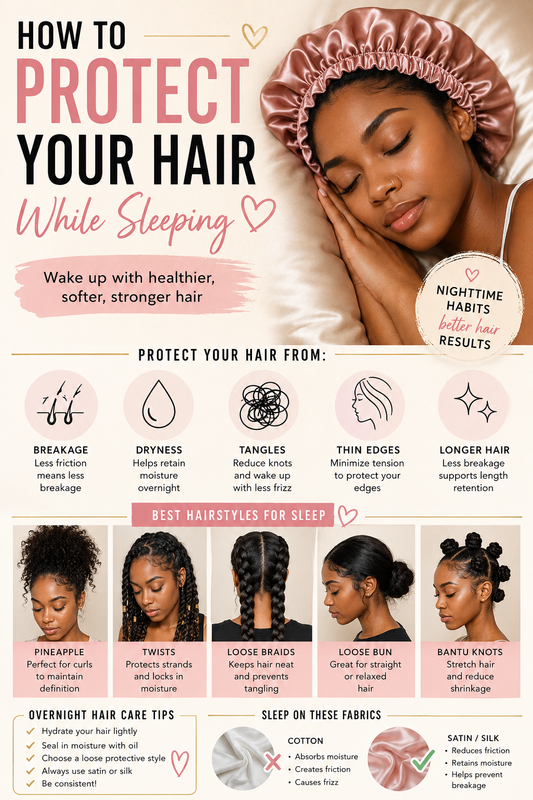
Healthy hair growth does not only depend on what you do during the day. Your nighttime routine plays a massive role in preventing breakage, dryness, thinning edges, frizz, split ends, tangles, and moisture loss. Many people spend hundreds of dollars on oils, shampoos, conditioners, and treatments but still wake up with damaged hair because they ignore what happens while they sleep.
If your hair feels dry in the morning, looks flattened, tangles easily, or sheds excessively, your nighttime habits could be the reason. Cotton pillowcases, rough tossing and turning, tight hairstyles, and lack of moisture protection can slowly destroy the health of your hair over time.
The good news is that protecting your hair while sleeping is simple once you understand what your hair actually needs overnight.
This complete guide will teach you:
- Why hair gets damaged while sleeping
- The best nighttime hairstyles for every hair type
- How to prevent dryness and breakage overnight
- The truth about satin and silk
- How to protect braids, locs, curls, and natural hair
- Common sleeping mistakes ruining your hair
- The best overnight hair growth habits
- How to wake up with softer, healthier hair every morning
Why Hair Gets Damaged While Sleeping
Many people assume hair rests while they sleep. In reality, hair experiences hours of friction every single night.
When your hair rubs against rough fabrics like cotton pillowcases, several damaging things happen:
1. Friction Causes Breakage
Hair strands constantly rub against fabric while you move during sleep. This repeated friction weakens the hair cuticle and leads to:
- Split ends
- Snapped strands
- Tangling
- Frizz
- Thinning edges
This is especially damaging for:
- Curly hair
- Coily hair
- Natural hair
- Chemically treated hair
- Bleached hair
- Fine hair
2. Cotton Pulls Moisture From Hair
Cotton absorbs natural oils and moisture from your hair overnight.
This leaves hair:
- Dry
- Brittle
- Dull
- Frizzy
- Weak
Natural hair and curly hair are especially vulnerable because oils already struggle to travel down the hair shaft.
3. Tight Hairstyles Create Tension
Sleeping with tight ponytails or buns places stress on:
- Hair follicles
- Edges
- Crown area
Over time, this can contribute to:
- Breakage
- Hairline thinning
- Traction alopecia
- Scalp soreness
4. Hair Tangles More Easily Overnight
Loose hair can twist and knot while you sleep. Tangles increase friction and make detangling more damaging in the morning.
The Best Fabrics for Sleeping With Healthy Hair
The fabric touching your hair matters more than most people realize.
Satin vs Cotton
Cotton:
- Absorbs moisture
- Creates friction
- Causes tangles
- Leads to frizz
Satin:
- Smooth surface
- Reduces friction
- Helps retain moisture
- Protects hairstyles longer
Switching to satin is one of the fastest ways to improve overnight hair protection.
Silk vs Satin: Which Is Better?
People often debate silk versus satin, but both can protect hair.
Silk
Pros:
- Natural fiber
- Luxurious feel
- Gentle on hair
Cons:
- Expensive
- Requires delicate care
Satin
Pros:
- Affordable
- Smooth surface
- Effective at reducing friction
- Easier maintenance
Cons:
- Quality varies
For most people, a high-quality satin bonnet or pillowcase works perfectly.
The Best Hairstyles for Sleeping
The best nighttime hairstyle depends on your hair type and texture.
Best Hairstyles for Curly Hair
Curly hair dries out easily and tangles faster overnight.
Pineapple Method
The pineapple method is one of the best ways to preserve curls.
How to do it:
- Gather hair loosely at the top of your head
- Use a soft satin scrunchie
- Avoid pulling tightly
Benefits:
- Protects curl definition
- Prevents flattening
- Reduces tangles
Loose Braids
Loose braids help:
- Minimize tangles
- Reduce friction
- Stretch curls gently
Never braid too tightly.
Satin Bonnet
A satin bonnet helps curls stay moisturized and reduces frizz dramatically.
Best Hairstyles for Natural Hair
Natural hair needs moisture retention and reduced manipulation.
Twists
Two-strand twists are excellent for overnight protection.
Benefits:
- Retain moisture
- Prevent tangling
- Reduce breakage
- Help stretch hair
Loose Braids
Braids keep strands organized and reduce knotting.
Bantu Knots
Loose bantu knots help:
- Stretch hair
- Preserve styles
- Reduce shrinkage
Avoid making them tight.
Best Hairstyles for Straight Hair
Straight hair can still become damaged overnight.
Loose Low Bun
A loose low bun:
- Prevents tangles
- Reduces friction
- Helps maintain smoothness
Avoid tight elastics.
Loose Braid
A loose braid works well for:
- Long hair
- Fine hair
- Easily tangled hair
How to Protect Braids While Sleeping
Braids can still experience frizz, dryness, and tension damage overnight.
Wrap Braids Properly
Use:
- Satin bonnet
- Satin scarf
- Satin pillowcase
This helps:
- Reduce frizz
- Extend braid lifespan
- Prevent dryness
Moisturize Lightly
Lightly hydrate your scalp and braids before bed using:
- Lightweight oils
- Moisturizing sprays
Avoid heavy buildup.
Products like Hairobics moisturizing products can help maintain softness overnight without making braids greasy.
Avoid Tight High Buns
Pulling braids tightly while sleeping can stress edges and scalp.
How to Protect Locs While Sleeping
Locs require moisture balance and lint prevention.
Cover Locs Every Night
Locs attract lint easily from cotton pillowcases and blankets.
Always use:
- Satin bonnet
- Satin scarf
- Satin loc sock
Keep Locs Moisturized
Dry locs become brittle over time.
Lightly mist locs before bed using water-based hydration products.
Avoid Sleeping on Wet Locs
Wet locs can:
- Smell musty
- Develop mildew
- Weaken over time
Always allow locs to dry properly.
Best Overnight Moisture Routine
Nighttime is the perfect opportunity to lock moisture into your hair.
Step 1: Lightly Hydrate Hair
Use:
- Water mist
- Leave-in conditioner
- Moisturizing spray
Avoid soaking hair.
Step 2: Seal Moisture
Seal hydration with lightweight oils.
Good options include:
- Jamaican black castor oil
- Argan oil
- Jojoba oil
- Grapeseed oil
Many people use products from Hairobics All Natural to help reduce overnight dryness and support healthier-looking hair.
Step 3: Protective Style
Choose:
- Twists
- Loose braid
- Pineapple
- Loose bun
Step 4: Satin Protection
Use:
- Satin bonnet
- Satin scarf
- Satin pillowcase
For maximum protection, many people combine both a bonnet and satin pillowcase.
Why Edges Thin While Sleeping
Many people unknowingly damage their edges every night.
Common causes:
- Tight bonnets
- Tight ponytails
- Rough pillowcases
- Friction
- Excessive tension
How to Protect Edges Overnight
Use Loose Styles
Avoid:
- Tight buns
- Tight ponytails
- Tight wraps
Moisturize Edges
Dry edges break easier.
Use lightweight oils or scalp treatments before bed.
Use Satin Fabric
Friction from cotton destroys delicate edge hairs over time.
Should You Sleep With Hair Wet?
Sleeping with wet hair is generally not ideal.
Problems With Sleeping on Wet Hair
Wet hair is weaker and stretches more easily.
This increases:
- Breakage
- Tangling
- Frizz
Wet scalp conditions may also contribute to irritation.
Better Alternative
Allow hair to dry partially before bed.
If necessary:
- Use loose braids
- Sleep with a microfiber towel briefly
- Use cool air drying
How to Prevent Morning Frizz
Frizz usually starts overnight.
Causes of Overnight Frizz
- Dry hair
- Friction
- Humidity loss
- Rough fabrics
- Lack of moisture
Frizz Prevention Routine
- Moisturize hair lightly
- Seal with oil
- Use satin protection
- Sleep in protective style
Consistency matters more than expensive products.
How Sleep Affects Hair Growth
Poor nighttime habits can sabotage hair retention.
Hair growth is not only about growing new strands — it is also about keeping the hair you already have.
If your hair breaks constantly overnight, it may seem like your hair never grows.
Overnight Habits That Help Hair Growth
Reduce Breakage
Less breakage means better length retention.
Improve Moisture Retention
Moisturized hair stays flexible and stronger.
Protect the Scalp
Healthy scalp conditions support healthier hair growth.
Minimize Tension
Reducing stress on follicles helps protect thinning areas.
Best Nighttime Oils for Hair
Some oils work especially well overnight.
Jamaican Black Castor Oil
Benefits:
- Helps seal moisture
- Supports scalp care
- Thick texture ideal for dry hair
Argan Oil
Benefits:
- Lightweight
- Adds softness
- Helps reduce frizz
Jojoba Oil
Benefits:
- Mimics natural scalp oils
- Lightweight hydration
Rosemary Oil (Diluted)
Benefits:
- Popular for scalp massage routines
- Often used in hair growth regimens
Never apply essential oils directly without dilution.
The Best Bonnet for Hair Protection
Not all bonnets are equal.
Look For:
- Double-layer satin
- Comfortable elastic
- Breathable material
- Full hair coverage
Avoid:
- Rough seams
- Tight bands
- Cheap scratchy fabrics
How to Keep Hairstyles Fresh Overnight
Overnight protection extends the life of your hairstyle.
Curly Hairstyles
Use:
- Pineapple
- Satin bonnet
- Curl-preserving scrunchie
Silk Press
Use:
- Loose wrap
- Satin scarf
- Satin pillowcase
Avoid humidity exposure.
Braids
Use:
- Satin bonnet
- Scalp hydration spray
Locs
Use:
- Loc sock
- Satin pillowcase
Common Nighttime Hair Mistakes
Many people unknowingly damage their hair every night.
Mistake 1: Sleeping Without Protection
This causes:
- Friction
- Dryness
- Frizz
- Breakage
Mistake 2: Tight Hairstyles
Tension damages:
- Edges
- Hairline
- Follicles
Mistake 3: Sleeping on Cotton
Cotton absorbs moisture and roughens the cuticle.
Mistake 4: Ignoring Moisture
Dry hair breaks more easily.
Mistake 5: Sleeping With Wet Hair
Wet strands are fragile.
Best Hair Care Routine Before Bed
Here is a simple routine almost anyone can follow.
Simple Night Routine
Step 1
Detangle gently.
Step 2
Apply light moisture.
Step 3
Seal with lightweight oil.
Step 4
Protect hair with loose style.
Step 5
Cover with satin bonnet or scarf.
Morning Hair Care Tips
Your morning routine matters too.
Avoid Rough Brushing
Use:
- Fingers
- Wide-tooth comb
Refresh Moisture
Lightly mist hair if needed.
Protect Hair From Heat
Limit excessive heat styling.
Best Sleeping Position for Hair
Believe it or not, sleep position can impact hair health.
Back Sleeping
Often reduces friction compared to side sleeping.
Side Sleeping
Can flatten curls and increase tangling on one side.
Satin Helps Regardless
A satin pillowcase helps reduce damage in any position.
Hair Protection for Men While Sleeping
Men also benefit from nighttime hair protection.
Especially for:
- Waves
- Locs
- Curly hair
- Braids
Best Overnight Protection for Waves
Use:
- Durag
- Satin pillowcase
This helps preserve wave patterns.
Best Overnight Protection for Beards
Beards can also dry out overnight.
Use:
- Satin pillowcase
- Beard oil before bed
Seasonal Changes and Overnight Hair Care
Your nighttime routine may need seasonal adjustments.
Winter
Hair tends to become drier.
Focus on:
- Extra moisture
- Heavier sealing oils
Summer
Humidity increases frizz.
Focus on:
- Lightweight hydration
- Frizz control
How Often Should You Wash Bonnets and Pillowcases?
Dirty hair accessories can affect scalp health.
Recommended:
- Pillowcase: weekly
- Bonnet/scarf: every 1–2 weeks
Especially important if using oils regularly.
Does a Satin Pillowcase Really Work?
Yes — many people notice:
- Less frizz
- Better moisture retention
- Fewer tangles
- Improved style longevity
Consistency produces the best results.
How Long Does It Take to See Results?
Some people notice improvements within days.
Common early improvements:
- Softer hair
- Less tangling
- Reduced frizz
Long-term consistency may help:
- Reduce breakage
- Improve length retention
- Support healthier-looking hair
Best Products for Overnight Hair Protection
The best products focus on:
- Moisture retention
- Scalp health
- Lightweight nourishment
Popular categories include:
- Leave-in conditioners
- Hair oils
- Moisturizing sprays
- Satin accessories
Many natural-hair users combine satin protection with nourishing products from brands like Hairobics for overnight moisture support and scalp care.
Final Thoughts
Protecting your hair while sleeping is one of the easiest ways to improve overall hair health. Small nighttime habits can make a huge difference over time.
If you consistently:
- Reduce friction
- Protect moisture
- Avoid tight tension
- Use satin protection
- Keep hair hydrated
…you may notice healthier, softer, shinier, and stronger hair over time.
Hair care is not just about what you do during the day. The hours you spend sleeping can either support healthy hair or slowly damage it night after night.
Building a consistent nighttime routine can help reduce breakage, preserve hairstyles longer, improve moisture retention, and support better length retention over time.
Whether you have curls, coils, locs, braids, waves, straight hair, or natural hair, protecting your hair while sleeping is one of the smartest long-term hair care habits you can develop.