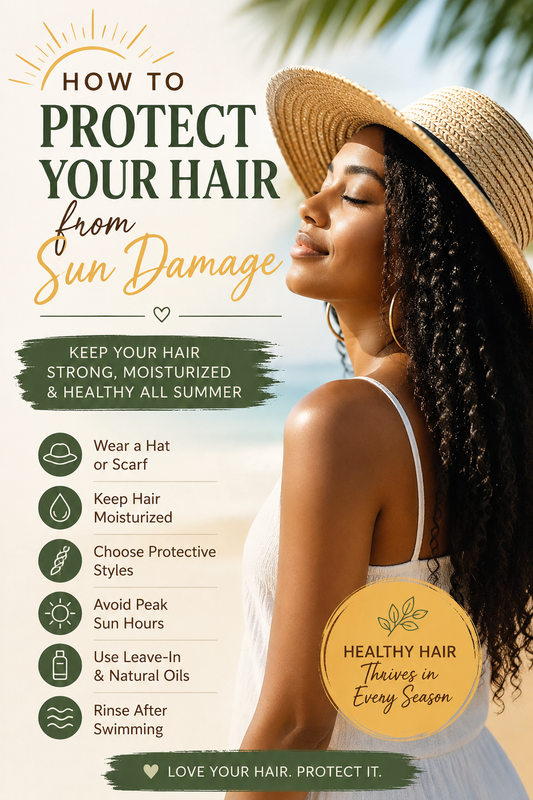
Most people know that the sun can damage their skin, but many don't realize it can also cause serious damage to their hair. Spending hours outdoors without protecting your strands can leave your hair dry, brittle, faded, and more prone to breakage.
Whether you wear your hair natural, have locs, protective styles, braids, curls, relaxed hair, or color-treated hair, ultraviolet (UV) rays can weaken the hair shaft and strip away moisture. Combined with heat, humidity, chlorine, and salt water, summer weather can become one of the biggest enemies of healthy hair.
The good news is that protecting your hair from sun damage isn't difficult. With the right routine, moisturizing products, protective styles, and healthy habits, you can enjoy the sunshine while keeping your hair soft, shiny, and strong.
In this complete guide, you'll learn:
- What sun damage does to hair
- Signs your hair has UV damage
- How to prevent moisture loss
- Best hairstyles for sun protection
- Daily summer hair care routines
- Tips for locs, braids, curls, and natural hair
- Common mistakes to avoid
Let's dive in.
Can the Sun Really Damage Hair?
Absolutely.
Hair is made primarily of keratin protein. Just like excessive heat styling, prolonged UV exposure gradually breaks down this protein.
The sun also:
- Removes natural oils
- Weakens the hair cuticle
- Causes color fading
- Increases porosity
- Leads to dryness
- Makes hair rough
- Causes split ends
- Weakens elasticity
Over time, unprotected hair becomes dull, fragile, and difficult to manage.
Signs Your Hair Has Sun Damage
Many people mistake sun damage for simply having "dry hair."
Common signs include:
- Rough texture
- Hair tangles easily
- Increased shedding
- Split ends
- Loss of shine
- Faded hair color
- Frizzy appearance
- Brittle ends
- Hair snaps during detangling
- Scalp feels dry or irritated
The earlier you recognize these symptoms, the easier it is to restore your hair's health.
Why Natural Hair Needs Extra Protection
Natural curls and coils naturally struggle to retain moisture because the scalp's oils travel more slowly down curved strands.
Adding intense sunlight makes moisture loss happen even faster.
Natural hair often experiences:
- Increased shrinkage
- Dry ends
- Breakage
- Frizz
- Knotting
- Single-strand knots
This makes hydration one of the most important aspects of summer hair care.
How UV Rays Affect the Hair Cuticle
Think of your hair cuticle like shingles on a roof.
Healthy cuticles lie flat.
UV exposure causes them to lift.
Once the cuticle opens:
- Moisture escapes.
- Protein breaks down.
- Hair becomes porous.
- Dirt enters more easily.
- Hair loses shine.
Protecting the cuticle is the key to maintaining healthy strands.
Wear a Hat Whenever Possible
One of the easiest ways to reduce UV damage is wearing a hat.
Choose:
- Wide-brim hats
- Bucket hats
- Satin-lined hats
- Baseball caps with satin lining
- Straw hats with protective lining
Avoid rough interior fabrics that create friction.
A satin lining helps reduce breakage while blocking direct sunlight.
Cover Your Hair with a Scarf
Lightweight scarves provide excellent UV protection.
Silk and satin scarves also:
- Reduce friction
- Help retain moisture
- Prevent tangles
- Protect edges
They're especially helpful during vacations or long outdoor events.
Moisturize Before Going Outside
Dry hair absorbs more heat.
Before spending hours outdoors:
- Mist your hair lightly.
- Apply a leave-in conditioner.
- Seal with a lightweight natural oil or butter.
Hydrated hair withstands heat much better than dry strands.
Keep Your Scalp Healthy
The scalp can also burn.
Signs include:
- Redness
- Flaking
- Tenderness
- Peeling
- Itching
Protect exposed parts with hats or scarves and keep your scalp moisturized to reduce dryness.
Use Protective Hairstyles
Protective styles reduce direct sun exposure.
Good options include:
- Two-strand twists
- Braids
- Cornrows
- Buns
- Flat twists
- Updos
- Low ponytails
These styles reduce manipulation while shielding your ends.
Protect Your Ends
The oldest part of your hair is the ends.
They dry out first.
Protect them by:
- Tucking them away
- Wearing buns
- Using twists
- Keeping them moisturized
- Trimming damaged ends regularly
Healthy ends help retain length.
Avoid Excessive Heat Styling
During summer, your hair already receives heat from the environment.
Adding:
- Flat irons
- Curling irons
- Blow dryers
can increase dryness and protein damage.
Whenever possible, embrace heat-free styles.
Wash Sweat Away Gently
Sweat contains salt.
Salt buildup can dry both the scalp and hair.
If you exercise frequently:
- Rinse with water.
- Use a gentle shampoo when needed.
- Follow with conditioner.
- Reapply moisturizer.
Keeping your scalp clean supports healthy growth.
Deep Condition Weekly
Weekly deep conditioning restores lost moisture.
Look for products containing ingredients like:
- Aloe vera
- Shea butter
- Coconut oil
- Avocado oil
- Olive oil
- Honey
- Glycerin
Leave the treatment on for 20–30 minutes for the best results.
Drink Plenty of Water
Healthy hair starts from within.
Staying hydrated helps:
- Support scalp health
- Improve elasticity
- Reduce dryness
- Maintain natural shine
Aim to drink water consistently throughout the day, especially during hot weather.
Eat Hair-Healthy Foods
Your hair benefits from nutrients such as:
- Protein
- Iron
- Zinc
- Biotin
- Omega-3 fatty acids
- Vitamins A, C, D, and E
Foods that support healthy hair include leafy greens, berries, eggs, fish, nuts, seeds, beans, avocados, and sweet potatoes.
Protect Hair While Swimming
Swimming pools and ocean water create additional stress.
Chlorine removes natural oils.
Salt water increases dryness.
Before swimming:
- Wet hair with clean water.
- Apply leave-in conditioner.
- Wear a swim cap if possible.
After swimming:
- Rinse immediately.
- Shampoo gently.
- Deep condition.
Summer Hair Routine
Morning
- Lightly mist hair.
- Apply leave-in conditioner.
- Seal moisture.
- Style protectively.
- Wear a hat if outdoors.
Afternoon
- Avoid touching hair constantly.
- Stay hydrated.
- Protect hair during peak sunlight.
Evening
- Remove dirt and sweat.
- Moisturize if needed.
- Cover with a satin bonnet or scarf.
Consistency is more effective than using many products.
How to Protect Locs from Sun Damage
Locs also lose moisture under intense sunlight.
Keep locs healthy by:
- Spritzing with water-based moisturizers
- Keeping the scalp hydrated
- Covering locs outdoors
- Washing away sweat regularly
- Sleeping with satin protection
- Avoiding excessive product buildup
Proper hydration keeps locs soft, flexible, and less prone to breakage.
How to Protect Braids
Braids expose portions of your natural hair to environmental stress.
Protect them by:
- Moisturizing your scalp
- Applying lightweight leave-in products
- Sleeping with satin
- Covering braids outside
- Washing gently every few weeks
Healthy braids begin with healthy natural hair underneath.
Protecting Curly Hair
Curly hair benefits from:
- Leave-in conditioner
- Curl creams
- Protective updos
- Satin pillowcases
- Weekly masks
- Gentle detangling
Avoid over-cleansing, which can strip away essential moisture.
Color-Treated Hair Needs Extra Care
Hair color fades faster in the sun.
Protect dyed hair by:
- Wearing hats
- Using color-safe shampoo
- Limiting UV exposure
- Deep conditioning weekly
- Avoiding excessive heat styling
These habits help preserve vibrancy and reduce dryness.
Common Summer Hair Mistakes
Avoid these habits:
- Going outside with dry hair
- Skipping conditioner
- Ignoring split ends
- Overwashing
- Excessive heat styling
- Forgetting to moisturize
- Sleeping without satin protection
- Neglecting your scalp
- Waiting too long between trims
- Spending hours in direct sunlight without covering your hair
Small changes can significantly improve hair health over time.
Myths About Sun Damage
Myth: Only dyed hair gets sun damage.
False. All hair types can be affected.
Myth: Dark hair is immune.
False. Dark hair may fade less noticeably but still experiences protein and moisture loss.
Myth: Oily hair doesn't need moisture.
False. Oil does not replace water. Hair needs both hydration and sealing.
Myth: One deep conditioning treatment fixes everything.
False. Healthy hair comes from consistent care.
Frequently Asked Questions
Can the sun cause hair breakage?
Yes. UV rays weaken the hair shaft, making strands more likely to snap during styling and detangling.
Does wearing a hat stop hair growth?
No. A clean, well-fitting hat protects your hair and scalp without affecting growth.
Should I moisturize every day?
It depends on your hair type and environment. Many people with natural hair benefit from light moisturizing several times a week, while others may need it daily in very dry or hot climates.
Is chlorine worse than sunlight?
Both can be damaging. Chlorine strips oils, while sunlight breaks down proteins and dehydrates hair. Together, they can significantly increase dryness and breakage.
Can I repair sun-damaged hair?
You can improve its condition through regular moisturizing, deep conditioning, minimizing further damage, and trimming severely split or weakened ends. Healthy new growth from the scalp is the best long-term solution.
Healthy Hair Is Protected Hair
Sunshine is wonderful for outdoor activities, vacations, and enjoying the warmer months—but it shouldn't come at the expense of your hair. Every hour your hair spends exposed to intense UV rays without protection increases the risk of dryness, fading, breakage, and moisture loss.
Fortunately, preventing sun damage is much easier than repairing it. A simple routine that includes regular moisturizing, protective hairstyles, deep conditioning, gentle cleansing, and covering your hair when spending long periods outdoors can make a remarkable difference. Whether you have natural hair, curls, coils, braids, locs, relaxed hair, or color-treated strands, consistency is the foundation of healthy hair care.
Instead of waiting until your hair becomes brittle or difficult to manage, make sun protection part of your daily routine. Hydrated hair retains length better, feels softer, shines more naturally, and resists breakage. By protecting your hair today, you'll enjoy stronger, healthier strands throughout every season of the year.
Final Thoughts
Beautiful hair isn't just about the products you use—it's also about how well you protect your hair from daily environmental stress. Sun exposure is one of the most overlooked causes of dryness and breakage, yet it's one of the easiest to prevent.
By combining smart habits such as wearing protective coverings, keeping your hair moisturized, minimizing heat styling, eating a balanced diet, and following a consistent care routine, you can keep your hair healthy even during the hottest months. Healthy hair thrives when it's nourished, protected, and treated with patience.
If you want stronger, shinier, and more resilient hair year-round, start making sun protection a regular part of your hair care routine today. Your future hair will thank you.