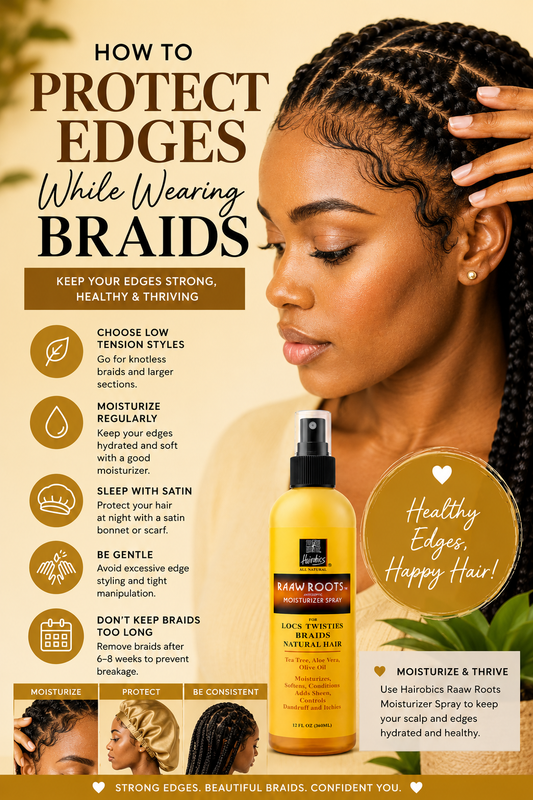
Braids are one of the most popular protective hairstyles for Black women and anyone with textured hair. They offer convenience, style versatility, and a break from daily manipulation. Whether you love knotless braids, box braids, cornrows, twists, or crochet styles, braids can help retain length and simplify your hair routine.
However, many people experience a frustrating problem while wearing braids: thinning edges.
Your edges are often the first area to show signs of stress, breakage, and hair loss. Tight braids, improper installation, neglect, and poor maintenance can slowly damage the delicate hairs around your hairline. In severe cases, repeated tension can lead to traction alopecia—a form of hair loss caused by constant pulling.
The good news is that you do not have to sacrifice your edges to enjoy beautiful braids.
This guide will teach you exactly how to protect your edges before, during, and after wearing braids so you can enjoy your favorite styles without risking your hairline.
Why Edges Are So Vulnerable
Before learning how to protect your edges, it's important to understand why they are so fragile.
The hair around your perimeter is naturally:
- Finer
- Softer
- More delicate
- Less dense than the rest of your hair
Because edge hairs are thinner, they cannot withstand as much tension as the thicker strands found elsewhere on your scalp.
When braids constantly pull on these delicate hairs, they become vulnerable to:
- Breakage
- Excessive shedding
- Inflammation
- Thinning
- Permanent hair loss
This is why edge protection should always be a priority when wearing braided styles.
Signs Your Braids Are Damaging Your Edges
Many people wait until significant damage occurs before taking action.
Watch for these warning signs:
Small Bumps Around the Hairline
Tiny bumps often indicate excessive tension.
Redness
Inflammation is a major warning sign.
Tenderness
Your braids should never feel painful.
Persistent Headaches
Tight braids can trigger headaches and scalp stress.
Hairline Thinning
Noticeable gaps around your edges indicate ongoing damage.
Broken Edge Hairs
Short, uneven hairs often suggest breakage rather than growth.
If you notice any of these symptoms, it's time to adjust your braid routine.
Start With Healthy Edges Before Braiding
One of the biggest mistakes people make is installing braids on already damaged edges.
Weak hair cannot tolerate additional stress.
Before getting braids:
Moisturize Thoroughly
Hydrated hair is more flexible and less prone to breakage.
Focus on:
- Hairline
- Temples
- Nape area
Strengthen Weak Areas
Use products rich in nourishing oils and botanical ingredients.
Consistent scalp care helps create a healthier foundation for protective styling.
Avoid Tight Hairstyles Before Braiding
Give your edges a break for at least one to two weeks before your braid appointment.
Choose the Right Braider
The person installing your braids matters.
A skilled braider understands:
- Proper tension
- Hairline protection
- Scalp health
- Hair density differences
Unfortunately, some braiders prioritize neatness over hair health.
Never be afraid to speak up.
Tell your stylist:
- You want low tension
- You are concerned about your edges
- You prefer comfort over extra-tight braids
A good stylist will respect your concerns.
Knotless Braids Are Often Better for Edges
Traditional box braids typically begin with a tight knot at the base.
This knot can create significant tension on the scalp.
Knotless braids start with your natural hair and gradually feed in extensions.
Benefits include:
- Less pulling
- Reduced scalp tension
- More flexibility
- Lower risk of edge damage
Many people find knotless braids much gentler on their hairline.
Never Allow Excessively Tight Braids
This may be the most important tip in the entire article.
Braids should never hurt.
Pain is not a sign of quality.
Pain is a warning.
If your braids:
- Feel tight
- Cause headaches
- Create bumps
- Pull your skin
They are too tight.
Ask your stylist to loosen them immediately.
Ignoring excessive tension can lead to permanent damage.
Leave Your Edges Out
Many hair professionals recommend leaving the most fragile edge hairs outside of the braided style.
Benefits include:
- Reduced tension
- Less pulling
- Improved hairline preservation
Your hairstyle may appear slightly less sleek, but your edges will thank you.
Remember:
Healthy edges are more important than perfect braids.
Avoid Micro Braids Near the Hairline
Micro braids can create excessive tension because of their small size.
Tiny sections often:
- Pull harder
- Concentrate tension
- Increase breakage risk
Instead, consider:
- Medium knotless braids
- Large knotless braids
- Medium box braids
- Chunkier protective styles
Larger sections generally place less stress on your hairline.
Moisturize Your Edges Regularly
Many people forget that braided hair still needs moisture.
Dry hair breaks more easily.
Focus on moisturizing:
- Hairline
- Temples
- Nape
A quality moisturizer can help keep delicate hairs soft and flexible.
Ingredients to Look For
- Aloe vera
- Jojoba oil
- Castor oil
- Coconut oil
- Glycerin
- Botanical extracts
Hydrated edges are more resilient against braid-related stress.
Use Hairobics Raaw Roots Moisturizer Spray
One of the easiest ways to keep braided styles hydrated is through regular use of a lightweight moisturizing spray.
Benefits include:
- Helps combat dryness
- Supports moisture retention
- Refreshes braids
- Soothes the scalp
- Keeps edges soft
Applying a moisturizing spray several times per week can help maintain healthier hair while wearing protective styles.
Sleep With Satin Every Night
Cotton pillowcases absorb moisture and create friction.
This friction can contribute to edge breakage.
Protect your hair using:
- Satin bonnet
- Satin scarf
- Silk scarf
- Satin pillowcase
This simple habit can significantly reduce hairline damage over time.
Avoid Excessive Edge Styling
Many people install braids and then heavily style their edges daily.
Unfortunately:
- Edge control gels
- Tight brushing
- Repeated manipulation
Can weaken already stressed hairs.
Limit edge styling whenever possible.
If you do style your edges:
- Use gentle pressure
- Avoid hard brushing
- Give edges rest days
Keep Braids Clean
A dirty scalp can lead to:
- Itching
- Inflammation
- Product buildup
- Follicle stress
Clean braids regularly.
Focus on:
- Scalp cleansing
- Product removal
- Maintaining moisture balance
A healthy scalp supports healthy edges.
Avoid Wearing Braids Too Long
Many people leave braids in for months.
This often leads to:
- Tangling
- Matting
- Breakage
- Shedding buildup
Most experts recommend removing braids after:
6–8 Weeks
Longer wear periods increase the risk of damage.
If your edges are already fragile, consider removing braids even sooner.
Give Your Edges Recovery Time
Protective styles should not be worn back-to-back year-round.
Your hairline needs recovery periods.
After removing braids:
Take a Break
Allow your scalp and edges to rest.
Focus on Moisture
Hydrate consistently.
Reduce Tension
Avoid ponytails and tight buns.
Recovery periods help prevent cumulative damage.
Massage Your Hairline
Gentle scalp massage may improve circulation and help support a healthy scalp environment.
Use light pressure.
Avoid aggressive rubbing.
A few minutes several times per week is enough.
Watch Out for Traction Alopecia
Traction alopecia develops when hair experiences prolonged tension.
Early signs include:
- Thinning temples
- Receding hairline
- Broken edges
- Sparse areas
The earlier you address traction-related issues, the better your chances of recovery.
Ignoring these signs can eventually lead to permanent hair loss.
Best Braid Styles for Edge Protection
If protecting your edges is your top priority, consider:
Knotless Braids
Excellent tension distribution.
Jumbo Braids
Less stress on individual hairs.
Loose Cornrows
Minimal pulling when installed correctly.
Crochet Styles
Can reduce direct tension on natural hair.
Flat Twists
Gentler than many braided styles.
Foods That Support Strong Edges
Healthy hair starts internally.
Focus on:
Protein
- Eggs
- Fish
- Chicken
- Beans
Iron
- Spinach
- Lentils
- Lean meats
Omega-3 Fatty Acids
- Salmon
- Walnuts
- Flaxseed
Vitamin C
- Citrus fruits
- Berries
- Bell peppers
A balanced diet supports stronger, healthier hair growth.
Common Edge Mistakes to Avoid
Mistake #1: Installing Tight Braids
The fastest route to damage.
Mistake #2: Skipping Moisture
Dry edges break easily.
Mistake #3: Excessive Edge Control
Too much manipulation causes stress.
Mistake #4: Wearing Braids Too Long
Extended wear increases breakage risk.
Mistake #5: Ignoring Pain
Pain is never normal.
Mistake #6: Braiding Damaged Hair
Weak edges need restoration before braiding.
Mistake #7: Constant Protective Styling
Your hairline needs recovery periods.
A Weekly Edge Protection Routine for Braids
Monday
Lightly moisturize edges.
Tuesday
Wear satin protection overnight.
Wednesday
Apply moisturizing spray to scalp and hairline.
Thursday
Gentle scalp massage.
Friday
Inspect edges for signs of tension.
Saturday
Refresh moisture levels.
Sunday
Rest and avoid unnecessary manipulation.
Consistency produces the best results.
How Long Does Edge Recovery Take?
Recovery varies based on:
- Severity of damage
- Overall health
- Styling habits
- Consistency
Minor breakage may improve within:
2–3 Months
Moderate thinning may require:
3–6 Months
More significant traction damage may take:
6–12 Months or Longer
Patience and consistency are essential.
Final Thoughts
Braids can absolutely be a healthy protective style when installed and maintained correctly. The key is understanding that your edges are the most delicate part of your hairline and require extra care.
Protecting your edges starts before braids are installed and continues throughout the life of the style. Choosing low-tension hairstyles, moisturizing consistently, sleeping with satin protection, avoiding excessive edge styling, and giving your hairline recovery time can make a tremendous difference.
Remember that healthy edges are worth more than the sleekest hairstyle. If a style feels painful, causes bumps, or creates tension around your hairline, address the issue immediately.
With proper care, you can enjoy beautiful braids while maintaining strong, full, healthy edges for years to come.
Recommended Product: For keeping braids, scalp, and edges hydrated, incorporate Hairobics Raaw Roots Moisturizer Spray into your routine to help maintain moisture, softness, and overall hair health while wearing protective styles.