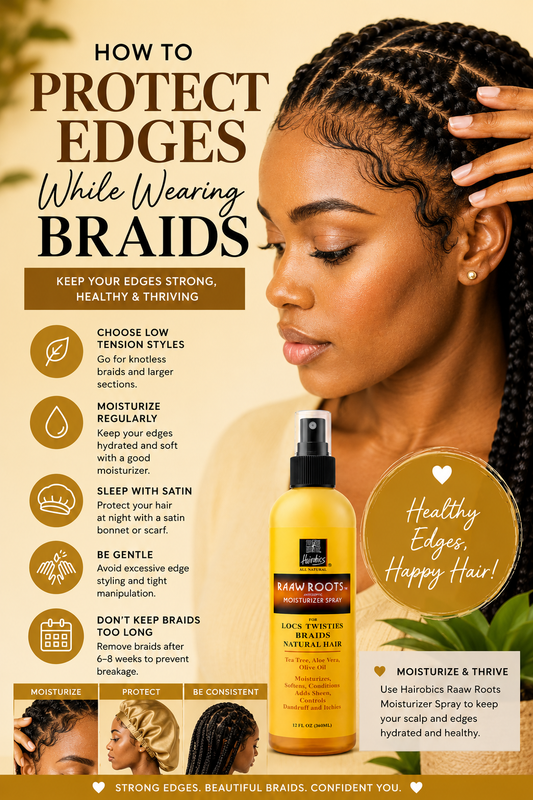
Braids are one of the most popular protective styles for natural hair. They offer convenience, versatility, and the ability to retain length while reducing daily manipulation. However, one of the biggest concerns many women experience while wearing braids is edge damage.
Your edges are the most delicate hairs on your head. The hairline contains finer strands that are more vulnerable to breakage, thinning, and traction alopecia. When braids are installed too tightly or maintained improperly, the edges can suffer significant damage.
The good news is that you can enjoy beautiful braids without sacrificing your hairline. By using proper installation techniques, maintaining moisture, reducing tension, and caring for your scalp consistently, you can protect your edges while wearing braids and promote healthy hair growth.
In this comprehensive guide, you'll learn everything you need to know about keeping your edges healthy before, during, and after wearing braids.
Why Edges Are So Fragile
Before discussing protection methods, it helps to understand why edges are so vulnerable.
The hairs around your hairline are:
- Naturally finer than other hair strands
- More exposed to environmental damage
- Subjected to daily friction
- Frequently manipulated for styling
- More prone to tension
Because these hairs are delicate, excessive pulling can easily lead to:
- Breakage
- Thinning
- Bald spots
- Receding hairline
- Traction alopecia
Many women mistakenly believe braids themselves cause edge loss. In reality, improper braid installation and maintenance are usually the culprits.
Common Causes of Edge Damage While Wearing Braids
1. Braids Installed Too Tight
The number one reason women lose edges from braids is excessive tension.
Signs your braids are too tight include:
- Headaches
- Scalp soreness
- Red bumps
- Hairline pain
- Difficulty sleeping
If your braids hurt, your follicles are under stress.
Healthy braids should never be painful.
2. Small Braids Around the Hairline
Many stylists create tiny braids around the edges for a neat appearance.
Unfortunately, these tiny braids place tremendous stress on delicate edge hairs.
Smaller sections mean:
- More tension per strand
- Increased pulling
- Higher breakage risk
Larger edge sections are generally safer.
3. Heavy Braiding Hair
Long braids look beautiful, but extra length means extra weight.
Heavy braids constantly pull on:
- Temples
- Hairline
- Nape area
Over time, this stress can weaken follicles and contribute to thinning edges.
4. Constant Styling
Repeatedly pulling braids into:
- High buns
- Ponytails
- Top knots
Places additional tension on your hairline.
Even perfectly installed braids can damage edges if they're constantly pulled upward.
5. Dry Hair and Scalp
Many people stop moisturizing after getting braids.
This is a major mistake.
Dry hair becomes:
- Brittle
- Weak
- Prone to snapping
Moisturized edges remain more elastic and resilient.
How to Prepare Your Edges Before Getting Braids
Protection begins before installation.
Deep Condition First
Deep conditioning strengthens hair and improves elasticity.
Benefits include:
- Increased moisture
- Reduced breakage
- Better flexibility
- Stronger strands
Try deep conditioning one to three days before your appointment.
Trim Damaged Ends
Removing split ends prevents further breakage.
Although trimming won't directly affect edges, healthier hair overall responds better to protective styling.
Strengthen Your Hairline
Focus on nourishing your edges before braiding.
Use products that contain:
- Jamaican black castor oil
- Rosemary oil
- Peppermint oil
- Aloe vera
- Jojoba oil
These ingredients help support healthy scalp conditions.
Avoid Chemical Treatments
Avoid:
- Relaxers
- Bleaching
- Coloring
Immediately before getting braids.
Chemical processing can weaken strands and increase the risk of edge damage.
Choose the Right Braids for Edge Protection
Not all braids are created equal.
Some styles are far safer for your hairline.
Best Braids for Protecting Edges
Knotless Braids
Knotless braids are among the safest options.
Benefits include:
- Less tension
- More flexibility
- Reduced scalp stress
- Better comfort
Because extensions are gradually fed in, there is less pulling at the roots.
Medium-Sized Braids
Medium braids provide a balance between:
- Longevity
- Style
- Hairline protection
Extremely small braids often increase tension.
Shorter Braids
Shorter braids place less weight on follicles.
Less weight equals less stress on edges.
Loose Hairline Braids
Ask your stylist to braid the edges loosely.
A slight reduction in tension can make a huge difference.
What to Tell Your Stylist
Communication is essential.
Before your appointment, clearly tell your stylist:
"I want my edges protected. Please braid my hairline loosely."
Do not assume they know your preferences.
Speak up if:
- Braids feel tight
- Hairline feels sore
- Scalp is uncomfortable
A good stylist will adjust tension immediately.
Leave Your Baby Hairs Out
One of the best edge-protection techniques is leaving fragile baby hairs out of the braid.
Benefits include:
- Less tension
- Reduced breakage
- Better hairline preservation
Not every strand needs to be braided.
Sometimes less is more.
Moisturize Your Edges Regularly
Braids do not eliminate the need for moisture.
Your edges should be hydrated several times per week.
Focus on:
- Hairline
- Temples
- Nape area
Use lightweight moisturizers rather than heavy greasy products.
Use a Moisturizing Braid Spray
A high-quality braid spray can help:
- Hydrate edges
- Refresh scalp
- Reduce dryness
- Improve softness
Look for ingredients such as:
- Aloe vera
- Rosemary
- Peppermint
- Jamaican black castor oil
Regular moisture helps maintain stronger strands.
Massage Your Hairline
Gentle scalp massage may improve circulation around the hairline.
Tips:
- Use fingertips
- Massage gently
- Avoid excessive rubbing
- Perform for 2–5 minutes
This can also help relieve tension from braided styles.
Sleep With Satin or Silk
Cotton pillowcases absorb moisture and create friction.
Switch to:
- Satin bonnet
- Silk bonnet
- Satin pillowcase
- Silk scarf
Benefits include:
- Less friction
- Better moisture retention
- Reduced breakage
This simple habit can dramatically improve edge health.
Avoid Excessive Edge Control
Many edge-control products contain strong holding ingredients.
Daily use can lead to:
- Product buildup
- Dryness
- Breakage
Use edge control sparingly.
Healthy edges are more important than perfectly laid baby hairs.
Don't Pull Braids Into Tight Styles
Your braid installation may be safe, but styling choices can still damage edges.
Avoid:
- Tight buns
- Tight ponytails
- Tight half-up styles
Choose looser styles whenever possible.
Recognize Warning Signs Early
Pay attention to your hairline.
Warning signs include:
Redness
Redness indicates irritation.
Bumps
Bumps often signal excessive tension.
Pain
Pain means your follicles are stressed.
Thinning
Visible thinning requires immediate attention.
Broken Hairs
Broken strands around the hairline are a warning sign.
Address issues early before permanent damage occurs.
What to Do If Braids Feel Too Tight
Never ignore painful braids.
Try:
Warm Water Compress
Helps relax tension.
Scalp Oil
Can soothe irritation.
Loosening the First Few Braids
Removing a few tight braids near the hairline may save your edges.
Taking Braids Down
If pain persists, removal may be necessary.
Your hairline is more important than preserving a hairstyle.
How Long Should You Keep Braids In?
One common mistake is keeping braids too long.
Most experts recommend:
- 4–8 weeks for most styles
- 6 weeks as an ideal average
Leaving braids in too long can cause:
- Matting
- Breakage
- Shedding buildup
- Tangles
Healthy protective styling requires timely removal.
Edge Care Routine While Wearing Braids
Daily
- Check for tension
- Protect hair at night
- Avoid excessive manipulation
Every 2–3 Days
- Moisturize edges
- Refresh scalp
- Apply lightweight growth-supporting oils
Weekly
- Clean scalp
- Massage hairline
- Assess for signs of thinning
Consistency matters more than complexity.
Best Ingredients for Edge Protection
Jamaican Black Castor Oil
Known for:
- Moisture retention
- Scalp nourishment
- Strengthening properties
Rosemary Oil
Popular for supporting healthy follicles.
Peppermint Oil
Provides a refreshing sensation and may support scalp circulation.
Aloe Vera
Excellent for hydration and soothing irritation.
Jojoba Oil
Lightweight and similar to natural scalp oils.
Can Edges Grow Back After Braid Damage?
In many cases, yes.
If follicles are still healthy, edges can recover with:
- Reduced tension
- Consistent moisture
- Proper scalp care
- Protective styling habits
Recovery may take several months.
Patience is essential.
Traction Alopecia: When to Be Concerned
Traction alopecia occurs when repeated tension damages hair follicles.
Symptoms include:
- Receding hairline
- Bald patches
- Chronic thinning
- Sparse temples
Early intervention improves recovery chances.
Ignoring symptoms can lead to permanent loss.
Healthy Edge Habits for Long-Term Growth
The healthiest hairlines often belong to women who:
- Avoid tight styles
- Moisturize consistently
- Sleep with satin protection
- Limit edge control use
- Choose low-tension braids
- Remove styles on time
- Listen to their scalp
Small habits create major results over time.
Frequently Asked Questions
Do braids cause edge loss?
Braids themselves do not cause edge loss. Excessive tension, poor installation, and improper maintenance are usually responsible.
Are knotless braids better for edges?
Yes. Knotless braids generally place less tension on the scalp and hairline.
How often should I moisturize my edges while wearing braids?
Two to four times weekly is sufficient for most people.
Can edge control damage edges?
Excessive use may contribute to dryness and breakage.
Should braids hurt?
No. Pain is a sign that braids may be too tight.
Conclusion
Braids can be an excellent protective style when installed and maintained correctly. Protecting your edges requires a combination of low-tension styling, proper moisture, scalp care, and healthy daily habits. The key is understanding that your hairline is delicate and deserves special attention.
Choose knotless or medium-sized braids, communicate with your stylist, keep your edges moisturized, avoid excessive tension, and never ignore pain or thinning. By following these strategies, you can enjoy beautiful braids while maintaining a healthy, full hairline.
Healthy edges don't happen by accident—they happen through consistent care, smart styling decisions, and a commitment to protecting your most fragile strands.