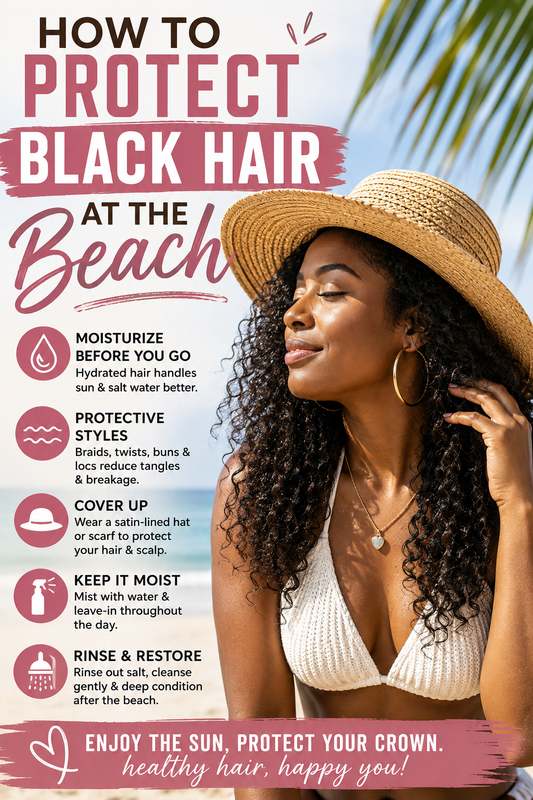
A day at the beach should be relaxing—not the beginning of weeks of dry, tangled, and brittle hair.
Between the hot sun, salty ocean water, sand, humidity, and strong winds, your hair is exposed to several elements that can strip away moisture and weaken the hair shaft. Black hair, especially natural textures, already tends to be drier than other hair types because natural scalp oils have a harder time traveling down curly strands.
Whether you wear:
- Natural curls
- 4C hair
- Braids
- Locs
- Twists
- Wigs
- Weaves
- Silk presses
Beach days require preparation.
The good news?
You don't have to avoid the beach to keep your hair healthy. With the right routine before, during, and after your beach trip, you can enjoy the ocean while maintaining soft, moisturized, strong hair.
In this complete guide, you'll learn exactly how to protect Black hair before, during, and after spending time at the beach.
Why the Beach Can Damage Black Hair
Understanding what causes damage helps you prevent it.
Beach environments combine several stressors at once.
Salt Water
Salt water pulls moisture from your hair.
It leaves the cuticle rough and lifted, causing:
- Dryness
- Brittleness
- Increased tangles
- Frizz
- Breakage
If your hair is already dry, salt water can make it significantly worse.
UV Rays
Just like your skin, your hair suffers from prolonged sun exposure.
Too much UV exposure can:
- Fade hair color
- Weaken protein bonds
- Dry the cuticle
- Cause split ends
- Make curls less defined
Wind
Beach winds constantly move hair around.
This creates:
- Knots
- Single-strand knots
- Tangles
- Mechanical breakage
Long natural hair is especially vulnerable.
Sand
Sand gets trapped in curls, braids, and locs.
It causes:
- Scalp irritation
- Product buildup
- Difficult washing afterward
Heat
High temperatures evaporate moisture quickly.
Hair loses hydration faster than usual, especially if you're sitting in direct sunlight for hours.
Why Black Hair Needs Extra Protection
Black hair has unique characteristics.
Curly and coily strands naturally bend many times.
Those bends make it harder for natural oils to coat every strand.
That means:
- Hair dries faster
- Ends become dry sooner
- Hair breaks more easily
- Moisture escapes quickly
Beach conditions accelerate all of these issues.
Step 1: Moisturize Before Leaving Home
Never go to the beach with dry hair.
Dry hair absorbs salt water more aggressively.
Instead:
Start with freshly moisturized hair.
Use:
- Water
- Leave-in conditioner
- Natural moisturizing cream
- Hair oil to seal
Hydrated hair handles beach conditions much better.
Step 2: Seal Moisture
Once moisture is inside the hair, lock it in.
Natural oils help reduce moisture loss.
Popular options include:
- Jamaican Black Castor Oil
- Avocado Oil
- Grapeseed Oil
- Coconut Oil
- Olive Oil
Focus especially on:
- Ends
- Hairline
- Crown
These areas dry out first.
Step 3: Choose a Protective Hairstyle
Protective styles reduce friction and exposure.
Great beach hairstyles include:
Braids
Braids are one of the best beach styles because they:
- Minimize tangles
- Reduce manipulation
- Dry faster
- Stay neat
Twists
Two-strand twists protect curls while remaining lightweight.
Twists also reduce shrinkage.
Buns
A high bun keeps hair away from sand and water.
This is ideal if you don't plan on swimming.
Puff
A high puff keeps curls elevated and reduces tangling.
Locs
Locs are naturally beach-friendly.
Simply rinse thoroughly afterward to remove salt and sand.
Wear a Satin-Lined Hat
A wide-brim hat provides two benefits.
It protects:
- Hair
- Scalp
Choose satin-lined hats whenever possible.
Cotton absorbs moisture.
Satin helps preserve it.
Use a Scarf
A silk or satin scarf can reduce:
- Wind damage
- Friction
- Tangles
Many women wrap their edges while enjoying the beach.
Wet Hair with Fresh Water Before Swimming
This is one of the best tricks professionals recommend.
Hair acts like a sponge.
If it's already filled with fresh water, it absorbs less salt water.
Simply:
- Wet hair first
- Apply leave-in conditioner
- Seal lightly with oil
Then swim.
Don't Stay in Salt Water Too Long
The longer your hair sits in ocean water, the more moisture it loses.
Take breaks.
If possible:
Rinse hair with fresh water every hour.
Bring a Spray Bottle
Carry a travel spray bottle filled with:
- Water
- Leave-in conditioner
Mist your hair throughout the day.
This simple habit dramatically reduces dryness.
Protect Your Edges
Edges are delicate.
Salt, sweat, and friction can weaken them.
Keep them protected by:
- Wrapping them
- Avoiding tight ponytails
- Moisturizing regularly
Avoid Tight Hairstyles
Tight ponytails become tighter when wet.
That increases tension.
Instead choose:
- Loose buns
- Loose braids
- Gentle twists
Beach Tips for Natural Hair
Natural curls benefit from:
- Heavy moisture beforehand
- Low manipulation
- Protective styling
- Frequent misting
Avoid brushing dry curls after swimming.
Beach Tips for 4C Hair
4C hair loses moisture quickly.
Focus on:
- Thick leave-in conditioner
- Cream moisturizer
- Oil sealant
- Protective styling
Reapply moisture if spending several hours outdoors.
Beach Tips for Braids
Braids hold up well but still need care.
Remember to:
- Rinse salt out
- Dry thoroughly
- Moisturize scalp
- Clean buildup
Beach Tips for Locs
Locs absorb large amounts of water.
After swimming:
- Rinse well
- Squeeze excess water
- Air dry completely
Never leave damp locs overnight.
Beach Tips for Curly Hair
Humidity often causes curls to expand.
Instead of fighting frizz:
Focus on moisture.
Hydrated curls stay healthier than dry curls coated in heavy gel.
Don't Forget Your Scalp
The scalp can become sunburned.
Especially if you have:
- Parts
- Braids
- Thin hair
- Locs with visible scalp
Wear hats or use scalp-safe SPF products.
Foods That Help Hair Recover
Healthy hair starts internally.
After beach days, eat foods rich in:
Protein:
- Eggs
- Fish
- Chicken
Healthy fats:
- Avocados
- Nuts
- Seeds
Vitamins:
- Leafy greens
- Sweet potatoes
- Berries
Hydration matters too.
Drink plenty of water.
How to Wash Hair After the Beach
Wash as soon as practical.
Steps:
- Rinse thoroughly.
- Shampoo gently.
- Focus on scalp.
- Apply conditioner.
- Detangle gently.
- Deep condition.
- Moisturize.
- Seal with oil.
Deep Condition Weekly During Summer
Summer exposure increases dryness.
Use a deep conditioner weekly.
Benefits include:
- Better elasticity
- Less breakage
- Softer curls
- Improved shine
Common Beach Hair Mistakes
Going to the beach with dry hair
Always moisturize first.
Skipping conditioner
Conditioner restores softness.
Never skip it.
Sleeping with wet hair
Wet hair breaks easier.
Dry completely first.
Ignoring your scalp
Healthy hair starts with a healthy scalp.
Waiting days to wash salt out
Remove salt promptly.
Signs Your Hair Needs Extra Moisture
Watch for:
- Rough texture
- Excessive tangles
- Dull appearance
- Brittle ends
- More shedding
- Frizz
- Stiff curls
Respond immediately with hydration.
A Simple Beach Hair Routine
Before
- Wash if needed
- Moisturize
- Apply leave-in
- Seal with oil
- Protective style
- Wear hat
During
- Mist hair
- Stay hydrated
- Rinse after swimming
- Limit sun exposure
After
- Rinse thoroughly
- Shampoo
- Condition
- Deep condition
- Moisturize
- Air dry
Frequently Asked Questions
Is salt water bad for Black hair?
Salt water isn't inherently harmful, but prolonged exposure removes moisture, making Black hair more prone to dryness and breakage without proper care.
Can I swim with braids?
Yes. Braids are one of the best protective styles for the beach. Just rinse them thoroughly afterward and moisturize your scalp.
Should I oil my hair before swimming?
Applying a light layer of oil after moisturizing can help slow moisture loss. Avoid using excessive amounts that can attract sand.
How often should I wash my hair after beach trips?
Wash your hair after each beach visit to remove salt, sand, sunscreen, and sweat. Follow with a moisturizing conditioner or deep treatment.
Can the sun damage natural hair?
Yes. Prolonged UV exposure can dry the hair, weaken the cuticle, and contribute to fading and breakage. Wearing a hat or scarf offers added protection.
Final Thoughts
Beach days and healthy Black hair can absolutely go together. The key is preparation, hydration, and gentle care before and after your time in the sun. Moisturizing your hair before heading out, choosing a protective style, rinsing away salt water promptly, and restoring moisture afterward will help keep your curls, coils, braids, or locs healthy all summer long.
By following these simple habits consistently, you can enjoy every beach vacation without sacrificing the strength, softness, or beauty of your hair.