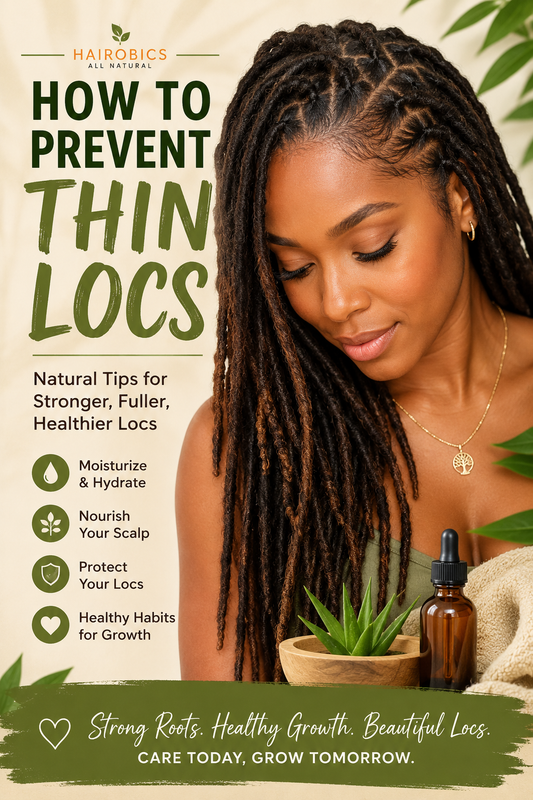
Locs are a beautiful expression of natural hair, culture, and personal style. Whether you've had your locs for six months or twenty years, one concern many people eventually face is thinning. A once-full loc may suddenly become narrow at the root, weak in the middle, or noticeably smaller than the others.
The good news is that thin locs are often preventable. With the right care routine, healthy habits, and quality natural products, you can protect your locs from unnecessary breakage while encouraging stronger, healthier growth.
This complete guide explains everything you need to know about preventing thin locs—from understanding the causes to building a daily routine that keeps your hair healthy for years to come.
Why Do Locs Become Thin?
Before fixing the problem, it's important to understand what causes thinning.
Common causes include:
- Excessive retwisting
- Tight hairstyles
- Hair breakage
- Dry hair
- Product buildup
- Poor scalp health
- Nutritional deficiencies
- Stress
- Hormonal changes
- Heat damage
- Chemical damage
- Lack of moisture
- Heavy extensions
- Genetics
Many people experience more than one cause at the same time.
Early Signs Your Locs Are Thinning
The sooner you recognize thinning, the easier it is to stop it.
Watch for:
- Smaller roots
- Weak spots
- Loose hairs around the base
- Excessive shedding
- Locs bending easily
- Split ends
- Fraying
- Visible scalp
- Uneven loc sizes
- Hairline becoming sparse
Never ignore these warning signs.
Avoid Over-Retwisting
One of the biggest causes of thin locs is retwisting too often.
Retwisting places tension directly on new growth.
Too much twisting can:
- Pull hairs from the follicles
- Cause traction alopecia
- Thin the roots
- Weaken the scalp
- Slow healthy growth
Most people only need a retwist every 4–8 weeks depending on hair texture and style.
Allow your scalp time to recover between maintenance sessions.
Stop Wearing Tight Styles
Styles that constantly pull on the roots create long-term damage.
Examples include:
- High ponytails
- Tight buns
- Tight barrel twists
- Heavy updos
- Tight braids over locs
If your scalp hurts after styling, the style is too tight.
Pain is never normal.
Moisturize Your Locs Regularly
Dry locs become brittle.
Brittle hair snaps easily.
Healthy moisture helps maintain flexibility.
Good moisturizing ingredients include:
- Aloe vera
- Distilled water
- Rose water
- Glycerin (used lightly)
- Natural botanical extracts
Moisturized locs bend instead of breaking.
Seal Moisture with Natural Oils
After moisturizing, seal hydration inside the hair.
Excellent oils include:
- Jamaican Black Castor Oil
- Avocado oil
- Grapeseed oil
- Coconut oil
- Sweet almond oil
- Argan oil
- Jojoba oil
Only use a small amount.
Too much oil causes buildup.
Keep Your Scalp Healthy
Healthy hair begins with a healthy scalp.
Your scalp should be:
- Clean
- Balanced
- Moisturized
- Free from heavy buildup
- Free from excessive itching
Massage your scalp several times each week to improve circulation.
Wash Your Locs Consistently
Dirty hair doesn't grow faster.
Instead, excessive buildup can clog follicles and weaken the roots.
Wash every:
- 2–4 weeks for mature locs
- Every 2–3 weeks if active
- More often after sweating heavily
Use a gentle sulfate-free shampoo.
Avoid Heavy Product Buildup
Waxes, creams, gels, and heavy butters stay trapped inside locs.
Over time this buildup:
- Adds weight
- Causes odor
- Prevents moisture absorption
- Weakens the hair
Choose lightweight products designed for locs.
Protect Your Hair While Sleeping
Cotton pillowcases steal moisture.
Instead use:
- Satin pillowcases
- Silk pillowcases
- Satin bonnets
- Silk scarves
Night protection dramatically reduces breakage.
Eat for Healthy Hair
Hair health begins inside your body.
Focus on foods rich in:
Protein
Hair is primarily protein.
Good sources include:
- Eggs
- Chicken
- Fish
- Greek yogurt
- Lentils
- Beans
Iron
Iron deficiency may contribute to hair shedding.
Eat:
- Spinach
- Lean beef
- Pumpkin seeds
Omega-3 Fatty Acids
Healthy fats improve scalp health.
Choose:
- Salmon
- Walnuts
- Flaxseed
- Chia seeds
Vitamin C
Supports collagen production.
Eat:
- Oranges
- Strawberries
- Bell peppers
Biotin
Supports healthy hair structure.
Sources include:
- Eggs
- Almonds
- Sweet potatoes
Drink More Water
Hydration affects every cell in your body.
When dehydrated:
- Hair becomes dry
- Scalp becomes flaky
- Breakage increases
Aim to drink water consistently throughout the day.
Reduce Stress
Chronic stress can contribute to hair shedding.
Helpful stress management techniques include:
- Walking
- Exercise
- Meditation
- Prayer
- Deep breathing
- Quality sleep
- Journaling
Healthy hair benefits from a healthy lifestyle.
Avoid Heat Damage
Frequent heat weakens hair proteins.
Limit:
- Blow dryers
- Flat irons
- Curling irons
If using heat:
- Use heat protectant
- Choose low temperatures
- Limit frequency
Don't Ignore Weak Spots
Some locs naturally become thinner in one area.
Strengthen them before they break.
A loctician may recommend:
- Combining locs
- Crocheting
- Reinforcing weak areas
Early intervention often saves the loc.
Be Gentle During Retwists
Aggressive twisting damages roots.
Choose a loctician who:
- Doesn't over-tighten
- Respects your hairline
- Uses gentle techniques
- Doesn't twist every loose hair
Comfort should always come before appearance.
Avoid Excessive Manipulation
Constant touching causes unnecessary stress.
Avoid:
- Twisting constantly
- Pulling locs
- Playing with ends
- Frequent styling
Hands off equals healthier locs.
Protect Your Hair During Exercise
Sweat itself isn't harmful.
However:
- Salt buildup
- Friction
- Drying
can weaken hair.
Wear:
- Satin-lined caps
- Sweatbands
- Loose protective styles
Wash or refresh the scalp afterward.
Strengthen Hair Naturally
Many people benefit from botanical ingredients known for supporting healthy-looking hair.
Look for products containing:
- Rosemary
- Peppermint
- Black castor oil
- Aloe vera
- Tea tree
- Lavender
- Moringa
- Nettle
- Horsetail extract
These ingredients help maintain a healthy scalp environment.
Trim Damaged Ends
Frayed ends continue splitting upward.
Occasional trimming helps maintain stronger locs.
Only remove damaged portions.
Avoid Chemical Damage
Bleach and harsh chemicals weaken locs significantly.
Repeated coloring may increase:
- Dryness
- Breakage
- Thinning
If coloring:
- Deep moisturize afterward
- Space treatments apart
- Seek professional assistance
Exercise for Better Circulation
Exercise improves blood flow throughout the body.
Healthier circulation supports healthy follicles.
Aim for:
- Walking
- Cycling
- Swimming
- Strength training
Most days of the week.
Listen to Your Hair
Healthy locs tell you what they need.
If they're:
Dry → Moisturize.
Weak → Reduce manipulation.
Itchy → Cleanse the scalp.
Breaking → Find the cause immediately.
Common Mistakes That Cause Thin Locs
Many people accidentally damage their locs through everyday habits.
Avoid these mistakes:
- Retwisting weekly
- Sleeping without protection
- Using wax
- Ignoring scalp issues
- Wearing tight ponytails
- Excessive coloring
- Skipping washes
- Poor nutrition
- Pulling locs
- Using dirty styling tools
A Weekly Routine to Prevent Thin Locs
Monday
Light scalp massage.
Tuesday
Moisturize locs.
Wednesday
Leave hair alone.
Thursday
Light oil on scalp if needed.
Friday
Protective low-tension style.
Saturday
Exercise and hydrate.
Sunday
Inspect roots and moisturize.
Consistency produces healthier hair than constantly changing routines.
How Hairobics All Natural Supports Healthy Locs
Healthy locs require consistent moisture, a clean scalp, and gentle maintenance. A routine that includes lightweight hydration and nourishing botanical ingredients can help reduce dryness and minimize breakage over time.
The Hairobics All Natural collection is designed to support natural hair and loc care by helping maintain moisture balance, encouraging a healthy-looking scalp, and strengthening the appearance of hair without relying on heavy waxes or greasy buildup. Incorporating products such as a lightweight moisturizing spray, scalp oil, and leave-in treatment into your regular routine can help keep locs soft, resilient, and easier to manage.
Remember that no product can instantly reverse thinning caused by medical conditions or permanent follicle damage, but a consistent regimen combined with healthy lifestyle habits can improve the overall condition and appearance of your locs.
Frequently Asked Questions
Can thin locs become thick again?
If thinning is caused by breakage, dryness, or tension and the follicles remain healthy, many people can improve the fullness and strength of new growth with proper care. Permanent follicle damage may not be reversible.
How often should I retwist my locs?
Most people benefit from retwisting every 4–8 weeks, depending on hair texture, lifestyle, and the advice of a trusted loctician.
Does oil make locs thicker?
Oils do not increase the number of hair strands, but they help reduce dryness and breakage, allowing locs to retain length and appear fuller over time.
Can sleeping without a bonnet cause thinning?
Sleeping on cotton pillowcases can increase friction and moisture loss, which may contribute to breakage. Satin or silk protection helps reduce this risk.
Should I combine thinning locs?
If a loc has developed a severe weak point, combining it with a neighboring loc may help preserve it. Consult an experienced loctician before making permanent changes.
Final Thoughts
Preventing thin locs is less about finding a miracle product and more about building healthy habits that protect your hair every day. Gentle maintenance, proper moisture, regular cleansing, a nutrient-rich diet, and low-tension styling all work together to support stronger, fuller locs.
Pay attention to early warning signs, avoid unnecessary stress on your roots, and stay consistent with your routine. Over time, these small daily choices can make a significant difference in the health, appearance, and longevity of your locs.
Whether you're starting your loc journey or maintaining mature locs, investing in healthy scalp care and natural hair practices today can help you enjoy thicker, stronger, and healthier locs for years to come.