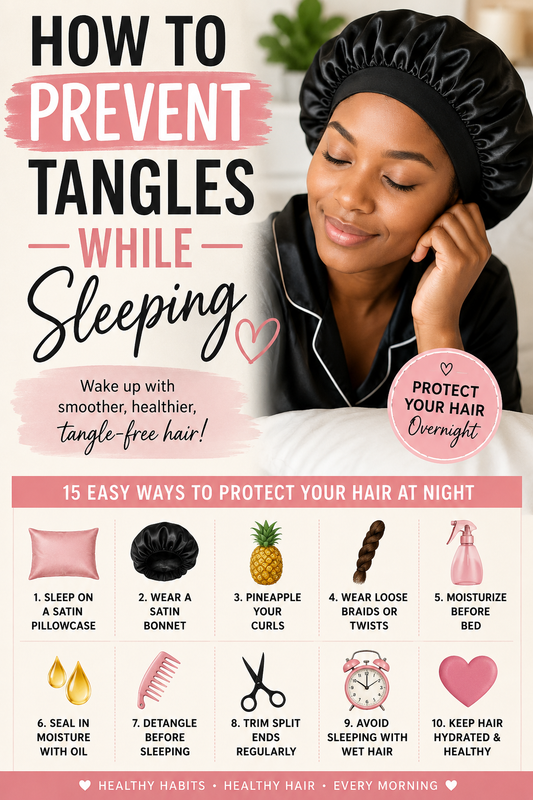
Do you wake up every morning fighting knots, tangles, and matted hair? If your nighttime routine leaves your curls stretched in every direction or your natural hair tied into impossible knots, you're not alone.
Many people spend time moisturizing, deep conditioning, and styling their hair during the day, only to unknowingly damage it while they sleep. Tossing and turning against rough pillowcases, sleeping with loose hair, or going to bed with dry strands can create friction that leads to tangles, breakage, split ends, and moisture loss.
The good news?
With the right nighttime hair routine, you can dramatically reduce tangles while improving moisture retention, curl definition, and overall hair health.
Whether you have:
- Type 3 curls
- Type 4 natural hair
- Locs
- Braids
- Twists
- Coily hair
- Transitioning hair
These overnight hair care techniques will help you wake up with smoother, healthier hair.
Why Hair Tangles While You Sleep
Understanding why hair tangles overnight is the first step toward preventing it.
Friction
Your hair rubs against your pillow hundreds of times throughout the night.
Cotton absorbs moisture while creating friction that roughens the hair cuticle.
When the cuticle lifts, strands catch onto one another, creating knots.
Dry Hair
Dry strands have raised cuticles.
Instead of sliding past one another, they grab onto neighboring hairs.
The drier your hair becomes, the easier it tangles.
Moving During Sleep
Most people change sleeping positions between 20 and 40 times each night.
Each movement twists hair around itself.
Hours later, those twists become knots.
Split Ends
Damaged ends snag easily.
One split end can hook onto another strand and begin forming larger tangles.
Long Hair
Longer hair naturally has more opportunities to wrap around itself.
Without protection, length often equals more tangles.
Why Black Hair Tangles More Easily
Natural hair grows in curves instead of straight lines.
Every bend in the strand creates another opportunity for neighboring hairs to intertwine.
Because textured hair is also naturally drier, it experiences:
- More friction
- More shrinkage
- More knots
- More breakage
That's why overnight protection is especially important.
Signs Your Hair Is Tangling Overnight
You may notice:
- Knots near the ends
- Puffy flattened hair
- Increased breakage
- Split ends
- More shedding while detangling
- Frizz
- Hair wrapped around itself
- Matted sections
These are all clues your nighttime routine needs improvement.
Best Ways to Prevent Tangles While Sleeping
1. Sleep on a Satin Pillowcase
One of the easiest upgrades you can make.
Unlike cotton, satin creates less friction.
Benefits include:
- Less breakage
- Better moisture retention
- Fewer tangles
- Reduced frizz
- Smoother curls
Many people notice a difference after just one night.
2. Wear a Satin Bonnet
A satin bonnet protects every strand from rubbing against bedding.
Benefits include:
- Prevents knots
- Preserves styles
- Locks in moisture
- Protects edges
- Reduces breakage
Choose one with a comfortable elastic that stays on all night.
3. Use a Silk Scarf
Some people prefer wrapping their hair instead of wearing a bonnet.
Silk wraps:
- Hold styles in place
- Reduce movement
- Minimize tangles
- Protect the hairline
4. Pineapple Your Curls
The pineapple method is perfect for curly hair.
Gather hair loosely at the top of your head.
Avoid pulling tightly.
This helps curls keep their shape while preventing flattening and knots.
5. Wear Loose Braids
A loose braid keeps strands together overnight.
It also prevents hair from wrapping around itself.
Avoid braiding too tightly.
6. Try Two-Strand Twists
Twists reduce friction while maintaining moisture.
They're especially effective for:
- Type 4 hair
- Transitioning hair
- Thick natural hair
7. Moisturize Before Bed
Dry hair tangles more.
Apply a light leave-in conditioner or moisturizing spray before sleeping.
Focus on:
- Ends
- Dry areas
- Hairline
Avoid soaking your hair.
8. Seal Moisture
After moisturizing, seal hydration using a lightweight natural oil.
Focus on:
- Ends
- Mid-lengths
Healthy oils help reduce friction between strands.
9. Detangle Before Sleeping
Never go to bed with tangled hair.
Use:
- Fingers
- Wide-tooth comb
- Detangling brush
Always begin at the ends and work upward.
10. Trim Split Ends
Split ends create knots.
Regular trims every few months help keep ends smooth and reduce snagging.
11. Avoid Sleeping With Wet Hair
Wet hair is weaker.
It stretches more easily and tangles faster.
If possible, allow hair to dry before bedtime.
12. Don't Sleep With Tight Ponytails
Tight styles can:
- Stress follicles
- Cause breakage
- Create dents
- Lead to tangles
Choose loose protective styles instead.
13. Protect Long Hair
Long hair benefits from:
- Loose braids
- Twists
- Satin wraps
- Pineapple styles
Keeping hair contained reduces overnight knots.
14. Wash Product Buildup Away
Heavy buildup increases friction.
Clarify periodically to help strands glide smoothly.
15. Keep Hair Hydrated
Hydrated hair is more flexible.
Flexible hair bends instead of breaking.
Use deep conditioning treatments regularly.
Best Overnight Hairstyles
Loose Braid
Excellent for:
- Long hair
- Straight hair
- Wavy hair
Pineapple
Perfect for:
- Curly hair
- Wash-and-go styles
Two-Strand Twists
Ideal for:
- Type 4 hair
- Natural hair
Flat Twists
Great for stretching hair while reducing tangles.
Loose Bun
Works well for medium-length hair.
Avoid tight elastics.
Mistakes That Cause Overnight Tangles
Avoid these habits:
- Sleeping on cotton
- Going to bed with dry hair
- Ignoring split ends
- Tight hairstyles
- Wet hair
- Skipping nighttime protection
- Rough brushing
- Sleeping with loose damaged hair
Nighttime Routine for Natural Hair
- Detangle gently.
- Apply a moisturizing leave-in.
- Seal with a lightweight oil.
- Put hair into twists or a loose braid.
- Cover with a satin bonnet.
- Sleep on a satin pillowcase for added protection.
Morning Routine
When you wake up:
- Remove bonnet carefully.
- Shake hair gently.
- Separate curls with your fingers.
- Mist lightly if needed.
- Avoid excessive brushing.
Foods That Support Healthy Hair
Healthy hair starts from within.
Eat foods rich in:
- Protein
- Iron
- Zinc
- Vitamin C
- Vitamin D
- Omega-3 fatty acids
- Biotin-rich foods
- Colorful fruits and vegetables
Hydration also plays an important role in keeping hair flexible and less prone to tangles.
Frequently Asked Questions
Why does my hair tangle every night?
Usually because of friction, dryness, loose sleeping styles, and cotton pillowcases.
Is satin better than cotton?
Yes.
Satin dramatically reduces friction and moisture loss.
Should I oil my hair before sleeping?
A small amount of lightweight oil after moisturizing can help reduce friction and lock in hydration. Avoid using excessive amounts that leave hair greasy.
Is sleeping with wet hair bad?
Yes.
Wet hair is more fragile and tangles more easily.
Do bonnets really work?
Absolutely.
They're one of the most effective ways to protect textured hair overnight.
How often should I moisturize at night?
Only when your hair feels dry. Over-applying products can lead to buildup, so focus on maintaining balanced moisture rather than applying heavy layers every evening.
Final Thoughts
Preventing tangles while sleeping doesn't require expensive products or complicated routines. The biggest improvements come from reducing friction, keeping your hair moisturized, and protecting your strands with gentle overnight styles.
A simple routine—detangle before bed, apply a light moisturizer, seal in hydration, style your hair in loose twists or a braid, and sleep with a satin bonnet on a satin pillowcase—can make a dramatic difference over time.
Consistency is key. As these habits become part of your nightly routine, you'll likely notice fewer knots, less breakage, better moisture retention, and healthier-looking hair each morning.
If you're looking to take your nighttime hair care routine to the next level, using a nourishing natural leave-in treatment and a lightweight moisturizing spray can help keep your hair soft, manageable, and ready to style when you wake up.