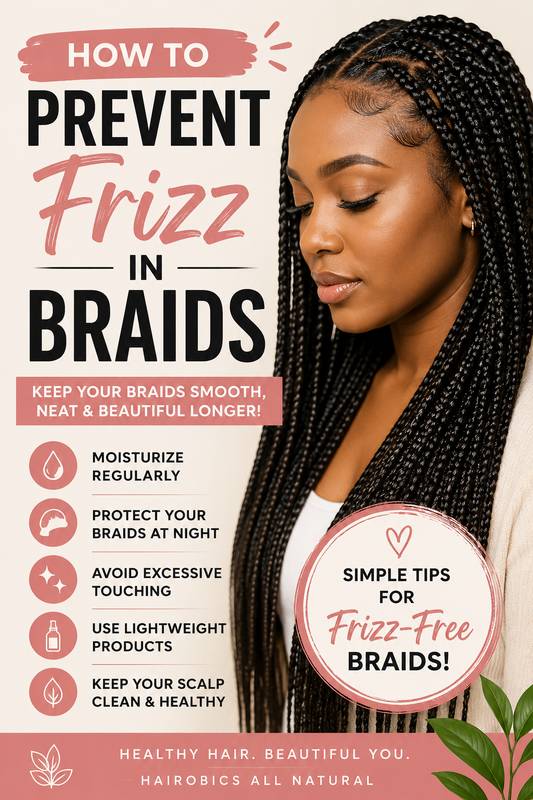
Braids are one of the most popular protective styles for natural hair. Whether you wear box braids, knotless braids, cornrows, twists, goddess braids, or faux locs, braids offer convenience, versatility, and protection. They help reduce daily manipulation, support length retention, and provide a stylish look that can last for weeks.
However, one common problem almost everyone experiences is frizz.
Nothing is more frustrating than spending hours getting your hair braided only to see frizz appear after a few days. Flyaways, fuzzy roots, unraveling ends, and puffy braid strands can make a fresh style look old much sooner than expected.
The good news is that frizz is not inevitable.
With the right hair care routine, products, and maintenance habits, you can keep your braids looking fresh, smooth, and polished for much longer.
In this guide, you'll learn:
- Why braids become frizzy
- How to prevent frizz before it starts
- Daily braid maintenance tips
- Best moisturizing techniques
- How to sleep with braids
- Products that help reduce frizz
- Common mistakes causing fuzzy braids
- How to refresh old braids
Let's dive in.
Why Do Braids Get Frizzy?
Before preventing frizz, it's important to understand why it happens.
Frizz occurs when loose hairs escape from the braid pattern. This can happen due to:
Natural Hair Growth
As your hair grows, new growth appears at the roots. These shorter hairs don't lie flat, creating fuzziness around the scalp.
Dry Hair
Dry hair is rougher and more likely to stick out from braids.
When hair lacks moisture:
- Cuticles lift
- Strands become brittle
- Flyaways increase
Friction
Constant rubbing against:
- Pillowcases
- Clothing
- Hats
- Scarves
can loosen strands and create frizz.
Humidity
Humidity causes hair to absorb moisture from the air.
This leads to:
- Swelling of strands
- Puffiness
- Flyaways
- Frizzy roots
Improper Installation
Braids installed too loosely may begin frizzing almost immediately.
Poor sectioning or insufficient gripping can also contribute to early frizz.
Start with Healthy Hair
The foundation of frizz-free braids begins before the braiding appointment.
Deep Condition Before Braiding
Hydrated hair behaves better inside braids.
A quality deep conditioning treatment helps:
- Improve elasticity
- Reduce dryness
- Minimize breakage
- Smooth cuticles
Deep condition at least one week before installation.
Trim Split Ends
Split ends are one of the biggest causes of fuzzy braids.
Damaged ends:
- Stick out
- Tangle easily
- Create frizz faster
Regular trims help braids look neater.
Detangle Thoroughly
Hair that isn't properly detangled before braiding often creates uneven sections and flyaways.
Before installation:
- Wash
- Condition
- Detangle completely
- Stretch hair if desired
Moisturize Braids Regularly
One of the biggest misconceptions is that braids don't need moisture.
Your natural hair still requires hydration while braided.
Why Moisture Prevents Frizz
Moisturized hair:
- Remains flexible
- Stays smooth
- Experiences less breakage
- Produces fewer flyaways
Dry hair becomes rough and fuzzy.
Use a Lightweight Moisturizing Spray
A braid-friendly moisturizer should:
- Hydrate hair
- Refresh the scalp
- Reduce dryness
- Avoid buildup
Spray lightly throughout the week.
Focus on:
- Roots
- Lengths
- Ends
Don't Overdo It
Too much product can create buildup and make braids appear dull.
Less is often more.
Protect Your Braids While Sleeping
Nighttime protection is one of the most important anti-frizz habits.
Many people unknowingly create frizz while sleeping.
Wear a Satin Bonnet
Cotton pillowcases absorb moisture and create friction.
A satin bonnet helps:
- Preserve braid patterns
- Reduce friction
- Retain moisture
- Prevent fuzziness
Use a Satin Scarf
A satin scarf wrapped around the edges helps keep:
- Roots smooth
- Hairline neat
- Flyaways under control
Sleep on a Satin Pillowcase
For extra protection:
Use both a bonnet and satin pillowcase.
This combination dramatically reduces braid frizz.
Avoid Excessive Touching
Constantly touching braids may seem harmless.
In reality, it accelerates frizz.
Why Touching Causes Frizz
Repeated manipulation:
- Loosens strands
- Disturbs braid patterns
- Creates friction
The more you touch your braids, the faster they age.
Hands Off Rule
Try to avoid:
- Twirling braids
- Pulling on braids
- Constant styling
- Running fingers through braids
Keep Your Scalp Clean
A dirty scalp can contribute to braid problems.
Benefits of Scalp Maintenance
A clean scalp helps:
- Reduce itching
- Prevent buildup
- Improve hair health
- Extend braid longevity
Use a Gentle Cleanser
When washing braided hair:
Choose products that won't:
- Strip moisture
- Cause excessive frizz
- Leave residue
Focus on cleansing the scalp.
Wash Braids the Right Way
Many people avoid washing braids because they're afraid of frizz.
However, proper washing actually helps maintain healthy braids.
Best Washing Method
- Dilute shampoo with water
- Apply directly to scalp
- Massage gently
- Rinse thoroughly
- Pat dry
Avoid aggressive scrubbing.
Air Dry Completely
Never leave braids damp for long periods.
Excess moisture can lead to:
- Odor
- Mildew
- Frizz
Allow braids to dry fully.
Control Humidity
Humidity is one of the biggest enemies of neat braids.
Why Humidity Causes Frizz
Hair absorbs moisture from the air.
This causes:
- Swelling
- Expansion
- Flyaways
Protective Solutions
Before going outside:
- Tie down edges
- Use a lightweight braid spray
- Wear a scarf during extreme humidity
These simple habits can make a major difference.
Seal Moisture Into Braids
Hydration is only half the battle.
You also need to lock moisture in.
Use Lightweight Oils
Natural oils can help:
- Smooth strands
- Reduce dryness
- Add shine
- Minimize frizz
Apply sparingly.
Focus on:
- Hairline
- Roots
- Ends
Avoid saturating braids.
Refresh Frizzy Braids
Even with excellent care, some frizz will eventually appear.
The key is knowing how to refresh braids.
Edge Control for Hairline Frizz
Apply lightly around:
- Edges
- Temples
- Nape
Use a soft brush to smooth hair.
Hot Water Method
For synthetic braids:
Dipping ends in hot water can:
- Smooth fibers
- Reduce fuzziness
- Restore neatness
Always use caution.
Re-Braid Problem Areas
Sometimes only a few braids need attention.
Touching up:
- Front rows
- Hairline
- Crown
can make the entire style look new again.
Common Mistakes That Cause Frizz
Using Heavy Products
Heavy products create buildup.
Buildup attracts dirt and makes braids look old.
Skipping Moisturizer
Dry hair becomes frizzy faster.
Sleeping Without Protection
This is one of the quickest ways to ruin a fresh style.
Overwashing
Too much washing can loosen braids.
Tight Styles
Excessively tight braids may cause breakage.
Broken hairs often lead to frizz.
Best Daily Routine for Frizz-Free Braids
Morning
- Lightly mist braids
- Smooth edges
- Style gently
During the Day
- Avoid excessive touching
- Protect hair from humidity
Evening
- Moisturize if needed
- Wrap hair with satin scarf
- Wear satin bonnet
Consistency is key.
How Long Should Braids Stay In?
Keeping braids too long increases frizz.
Most styles look best for:
Knotless Braids
4–8 weeks
Box Braids
6–8 weeks
Cornrows
2–6 weeks
Twists
4–8 weeks
Faux Locs
6–12 weeks
Leaving styles in beyond their lifespan can lead to:
- Excessive frizz
- Matting
- Breakage
- Buildup
Best Ingredients for Reducing Frizz in Braids
Look for products containing:
Aloe Vera
Helps hydrate hair and smooth cuticles.
Jamaican Black Castor Oil
Supports moisture retention and scalp health.
Jojoba Oil
Lightweight and similar to natural scalp oils.
Coconut Oil
Helps reduce protein loss.
Rosemary
Promotes a healthy scalp environment.
Peppermint
Provides a refreshing sensation while supporting scalp cleanliness.
Signs Your Braids Need Attention
Watch for:
- Excessive flyaways
- Dry scalp
- Unraveling ends
- Heavy buildup
- Persistent itching
Addressing problems early helps preserve your style longer.
Professional Stylist Tips for Long-Lasting Braids
Install Medium-Sized Sections
Very small sections may frizz faster.
Stretch Hair Before Braiding
Stretched hair often creates smoother results.
Moisturize Consistently
Hydrated hair behaves better.
Protect Every Night
This habit alone can extend braid life by weeks.
Avoid Excessive Product Use
Buildup is a major contributor to dull-looking braids.
How Hairobics Can Help Maintain Frizz-Free Braids
Keeping braids smooth requires consistent hydration.
The Hairobics Raaw Roots Moisturizing Spray is designed to help:
- Hydrate natural hair
- Refresh dry braids
- Support scalp health
- Reduce dryness-related frizz
- Add lightweight moisture without heaviness
When paired with proper nighttime protection and regular scalp care, maintaining beautiful braids becomes much easier.
Frequently Asked Questions
Why do my braids get frizzy after only a few days?
Common causes include humidity, dry hair, excessive touching, and sleeping without satin protection.
Can moisturizing braids reduce frizz?
Yes. Proper hydration keeps hair smooth and flexible, reducing flyaways.
How often should I moisturize braids?
Most people benefit from moisturizing 2–4 times per week depending on climate and hair needs.
Is frizz normal with braids?
Yes. Some frizz is natural as hair grows and experiences daily wear.
Can I wash my braids without creating frizz?
Yes. Gentle cleansing techniques help maintain neatness while keeping the scalp healthy.
Final Thoughts
Braids are an excellent protective style, but keeping them neat requires intentional care. Frizz often develops because of dryness, friction, humidity, buildup, and improper maintenance. Fortunately, a few simple habits can dramatically extend the life of your style.
By moisturizing regularly, protecting your braids at night, keeping your scalp clean, avoiding excessive manipulation, and using lightweight products, you can enjoy smoother, fresher-looking braids for weeks.
Remember that healthy hair is the foundation of beautiful braids. The better you care for your natural hair underneath, the longer your braids will stay sleek, polished, and frizz-free.
If you're serious about maintaining beautiful braids, make hydration and protection part of your daily routine, and your hair will thank you.