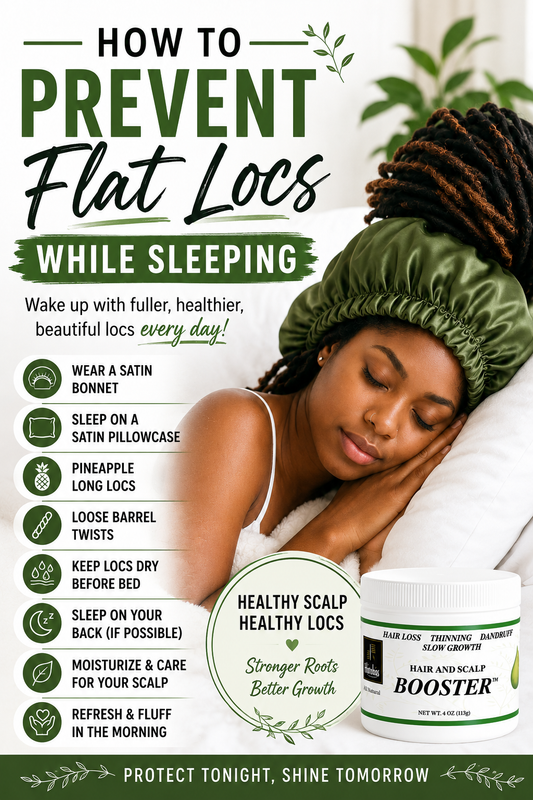
If you've ever looked in the mirror after waking up and noticed one side of your locs completely flattened, you're not alone. Flat locs are one of the most common concerns among people with starter locs, mature locs, traditional locs, and freeform locs. While sleeping is essential for your body's recovery, the constant pressure between your head and your pillow can compress your locs, leaving them looking squished, bent, or misshapen by morning.
The good news is that flat locs are usually temporary—and with the right nighttime routine, you can dramatically reduce flattening while protecting the health of your hair and scalp.
In this comprehensive guide, you'll learn why locs flatten during sleep, the best nighttime protection methods, common mistakes to avoid, and how to wake up with fuller, healthier-looking locs every morning.
Why Do Locs Become Flat Overnight?
Understanding the cause makes prevention much easier.
Every night, your head rests against one position for hours. Even if you move throughout the night, certain areas experience prolonged pressure. Because locs are flexible, especially when they're freshly washed or still maturing, they naturally compress under this weight.
Several factors increase flattening:
- Sleeping in the same position
- Cotton pillowcases creating friction
- Wet or damp locs before bed
- Heavy, long locs
- Soft starter locs
- Fine hair textures
- Loose retwists
- Tight sleeping caps
Fortunately, most of these factors are easy to correct.
Why Flat Locs Aren't Always a Bad Thing
Many people panic after seeing flattened locs in the morning.
In reality, temporary flattening usually isn't permanent.
Healthy locs naturally reshape themselves as you move throughout the day.
Problems only occur when:
- Locs remain compressed for weeks.
- Hair stays damp overnight.
- Locs repeatedly dry while flattened.
- Excessive tension weakens the roots.
Long-term compression can slowly change the shape of individual locs, especially newer ones.
The Science Behind Compression
Hair fibers contain proteins called keratin.
Keratin is surprisingly flexible.
When pressure is applied for several hours, hair temporarily molds into that shape.
This is the same reason:
- Braids create waves.
- Rollers create curls.
- Hair ties leave dents.
- Hats flatten hairstyles.
Locs behave similarly.
The longer the pressure lasts, the greater the temporary shape change.
Tip #1: Always Sleep With a Satin or Silk Bonnet
The easiest improvement you can make is replacing cotton with satin or silk.
Benefits include:
- Less friction
- Reduced flattening
- Better moisture retention
- Less lint buildup
- Reduced frizz
- Longer-lasting retwists
Cotton absorbs natural oils while satin allows locs to glide across the fabric.
Look for a bonnet that's roomy enough for your locs without squeezing them tightly.
Tip #2: Upgrade Your Pillowcase
Even if your bonnet slips off during the night, a satin pillowcase provides a second layer of protection.
Benefits include:
- Reduced breakage
- Less compression
- Healthier scalp
- Less dryness
- Fewer flattened areas
Many locticians recommend using both a satin bonnet and satin pillowcase together for maximum protection.
Tip #3: Pineapple Long Locs
The "pineapple" method isn't just for curly hair.
It also works wonderfully for longer locs.
Simply gather your locs loosely at the very top of your head using a soft satin scrunchie.
Avoid pulling tightly.
This keeps the majority of your locs elevated instead of trapped underneath your head all night.
Benefits include:
- Better volume
- Less flattening
- Reduced tangling
- Easier morning styling
Tip #4: Try Loose Barrel Twists
If your locs are shoulder length or longer, loose barrel twists are an excellent nighttime option.
Unlike tight styling, loose twists:
- Reduce pressure
- Prevent bunching
- Help maintain shape
- Keep locs organized
Remember—they should always remain loose.
Tight twists can create tension and scalp soreness.
Tip #5: Never Go to Bed With Wet Locs
One of the biggest mistakes people make is sleeping with damp hair.
Wet locs:
- Compress easier
- Dry in flattened shapes
- Can develop odor
- Increase mildew risk
- Stay wet for hours
Always allow locs to dry completely before bedtime.
If necessary, use a hooded dryer or cool air setting to ensure the center of each loc is dry.
Tip #6: Choose the Right Sleeping Position
Back sleepers generally experience the least flattening.
Side sleepers often flatten one side.
Stomach sleepers usually compress the front and crown.
If changing positions feels difficult, try using a supportive pillow that encourages better alignment.
Even slight adjustments can reduce pressure on your locs.
Tip #7: Keep Your Locs Moisturized—But Not Wet
Dry locs become stiff and brittle, while overly wet locs become heavy and compress easily.
Aim for balanced moisture.
A lightweight botanical moisturizer followed by a nourishing scalp treatment can help maintain softness without oversaturating the hair.
For many people, applying a small amount of Hairobics Hair & Scalp Booster to the scalp before bed helps support scalp hydration while avoiding excessive buildup on the locs themselves.
Tip #8: Don't Wear Tight Caps to Bed
Many people mistakenly believe tighter equals better.
Actually, tight caps:
- Flatten locs
- Reduce circulation
- Cause headaches
- Leave dents
- Increase tension
Instead, choose a roomy satin bonnet or satin-lined sleep cap that allows your locs to rest naturally without being compressed.
Tip #9: Avoid Sleeping With Heavy Accessories
Many people forget to remove accessories before bed. While beads, cuffs, shells, and decorative wraps look beautiful during the day, they can create pressure points that flatten your locs overnight.
Sleeping with accessories can also:
- Cause locs to bend unnaturally
- Increase friction
- Pull on the roots
- Create weak spots
- Damage decorative pieces
- Lead to scalp discomfort
Before bed, remove anything that adds unnecessary weight or pressure.
Tip #10: Don't Tie Your Locs Too Tightly
One of the biggest misconceptions is that tighter wrapping provides better protection.
Actually, wrapping your locs too tightly can:
- Flatten the hair
- Leave noticeable dents
- Cause scalp tension
- Slow circulation
- Create headaches
- Distort the natural cylindrical shape of your locs
Your nighttime wrap should be secure enough to stay in place but loose enough that your locs can maintain their natural shape.
A satin scarf tied gently around the hairline, combined with a roomy bonnet, often provides the best balance.
Tip #11: Rotate Your Sleeping Position
If you always sleep on the same side, that side experiences repeated compression night after night.
Over time, this habit can cause one side of your locs to appear flatter than the other.
Try to alternate between:
- Sleeping on your back
- Left side
- Right side
Even making small changes can distribute pressure more evenly.
Tip #12: Use a Satin-Lined Sleep Cap for Long Locs
For people with shoulder-length or waist-length locs, standard bonnets may not provide enough room.
A satin-lined sleep cap designed for longer hairstyles allows your locs to rest without being folded too tightly.
Look for one that:
- Has extra depth
- Doesn't squeeze the hair
- Stays on comfortably
- Is made with smooth satin lining
This helps reduce creases and keeps your locs looking fuller in the morning.
Tip #13: Separate Locs Before Bed
Take a few minutes each night to gently separate any locs that may have begun sticking together.
This simple habit can:
- Maintain individual loc definition
- Prevent bunching
- Reduce tangles
- Improve airflow
- Make styling easier the next morning
Be gentle and avoid forcing locs apart if they've naturally begun to mature together.
Tip #14: Keep Your Scalp Healthy
Healthy locs begin with a healthy scalp.
A dry, itchy, or irritated scalp may encourage scratching during sleep, increasing friction and disturbing your hairstyle.
A consistent scalp-care routine can help maintain comfort overnight.
Many people choose a lightweight botanical scalp treatment, such as Hairobics Hair & Scalp Booster, to help keep the scalp moisturized without leaving the locs greasy or weighed down.
Apply sparingly to the scalp and massage gently before bedtime if it fits your routine.
Tip #15: Refresh Your Locs Every Morning
Even with the best nighttime routine, some flattening can still occur.
Fortunately, it usually takes only a few minutes to restore volume.
A simple morning refresh routine includes:
- Remove your bonnet or scarf.
- Shake your locs gently.
- Massage your scalp with your fingertips.
- Lift the roots using your fingers.
- Separate any locs that are overlapping.
- Allow your locs to hang naturally for several minutes.
Avoid immediately tying your locs back into a ponytail, as this can prolong compression.
Morning Tricks to Restore Flat Locs
If your locs still look flat after waking up, try these methods:
Gentle Root Massage
Massaging your scalp stimulates circulation and helps lift compressed roots.
Steam From a Warm Shower
Standing in a steamy bathroom for a few minutes can help relax compressed hair fibers without soaking your locs.
Finger Fluffing
Run your fingers through the roots—not by combing the locs, but by lifting and separating them.
Flip Your Head Forward
Bending forward and gently shaking your locs can instantly add volume.
Common Mistakes That Cause Flat Locs
Avoid these habits if you want your locs to stay full and healthy:
- Sleeping with wet locs
- Using cotton pillowcases
- Wearing tight bonnets
- Sleeping with heavy accessories
- Wrapping locs too tightly
- Skipping nighttime protection
- Using products that leave heavy buildup
- Constantly sleeping on the same side
- Ignoring scalp health
- Leaving locs compressed for long periods after waking
Do Starter Locs Flatten More Easily?
Yes.
Starter locs are softer and haven't fully matured, making them more susceptible to flattening.
During the first several months:
- Be gentle with retwists.
- Sleep with satin protection every night.
- Avoid unnecessary manipulation.
- Keep locs clean and dry.
- Follow your loctician's maintenance schedule.
As your locs mature, they'll become denser and more resilient.
Does Loc Size Matter?
Absolutely.
Micro Locs
- More flexible
- Less noticeable flattening
- Easier to reshape
Traditional Locs
- Moderate flattening
- Usually recover quickly
Thick Locs
- Hold their shape well
- Can develop larger flat spots if compressed for long periods
No matter the size, consistent nighttime care makes a significant difference.
Frequently Asked Questions
Why are my locs flat every morning?
Most often, it's due to prolonged pressure while sleeping. Switching to satin protection and adjusting your nighttime routine can help reduce flattening.
Can flat locs become permanent?
Temporary flattening is normal. However, repeated compression over months or years can gradually influence the shape of some locs.
Should I sleep with my locs tied up?
If your locs are long enough, loosely gathering them in a pineapple or loose barrel twists can help minimize pressure. Avoid tying them too tightly.
Is a satin bonnet enough?
A satin bonnet is an excellent first step, but pairing it with a satin pillowcase provides extra protection if the bonnet slips off during the night.
Should I moisturize my locs before bed?
If your locs are dry, a light mist or a small amount of scalp moisturizer can be beneficial. Avoid soaking the locs before sleep, as damp locs are more likely to flatten and may take too long to dry.
Final Thoughts
Waking up with flat locs doesn't mean you're doing something wrong—it simply means your hair has been under pressure while you slept. The key is to create a nighttime routine that protects your locs without placing unnecessary tension on them.
Simple habits like sleeping on a satin pillowcase, wearing a roomy bonnet, keeping your locs dry, and gently refreshing them each morning can make a noticeable difference over time.
Healthy locs are built through consistency, not perfection. By giving your hair the right care every night, you'll help preserve its shape, reduce frizz, maintain moisture, and wake up with fuller, healthier-looking locs ready for the day.
Conclusion
Preventing flat locs while sleeping is all about reducing pressure, minimizing friction, and maintaining healthy moisture levels. A thoughtful bedtime routine protects both your locs and your scalp, helping your hairstyle last longer between maintenance appointments.
If you're looking to support a healthy scalp as part of your nightly routine, Hairobics Hair & Scalp Booster can be applied sparingly to nourish the scalp without weighing down your locs. Combined with proper nighttime protection, it can become part of a routine that helps keep your locs looking their best day after day.
By practicing these techniques consistently, you'll spend less time trying to reshape flattened locs in the morning and more time enjoying strong, healthy, and beautifully maintained locs.