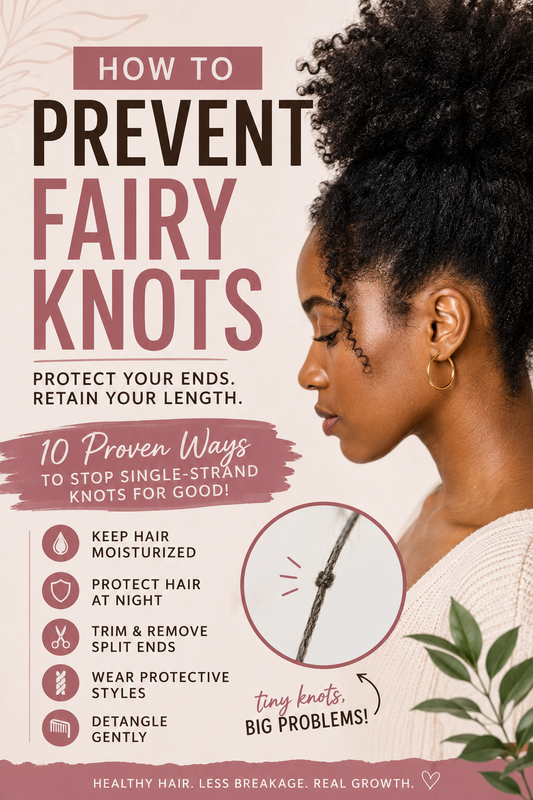
If you have natural hair, curly hair, coily hair, or locs, you've probably experienced the frustrating phenomenon known as fairy knots. These tiny knots seem to appear out of nowhere and can make detangling a nightmare. They often lead to breakage, split ends, and length retention issues that leave many people wondering why their hair won't grow past a certain point.
The truth is that fairy knots are one of the most common challenges for people with textured hair. Because curly and coily strands naturally twist and wrap around themselves, they are more prone to forming knots than straight hair.
The good news is that fairy knots can be prevented. With the right hair care routine, proper moisture balance, and healthy hair habits, you can dramatically reduce the number of knots in your hair and retain more length over time.
In this guide, you'll learn:
- What fairy knots are
- Why they happen
- Who is most likely to get them
- How to prevent fairy knots naturally
- The best hair care routine to minimize knots
- Common mistakes that make knots worse
- Tips for natural hair, braids, locs, and protective styles
Let's dive in.
What Are Fairy Knots?
Fairy knots, also called single-strand knots, occur when a single strand of hair wraps around itself and forms a knot.
Unlike regular tangles that involve multiple strands, fairy knots form on one individual strand.
These knots are most commonly found:
- Near the ends of the hair
- On curly hair
- On coily hair
- On kinky hair
- In natural hair textures
Because the strand loops around itself, it creates a tiny knot that can become difficult to remove.
When you attempt to pull the knot apart, the strand often breaks.
This contributes to:
- Split ends
- Hair thinning
- Breakage
- Poor length retention
Why Are They Called Fairy Knots?
The term "fairy knot" comes from folklore.
In old stories, tiny knots in hair were believed to be tied by fairies while people slept.
Today, we know the real cause is much less magical.
Fairy knots are created when hair strands:
- Twist
- Curl
- Rub against each other
- Become dry
- Experience friction
The more textured your hair is, the easier it becomes for a strand to wrap around itself.
Why Do Fairy Knots Happen?
Understanding the cause is the first step toward prevention.
1. Hair Texture
People with:
- 3C hair
- 4A hair
- 4B hair
- 4C hair
are naturally more prone to fairy knots.
The tighter the curl pattern, the easier it is for strands to loop around themselves.
This is why fairy knots are particularly common among Black women with natural hair.
2. Dry Hair
Dry hair is rough hair.
When hair lacks moisture:
- The cuticle lifts
- Strands catch on one another
- Friction increases
- Knots form more easily
Moisturized hair remains flexible and smooth.
3. Split Ends
Damaged ends are knot magnets.
Split ends:
- Fray apart
- Catch neighboring strands
- Increase tangling
- Create knots
Regular trimming can significantly reduce fairy knots.
4. Excessive Friction
Hair constantly rubs against:
- Clothing
- Pillows
- Scarves
- Towels
This friction encourages strands to intertwine.
Cotton pillowcases are especially problematic.
5. Wearing Hair Out Constantly
Loose hair is exposed to:
- Wind
- Movement
- Friction
- Environmental stress
Protective styling reduces opportunities for knot formation.
6. Skipping Detangling Sessions
When shed hairs remain trapped in textured hair, they become entangled with healthy strands.
Over time, these tangles evolve into knots.
Regular detangling is essential.
Are Fairy Knots Bad?
Fairy knots aren't dangerous, but they can cause problems.
They may lead to:
- Hair breakage
- Split ends
- Tangles
- Frustration
- Difficulty retaining length
For people trying to grow long natural hair, fairy knots can be a major obstacle.
Signs You Have Fairy Knots
You may notice:
- Tiny bumps at the ends of strands
- Rough-feeling ends
- Increased tangling
- Hair catching during detangling
- Small white dots on strands
- Breakage at the ends
If you inspect a shed strand closely, you'll often see a tiny knot tied near the tip.
How to Prevent Fairy Knots
Now let's focus on solutions.
1. Keep Hair Moisturized
Moisture is your first defense.
Hydrated hair is:
- Softer
- More flexible
- Less likely to tangle
Focus on:
- Water-based moisturizers
- Leave-in conditioners
- Moisture sprays
Apply moisture consistently throughout the week.
2. Seal Moisture Into the Hair
Adding moisture isn't enough.
You must seal it in.
Natural oils help reduce friction and maintain softness.
Popular sealing oils include:
- Jojoba oil
- Castor oil
- Avocado oil
- Coconut oil
Proper sealing reduces roughness and knot formation.
3. Trim Damaged Ends
Split ends eventually turn into knots.
Trimming:
- Removes damaged ends
- Prevents worsening splits
- Reduces tangles
Most people benefit from occasional dusting or trimming throughout the year.
4. Stretch Your Hair
Stretched hair experiences fewer knots than highly shrunken hair.
Ways to stretch hair include:
- Twist-outs
- Braid-outs
- Banding
- Roller sets
- Flexi rods
Stretching keeps strands aligned and reduces opportunities for knotting.
5. Protective Style Regularly
Protective styles reduce manipulation and friction.
Examples include:
- Twists
- Braids
- Flat twists
- Buns
- Updos
These styles help keep strands organized and protected.
6. Sleep With Hair Protected
Nighttime friction is a major cause of fairy knots.
Protect hair with:
- Satin bonnets
- Silk scarves
- Satin pillowcases
This reduces rubbing and moisture loss.
7. Detangle Properly
Gentle detangling prevents tangles from becoming knots.
Best practices include:
- Detangle on damp hair
- Use conditioner
- Work in sections
- Start at the ends
- Move upward slowly
Avoid rushing through the process.
8. Avoid Over-Manipulation
Constant styling increases friction.
Limit:
- Excessive brushing
- Frequent combing
- Daily restyling
The less manipulation, the fewer knots you'll experience.
9. Protect Hair From Wind
Wind causes strands to whip around and tangle.
On windy days:
- Wear protective styles
- Use scarves
- Keep ends tucked away
This simple habit can dramatically reduce knotting.
10. Deep Condition Weekly
Deep conditioning improves:
- Elasticity
- Moisture retention
- Manageability
Soft hair is far less likely to knot.
Aim for a weekly deep conditioning treatment.
Best Hair Routine to Prevent Fairy Knots
Wash Day
- Pre-poo
- Shampoo scalp
- Condition thoroughly
- Detangle carefully
- Deep condition
- Apply leave-in conditioner
- Seal moisture
- Stretch hair
Midweek Maintenance
- Moisturize lightly
- Protect hair at night
- Avoid excessive manipulation
Monthly Maintenance
- Assess ends
- Dust damaged strands
- Refresh protective styles
Common Mistakes That Cause Fairy Knots
Leaving Hair Dry
Dry hair tangles faster.
Ignoring Split Ends
Split ends worsen over time.
Sleeping Without Protection
Cotton pillowcases create friction.
Detangling Dry Hair
Dry detangling often causes breakage.
Wearing Hair Out Daily
Loose hair experiences more friction and tangling.
Using Harsh Towels
Traditional towels roughen the cuticle.
Use microfiber towels instead.
How to Prevent Fairy Knots on 4C Hair
4C hair experiences significant shrinkage.
To minimize knots:
- Keep hair moisturized
- Stretch hair regularly
- Use low-manipulation styles
- Trim damaged ends
- Protect hair while sleeping
Consistency is key.
How to Prevent Fairy Knots in Curly Hair
For curly hair:
- Use leave-in conditioner
- Avoid brushing dry curls
- Deep condition regularly
- Protect ends
- Detangle gently
Healthy curls knot less frequently.
How Protective Styles Help Prevent Fairy Knots
Protective styles:
- Reduce friction
- Prevent tangling
- Minimize manipulation
- Protect ends
However, styles should not be worn too long.
Excessive buildup and matting can eventually increase knotting.
Can Hair Oils Prevent Fairy Knots?
Hair oils cannot eliminate fairy knots entirely.
However, they can:
- Reduce friction
- Improve softness
- Seal moisture
- Protect ends
When combined with proper hair care, oils can significantly reduce knot formation.
Can Fairy Knots Stop Hair Growth?
Hair grows from the scalp regardless of fairy knots.
However, knots can cause breakage.
This creates the illusion that hair isn't growing.
The real problem is poor length retention.
Reducing fairy knots helps you keep the hair you grow.
When Should You Cut a Fairy Knot?
If the knot:
- Won't unravel
- Causes tangling
- Is attached to split ends
It's often best to trim the strand above the knot.
Pulling aggressively usually causes more damage.
The Truth About Length Retention
Many people focus exclusively on growth.
The real secret is retention.
Hair can grow:
- But still appear stagnant
- Because breakage cancels growth
Reducing fairy knots improves retention dramatically.
Final Thoughts
Fairy knots are one of the most common challenges for natural hair, curly hair, and coily hair. While they may seem unavoidable, they can be greatly reduced through consistent care.
The most effective strategies include:
- Keeping hair moisturized
- Sealing moisture
- Stretching hair
- Protective styling
- Regular detangling
- Trimming damaged ends
- Sleeping with satin protection
By minimizing friction, maintaining healthy ends, and following a consistent hair care routine, you'll experience fewer knots, less breakage, and better length retention.
Healthy hair growth isn't just about growing hair—it's about keeping the hair you already have. Preventing fairy knots is one of the most effective ways to do exactly that.