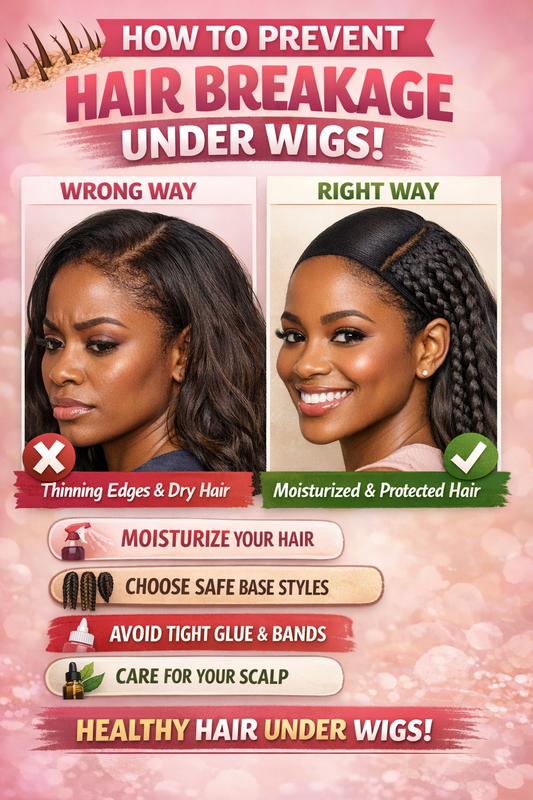
Wigs are one of the most powerful tools for protecting your natural hair, switching up your look, and maintaining style versatility. But here’s the truth most people don’t talk about: if worn incorrectly, wigs can actually cause serious hair breakage, thinning edges, and long-term damage.
If your goal is healthy, thicker, longer hair underneath your wigs, this guide will show you exactly how to wear wigs the right way—so your hair thrives instead of suffers.
Table of Contents
- What Causes Breakage Under Wigs
- Are Wigs Actually Protective Styles?
- The Biggest Mistakes That Lead to Hair Damage
- Prepping Your Hair Before Wearing a Wig
- The Best Protective Base Styles
- Moisture Is Everything: How to Keep Hair Hydrated
- Scalp Care Routine While Wearing Wigs
- How Tight Is Too Tight? (Glue, Bands, Clips Explained)
- Lace Front Wigs & Edge Protection
- How Often Should You Take Your Wig Off?
- Night Routine to Prevent Breakage
- Washing & Conditioning Your Natural Hair
- Signs Your Wig Routine Is Damaging Your Hair
- Best Products to Prevent Breakage
- Weekly Wig Hair Care Routine (Step-by-Step)
- Final Tips for Maximum Hair Growth & Retention
1. What Causes Breakage Under Wigs?
Before fixing the problem, you need to understand it.
Hair breakage while wearing wigs is usually caused by:
- Dryness (the #1 cause)
- Tension on edges and scalp
- Friction between wig and hair
- Lack of scalp care
- Improper braiding underneath
- Wearing wigs too long without breaks
Wigs don’t automatically protect your hair—your routine determines whether your hair grows or breaks.
2. Are Wigs Actually Protective Styles?
Yes—but only if done correctly.
A true protective style:
- Reduces manipulation
- Keeps ends tucked away
- Maintains moisture
- Protects hair from environmental damage
A wig becomes damaging when:
- Your hair is dry underneath
- Your edges are constantly pulled
- Your scalp is neglected
? Key takeaway:
Wigs are only protective if your hair is still being cared for underneath.
3. The Biggest Mistakes That Lead to Hair Damage
Let’s be real—most breakage comes from these:
❌ Wearing wigs on dry hair
Dry hair = brittle hair = breakage
❌ Tight braids underneath
Too much tension weakens roots and causes thinning
❌ Gluing wigs daily
Repeated adhesive use destroys edges
❌ Never moisturizing your scalp
Out of sight ≠ out of care
❌ Sleeping in wigs without protection
Friction = breakage + tangling
❌ Leaving wigs on too long
Your scalp needs oxygen and care
4. Prepping Your Hair Before Wearing a Wig
This is where most people go wrong.
Step-by-Step Prep Routine:
- Cleanse your scalp
- Remove buildup
- Use a gentle shampoo
- Deep condition
- Restores moisture
- Strengthens hair
- Apply leave-in conditioner
- Locks in hydration
- Seal with oil
- Prevents moisture loss
- Detangle gently
- Prevents breakage before styling
? Skipping prep = starting your wig routine with weak hair
5. The Best Protective Base Styles
Your foundation matters.
✔ Flat Twists
- Less tension than braids
- Great for fragile hair
✔ Cornrows (loose, not tight)
- Classic and effective
- Keep them neat but not painful
✔ Low Manipulation Plaits
- Ideal for longer wear
❌ Avoid:
- Super tight braids
- Heavy extension braids underneath wigs
? Rule: If it hurts, it’s damaging your hair.
6. Moisture Is Everything: How to Keep Hair Hydrated
Hair under wigs dries out FAST.
Moisture Routine:
- Spray hair every 2–3 days with:
- Water-based moisturizer
- Light leave-in conditioner
- Seal with:
- Lightweight oils (not heavy grease)
Focus Areas:
- Ends (most fragile)
- Edges
- Crown (often neglected)
? Dry hair = guaranteed breakage
7. Scalp Care Routine While Wearing Wigs
Healthy hair starts with a healthy scalp.
Weekly Scalp Care:
- Apply a light oil or growth serum
- Massage for 3–5 minutes
- Keep scalp clean and itch-free
Why this matters:
- Boosts blood circulation
- Prevents dryness and flakes
- Supports hair growth
8. How Tight Is Too Tight? (Glue, Bands, Clips Explained)
This is where many people lose their edges.
Wig Installation Options:
✔ Adjustable Bands (BEST OPTION)
- No tension on edges
- Secure without glue
✔ Wig Clips
- Use sparingly
- Avoid placing near fragile areas
⚠️ Glue/Adhesive
- Can damage edges if overused
- Never apply repeatedly without breaks
? Golden Rule:
Your wig should feel secure—not painful.
9. Lace Front Wigs & Edge Protection
Lace fronts look amazing—but can be risky.
How to Protect Your Edges:
- Use a wig cap barrier
- Avoid applying glue directly on hairline
- Give your edges break days
- Rotate wig positions slightly
Edge Care Tip:
Apply nourishing oil to edges daily—even while wearing wigs.
10. How Often Should You Take Your Wig Off?
Your scalp needs to breathe.
Recommended:
- Remove wig daily if possible
- At minimum: every 2–3 days
Why?
- Reduces sweat buildup
- Prevents bacteria
- Allows proper moisturizing
? Wearing wigs nonstop = long-term damage
11. Night Routine to Prevent Breakage
Sleeping correctly is a game changer.
Best Night Routine:
- Remove wig (preferred)
- Wear satin/silk bonnet
- OR use satin pillowcase
If keeping wig on:
- Wrap hair underneath
- Reduce friction
? Cotton = dryness
? Satin = protection
12. Washing & Conditioning Your Natural Hair
Don’t neglect wash days.
Ideal Schedule:
- Every 1–2 weeks
Wash Routine:
- Cleanse scalp thoroughly
- Deep condition
- Detangle gently
- Moisturize + seal
? Clean scalp = better growth + less breakage
13. Signs Your Wig Routine Is Damaging Your Hair
Pay attention to warning signs:
- Thinning edges
- Excess shedding
- Dry, brittle strands
- Scalp irritation
- Breakage at hairline
? If you see these, adjust immediately
14. Best Products to Prevent Breakage
To keep your hair strong under wigs, focus on:
✔ Moisturizers
- Water-based leave-ins
✔ Oils
- Seal moisture
- Support scalp health
✔ Strengthening Treatments
- Reduce breakage
- Improve elasticity
✔ Scalp Oils
- Promote growth
- Reduce dryness
? Consistency matters more than the product itself
15. Weekly Wig Hair Care Routine (Step-by-Step)
Here’s a simple routine that works:
Day 1 (Wash Day)
- Shampoo
- Deep condition
- Moisturize + seal
- Install protective base
- Put on wig
Day 3
- Lightly moisturize scalp and hair
Day 5
- Massage scalp with oil
- Rehydrate hair
Day 7
- Remove wig
- Let hair breathe overnight
Repeat weekly.
16. Final Tips for Maximum Hair Growth & Retention
If your goal is long, thick, healthy hair under wigs, follow these:
✔ Prioritize moisture over everything
✔ Avoid tight styles
✔ Take breaks from wigs
✔ Care for your scalp consistently
✔ Protect your edges at all costs
✔ Be gentle with your hair
The Bottom Line
Wigs can either:
- Grow your hair like crazy, or
- Destroy your hair slowly over time
The difference is your routine.
If you:
- Keep your hair moisturized
- Avoid tension
- Care for your scalp
- Give your hair breaks
? You’ll see less breakage, stronger strands, and real hair growth